Ember Days: An Anglican Perspective
Four times a year, the Anglican calendar sets aside three days for fasting, prayer, and intercession for the Church's ministry. Most Anglicans have never heard of them. Here's what Ember Days are, when they fall, and how to observe them.
Days of Discipline, Denial, and Special Prayer
The Anglican calendar is ordered by a hierarchy of holy days, but it also contains appointed Days of Discipline, Denial, and Special Prayer. The BCP 2019 places Ember Days within this latter category and sets them aside specifically for “prayers for those called to Holy Orders.” Four times each year, on a Wednesday, Friday, and Saturday, the calendar creates a recurring rhythm in which the Church prays for those whom God is calling to ordained ministry and for the Church charged with discerning, forming, ordaining, sending, and supporting them. (BCP 2019, p. 689)
Ember Days may also be kept with fasting. The BCP describes fasting as involving reduced consumption and normally joining that bodily discipline to prayer, self-examination, and acts of mercy. Ember Days are therefore neither minor feast days nor merely clerical anniversaries. They remind the whole Church that faithful ordained ministry does not perpetuate itself automatically. Pastors must be called, formed, tested, ordained, sent, and sustained, and Jesus himself commands his people to pray that the Lord of the harvest will send laborers into his harvest.
The English name Ember is commonly traced to Old English forms such as ymbren or ymbryne, associated with a recurring course or circuit. The medieval Latin name quatuor tempora, meaning “the four times,” independently describes the same fourfold seasonal pattern. The precise history of the English term has been debated, but the liturgical pattern itself is clear: four times each year the calendar calls the Church back to prayer for ordained vocation and ministry.
Ember Days and Rogation Days
Ember Days are sometimes confused with Rogation Days because both belong to the Prayer Book’s Days of Discipline, Denial, and Special Prayer and both may be observed with fasting. Their particular purposes, however, are different. Rogation Days are the Monday, Tuesday, and Wednesday immediately preceding Ascension Day and are especially devoted to asking God’s blessing upon agriculture and industry. Ember Days are set aside particularly for “prayers for those called to Holy Orders.” (BCP 2019, p. 689)
The distinction reveals parallel truths about divine providence. Rogation reminds Christians that the earth, its fruitfulness, and human labor remain dependent upon God. Ember Days remind the Church that her ordained ministers are also gifts of providence. Crops do not give themselves growth, and churches do not ultimately give themselves faithful pastors. In both cases human beings truly work, but God gives what human effort cannot create.
Ancient Roots
The origins of Ember Days are ancient, although their precise development cannot be reconstructed with complete certainty. Seasonal fasts became established in the Roman Church during late antiquity, with recurring periods of prayer and fasting associated with different times of the year. Earlier Roman practice seems to have included three seasonal observances, while the familiar fourfold pattern developed over time.
By the fifth century these seasonal fasts were firmly established. Leo the Great preached sermons connected with them and regarded the practice as possessing apostolic roots. We need not conclude from Leo’s language that the apostles themselves instituted the later Ember calendar in its fully developed form. His testimony does demonstrate, however, that these seasonal fasts were already deeply rooted in the Roman Church by his time.
The connection between these fasts and ordination also became strong in the ancient Western Church. By the late fifth century, under Pope Gelasius I, ordinations of deacons and priests were explicitly associated with these appointed fasting periods, and Ember Saturdays became important occasions for ordination. From Rome the observance spread through Western Christianity and eventually became established in England. The details and emphases varied over the centuries, but the relationship among Ember Days, fasting, prayer, vocation, and ordination became deeply rooted in the Western liturgical tradition.
The Anglican inheritance preserves that pattern. The BCP 2019 retains Ember Days explicitly, provides two Collects and two sets of lectionary propers, directs the Preface of Apostles on the Ember Collect pages, provides the corresponding Proper Preface under the title Apostles and Ordinations, and specifically authorizes the use of the Litany of Ordinations on Ember Days.
When Are Ember Days Observed?
The BCP 2019 lists four sets of Ember Days on page 689. The four sets are the Wednesday, Friday, and Saturday after Saint Lucy’s Day, December 13; after the First Sunday in Lent; after the Day of Pentecost; and after Holy Cross Day, September 14.
These sets are often described conveniently as the Winter, Spring, Summer, and Autumn Ember Days, although those seasonal names are descriptive rather than the formal titles used by the Prayer Book.
These four sets place Ember prayer at significant points across the Christian year. The December days occur in Advent, the Lenten days within the Church’s season of repentance and fasting, the summer days immediately after Pentecost, and the autumn days following Holy Cross Day. Later in the year’s rhythm, each setting gives the same prayer for ordained vocation a distinctive theological accent.
The BCP’s stated purpose should govern the observance: “Ember Days are set aside for prayers for those called to Holy Orders.” (BCP 2019, p. 689) That does not mean Christians may pray only for ordinands. The Ember Collects and Litany naturally widen prayer toward the ministry and mission of the Church. Yet vocation to Holy Orders is not a later addition or merely one theme among many. It is the Prayer Book’s explicit center.
God Calls Before the Church Sends
The deepest theological truth behind Ember Days is that ministry belongs to God before it belongs to the Church. Jesus says, “The harvest is plentiful, but the laborers are few; therefore pray earnestly to the Lord of the harvest to send out laborers into his harvest.” (Matthew 9:37–38, ESV) The command is striking. Jesus expects laborers to work, churches to teach, leaders to discern, and ministers to be sent, yet his first instruction is prayer. The harvest belongs to the Lord, the laborers are his, and the sending is ultimately his act.
This does not render ecclesial discernment unnecessary. The Church must examine candidates carefully, test doctrine and character, provide formation, and refuse ordination where fitness is lacking. But all of that discernment takes place beneath a more fundamental truth: the Church does not manufacture vocation.
God is the first mover. He calls before the candidate answers and gives gifts before the Church recognizes them. The Church’s role is real and serious, but it is responsive to the prior action of God. A private conviction does not by itself constitute an ecclesially recognized vocation, but neither can a church bureaucracy create a divine call where God has not given one.
The Litany of Ordinations reflects this order when the Church asks God to guide by his indwelling Spirit those whom he calls to the ministry of his Church and to increase the number of ministers so that the Gospel may be preached to all people. Ember Days therefore guard against opposite errors. Ministry is not a self-selected career in which a person simply announces a vocation and expects the Church to ratify it, but neither is ordination merely an institutional staffing process. God calls, and the Church prayerfully discerns.
The First Ember Collect
The BCP provides two Ember Collects on page 634. The first, The Ministry of the Church, may be used on the traditional Ember Days or at other times. It begins by addressing God as “the giver of all good gifts” and confesses that in his divine providence he has appointed various orders in the Church. The prayer asks God to give grace to those called to office and ministry, to fill them with “the truth of your doctrine” and clothe them with “holiness of life,” so that they may serve faithfully for God’s glory and the benefit of his Church. (BCP 2019, p. 634)
The opening words are decisive because ministry begins in gift before it becomes task. The Church does not pray first for charismatic personalities, managerial competence, creativity, popularity, or institutional success. She asks God to give grace.
The prayer then joins two things the Church must never separate: truth of doctrine and holiness of life. A minister who lives respectably but teaches falsehood cannot shepherd the Church faithfully, and neither can a minister who confesses correct doctrine while living in persistent ungodliness.
Even here the Collect places both beneath grace. Those called are not simply told to become doctrinally sound and morally impressive through greater exertion. The Church asks God to fill and clothe them. Fidelity is real, discipline is necessary, study matters, and holiness requires obedience, but faithful ministry depends upon grace from beginning to end.
The Second Ember Collect
The alternative Collect remembers that God led his holy apostles to ordain ministers in every place and asks that the Church, “under the guidance of the Holy Spirit, may choose suitable persons for the ministry of Word and Sacrament,”and uphold them in their work for the extension of God’s Kingdom. (BCP 2019, p. 634)
The prayer gives the Church a compact theology of vocation and discernment: God leads, the Holy Spirit guides, the Church chooses, those chosen must be suitable, and once they are set apart the Church must continue to uphold them.
None of those elements can safely be removed. Claims of personal calling do not eliminate the need for the Church’s discernment, and institutional discernment does not eliminate dependence upon the Holy Spirit. Ordination itself does not end the Church’s responsibility toward her ministers. Those whom the Church sends must continue to be supported by prayer, fellowship, correction, encouragement, and practical care.
The phrase “the ministry of Word and Sacrament” also protects the proper nature of ordained ministry. The Church certainly needs administrators, organizers, strategists, fundraisers, and leaders with many practical abilities, yet ordained ministry is not finally defined by institutional management. Bishops, priests, and deacons each serve the Church according to the responsibilities of their respective orders. Bishops and priests are entrusted with the sacramental and pastoral ministries proper to their offices, while deacons are ordained especially to proclaim the Gospel, assist in the Church’s worship, serve those in need, and support the sacramental ministry of bishops and priests.
With either Ember Collect, the BCP directs the Preface of Apostles. The corresponding Proper Preface itself appears in the supplemental Eucharistic texts under the title Apostles and Ordinations. It places ordered ministry beneath the risen Christ, the great Shepherd of the flock, who sent his apostles to preach the Gospel and teach the nations and promised to remain with them.
The Ember Day Readings
The BCP provides two sets of Ember Day propers on page 732, titled Ember Days I and Ember Days II. They are not assigned separately to Wednesday, Friday, and Saturday, so it is better not to invent a separate set of readings for each day.
Ember Days I appoints Numbers 11:16–17, 24–29; Psalm 99; 1 Corinthians 3:5–11; and John 4:31–38. These readings emphasize shared ministry, divine empowerment, and the Lord who gives growth.
Numbers 11 is particularly important because Moses is overwhelmed by the burden of leading Israel, and God commands him to gather seventy elders. The LORD takes some of the Spirit that is upon Moses and places it upon the seventy elders for their shared work. The burden is distributed, but the source of empowerment remains divine.
First Corinthians makes the same point through another image when Paul writes, “I planted, Apollos watered, but God gave the growth.” (1 Corinthians 3:6, ESV) Ministers matter, planting matters, and watering matters, yet neither apostle can produce the life upon which ministry depends.
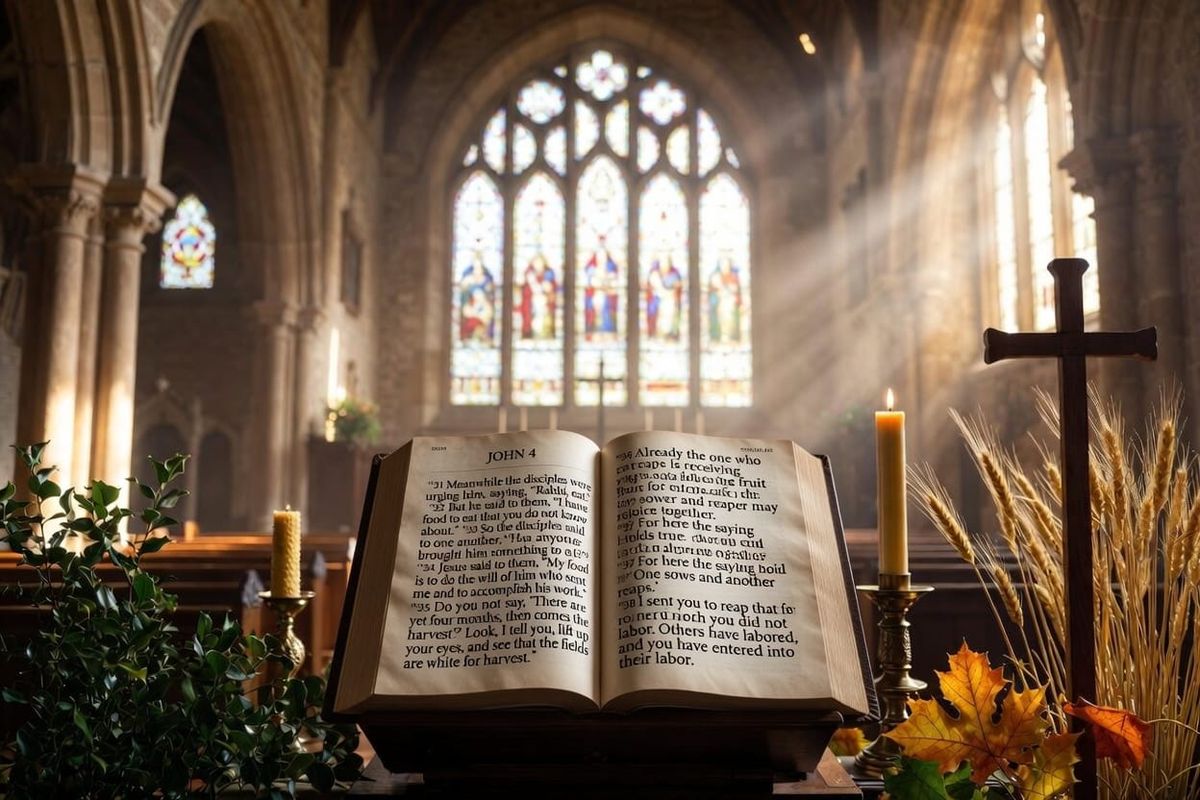
Jesus then tells his disciples in John 4, “Look, I tell you, lift up your eyes, and see that the fields are white for harvest.”(John 4:35, ESV) The language naturally echoes his command elsewhere to pray for laborers because the harvest already belongs to God before the laborers enter it.
Ember Days II appoints 1 Samuel 3:1–10; Psalm 63:1–8; Ephesians 4:11–16; and Matthew 9:35–38. Here vocation becomes even more explicit.
Samuel hears God’s call but initially does not recognize the voice. Eli helps him discern what is happening and teaches him to answer, “Speak, LORD, for your servant hears.” (1 Samuel 3:9, ESV) The story offers a compelling picture of divine initiative joined to discernment within the community: God calls Samuel, while Eli helps Samuel recognize the call.
Ephesians 4 teaches that the ascended Christ gives apostles, prophets, evangelists, shepherds, and teachers “to equip the saints for the work of ministry, for building up the body of Christ.” (Ephesians 4:12, ESV) Ministry is Christ’s gift to his Body, and its purpose is not to create dependence upon impressive leaders but to build up the whole Church toward maturity in Christ.
Matthew 9 completes the set by returning to the command around which Ember prayer naturally gathers: “Therefore pray earnestly to the Lord of the harvest to send out laborers into his harvest.” (Matthew 9:38, ESV)
The Litany of Ordinations
The BCP gives Ember Days another resource that deserves particular attention. The Additional Directions following the Litany of Ordinations authorize its use on Ember Days in place of the Prayers of the People at the Eucharist, following the Collects in the Daily Office, or as a separate devotion.
This makes Ember observance unusually practical. A parish does not need to invent an elaborate special service. The Church already possesses a litany asking God to guide those whom he calls, strengthen those entering ministry, increase the number of ministers, preserve holiness and faithfulness, and advance the unity and mission of the Church.
The Church therefore prays for more ministers, but not merely more people to fill vacant offices. She asks for ministers guided by the indwelling Spirit and sent so that the Gospel may be preached.
In a time when churches may face shortages of clergy or anxiety about future leadership, this is more than liturgical archaeology. The Prayer Book directs the Church toward prayer before technique because faithful ministers are finally gifts from the Lord of the harvest.
Holy Orders and the Ministry of the Whole Church
Because the BCP explicitly says Ember Days are set aside for prayers for those called to Holy Orders, ordained vocation must remain at the center of their observance.
At the same time, the first Collect prays for those called to “any office and ministry” among God’s people. The Church contains many real ministries beyond episcopal, priestly, and diaconal office. Catechists, musicians, teachers, vestry members, intercessors, missionaries, pastoral caregivers, and countless others serve Christ’s people in necessary ways.
Every baptized Christian also has a vocation to holiness and service. Peter writes, “As each has received a gift, use it to serve one another, as good stewards of God’s varied grace.” (1 Peter 4:10, ESV) Honoring the ministry of all the baptized, however, should not erase the particular vocation of Holy Orders.
Anglican theology does not need to choose between a gifted laity and an ordered ministry. The Church needs both. Bishops, priests, and deacons exercise particular offices within the Body, while the whole people of God receive gifts for service.
Ember Days hold these truths together without confusing their order. Their primary Prayer Book purpose is prayer for those called to Holy Orders. Their broader horizon is a Church in which every gift is received from God and ordered toward the building up of Christ’s Body.
Fasting and Ember Days
The BCP 2019 says that Ember Days may be kept with fasting. That wording matters because the Prayer Book does not impose upon Ember Days the same language of “special devotion and total abstinence” used for Ash Wednesday and Good Friday.
Instead, Ember Days belong to the wider pattern of Christian discipline in which fasting may be observed. The BCP explains that fasting, in addition to reduced consumption, normally includes prayer, self-examination, and acts of mercy. (BCP 2019, p. 689)
This is more useful than reducing Ember observance to a rigid food formula. A Christian may reduce food according to circumstance, health, prudence, and the discipline undertaken. The bodily practice should serve prayer rather than become an achievement in itself. Jesus warns against fasting performed to be seen by others, and fasting does not earn a better hearing from God.
Its value lies in disciplining appetite, exposing dependence, creating space for prayer, and joining bodily self-denial to spiritual attention. On Ember Days that discipline has a particular object: hunger can become a reminder to pray for those discerning Holy Orders, for ordinands and clergy, and for the Lord of the harvest to send faithful laborers.
Prayer for Faithful Ministers
Ember Days challenge the way churches sometimes think about leadership. The New Testament does not ask first whether a minister is impressive. It asks whether he is faithful. Paul writes that “it is required of stewards that they be found faithful.” (1 Corinthians 4:2, ESV)
The Pastoral Epistles emphasize sound doctrine, moral character, self-control, hospitality, maturity, and the ability to teach. The Ember Collects similarly ask for truth of doctrine, holiness of life, suitable persons, Spirit-guided discernment, and faithful work.
That matters in every age, but especially in cultures fascinated by scale, personality, influence, and visibility. A charismatic minister can still be a dangerous shepherd, a gifted preacher can abandon apostolic doctrine, and a visibly successful institution can be spiritually unhealthy. The Church therefore needs more than ministers. She needs faithful ministers, and Ember prayer asks God to give them.
The Church must also discern carefully. Ordination is not simply the institutional blessing of a private conviction. A person may sincerely believe himself called and still lack the gifts, doctrine, character, stability, or fitness required for ordained ministry.
Bishops bear a particular responsibility in that discernment, but the process rightly involves priests, congregations, theological formation, examination, and those who know the candidate well. The Church must neither quench a genuine vocation nor rush a candidate whom she is charged to test.
Samuel needed Eli, but Eli did not manufacture Samuel’s call. Ember theology keeps divine calling and ecclesial discernment in their proper order.
Upholding Those Who Are Sent
The second Collect does not end when suitable ministers have been chosen. It asks that the Church “may uphold them in their work.” (BCP 2019, p. 634) That phrase deserves attention because congregations may pray intensely for someone during discernment and ordination and then assume the work is finished. The Prayer Book says otherwise.
Clergy remain human beings. They need prayer, friendship, correction, encouragement, rest, practical support, and the ordinary fellowship of the Church. Bishops need prayer, priests need prayer, and deacons need prayer. Those carrying public pastoral responsibility often bear burdens that are only partially visible to the congregations they serve.
To uphold ministers does not mean shielding them from accountability or placing clergy beyond criticism. Faithful support includes truthful correction when necessary. Nor does it mean treating ministers as spiritually superior. It means recognizing that those entrusted with the care and service of Christ’s flock need the prayers of Christ’s people.
Paul repeatedly asks churches to pray for him. If an apostle asked for the prayers of the Church, contemporary ministers certainly need them.
Ember Days Through the Christian Year
Each Ember set acquires a slightly different character from its liturgical setting.
The Ember Days following Saint Lucy’s Day occur during Advent, a season of expectation and preparation. The Church waits for the coming of Christ and prays that God will raise up ministers who faithfully prepare his way through proclamation of the Gospel.
The Ember Days following the First Sunday in Lent come during a season of repentance, fasting, and self-examination. They provide a natural occasion for ministers and prospective ministers alike to examine doctrine, character, motives, and obedience before God.
The Ember Days following Pentecost stand immediately beside the Church’s celebration of the Holy Spirit. Their placement is particularly fitting because Christ gives gifts to his Church through the Spirit, and the Church responds by praying for those whom God calls into ordered ministry. The movement is from gift to vocation and from Pentecost toward mission.
The Ember Days following Holy Cross Day are equally fitting. The ministry of Christ’s Church can never be separated from the Cross. Christian leadership is not self-exaltation but service under the crucified Lord, and anyone who would shepherd or serve Christ’s people in ordained ministry must learn to take up the cross and follow him.
The four sets therefore repeat one central prayer while placing it within four dimensions of Christian life: expectation, repentance, Spirit-given mission, and costly discipleship.
The Liturgical Character
The BCP 2019 does not assign a distinctive liturgical color to Ember Days. They occur within different portions of the Christian year rather than forming a separate liturgical season of their own, so the surrounding seasonal color may be retained according to local custom.
An Advent Ember Day remains within Advent, and a Lenten Ember Day remains within Lent. The Ember Days after Pentecost and Holy Cross fall within the long period after Pentecost. The Ember observance adds its particular emphasis upon vocation, Holy Orders, prayer, and optional fasting without creating a separate season of its own.
Where one of the Ember Collects is used at the Eucharist, the Collect page directs the Preface of Apostles. The Proper Preface itself is titled Apostles and Ordinations in the supplemental Eucharistic texts. This is the same Proper Preface used elsewhere in the Prayer Book for apostolic and ordination-related observances, and its language directs the Church back to the risen Christ, the great Shepherd who sends his apostles to preach the Gospel and teach the nations.
Observing Ember Days
The simplest way to recover Ember Days is to begin with what the Prayer Book actually provides. Mark the four sets on the calendar: after Saint Lucy’s Day, December 13; after the First Sunday in Lent; after the Day of Pentecost; and after Holy Cross Day, September 14. Each set consists of Wednesday, Friday, and Saturday. (BCP 2019, p. 689)
Pray one or both of the Ember Collects on page 634 and let their petitions guide the content of the day. Ask God to raise up ministers, give them sound doctrine and holy lives, guide the Church’s discernment, provide suitable persons for the ministry of Word and Sacrament, and uphold those already serving.
Read one of the two Ember Day lectionary sets on page 732 rather than feeling compelled to invent separate propers for Wednesday, Friday, and Saturday. The BCP itself provides Ember Days I and Ember Days II. The Litany of Ordinations may also be used, since the Prayer Book specifically authorizes it for Ember Days in place of the Prayers of the People at the Eucharist, following the Collects in the Daily Office, or separately.
Prayer can become very concrete. Pray by name for the bishop, parish clergy, deacons, seminarians, postulants, aspirants, and anyone discerning a possible call. Pray for congregations without clergy and for dioceses seeking faithful pastors. If keeping a fast, connect the physical discipline directly to these prayers. Reduced consumption, self-examination, prayer, and acts of mercy belong within the Prayer Book’s pattern.
Ember Days can also become a recurring examination of the wider Church’s faithfulness. Even Christians not called to Holy Orders have received gifts and responsibilities, and these days provide an opportunity to ask whether those gifts are being offered faithfully to the Lord who gave them. But the primary Ember prayer should remain what the BCP says it is: prayer for those called to Holy Orders.
Conclusion
Ember Days are one of the quiet disciplines of Anglican Christianity. They do not commemorate a single biblical event, celebrate a saint, or carry the prominence of a Principal Feast. Instead, four times each year they return the Church to a simple but necessary act of dependence: prayer for those whom Christ calls to the ordained ministry of his Church.
The Church cannot ordain herself into faithfulness. Seminaries cannot educate themselves into spiritual life, bishops cannot manufacture vocation, congregations cannot produce shepherds by institutional technique, and candidates cannot call themselves into Holy Orders merely by wanting the work. Jesus instead tells his disciples, “Therefore pray earnestly to the Lord of the harvest to send out laborers into his harvest.” (Matthew 9:38, ESV) Ember Days take that command seriously.
God is the first mover. He gives the gifts, calls the laborers, guides the Church, and sustains those whom he sends. The Church’s responsibility is therefore neither passive nor sovereign. She prays, discerns, forms, ordains, sends, supports, corrects, and gives thanks, but beneath every faithful act of ministry stands the grace of God.
The two Ember Collects express that dependence particularly well. God is “the giver of all good gifts,” and the Church asks him to give grace to those he calls. She then asks that, “under the guidance of the Holy Spirit,” she may choose suitable ministers and uphold them in their work. Four times each year, the calendar returns the Church to this truth: she needs laborers, faithful shepherds, and holy and orthodox ministers of Word and Sacrament. Before all her plans, recruitment, discernment, and formation, however, Christ commands her to pray.