The Feast of James the Apostle: An Anglican Perspective
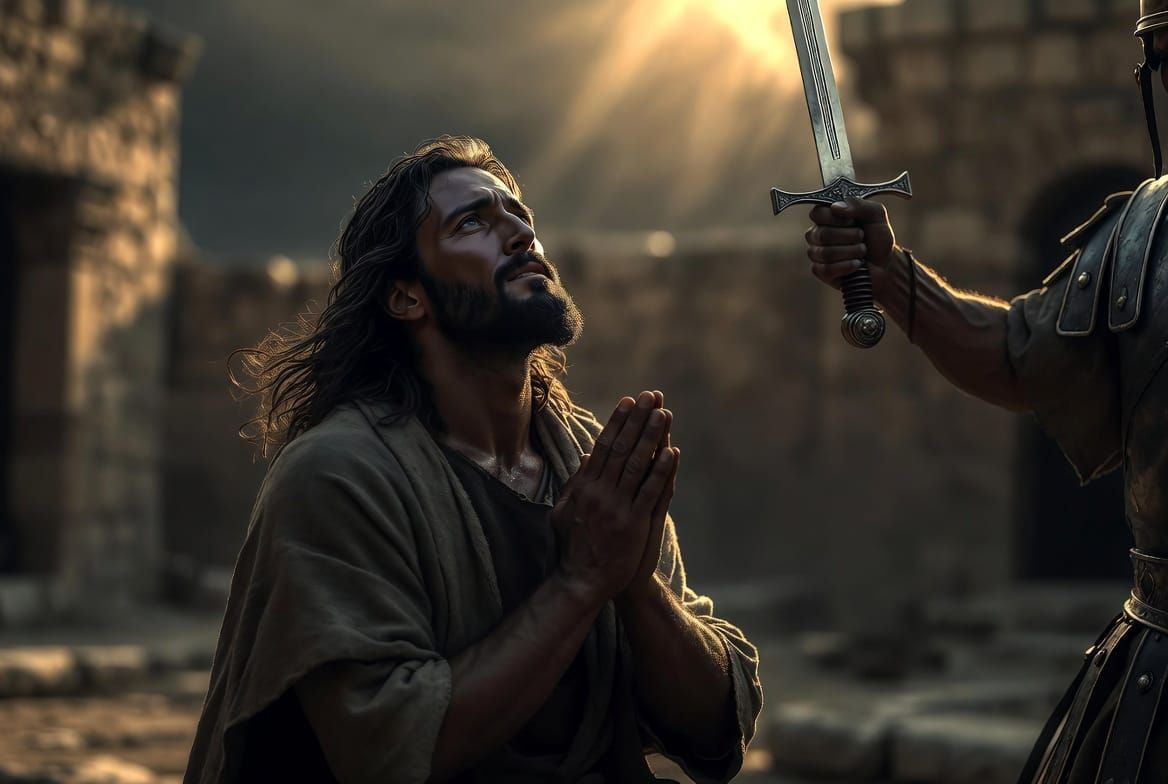
July 25: Saint James. First among the Twelve to be martyred. Acts 12:2 gives him two verses. The man who was at the Transfiguration, who slept in Gethsemane, who asked for the seat of honor — gone in a subordinate clause. This is what drinking the cup looks like.
Feast Day: July 25
The Anglican calendar is ordered by a hierarchy of holy days, each carrying a different weight of observance. At the top stand the seven Principal Feasts, the highest-ranking days of the liturgical year. Below them are the Red-Letter Holy Days appointed in the BCP 2019 with their own Collects and propers. The Feast of Saint James the Apostle, observed on July 25, is one of these Red-Letter Holy Days. The BCP appoints his Collect on page 630 and the feast’s readings in the Holy Day lectionary on page 731. The appointed Proper Preface is Apostles and Ordinations.
James is the son of Zebedee and the brother of John, one of the first disciples called by Jesus and one of the Twelve. Together with Peter and John, he belongs to the smaller group of three disciples whom Jesus takes with him at several decisive moments: the raising of Jairus’s daughter, the Transfiguration, and his prayer in Gethsemane. He sees extraordinary manifestations of Christ’s power and glory, yet the Gospel appointed for his feast centers not upon what he sees but upon what Jesus teaches him about greatness, authority, service, and the cup of suffering.
The end of James’s life is recorded with remarkable brevity. Acts tells us that Herod Agrippa I “killed James the brother of John with the sword.” (Acts 12:2, ESV) The BCP Collect identifies him as “first among the Twelve to suffer martyrdom for the Name of Jesus Christ.” The disciple who once sought a place of honor beside Jesus becomes the first of the Twelve whose martyrdom is recorded in Scripture. His feast therefore holds together two moments in one life: the ambition of Matthew 20 and the self-giving witness remembered in Acts 12.
James Son of Zebedee
James must first be distinguished from the other men named James in the New Testament. He is not James son of Alphaeus, another member of the Twelve, commemorated with Philip on May 1. Nor is he James of Jerusalem, the kinsman of the Lord who became a leading figure in the Jerusalem church and is commemorated on October 23. This feast belongs to James son of Zebedee, brother of John.
Later Christian tradition often calls him James the Greater in order to distinguish him from other New Testament figures named James. The title should not be understood as a theological judgment that he was holier or more important before God. It functions primarily as a traditional distinguishing title for the James who receives greater prominence in the Gospel narratives and in later Christian memory.
Matthew describes Jesus calling the brothers beside the Sea of Galilee. James and John are in a boat with their father Zebedee mending their nets when Jesus calls them, and “immediately they left the boat and their father and followed him.” (Matthew 4:22, ESV) The simplicity of the account establishes the fundamental fact about James before any later honor or failure: Christ calls, and James follows.
Mark tells us that Jesus gave James and John the name Boanerges (boh-ah-NEHR-gays), which he explains as “Sons of Thunder.” (Mark 3:17, ESV) Luke preserves one episode that makes the title feel appropriate. When a Samaritan village refuses to receive Jesus, James and John ask, “Lord, do you want us to tell fire to come down from heaven and consume them?” Jesus rebukes them. (Luke 9:54–55, ESV) Their zeal is real, but it still requires formation by the Lord they follow.
James’s life therefore illustrates a pattern common throughout the Gospels. Jesus does not call disciples because their character has already reached maturity. He calls them and then forms them.
One of the Three
James receives privileges given to few others. When Jairus’s daughter has died, Jesus permits only Peter, James, and John to enter with the child’s parents when he raises her. (Mark 5:37–43) On the mountain of Transfiguration, Jesus again takes Peter, James, and John apart and reveals his glory before them. They see Moses and Elijah, enter the overshadowing cloud, and hear the Father’s voice identify Jesus as his beloved Son.
The calendar places James’s feast and the Transfiguration only twelve days apart. The Church remembers first the apostle who would drink the cup of suffering and then returns to the mountain where he had once seen the glory of the Lord he later died confessing. The mountain and the martyrdom belong within one discipleship.
James is also among the three whom Jesus takes farther into Gethsemane. There, however, the privileged witnesses fail. Jesus tells Peter, James, and John that his soul is “very sorrowful, even to death” and asks them to remain and watch. They fall asleep. (Mark 14:33–41) The men who had once seen the glory on the mountain cannot remain awake during the anguish in the garden.
These scenes keep James’s later martyrdom from being romanticized as the inevitable achievement of an unusually heroic man. The James who eventually dies for Christ is also the disciple who needed correction, misunderstood greatness, wanted fire called down upon opponents, and slept while Jesus prayed. The difference between the earlier disciple and the later martyr is not that James finally discovered hidden strength within himself. Christ formed and sustained the man he had called.
The Request for the Seats of Honor
The appointed Gospel is Matthew 20:20–28. The mother of the sons of Zebedee approaches Jesus with James and John and asks that her sons sit, one at his right hand and one at his left, in his Kingdom. Matthew places the request upon their mother’s lips, while Mark presents James and John making the request themselves. In Matthew, however, Jesus immediately answers the brothers, and their own reply makes clear that they participate in the ambition behind the request.
Jesus says, “You do not know what you are asking. Are you able to drink the cup that I am to drink?” They answer, “We are able.” Jesus replies, “You will drink my cup.” (Matthew 20:22–23, ESV)
Their confidence is striking because the Gospel has already told them that Jesus is going to Jerusalem to be condemned, mocked, flogged, crucified, and raised. Yet they continue to imagine the Kingdom through categories of rank and proximity to power. They want the places nearest the throne without yet understanding what the enthronement of Jesus will look like.
Matthew later places two men beside the crucified Jesus, one on his right and one on his left. The places of honor the disciples imagined are revealed beneath the shadow of the Cross. The road toward glory passes through the suffering of the Son of Man.
The Cup Christ Drinks First
The cup is the central image of the feast. In Scripture, a cup can signify suffering, judgment, or the portion God appoints. In Gethsemane Jesus prays, “My Father, if it be possible, let this cup pass from me; nevertheless, not as I will, but as you will.” (Matthew 26:39, ESV)
James will indeed drink Christ’s cup in the sense Jesus promises in Matthew 20: he will share in the suffering that comes from following his Lord. His martyrdom is the clearest fulfillment of that promise. Yet James does not drink the cup in the unique saving sense in which Christ drinks it. Jesus gives his life “as a ransom for many.” (Matthew 20:28, ESV) His Passion and death accomplish the redemption no disciple can accomplish.
The disciples participate in Christ’s sufferings; they do not repeat or supplement his atoning sacrifice. James’s blood does not redeem the Church. Christ’s does. James can drink the cup of costly discipleship because Christ has first given himself for James.
That distinction strengthens the grace-centered meaning of the feast. James does not prove himself worthy of Jesus by suffering enough. His martyrdom is the fruit of belonging to the Lord who has already redeemed him. Grace precedes the cup James drinks.
True Authority
The request for privileged seats causes indignation among the other ten disciples. Jesus gathers all of them and addresses the deeper problem: they are imagining authority according to the patterns of worldly rule.
He says, “You know that the rulers of the Gentiles lord it over them, and their great ones exercise authority over them. It shall not be so among you.” He then gives the Kingdom’s alternative: “Whoever would be great among you must be your servant, and whoever would be first among you must be your slave.” (Matthew 20:25–27, ESV)
Jesus does not abolish authority. He redefines its character by reference to himself: “even as the Son of Man came not to be served but to serve, and to give his life as a ransom for many.” (Matthew 20:28, ESV) Christian authority is real authority, but it takes its shape from the Son of Man who gives himself for others.
The BCP Collect draws its principal petition directly from this teaching. It asks God to pour upon the leaders of the Church “that spirit of self-denying service, by which they may have true authority among your people.” That is a remarkably concentrated Anglican theology of leadership. True authority is not the absence of office, order, discipline, or responsibility. It is authority exercised according to the pattern of Christ rather than the domination of worldly rulers.
James’s life gives the Collect a particularly sharp edge. The man associated in Matthew 20 with the desire for a place beside the throne is remembered liturgically as a model through whom the Church learns that authority becomes true authority only when it is shaped by self-denying service.
“Do You Seek Great Things for Yourself?”
The appointed Old Testament reading, Jeremiah 45:1–5, addresses Baruch, Jeremiah’s scribe, in a time of exhaustion and national collapse. Baruch laments, “Woe is me! For the LORD has added sorrow to my pain. I am weary with my groaning, and I find no rest.” (Jeremiah 45:3, ESV)
God responds by reminding Baruch that the judgment falling upon Judah is larger than Baruch’s private expectations, and then asks, “And do you seek great things for yourself? Seek them not.” (Jeremiah 45:5, ESV)
The lectionary’s juxtaposition with Matthew 20 is exceptionally apt. The mother of James and John seeks great positions for her sons. Baruch is told not to seek great things for himself. Neither passage teaches that Christian disciples should aspire to uselessness or bury the gifts God has given them. The issue is the pursuit of greatness for the self.
Jesus does not tell James that service is insignificant. He tells him that service is the true measure of greatness in the Kingdom. Ambition is redirected rather than merely extinguished. The Christian may desire to serve greatly, preach faithfully, lead courageously, and spend himself for the Kingdom, but the center of those desires must be Christ’s glory and the good of his people rather than the enlargement of the self.
The BCP Collect receives Jeremiah and Matthew together with unusual clarity. True authority grows out of self-denying service because authority in Christ’s Church belongs to stewards, not proprietors.
The First of the Twelve to Suffer Martyrdom
Acts records James’s death with startling brevity. During a period of persecution, “Herod the king laid violent hands on some who belonged to the church. He killed James the brother of John with the sword.” (Acts 12:1–2, ESV)
The Herod here is Herod Agrippa I, whose reign ended with his death in AD 44. James’s martyrdom therefore occurred no later than that year and is ordinarily dated around AD 44. The BCP rests upon firm biblical ground when it calls James the first among the Twelve to suffer martyrdom. Stephen had already been martyred, but Stephen was not one of the Twelve. James is the first member of that apostolic company whose martyrdom Scripture records. Later Christian tradition likewise remembered him as the first of the Twelve to die for Christ.
Luke gives us no final sermon, no last exchange with the other apostles, and no description of James’s demeanor before the sword. The restraint of Acts is itself striking. A man who stood on the mountain of Transfiguration disappears from the narrative in a sentence.
That brevity reminds us that the significance of a Christian life does not depend upon how extensively history records it. James had no opportunity to leave a New Testament epistle attributed to him, and Acts preserves no missionary sermon from his ministry. He was called, he followed, he was sent, and he died bearing Christ’s Name. His significance rests not in literary output or historical celebrity but in the Lord who called him.
A Faithful Church Is Not Exempt from Suffering
The wider context of Acts 11:27–12:3 is important. The Church is not collapsing into spiritual failure when James is killed. The preceding verses describe prophets arriving from Jerusalem and the disciples at Antioch generously sending relief to believers in Judea. The Church is alive, generous, Spirit-gifted, and engaged in mutual care.
Then Herod kills James.
This prevents a dangerous assumption that visible faithfulness guarantees temporal protection. Scripture does not teach that a sufficiently obedient congregation or sufficiently faithful apostle will necessarily be spared suffering. Peter is miraculously delivered from prison later in the same chapter; James is not.
Acts does not explain why God allows James to die while sending an angel to release Peter. The narrative gives us no warrant to conclude that Peter possessed greater faith or that James somehow failed. Both belong to Christ. One is delivered from the sword for a time; the other is permitted to die in faithful witness.
Christian confidence therefore rests not in a promise that every servant will be preserved from earthly harm but in the promise that nothing can separate those who belong to Christ from him. The Proper Preface does not promise the apostles safety. It remembers that the risen Christ sent them and promised to remain with them “even to the end of the ages.”Christ’s presence, not immunity from suffering, is the apostolic promise.
Psalm 7 and the Righteous Judge
Psalm 7:1–11 is the appointed Psalm. It begins, “O LORD my God, in you have I put my trust; save me from all those who persecute me, and deliver me.” The Psalm is the prayer of someone threatened by enemies who entrusts judgment to God rather than seizing vengeance for himself.
That makes it especially fitting for James. Herod holds political power and possesses the sword, but he is not the final judge. Acts itself eventually records Herod’s death and then immediately says, “But the word of God increased and multiplied.” (Acts 12:24, ESV)
James does not live to see that reversal. This is an important feature of Christian faith. The believer may die before seeing vindication within history. Trust in God does not depend upon receiving the resolution before death.
Psalm 7 therefore gives the feast a deeper posture than defiance. James’s witness is not admirable because he proves himself tougher than Herod. Christian martyrdom rests upon entrusting oneself to the righteous God whose verdict exceeds the verdict of earthly rulers. The sword can end James’s earthly ministry, but it cannot overturn the judgment of God or stop the Gospel.
The BCP 2019 Collect
The Collect on page 630 remembers James as first among the Twelve to suffer martyrdom for the Name of Jesus Christ and asks God to pour upon the leaders of the Church the spirit of self-denying service by which they may have true authority among his people.
The prayer makes an interesting movement. It begins with James’s martyrdom, but it does not ask the congregation to imitate martyrdom as though death itself were a spiritual achievement. Instead it asks for the underlying form of discipleship revealed in his life: self-denying service.
It also begins with God. The Church does not ask its leaders simply to summon greater humility from within themselves. She asks God to pour out the spirit by which true authority is exercised. That language keeps the Collect firmly within the theology of grace. Self-denying ministry is commanded, but the Church prays for God to give what he commands.
James himself illustrates the same order. Jesus calls before James follows. Jesus teaches before James understands. Jesus drinks the saving cup before James drinks the cup of suffering. God acts first, and James’s faithfulness becomes response.
The Proper Preface
The BCP directs the use of its apostolic Proper Preface for Saint James. The full heading of that Preface is Apostles and Ordinations. It gives thanks through Jesus Christ, the great Shepherd of his flock, who after his Resurrection sent forth his apostles to preach the Gospel and teach all nations and promised to be with them always, even to the end of the ages. The same full heading appears in the ACNA material for apostolic Holy Days.
James belongs unmistakably to that company. He was one of the Twelve called during Jesus’s earthly ministry and belongs to the apostolic mission established by Christ. The Preface therefore places his martyrdom inside mission rather than treating it as an isolated tragedy.
Its promise of Christ’s presence also guards the meaning of Acts 12. James’s death does not mean the risen Lord abandoned him. Jesus never promised that apostolic mission would be safe. He promised that he would be with those he sent.
James’s feast therefore teaches a mature understanding of divine faithfulness. God’s faithfulness is not measured by whether the disciple avoids the sword. The crucified and risen Christ remains faithful to his servant even when that servant’s obedience ends in martyrdom.
James and the Transfiguration
James’s presence at the Transfiguration deserves particular attention because it allows two moments of his life to illuminate one another. He is one of only three disciples permitted to see Jesus’s glory revealed upon the mountain. The Father identifies Jesus as the beloved Son and commands the disciples to listen to him.
Yet the glory shown there does not exempt James from suffering. In Luke’s account, Moses and Elijah speak with Jesus about his coming departure at Jerusalem, so the glory of the mountain itself is already oriented toward the saving work that will be accomplished through the Cross. James sees the King in his beauty before he fully understands how discipleship will conform him to the path of that King.
The Church’s calendar places the two observances only twelve days apart. On July 25 the Church remembers James as the first of the Twelve to suffer martyrdom; on August 6 she returns to the mountain where James once stood beside Peter and John and saw the glory of Christ. The same apostle who saw the glory later drank the cup, not to earn that glory, but because he belonged to the Lord who had first revealed himself and first given himself for him.
James, Spain, and the Camino de Santiago
Later Christian tradition developed a particularly strong association between James son of Zebedee and Spain. This is the James known in Spanish as Santiago, and medieval tradition identified his tomb at Compostela in Galicia. Santiago de Compostela became one of the great pilgrimage destinations of Western Christianity, and the network of routes leading there became known as the Camino de Santiago, the Way of Saint James.
The James of the Camino tradition is therefore the same James commemorated on July 25: James son of Zebedee, brother of John, one of the Twelve, and the apostle whose martyrdom is recorded in Acts 12. It is not James son of Alphaeus or James of Jerusalem.
The tradition that James personally preached in Spain cannot be established from the New Testament or from early first-century evidence. Acts records his martyrdom relatively early in the history of the Church, and no biblical source describes a Spanish mission. The surviving historical testimony for such a mission appears considerably later. Even older Catholic historical treatments acknowledge both the lateness of the evidence and the difficulties surrounding the tradition.
Likewise, the tradition that his remains were carried to Galicia and ultimately discovered at Compostela belongs to later Christian memory rather than securely documented apostolic history. The pilgrimage tradition is unquestionably associated with James son of Zebedee, but the historical chain connecting his first-century death in Judea to a tomb in Galicia cannot be demonstrated with the same confidence as the biblical facts of his life and martyrdom.
Santiago de Compostela nevertheless became enormously important to medieval Christian life, shaping pilgrimage, architecture, hospitality, penitential practice, art, and the religious imagination of Europe. The Camino remains one of Christianity’s best-known pilgrimage traditions.
The theological heart of James’s feast, however, rests on firmer ground than the later Spanish tradition. Scripture already tells us that Jesus called him, formed him among the Twelve, promised that he would drink the cup, and that James eventually died for the Name of Christ.
The Liturgical Character
Red is customarily used for Saint James in Anglican worship. It is especially fitting because the BCP Collect identifies his martyrdom as the defining historical distinction of the feast. The color recalls blood shed in witness to Christ and the costly character of apostolic discipleship.
July 25 always occurs during the Season after Pentecost, so the customary red of Saint James interrupts the green ordinarily associated with the long season. The contrast is theologically fitting. The green season teaches steady Christian growth and formation, while the apostle’s red feast reminds the Church that ordinary formation prepares Christians for whatever faithfulness may eventually require.
Most believers will not die by a persecutor’s sword. Yet the same fundamental pattern governs all discipleship. The self is no longer the final authority. Christ calls his people to receive their lives from him and spend them in his service.
When July 25 Falls on Sunday
Saint James is a Red-Letter Holy Day. Under the BCP’s rules of precedence, Holy Days falling on a Sunday outside Advent, Lent, and Easter may be observed on that Sunday or transferred according to the Prayer Book’s calendar provisions.
Because July 25 always occurs during the Season after Pentecost, the feast may therefore be observed on the Sunday when the dates coincide or transferred according to the Prayer Book rubric.
The permanent article should not tie Saint James to a particular numbered Proper, lectionary year, or nearby Sunday Gospel. Those relationships change from year to year. His fixed-date propers provide the stable biblical frame for the feast.
Observing This Feast
Saint James the Apostle is observed on July 25. The Collect is found on page 630, the appointed Proper Preface is Apostles and Ordinations, and the readings are Jeremiah 45:1–5, Psalm 7:1–11, Acts 11:27–12:3, and Matthew 20:20–28. Red is customarily used in Anglican worship.
Begin with Matthew 20 and pay attention to the movement from ambition to service. James and John want places of honor, but Jesus does not merely rebuke ambition and leave a vacuum. He teaches them what greatness in his Kingdom actually looks like. The Son of Man himself becomes the measure of authority because he came not to be served but to serve and to give his life as a ransom for many.
Read Jeremiah 45 and allow God’s question to examine the motives beneath Christian service: “Do you seek great things for yourself?” The problem is not desire for the Kingdom to flourish, for the Church to be strengthened, or for one’s gifts to be used fully. The problem is arranging service around the enlargement of the self.
Then read Acts 12 without embellishment. James dies, while Peter will shortly be delivered. Allow the difference to remain unresolved. Christian faith does not possess a formula by which obedience guarantees temporal rescue. Both apostles belong to Christ, and both are held within his providence.
Pray the Collect especially for bishops, priests, deacons, vestries, ministry leaders, and anyone entrusted with authority. Ask God to replace the desire to be important with the desire to serve faithfully, while remembering that self-denial does not mean abdication of genuine responsibility. The Collect asks for true authority, not for a Church without authority.
Finally, remember the order of the cup. Christ’s cup comes first. His suffering saves; ours does not. His Cross accomplishes redemption; our crosses are the response of those already redeemed. James could eventually drink the cup of martyrdom because he belonged to the Lord who had first given himself for him.
Conclusion
Saint James begins the Gospel story beside a fishing boat and disappears from Acts beneath the sword of a king. Between those moments he sees more than most disciples ever see. He watches Jesus raise the dead, sees his face shine on the mountain, hears the Father’s voice, receives correction for misguided zeal, seeks a place of honor, and sleeps in Gethsemane.
His feast does not ask the Church to pretend that James always understood what following Jesus meant. Matthew 20 makes clear that he did not. He wanted the seat before he understood the cup. Jesus did not abandon him in that misunderstanding. He corrected him, formed him, and told him the truth about the path ahead.
James eventually drank the cup, but never in the unique saving sense in which Jesus drank it. Christ gave his life as the ransom for many. James gave his life because he belonged to the one who had already ransomed him. His martyrdom was witness, not atonement; response, not redemption.
That is why the Collect does not ask the leaders of the Church simply to become as courageous as James by force of will. It asks God to pour out the spirit of self-denying service by which true authority is exercised. The grace that called James is the grace that must form the Church’s leaders still.
The man who once desired a place beside Christ’s throne became a servant whose life was poured out before history had much opportunity to remember him. Acts gives his death a single sentence, but the Church gives him a feast because the measure of faithfulness is not how much is recorded afterward. The measure is whether the disciple follows the Lord who called him.
James followed, and the Son of Thunder was formed by Jesus Christ until the disciple who once sought the seat of honor became the apostle who drank the cup. When that cup finally came, he belonged to the Lord who had already drunk first.