The Feast of James the Apostle: An Anglican Prospective
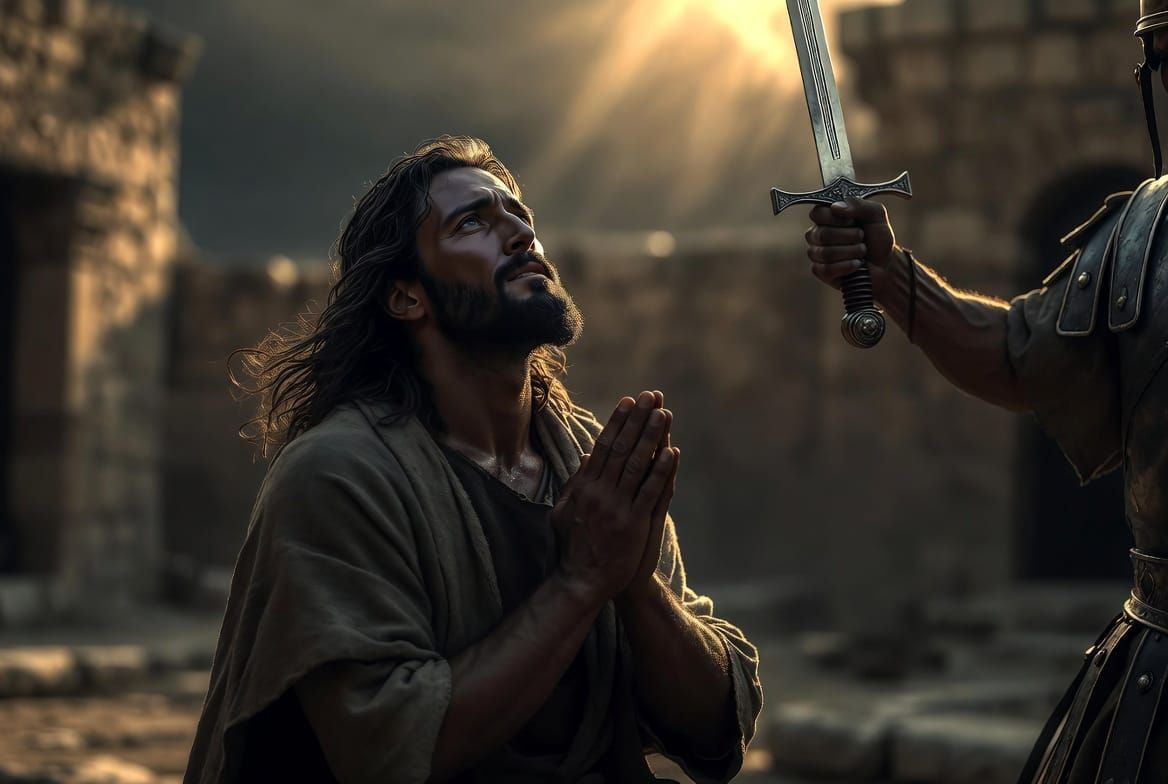
July 25: Saint James. First among the Twelve to be martyred. Acts 12:2 gives him two verses. The man who was at the Transfiguration, who slept in Gethsemane, who asked for the seat of honor — gone in a subordinate clause. This is what drinking the cup looks like.
Feast Day: July 25
The Anglican calendar is ordered by a hierarchy of holy days, each carrying a different weight of observance. At the top sit the seven Principal Feasts, the highest days of the liturgical year. Below them are the Red-Letter Holy Days, appointed in the BCP 2019 with their own collects, propers, and lectionary readings, listed on page 688. They are called Red-Letter Days because, in the tradition of printing church calendars, these days appear in red ink, distinguished from the Optional Commemorations which appear in ordinary type. The Feast of Saint James the Apostle, observed on July 25, is one of these Red-Letter Holy Days. The BCP 2019 appoints a collect on page 630 and lectionary readings on page 731 for this feast.
July 25 falls in the Season after Pentecost, three days after the Feast of Mary Magdalene. The juxtaposition is worth holding: Mary Magdalene bore witness over decades; James was the first of the Twelve to drink the cup he claimed he could drink. Two very different patterns of faithfulness appear in the same week of Ordinary Time. The Season after Pentecost is the season of formation, and the Church is given in one week a woman who bore witness long and a man who bore witness briefly, and told in both cases: this is what faithfulness looks like.
James son of Zebedee is distinct from James the brother of Jesus, who led the church in Jerusalem and is honored on October 23, and from James son of Alphaeus. He is the James of the inner circle, one of the three, with Peter and John, who witnessed the Transfiguration, the raising of Jairus's daughter, and the agony in Gethsemane. He and his brother John were called Boanerges, Sons of Thunder, by Jesus himself. He was the first of the Twelve to be martyred, and the New Testament dispenses with his death in a single sentence.
The Biblical Portrait
James first appears in the Gospels being called from his fishing boat on the Sea of Galilee. Jesus sees him and his brother John mending their nets with their father Zebedee, and calls them. "Immediately they left the boat and their father and followed him." (Matthew 4:22, ESV) He is among the first called, one of the Twelve appointed, and one of the three chosen for the inner circle. He was there when the Lord was transfigured on the mountain, when Jairus' daughter was raised from the dead, and when Jesus prayed in agony in Gethsemane. He is one of the disciples who is with Jesus from the very beginning to the very end of his public ministry.
The appointed Gospel is Matthew 20:20–28, the request of the mother of Zebedee's sons. She comes to Jesus and kneels before him, asking that her sons James and John be given the two highest seats in the Kingdom: one at the right hand and one at the left. Jesus turns to the brothers and asks: "You do not know what you are asking. Are you able to drink the cup that I am to drink?" (Matthew 20:22, ESV) They answer without hesitation: we are able. And Jesus says: "You will drink my cup, but to sit at my right hand and at my left is not mine to grant, but it is for those for whom it has been prepared by my Father." (Matthew 20:23, ESV) James and John answered boldly, not knowing that the cup Jesus offered them was first the cup he himself would drink to the dregs in Gethsemane and on Calvary. Within fifteen years of that conversation, James was dead. He drank the cup. He was the first of the Twelve to do so.
The New Testament records his death with no ceremony, no speech, no last words. Acts 12:1–2: "About that time Herod the king laid violent hands on some who belonged to the church. He killed James the brother of John with the sword."(Acts 12:1–2, ESV) That is all. Two verses. The first apostolic martyr among the Twelve dispatched in a subordinate clause. Luke's narrative moves immediately to Peter's arrest, Herod's plan, the angel, the prison, the escape. James' death is the occasion for what follows, not the focus. The man who had been at the Transfiguration, who had heard the Father's voice from the cloud, who had slept in Gethsemane, who had asked for the seat at the right hand, he is gone in a sentence. This is what drinking the cup looks like in the Acts of the Apostles.
The Cup
The cup is the passage's controlling image, and it runs through the whole of Jesus' ministry to its center in Gethsemane. In the Old Testament the cup of God is the cup of his wrath against sin, the cup that must be drunk, the suffering that cannot be avoided, the cost that the holy God has appointed for the sin of the world. When Jesus asks the disciples "are you able to drink the cup that I am to drink?" he is not asking whether they can handle a difficult situation. He is asking whether they can walk into the suffering that following him will cost. And when he prays in Gethsemane, "My Father, if it be possible, let this cup pass from me; nevertheless, not as I will, but as you will" (Matthew 26:39, ESV); the cup he is asking to avoid is the same cup he told the brothers they would drink.
The connection between Matthew 20 and Matthew 26 illuminates both passages. The request for the seats of honor looks foolish until we realize that James and John are asking, unknowingly, to share in the Lord's own cup. They answer "we are able" without knowing what they are saying yes to. Jesus does not correct them or mock their confidence. He accepts their word and tells them the truth: you will drink my cup. He does not say: you are wrong about your ability. He says: you will be given the opportunity to prove it. And James was.
The mother's request in Matthew 20 is also the occasion for Jesus' teaching on authority in the Kingdom: "You know that the rulers of the Gentiles lord it over them, and their great ones exercise authority over them. It shall not be so among you. But whoever would be great among you must be your servant, and whoever would be first among you must be your slave, even as the Son of Man came not to be served but to serve, and to give his life as a ransom for many." (Matthew 20:25–28, ESV) The collect for James' feast is built directly on this passage: that spirit of self-denying service, by which they may have true authority among your people. The greatest in the Kingdom serves. The first among the Twelve to die was among the first to be called, and the call and the cup belong together.
The Appointed Readings
The lectionary for the Feast of James is found on page 731 of the BCP 2019. Jeremiah 45:1–5 is among the most searching passages in the prophetic literature. Baruch, Jeremiah's secretary, is exhausted: "Woe is me! For the Lord has added sorrow to my pain. I am weary with my groaning, and I find no rest." (Jeremiah 45:3, ESV) And God's answer is not comfort but confrontation: I am breaking down what I have built and plucking up what I have planted. And then the word that speaks directly to the mother of Zebedee's sons and to every disciple who has ever wanted the seat of honor: "And do you seek great things for yourself? Seek them not." (Jeremiah 45:5, ESV) The consolation God offers Baruch is not greatness but survival: your life I will give you as a prize of war in all places to which you may go. James did not get that consolation. But the word about not seeking great things is the word that the whole of Matthew 20 is pressing.
Psalm 7:1–11 is a psalm of trust in God the righteous judge, cried out from a place of being hunted: "O Lord my God, in you do I take refuge; save me from all my pursuers and deliver me." (Psalm 7:1, ESV) The psalm of the one who trusts God's vindication while surrounded by those who wish him harm is the appropriate prayer for the feast of the man who was killed by a king. James did not live to see Herod's judgment, Acts 12 records that the angel struck Herod down and he was eaten by worms, but the psalm expresses the posture that makes it possible to drink the cup: not defiance but trust, not the demand for immediate vindication but the confidence that the righteous judge will judge.
Acts 11:27–12:3 places James' martyrdom in the context of a thriving, prophetically gifted, generous Church that is nonetheless under mortal threat from political power. The same community that sends relief to the brothers in Judea, that welcomes prophets from Jerusalem, that lives in the fullness of the Spirit's gifts, is the community from which Herod seizes and kills the apostle. The Church's vitality and the apostle's death occur in the same passage. James' feast does not invite sentimentality about suffering. It invites honesty: faithful, Spirit-filled, generous Christian communities are not exempt from the cup.
The BCP 2019 Collect and Preface
The BCP 2019 appoints the following collect for July 25 on page 630: "O gracious God, your servant and apostle James was first among the Twelve to suffer martyrdom for the Name of Jesus Christ: Pour out upon the leaders of your Church that spirit of self-denying service, by which they may have true authority among your people; through Jesus Christ our Lord, who lives and reigns with you and the Holy Spirit, one God, now and for ever. Amen." The collect names James by the distinction that defines his feast, first among the Twelve to suffer martyrdom, and then turns immediately to the application: pour out on the leaders of the Church that spirit of self-denying service. The connection is exact. James is not honored primarily as a great teacher, a miracle worker, or a theologian. He is honored as a martyr whose martyrdom was the fulfillment of his call. He was sent. He served. He died. The collect asks that those who lead the Church today would be shaped by the same spirit, not the spirit that seeks the seat of honor but the spirit that drinks the cup.
The Preface of the Apostles, found on page 155 of the BCP 2019, is appointed for this feast: "Through the great shepherd of your flock, Jesus Christ our Lord; who after his resurrection sent forth his apostles to preach the Gospel and to teach all nations; and promised to be with them always, even to the end of the ages." (BCP 2019, p. 155) James was sent. He preached. He was promised the Lord's presence to the end of the ages, and the end of the ages came for him in Jerusalem under Herod. The shepherd who sent him was with him. The preface does not promise safety. It promises presence. That is enough, the feast of July 25 insists. It was enough for James.
Saint James in Anglican Worship
Red vestments are worn on the Feast of James, honoring him as a martyr, the first of the Twelve to be martyred, killed by the sword at the order of Herod Agrippa I, probably in AD 44. The feast has been observed in the Western Church since ancient times and was retained in the Anglican calendar at the Reformation. The BCP 2019 continues this tradition with full Red-Letter status.
The feast falls three days after Mary Magdalene in the middle of the Season after Pentecost. The two saints together in the same week present the Church with the full range of faithful witness: the long life and the short life, the woman who bore witness for decades and the man who bore witness for fifteen years, the resurrection's first witness and the apostolate's first martyr. The ordinary season is interrupted twice in one week to show that the Kingdom's harvest takes every shape, and that faithfulness to the cup is the measure of both.
Observing the Feast
The Feast of Saint James the Apostle falls on July 25 and always lands in the Season after Pentecost. The collect is on page 630 of the BCP 2019 and the lectionary readings are on page 731. Red vestments are worn.
To observe the feast: pray the collect and let its petition for leaders land honestly, the spirit of self-denying service, not the spirit that seeks the seat of honor. Read Matthew 20:20–28 and hear the question Jesus asks the brothers: are you able to drink the cup that I am to drink? They answered without knowing what they were saying. James found out. Read Acts 12:1–2 and let the two verses be what they are: the whole of his martyrdom, stated plainly, without ceremony. Read Jeremiah 45 and receive the word God spoke to Baruch: do you seek great things for yourself? Seek them not. That word was not given to discourage faithfulness but to redirect ambition toward the only thing that lasts.
Let the feast of the first apostolic martyr do what it is designed to do: press the question of the cup. Every follower of Jesus has been told, in one form or another, the same thing James was told: you will drink my cup. The feast of July 25 is the Church's annual examination of whether it is ready to answer as James answered, and whether those who answered are ready to follow where he led.
Conclusion
The Feast of James is the shortest biography in the apostolic calendar. He was called from the boat, he was given the cup, he drank it, and he was gone, in a subordinate clause of Acts 12, before the church he helped to build had finished its first generation. The collect does not dwell on his death. It turns immediately to the living: pour out on the leaders of the Church that spirit of self-denying service, by which they may have true authority. James' martyrdom is not an ending to be mourned but a pattern to be received. He was first. He will not be last. And the ones who lead the Church after him are asked to carry the same spirit into their own cup, whatever form it takes.
"O gracious God, your servant and apostle James was first among the Twelve to suffer martyrdom for the Name of Jesus Christ: Pour out upon the leaders of your Church that spirit of self-denying service, by which they may have true authority among your people." (BCP 2019, p. 630)