The Feast of the Virgin Mary, Mother of Our Lord Jesus Christ: An Anglican Perspective
August 15: the Virgin Mary. The BCP says simply: you have taken to yourself the blessed Virgin Mary. The manner of her taking is not defined. The fact of God’s gracious reception is affirmed. Anglican honor rests on what Scripture says plainly: she is the mother of the incarnate Son.
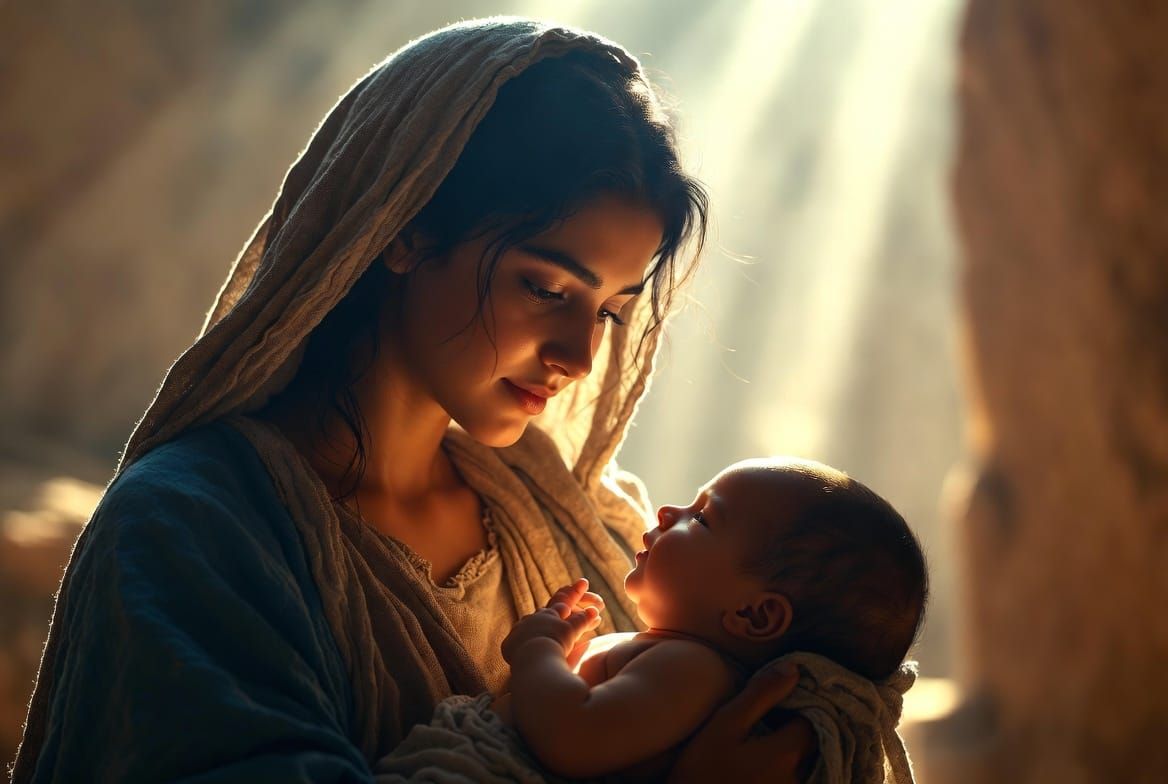
Feast Day: August 15
The Anglican calendar is ordered by a hierarchy of holy days, each carrying a different weight of observance. At the top sit the seven Principal Feasts, the highest days of the liturgical year. Below them are the Red-Letter Holy Days, appointed in the BCP 2019 with their own collects, propers, and lectionary readings, listed on page 688. They are called Red-Letter Days because, in the tradition of printing church calendars, these days appear in red ink, distinguished from the Optional Commemorations which appear in ordinary type. The feast of the Virgin Mary, Mother of Our Lord Jesus Christ, observed on August 15, is one of these Red-Letter Holy Days. The BCP 2019 appoints a collect on page 631 and lectionary readings on page 731 for this feast.
August 15 falls in the Season after Pentecost, typically in the week of Proper 14 or 15, shortly after the Transfiguration. The long green season that forms the Church in the ordinary disciplines of discipleship is interrupted on August 15 by the one who, of all human beings, was most formed by what God was doing. The Magnificat, Mary's own song, appointed as the Gospel for this feast, is the first Easter proclamation before there was an Easter: the mighty brought down from their thrones, the humble exalted, the hungry fed, the proud scattered. She sang it before she knew how it would be accomplished. The feast of August 15 honors the woman who said yes before she knew the full cost of what she was saying yes to.
What August 15 Is
The name the BCP 2019 gives this feast is precise and deliberate: the Virgin Mary, Mother of Our Lord Jesus Christ. Not the Assumption. Not the Dormition. The feast is named for who Mary is, virgin, mother of the Lord, not for any particular event at the end of her life.
In the Roman Catholic tradition, August 15 is the Feast of the Assumption, defined as dogma in 1950: the teaching that Mary was taken body and soul into heaven at the end of her earthly life. In the Eastern Orthodox tradition, August 15 is the Feast of the Dormition, the falling asleep of the Theotokos, her entry into the rest of God before her bodily glorification. Both traditions celebrate something specific about what happened to Mary at the end of her life. The BCP 2019 does neither. Its collect says simply: you have taken to yourself the blessed Virgin Mary. The manner of her taking is not defined. The fact of God's gracious reception of her is affirmed. The Anglican feast holds that affirmation without specifying its doctrinal content.
This is not evasion. It is the Anglican way of honoring the fact that Scripture does not record the end of Mary's earthly life, and that the Church is not required to define what Scripture does not reveal. The honor given to Mary on August 15 rests not on a doctrine about her death but on what the Scriptures plainly say: she is the mother of the incarnate Son of God, she bore him in her body, she nursed him and raised him, she stood at the cross, and she was present in the upper room at Pentecost. That is enough to justify a feast. The BCP 2019 rests the observance there.
Mary in Scripture
The New Testament's portrait of Mary is both more prominent and more restrained than popular piety has sometimes recognized. She appears at the Annunciation in Luke 1, where Gabriel tells her she will conceive and bear the Son of the Most High. Her response, "Behold, I am the servant of the Lord; let it be to me according to your word" (Luke 1:38, ESV), is the defining statement of her life. Everything else that follows, from the manger to the cross to the upper room, flows from this single act of radical receptive obedience. She does not fully understand what is happening. The angel has told her something about the child she will bear; she has not been told about Simeon's sword, about the flight to Egypt, about the wedding at Cana, about the cross. She says yes to what she has been told and entrusts the rest to God. That is the faith the feast of August 15 honors.
She appears at the Visitation, when she carries the Lord's presence to Elizabeth and the child in Elizabeth's womb leaps at her greeting. She appears at the Nativity, where she ponders all the things the shepherds say and holds them in her heart. She appears at the Presentation, where Simeon takes the child, blesses God, and says to Mary: "a sword will pierce through your own soul also." (Luke 2:35, ESV) She appears at the finding in the temple, where the twelve-year-old Jesus tells her he must be about his Father's business, and she does not understand. She appears at Cana, where she tells the servants whatever he says to do, do it. She stands at the cross in John's Gospel, where the Lord gives her into the keeping of the Beloved Disciple. And she is present in Acts 1:14, gathered with the apostles in prayer in the upper room before Pentecost. Scripture's portrait of Mary is of a woman who is present at every decisive moment and who consistently does the same thing: she receives, she holds, she obeys, and she waits.
The Nicene Creed, which the Church confesses at every Eucharist, names Mary in its account of the Incarnation: the Son "by the Holy Spirit was incarnate of the Virgin Mary, and was made man." This is the Church's ecumenical, conciliar affirmation about Mary: she is the one in whose body the eternal Son took flesh. The Eastern Church's title Theotokos, God-bearer, was defended at the Council of Ephesus in AD 431 not to exalt Mary but to protect the doctrine of the Incarnation: the child she bore is truly God. Anglicanism affirms the Theotokos in this sense. The feast of August 15 is, at its heart, a feast of the Incarnation.
The Appointed Readings
The lectionary for the feast is found on page 731 of the BCP 2019. Isaiah 61:10–11 opens with the soul exulting in the Lord: "I will greatly rejoice in the Lord; my soul shall exult in my God, for he has clothed me with the garments of salvation; he has covered me with the robe of righteousness, as a bridegroom decks himself like a priest with a beautiful headdress, and as a bride adorns herself with her jewels." (Isaiah 61:10, ESV) The imagery of salvation as clothing, of joy as the garment of the redeemed, is the Old Testament ground of the Magnificat's own exultation. Mary's soul magnifying the Lord in Luke 1 is this Isaiah text made particular: the soul clothed with salvation, rejoicing in what God has done.
Psalm 34 is the psalm of the one who sought the Lord and was delivered: "Oh, magnify the Lord with me, and let us exalt his name together!" (Psalm 34:3, ESV) The invitation to magnify the Lord together is the psalm's refrain and the Magnificat's title: Magnificat anima mea Dominum, My soul magnifies the Lord. The psalm and the canticle share the same verb, the same posture, the same movement from personal deliverance to communal praise. Both know that the one who sought the Lord was not put to shame.
Galatians 4:4–7 is Paul's summary of the Incarnation's purpose: "But when the fullness of time had come, God sent forth his Son, born of woman, born under the law, to redeem those who were under the law, so that we might receive adoption as sons." (Galatians 4:4–5, ESV) Paul does not name Mary. He says only: born of woman. But the feast of August 15 is the feast of the woman from whom the Son was born. She is the one whose body the fullness of time required, whose yes made the Incarnation possible in the way it happened, whose flesh became the flesh of the Word made flesh. The Epistle names the Incarnation's logic; the feast honors the one whose body carried it.
The appointed Gospel is Luke 1:46–55, the Magnificat. Mary has just received the angel's announcement and traveled to her cousin Elizabeth. Elizabeth greets her with the Spirit-filled declaration: blessed are you among women, and blessed is the fruit of your womb. And Mary sings: "My soul magnifies the Lord, and my spirit rejoices in God my Savior, for he has looked on the humble estate of his servant." (Luke 1:46–48, ESV) The Magnificat is the Old Testament's entire theology of reversal compressed into twelve verses: the proud scattered, the mighty brought down, the humble exalted, the hungry fed, the rich sent away empty. It is Hannah's song extended. It is the Psalms of the poor distilled. It is sung by a teenager in the hill country of Judea who does not yet know how the reversal will be accomplished, but who already knows that God has begun it, because she carries its instrument in her body.
The BCP 2019 Collect and Preface
The BCP 2019 appoints the following collect for August 15 on page 631: "O God, you have taken to yourself the blessed Virgin Mary, mother of your incarnate Son: Grant that we, who have been redeemed by his blood, may share with her the glory of your eternal kingdom; through Jesus Christ our Lord, who lives and reigns with you, in the unity of the Holy Spirit, one God, now and for ever. Amen." The collect is structured around the Incarnation. Mary is identified entirely by her relationship to the incarnate Son: she is his mother. The petition asks that those redeemed by his blood may share with her the glory of the eternal kingdom. The collect does not ask for Mary's intercession. It does not attribute to her any mediatorial role. It holds her up as a fellow recipient of the redemption accomplished by her Son's blood, and asks that the Church may share what she has already received. The movement is from the Incarnation to the blood of the cross to the glory of the kingdom, the whole arc of salvation in two clauses.
The Preface of Christmas, found on page 152 of the BCP 2019, is appointed for this feast: "Because you gave Jesus Christ, your only Son, to be born for us; who, by the Holy Spirit and the Virgin Mary his mother, was made truly man, yet without the stain of sin, that we might be cleansed from sin and given the right to become your children." (BCP 2019, p. 152) The appointment of the Christmas Preface on August 15 is the BCP's clearest statement about what this feast is. By giving the feast the Christmas Preface, the BCP grounds the entire August 15 observance in the Incarnation. The preface names Mary by name, by the Holy Spirit and the Virgin Mary his mother, was made truly man, in exactly the terms the Nicene Creed uses. The feast of August 15, whatever the calendar history of the day, is being observed in the BCP 2019 as a feast of the Incarnation and of Mary's role within it. The Christmas Preface in August is a theological statement, not a liturgical accident.
The Feast in Anglican Worship
White vestments are worn on the Feast of the Virgin Mary, appropriate to her honor as the mother of the Lord and as a confessor, one who bore witness to Christ through a lifetime of faith rather than through martyrdom. The feast has been observed in the Western Church since the seventh century and was retained in the Anglican calendar at the Reformation, though with the deliberate removal of the Assumption's specific doctrinal content. Every edition of the Book of Common Prayer has included August 15, and the BCP 2019 gives it full Red-Letter status.
The Magnificat, appointed as the Gospel for this feast, is also one of the canticles of Evening Prayer in the BCP 2019, appointed for regular use at the Daily Office. The feast of August 15 provides a natural occasion to preach the Magnificat in its full biblical and theological context: the Old Testament theology of reversal that it carries, the personal faith that underlies its public proclamation, and its status as the longest speech by any woman in the New Testament.
The feast falls in the middle of the Season after Pentecost, nine days after the Transfiguration and six weeks before Holy Cross Day. August in the liturgical calendar is dense with theological content: the Transfiguration on the 6th, this feast on the 15th. The Church's formation in the ordinary season is twice interrupted in one month by events that press to the center of what the Gospel is: the glory of the Son and the faith of the mother who bore him.
Observing the Feast
The feast of the Virgin Mary, Mother of Our Lord Jesus Christ, falls on August 15 and always lands in the Season after Pentecost. The collect is on page 631 of the BCP 2019 and the lectionary readings are on page 731. White vestments are worn.
To observe the feast: pray the collect and receive its movement, from the Incarnation to the blood of the cross to the glory of the kingdom. Read the Magnificat in full, Luke 1:46–55, and let it be what it is: the first great Christian hymn, sung before the cross, before the resurrection, before Pentecost, by the woman who carried in her body the one who would accomplish all of them. Read Galatians 4:4–5 and hear the fullness of time: born of woman. Read Isaiah 61:10 and hear the soul clothed with salvation exulting in God.
Let the feast honor Mary for what Scripture gives her: the obedience of the Annunciation, the faith of the Visitation, the pondering heart of the Nativity, the presence at the cross, the waiting in the upper room. The collect asks that we may share with her the glory of the eternal kingdom. August 15 is the day the Church turns toward that kingdom and gives thanks for the woman through whose body it entered the world.
Conclusion
The Feast of the Virgin Mary on August 15 is the Anglican calendar's annual honoring of the one whom all generations shall call blessed. The BCP 2019 honors her without defining what cannot be defined, celebrates her without elevating her beyond what Scripture warrants, and grounds her feast entirely in the Incarnation of her Son. The collect asks for what it can ask with confidence: that those redeemed by his blood may share with her the glory of the eternal kingdom. The feast of August 15 holds all three together.
She said yes. He was born. We were redeemed.
"O God, you have taken to yourself the blessed Virgin Mary, mother of your incarnate Son: Grant that we, who have been redeemed by his blood, may share with her the glory of your eternal kingdom; through Jesus Christ our Lord." (BCP 2019, p. 631)