The Season of Easter: An Anglican Perspective
The Season of Easter is fifty days, not one Sunday. The calendar insists on this: the resurrection is not a doctrine to be acknowledged but a reality to be inhabited. From the empty tomb through the Ascension to the fire of Pentecost — one continuous act of worship.
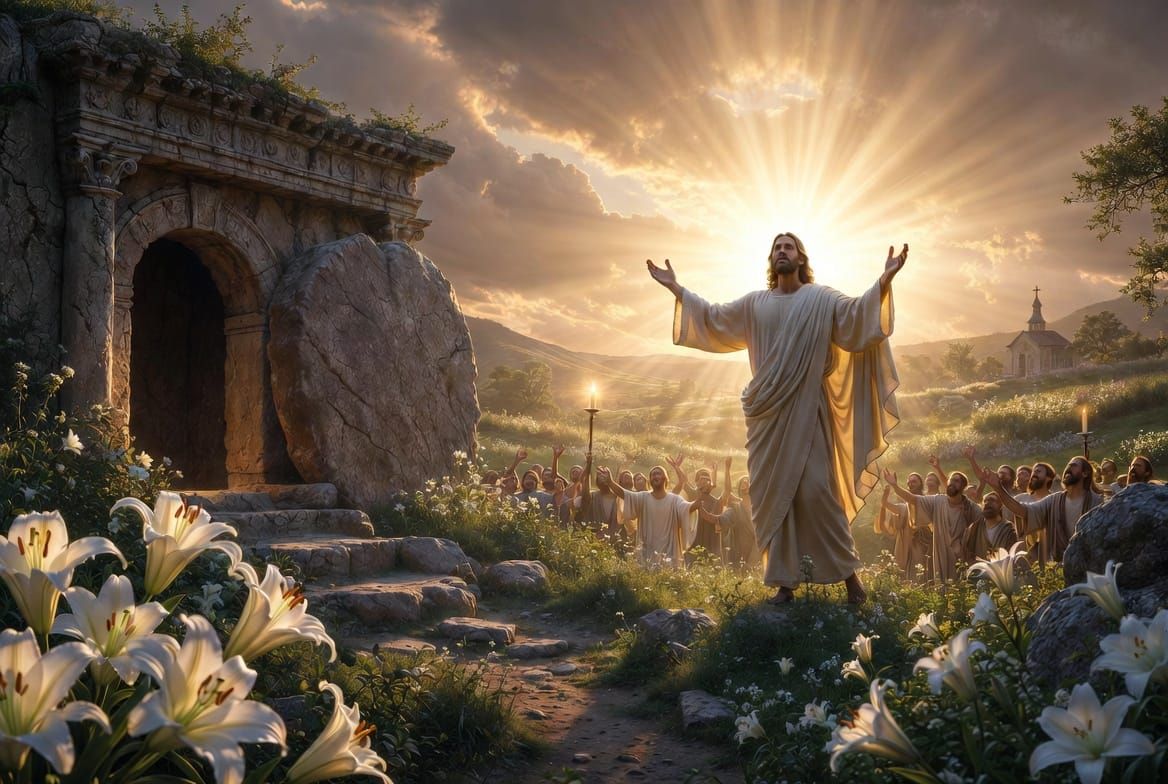
The Great Fifty Days, Easter Day through the Day of Pentecost
The Season of Easter, often called the Great Fifty Days or Eastertide, is the Church’s sustained celebration of the Resurrection of Jesus Christ. It begins on Easter Day and reaches its fiftieth day on the Day of Pentecost. The BCP 2019 itself speaks of “the 50 days of Eastertide” and exempts them from the ordinary Friday fasting encouraged during the rest of the year. (BCP 2019, p. 689)
The Great Fifty Days are among the most ancient patterns of Christian festal observance. The Church does not celebrate the Resurrection intensely for one Sunday and then quietly return to ordinary life. Easter Day opens a season longer than Lent’s forty days, carrying the Church from the empty tomb through the appearances of the risen Christ, his Ascension to the Father’s right hand, the apostles’ days of prayerful waiting, and finally the outpouring of the Holy Spirit at Pentecost.
The season is therefore not a single note held for seven weeks but a sustained unfolding of what the Resurrection means. Christ has risen, and the risen Lord forms and commissions his witnesses before ascending to reign at the Father’s right hand. He does not abandon his Church but fulfills his promise to send the Holy Spirit, and at Pentecost the apostolic witness moves publicly toward the nations as the Great Fifty Days reach their culmination.
Fifty Days of Resurrection Joy
The length of Easter is itself a theological statement. Lent gives the Church forty days of preparation, penitence, fasting, and self-examination. Easter answers with fifty days of festal joy. The Christian calendar therefore refuses to let penitence have greater weight than the victory toward which penitence was always directed.
This does not mean that Christians cease repenting during Easter or that the Christian life becomes temporarily free from suffering. Repentance remains part of Christian existence, and the Easter lectionary itself contains persecution, rejection, martyrdom, and costly discipleship. What changes is the governing accent of the season. The Church lives openly and deliberately in the victory already accomplished by Christ.
The BCP makes that festal character visible even in its fasting discipline. It encourages the weekdays of Lent and every Friday of the year as days of fasting, but specifically excludes the twelve days of Christmas and the fifty days of Eastertide from the ordinary Friday fast. Rogation Days, which occur immediately before Ascension Day, may still be kept with fasting and special prayer, so Easter joy should not be reduced to a prohibition against every form of bodily discipline. Nevertheless, the ordinary weekly fast yields during Easter to the feast of the risen Lord. (BCP 2019, pp. 689–690)
The Structure of the Season
The Easter season has a clear internal movement. The early weeks remain close to the empty tomb and the appearances of the risen Jesus. The Church hears of frightened disciples, locked doors, Thomas’s confession, recognition of the Lord, and the transformation of those who had scattered during the Passion into witnesses of the Resurrection.
The Second Sunday of Easter is especially anchored in John 20 and the appearance of Christ to the disciples and Thomas. Its Collect asks that those who have been reborn into the fellowship of Christ’s Body may “show forth in their lives what they profess by their faith.” (BCP 2019, p. 612) Easter faith therefore moves immediately toward Easter life. The Church that confesses that Christ has risen is called to live as a people made new by him.
The Fourth Sunday of Easter is Good Shepherd Sunday. The Collect prays that when Christ’s people hear his voice, they may know the one who calls them each by name and follow where he leads. (BCP 2019, p. 612) The risen Christ is not merely a figure from a completed biblical story. He is the living Shepherd of his Church.
The Sixth Sunday of Easter is Rogation Sunday, immediately preceding the traditional Rogation Days of Monday, Tuesday, and Wednesday before Ascension Day. The Church asks God’s blessing upon the work of human hands and the fruits of the earth even while preparing to celebrate Christ’s Ascension. Easter joy therefore remains grounded in ordinary creaturely life: fields, labor, provision, vocation, and dependence upon God.
Ascension Day falls on the fortieth day of Easter, the Thursday of the sixth week. The Seventh Sunday then stands between the Ascension and Pentecost, giving the Church a brief liturgical experience of the apostles’ prayerful waiting. The fifty days finally culminate on Pentecost, when the promised Spirit is poured out upon the gathered disciples.
The Easter Lectionary
The Sunday lectionary for Easter is found principally on pages 723–725 of the BCP 2019. One of its most distinctive features is the prominence of the Acts of the Apostles. During the Sundays of Easter, Acts regularly occupies the place normally given to an Old Testament lesson, so the season that proclaims the Resurrection simultaneously follows the emergence of the apostolic Church as a public witness to the risen Christ.
The effect is important. In the Gospels the disciples encounter the risen Lord; in Acts those same disciples become witnesses. Peter, who denied Jesus in the courtyard, now proclaims him publicly. The apostles who fled during the Passion speak with boldness before rulers and crowds. The Resurrection has not merely given them a new idea. They have encountered the living Christ and have been commissioned to testify to what God has done.
The Gospel readings also carry the Church from the Resurrection appearances into the teaching that prepares Christ’s disciples for life after his Ascension. John has a particularly prominent place. As the weeks progress, readings from the Farewell Discourse draw attention to Christ’s commandment of love, the coming of the Holy Spirit, abiding in Christ as branches in the vine, and the life of the Church in the world.
The Epistle readings give each lectionary year its own Easter texture. Year A draws substantially from 1 Peter, which blesses God for causing his people to be “born again to a living hope through the resurrection of Jesus Christ from the dead.” (1 Peter 1:3, ESV) Year B draws from 1 John, with its emphasis on the incarnate Son, love, obedience, assurance, and fellowship with God. Year C draws from Revelation, opening Easter toward its eschatological fulfillment in the worship of the Lamb, the new creation, and the final victory of God.
Easter therefore moves from event to consequence without ever leaving the event behind. The Resurrection remains the foundation, while the lectionary asks what sort of Church must exist because Jesus Christ is alive.
Resurrection and New Life
The Easter season never treats the Resurrection as something that happened only to Jesus and left his people unchanged. The New Testament repeatedly joins the Resurrection of Christ to the new life of Christians.
Paul tells the Colossians, “If then you have been raised with Christ, seek the things that are above, where Christ is.”(Colossians 3:1, ESV) Romans connects Baptism directly to the Paschal mystery: “We were buried therefore with him by baptism into death, in order that, just as Christ was raised from the dead by the glory of the Father, we too might walk in newness of life.” (Romans 6:4, ESV)
This new life does not originate in Christian determination. God acts first in Christ’s death and Resurrection, and the Holy Spirit joins sinners to the risen Lord and gives life. Christian obedience follows from grace received rather than serving as the means by which resurrection life is earned.
That order appears repeatedly in the Easter Collects. The Church asks God to enable the baptized to show forth what they profess, to follow the Good Shepherd, to know Christ as the way, truth, and life, to love what he commands, and to live within the grace already given. Easter is therefore not simply fifty days of saying that Jesus lives. It is fifty days of learning what it means to belong to the living Jesus.
Ascension Within Easter
Ascension Day is not the end of Easter but one of its great climactic moments. Forty days after Easter Day, the Church celebrates the bodily Ascension of the risen Christ. The Lord who rose from the tomb does not simply disappear from the story. He ascends in our humanity, is enthroned at the Father’s right hand, and reigns as Lord.
The BCP Collect on page 613 prays, “Almighty God, whose only-begotten Son our Lord Jesus Christ ascended into heaven: May our hearts and minds also there ascend, and with him continually dwell.” The Ascension therefore does not mean abandonment. Christ’s ordinary visible presence among his disciples comes to an end, but the risen and ascended Lord reigns from the Father’s right hand, intercedes for his people, and fulfills his promise to remain with his Church.
The distinction matters. Christian hope is not that Jesus remains bodily located everywhere on earth as he was among the disciples before the Ascension. His true humanity has ascended. Yet neither is the Ascension a story about Christ becoming absent from his people. He reigns, intercedes, sends the Spirit, and is present with his Church according to the means and promises he has given.
The Easter season therefore holds Resurrection and Ascension together. The One who came out of the tomb is the One who now reigns. Easter joy matures into confidence in the enthroned Christ.
Waiting for the Promise
After the Ascension comes a brief interval that is easy to overlook. Acts tells us that the apostles returned to Jerusalem and devoted themselves to prayer as they waited for the promised Holy Spirit. The Seventh Sunday of Easter inhabits that period between Christ’s Ascension and Pentecost.
This waiting is very different from the waiting of Holy Saturday. On Holy Saturday the Church attends to the burial of Christ before the Resurrection is proclaimed. After the Ascension, the apostles already know that Jesus is risen and enthroned. Their waiting rests upon a promise.
That distinction gives Christian waiting its proper character. The Church does not wait for God as though nothing decisive has yet happened. Christ has died, Christ is risen, and Christ has ascended. The people of God wait for the fulfillment of promises made by the victorious Lord.
This is a useful pattern for the whole Christian life. We live between accomplishment and consummation. The decisive victory has been won, yet not everything promised has reached its final fulfillment. Easter trains the Church to live faithfully within that tension.
Pentecost: The Fiftieth Day
The word Pentecost comes from the Greek pentēkostē (pen-tay-kos-TAY), meaning “fiftieth.” Pentecost is therefore not an unrelated feast appended to the end of Easter. Its very name identifies it as the fiftieth day.
Acts 2 describes the disciples gathered together when a sound like a mighty rushing wind fills the house, tongues as of fire rest upon them, and they begin speaking in other languages as the Spirit enables them. Jews from many nations hear the mighty works of God proclaimed in their own tongues. Peter then stands and announces that what they are witnessing fulfills the prophetic promise of the outpouring of the Spirit.
Pentecost should not be described as though the Church had no existence before that morning. Jesus had already called disciples, appointed apostles, instituted the Eucharist, commanded Baptism, and gathered a people around himself. Yet Pentecost is rightly understood as a decisive manifestation and empowering of the Church for its mission to the nations. The risen and ascended Christ pours out the promised Spirit, and the apostolic witness moves outward with new power.
The Great Fifty Days therefore end not by turning attention away from Christ but by revealing another fruit of his victory. The Christ who rose and ascended pours out the Spirit upon his people.
The BCP 2019 Collects
The BCP provides unusually rich Collects throughout Easter. Easter Day begins on page 609, Easter Week receives daily Collects on pages 610–611, the Sundays of Easter continue through pages 612–613, Ascension Day and the Sunday after Ascension are included there, and Pentecost appears on page 614.
The Easter Day Collect gives the season its foundational grammar by praying to the God who, “through your only-begotten Son Jesus Christ overcame death and opened to us the gate of everlasting life,” and asking that those who celebrate the Resurrection may, “by your life-giving Spirit, be delivered from sin and raised from death.” (BCP 2019, p. 609) God has acted in Christ; the Church asks to receive the saving fruit of that action.
The Collect for the Third Sunday of Easter develops the same grace-centered pattern. It remembers that God gave his Son to be “both a sacrifice for sin and an example of godly living,” and then asks for grace both to receive his “inestimable benefits” and to follow his holy life. (BCP 2019, p. 612) Benefit comes before imitation. Christ first saves; those who have received his grace are then called to follow him.
The Easter Collects therefore resist two opposite errors. They do not reduce Resurrection faith to a doctrine acknowledged without consequence, but neither do they turn Easter into a program of moral improvement. The risen Christ gives life, and those made alive in him are called to walk accordingly.
The Easter Preface
The Preface of Easter on page 154 gives the season one of its clearest theological summaries. The Church praises God for “the glorious resurrection of your Son Jesus Christ our Lord,” confessing Christ as the true Paschal Lamb “who was offered for us, and has taken away the sin of the world,” and then declaring that “by his death [he] has destroyed death, and by his rising to life again has won for us everlasting life.”
The Preface holds Cross and Resurrection together. Easter joy is not a victory celebration detached from Good Friday. The risen One is the Paschal Lamb who was offered for sinners. His death destroys death, and his Resurrection opens everlasting life.
The BCP appoints the Preface of Easter through the Easter season until Ascension Day, when the proper Preface of the Ascension takes its place for that feast and the days following. The change does not interrupt the Paschal proclamation. It develops it. The risen Christ is now confessed as the ascended and reigning Lord.
Easter in Anglican Worship
The liturgical color of the Easter season is white, expressing Resurrection joy, light, victory, and glory. White begins at the Great Vigil when the Church crosses from the restraint of Holy Saturday into Easter. It continues through the Easter Sundays and Ascension, while particular Holy Days within the season may bring their own appointed colors. Pentecost is red, visually marking the fire and outpouring of the Holy Spirit.
The Paschal Candle is another of Easter’s most visible signs. Lit at the Great Vigil, it should, according to the BCP, be lit “for all principal services throughout the season of Easter.” It is also traditionally used at Baptism and the Burial of the Dead throughout the year. (BCP 2019, p. 595) The symbolism is especially rich because Baptism and Christian burial both derive their hope from union with the crucified and risen Christ.
Some Anglican parishes extinguish the Paschal Candle after the Gospel on Ascension Day and subsequently keep it near the font. That is a venerable ceremonial custom, but it should be distinguished from the BCP 2019’s actual rubric, which directs that the Candle be lit at principal services throughout the Easter season. The Prayer Book itself therefore allows the light of the Paschal Candle to continue bearing witness through the Great Fifty Days.
The Alleluia also returns prominently after its Lenten absence in many parishes. Its restoration at Easter expresses the movement from penitential restraint into praise. The Church has not discovered a happier religious mood. She has received news: Jesus Christ is risen from the dead.
Baptism and Easter
The connection between Easter and Holy Baptism is ancient and theological rather than merely seasonal. The Great Vigil is one of the BCP’s especially appropriate occasions for Baptism, together with Pentecost, All Saints’ Day or the Sunday following, and the Baptism of Our Lord.
The reason is clearest at Easter. The BCP’s introduction to the Great Vigil says that Holy Baptism is the Sacrament through which candidates are united to the death and Resurrection of Jesus Christ. The sacrament therefore places the Christian directly within the Paschal proclamation. We do not merely watch Christ pass through death into life; by grace we are united to him.
That language must remain carefully ordered. Jesus is not “born again” from the tomb as though he required the regeneration sinners require. He is the sinless Son who conquers death. We are the ones who need new birth. Through Baptism we are united to the crucified and risen Christ and received into the life he alone gives.
The Easter season therefore provides a natural time for the baptized to remember not merely the promises they made but the grace that preceded those promises. Baptism begins with God’s action, and Christian discipleship is the life that follows from his gift.
Holy Days Within the Season
Several important Holy Days may occur during Eastertide. Saint Mark the Evangelist falls on April 25, and Saint Philip and Saint James on May 1. The Visitation of the Blessed Virgin Mary on May 31 also falls within Easter in years when Pentecost is sufficiently late. Ascension Day itself is one of the seven Principal Feasts and always occurs within Easter, on the fortieth day.
These feast days do not distract from the Resurrection. Properly observed, they show its fruit in the life and witness of the Church. Apostles and evangelists proclaim the risen Lord, Mary’s Visitation belongs to the biblical story that leads to Christ, and Ascension Day reveals the destination of the risen Lord’s earthly appearances: he reigns at the Father’s right hand.
Observing the Season
The Season of Easter begins on Easter Day and culminates on the Day of Pentecost. Counted inclusively, these are the Great Fifty Days, encompassing Easter Day, the six Sundays that follow it, and Pentecost on the fiftieth day. The BCP provides the principal seasonal Collects on pages 609–614 and the Easter lectionary on pages 723–725.
To observe Easter well, resist the cultural habit of treating Easter as a single Sunday and continue the feast by following the Sunday readings through Acts and the Gospel of John. Pray the Collects and notice how steadily they move from the fact of the Resurrection toward the life that flows from it. Let the Paschal Candle, the white of the season, and the restored Alleluia remind you that Lent was preparation for a feast that is meant to endure.
Observe Ascension Day rather than allowing a Thursday feast to disappear between Sundays. Christ’s Ascension is not an embarrassing departure from the Easter story but part of its fulfillment. He rises, ascends, reigns, and sends the Spirit.
Then allow Pentecost to complete the Great Fifty Days. The season that began with disciples discovering an empty tomb ends with those disciples proclaiming the mighty works of God in the power of the Holy Spirit. The fearful become witnesses, not because they have discovered hidden reserves of courage, but because the risen and ascended Lord has fulfilled his promise.
Conclusion
The Season of Easter is the Church’s annual immersion in the reality of the Resurrection. Fifty days insist that Easter is too large for a single morning. The risen Christ appears to his disciples, forms them through his Word, ascends to the Father’s right hand, and pours out the promised Holy Spirit upon his people. The Church learns not only to proclaim Christ is risen, but to inhabit the world that his Resurrection has created.
The season’s joy is therefore neither denial nor sentimentality. Good Friday remains true. Christ truly suffered and died. Holy Saturday remains true. His body truly lay in the tomb. But those truths now stand within the greater announcement that the Crucified One lives. Death could not hold him, his sacrifice is complete, he reigns, and those who belong to him possess a living hope.
The Preface of Easter gives the season its proper confession when it praises Christ as “the true Paschal Lamb, who was offered for us, and has taken away the sin of the world,” and declares that “by his death [he] has destroyed death, and by his rising to life again has won for us everlasting life.” (BCP 2019, p. 154) The Great Fifty Days give the Church time to receive that truth until Resurrection joy begins to shape the way Christians live.