Are You Able? Saint James the Apostle (Matthew 20:20-28)
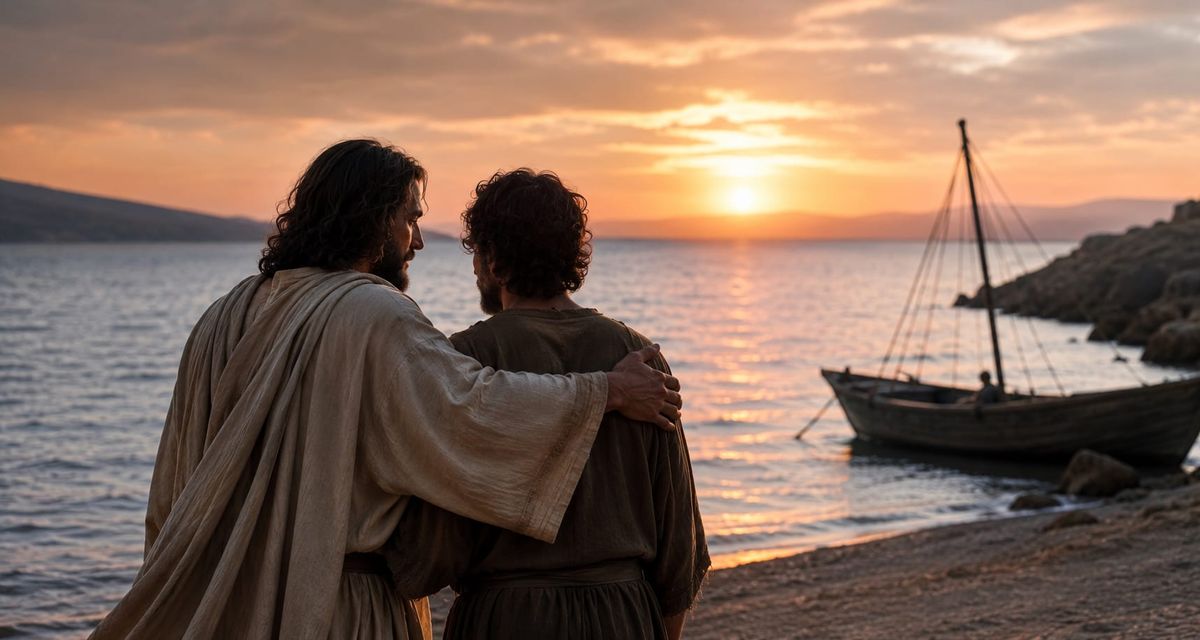
The calling already contained the cup. When Jesus said, “Follow me,” beside the Sea of Galilee, he was not offering James a safe career. He was calling James into his own path. The boat, the Transfiguration, Gethsemane, the correction, the service, and Herod’s sword belong to one discipleship.
July 25, 2026, Saint James the Apostle, Red-Letter Holy Day, Season after Pentecost
Matthew 20:20-28; Psalm 7:1-11; Acts 11:27-12:3; Jeremiah 45:1-5
Grace, mercy, and peace from God our Father and the Lord Jesus Christ be with you on this feast of Saint James the Apostle.
Three days ago the Church commemorated Saint Mary Magdalene. She came to the tomb in the dark, heard her name spoken by the risen Lord, and carried the news of the resurrection to the disciples. Today the Church remembers James son of Zebedee, one of the Twelve and the man the Prayer Book identifies as first among them to suffer martyrdom for the Name of Jesus Christ. Mary tells the disciples, “I have seen the Lord.” James’s death is given to us with remarkable brevity. Herod Agrippa I “killed James the brother of John with the sword.” (Acts 12:2, ESV) He is gone from the New Testament in a sentence while Luke’s narrative moves on to Peter’s arrest and deliverance. The Church receives both witnesses, and neither the visibility nor the length of a ministry is the measure of its faithfulness.
James first appears in the Gospels being called from his fishing boat alongside his brother John. Jesus gives the brothers a name in Mark 3:17: Boanerges (boh-ah-NEHR-gays), Sons of Thunder. The name fits. They are zealous and impulsive, and at one point they are ready to call fire down from heaven upon a Samaritan village that refuses to receive Jesus. James is also among the three disciples present at several of the defining moments of Jesus’s ministry: the raising of Jairus’s daughter, the Transfiguration, and the agony in Gethsemane. He has seen more than most disciples ever saw, and still he does not yet understand what following Jesus will cost.
Our Gospel reading gives us the moment when the question is put directly. Verse 20 tells us that the mother of the sons of Zebedee comes to Jesus with her sons and kneels before him. She asks that James and John receive the two highest places in the kingdom, one at Jesus’s right hand and one at his left. Then Jesus turns to the brothers. Verse 22: “You do not know what you are asking. Are you able to drink the cup that I am to drink?” They answer without hesitation: “We are able.”(Matthew 20:22, ESV)
They mean more than they understand. They have left their boats. They have followed Jesus. They have seen his power and heard his teaching. They believe he is the King. But they are still imagining the kingdom according to the shape of earthly kingdoms. They want the places nearest the throne. They want honor. They want significance. They want the seat before they understand the cup.
The cup in Matthew 20 becomes unmistakable in Gethsemane. There Jesus prays, “My Father, if it be possible, let this cup pass from me; nevertheless, not as I will, but as you will.” (Matthew 26:39, ESV) The cup is suffering. It is obedience when obedience becomes costly. It is the path that leads through rejection and death. Jesus tells James and John that they will drink his cup, but we must hear that promise carefully. They will share in the sufferings that come from belonging to him, but they will never drink the cup in precisely the same sense Jesus does.
At the end of our Gospel, Jesus says that “the Son of Man came not to be served but to serve, and to give his life as a ransom for many.” (Matthew 20:28, ESV) That belongs uniquely to Christ. His suffering saves. His death atones. His blood redeems. James’s blood does not redeem the Church. Christ’s does. James’s martyrdom is witness, not atonement; response, not redemption. Before James drinks the cup, Jesus drinks it first, and he drinks the saving cup that no disciple could ever drink in his place.
There is grace in that order. James does not eventually prove himself worthy by becoming courageous enough to die. Before James gives his life because he belongs to Christ, Christ gives his life for James. Before James stands beneath Herod’s sword, Christ bears the judgment of sin upon the Cross. James’s faithfulness grows out of the grace of the Lord who called him, corrected him, formed him, and gave himself for him.
Verse 23 tells us that Jesus says, “You will drink my cup.” (Matthew 20:23, ESV) James does not yet understand what he is saying, but Christ will form him into the man who finally lives those words. The Son of Thunder will be changed, and Jesus does not accomplish that by abandoning him when he gets things wrong. James wants fire called down on Samaritans, and Jesus rebukes him. James wants the seat of honor, and Jesus teaches him about the cup. James sleeps in Gethsemane when Jesus tells him to watch, and Jesus does not cast him away. Christ keeps forming the man he called.
That is good news for us because Christ still calls unfinished people. We sometimes imagine that God will really be able to use us after our motives are purified, after our faith is stronger, after the rough edges are gone, after we are finally the kind of Christians we think we ought to be. But Jesus called James from the boat before any of that work was finished. The calling itself became part of the means by which Christ formed him.
Then verse 24 tells us that the other ten disciples hear what James and John have asked and become indignant. Their indignation hardly suggests that they are free from the same desire for greatness. James and John have said aloud what all of them still need Jesus to correct. So Jesus calls all of them together because the lesson is for the whole Church.
Verse 25 says, “You know that the rulers of the Gentiles lord it over them, and their great ones exercise authority over them.” Then verse 26: “It shall not be so among you.” (Matthew 20:25-26, ESV) Jesus does not abolish authority. He changes its shape. “Whoever would be great among you must be your servant, and whoever would be first among you must be your slave.” (Matthew 20:26-27, ESV) Then he gives himself as the pattern: “even as the Son of Man came not to be served but to serve.” (Matthew 20:28, ESV)
This is why the Collect for Saint James is so important. It asks God to pour out upon the leaders of the Church “that spirit of self-denying service, by which they may have true authority among your people.” True authority. The Prayer Book does not oppose service to authority. It teaches that authority becomes true authority when it is shaped by self-denying service. That matters for bishops, priests, deacons, vestries, ministry leaders, parents, teachers, employers, and anyone else entrusted with responsibility. Christian leadership is not pretending we have no authority. It is exercising whatever authority God has entrusted to us according to the pattern of Christ.
The world asks how much power we can gather around ourselves. Jesus asks how much of ourselves we are willing to spend for the good of others. The mother asked for the seats without asking about the path. Jesus answered with the path.
Jeremiah 45 gives us the same truth from another direction. Baruch has served as Jeremiah’s scribe. In Jeremiah 36, he writes the prophet’s words and reads them publicly when Jeremiah himself cannot go into the house of the LORD. By Jeremiah 45, Baruch is weary. He says, “Woe is me! For the LORD has added sorrow to my pain. I am weary with my groaning, and I find no rest.” (Jeremiah 45:3, ESV)
God answers him with a question: “And do you seek great things for yourself? Seek them not.” (Jeremiah 45:5, ESV) That question belongs beside Matthew 20. Baruch hears, “Do not seek great things for yourself.” James and John seek the seats. Jesus gives them the cup. In both readings, the Lord turns us away from greatness we can possess and toward faithfulness that serves.
That does not mean Christians should aspire to uselessness or bury the gifts God has given them. We should want the Gospel proclaimed. We should want the Church strengthened. We should want our gifts used faithfully and fruitfully. The question is whether we seek those things for Christ’s glory and the good of his people, or whether somewhere beneath them we are still looking for the seat.
Jesus does not tell James that greatness is meaningless. He tells him what greatness in the kingdom looks like. The greatest is the servant. The first is the slave. The King is the one who gives his life.
Then Acts shows us where Christ’s formation eventually leads James. Acts 12:1-2 says, “About that time Herod the king laid violent hands on some who belonged to the church. He killed James the brother of John with the sword.” (Acts 12:1-2, ESV) That is nearly all Luke gives us. No final sermon. No account of James’s demeanor before death. No carefully preserved farewell. The man who stood on the mountain of Transfiguration disappears from the narrative in a sentence.
There is something deeply Christian about that brevity. The significance of a faithful life does not depend upon how much history records afterward. No New Testament epistle is attributed to James son of Zebedee, and Acts preserves no missionary sermon from his ministry. Long before Acts gives us the sentence of his death, the Gospel had already given us the shape of his life: Jesus called, and James followed. The whole biography of Saint James the Apostle can almost be contained in those two words: he followed.
The wider context matters as well. Luke places James’s death immediately after an account of a living, generous, Spirit-gifted Church sending relief to believers in Judea. The Church is active, generous, and serving, and then Herod kills James. Faithfulness and suffering stand beside one another in the same narrative. Spirit-filled Christian life is not an exemption from the cup.
Then Acts gives us something even more unsettling. Peter is arrested next, but Peter is delivered. An angel comes. Chains fall away. The gate opens. James receives the sword; Peter receives an escape. Acts does not tell us why, and that matters because we are always tempted to turn faithfulness into a formula. If we pray enough, obey enough, believe enough, or serve enough, perhaps God will arrange the outcome we want.
James and Peter stand next to one another in Acts 12 and refuse that formula. Both belong to Christ. Both are apostles. One is delivered from death for a time. The other is permitted to die in faithful witness. The promise is not that every servant of Christ will be spared suffering. The promise is that the servant belongs to Christ in the suffering.
That is why Psalm 7 is so fitting for this feast. The Church places this prayer beside James’s martyrdom: “O LORD my God, in you do I take refuge; save me from all my pursuers and deliver me.” (Psalm 7:1, ESV) The psalmist is threatened by enemies and entrusts judgment to the righteous God rather than seizing vengeance for himself. Herod has the sword, but Herod is not the final judge.
Acts later records Herod’s death and then says, “But the word of God increased and multiplied.” (Acts 12:24, ESV) James does not live to see that reversal. Faith does not always receive the explanation or the vindication before death. Sometimes faith entrusts the outcome to God and dies before seeing what God will do next.
For most Christians, the cup will not look like Herod’s sword. Sometimes it is much quieter. It may be the long obedience no one notices, caring for someone through years of illness, serving faithfully when the visible fruit is small, telling the truth when silence would be easier, or forgiving when resentment feels more satisfying. It may mean continuing to pray for someone who seems no closer to Christ than when we began, or holding fast to the Christian confession when that confession is unwelcome.
The cup may also look like faithful ministry in a small congregation, praying for people who do not respond, showing up week after week with everything we have and seeing little visible fruit. It may be accepting that the work God has given us is ordinary, hidden, and unlikely to receive much recognition. The cups are different, but the Lord is the same, and the question remains: “Are you able?”
The wise answer is not a boast about our strength. We know too much about ourselves for that. James was not strong enough in himself. The disciples who argued about seats and slept in Gethsemane were not strong enough in themselves. Our hope rests somewhere else. The one who asks us to follow has already gone ahead. The one who gives us the cup has already drunk the cup no one else could drink.
Christ’s cup saves us. The cups we receive in following him form us. That is where Christian courage comes from, not from believing we are stronger than we are, but from knowing Christ is stronger than we are.
The calling already contained the cup. When Jesus said, “Follow me,” beside the Sea of Galilee, he was not offering James a safe career. He was calling James into his own path. The boat, the Transfiguration, Gethsemane, the correction, the service, and finally Herod’s sword belong to one discipleship. Jesus did not promise James a platform. He promised him a cup. James drank it, not because he became another Christ, but because he belonged to Christ.
That is why the Collect does not leave James beneath Herod’s sword as though the purpose of the feast were simply to admire a dead apostle. It turns immediately toward the living Church: “Pour out upon the leaders of your Church that spirit of self-denying service.” The feast is not merely a memorial for the dead. It is a commission for the living.
Three days ago the Church heard Mary Magdalene say, “I have seen the Lord.” Today Acts gives us James’s death in a sentence. The Church receives both witnesses. One speaks from the empty tomb; the other disappears beneath the sword of a king. Scripture does not measure faithfulness by how many words are preserved about a life, how visible the ministry becomes, or how much history remembers afterward. The size of the cup is not the measure of the faithfulness. The drinking is.
Called from the boat, given the cup, gone in a sentence. James wanted the seat before he understood the cup, and Jesus did not abandon him in that misunderstanding. He corrected him, formed him, told him the truth, and brought him all the way to the faithfulness he had once promised more confidently than he understood.
So when Christ asks, “Are you able to drink the cup that I am to drink?” our answer is not a boast about our strength. It is a prayer of trust. By your grace, Lord, make us able. Form in us that self-denying love by which authority becomes true. Keep us faithful in the cup you actually give us, whether public or hidden, dramatic or ordinary. And when following you costs more than we imagined when we first said yes, remind us that you have already gone before us.
Christ drank first. James followed. And by grace, so do we.
In the Name of the Father, and of the Son, and of the Holy Spirit. Amen.