Before Philip Called You, I Saw You: The Feast of Bartholomew the Apostle (John 1:43-51)
August 24: Feast of Bartholomew the Apostle. Before Philip called him, Jesus had already seen him. The collect asks the Church to love what Bartholomew believed and preach what he taught. The kingdom of God does not depend on our prominence.
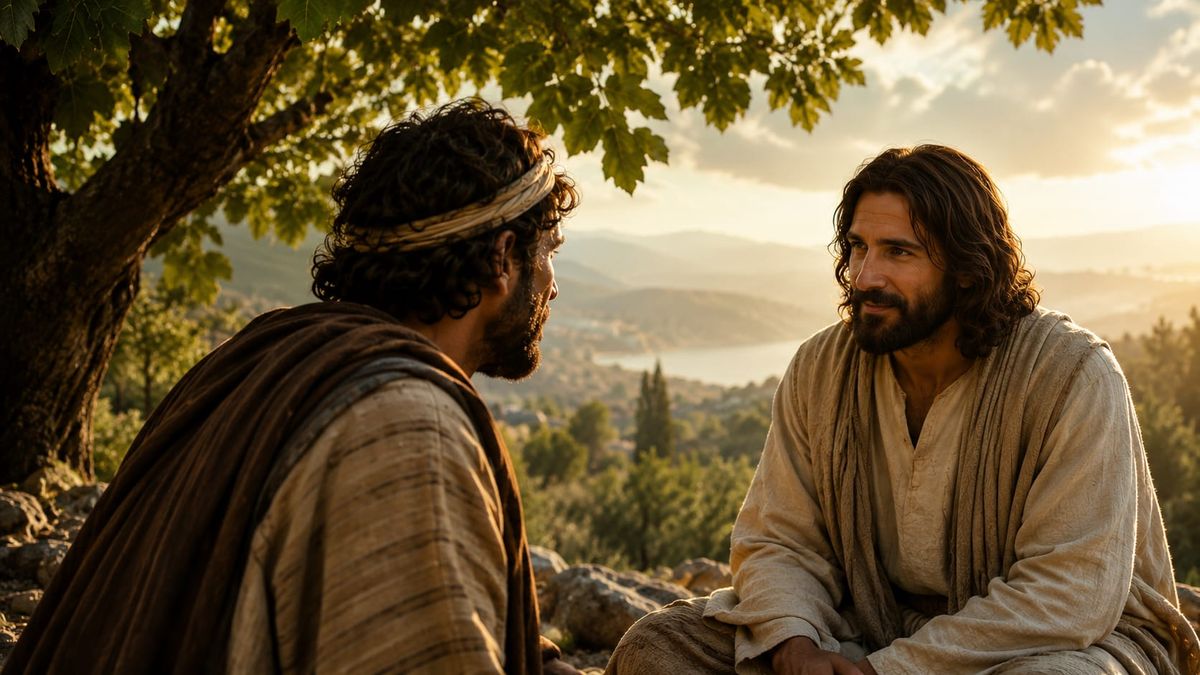
August 24, 2026, The Feast of Bartholomew the Apostle, Season after Pentecost
John 1:43-51, Deuteronomy 18:15-18, Psalm 91, 1 Corinthians 4:9-16, Luke 22:24-30
Grace, mercy, and peace from God our Father and the Lord Jesus Christ be with you on this feast of Saint Bartholomew the Apostle.
The day before this feast, the Church stands at Caesarea Philippi. It hears Peter’s great confession: you are the Christ, the Son of the living God. And on this feast day, the calendar turns immediately to another apostle who made a remarkable confession: you are the Son of God, you are the King of Israel. Peter speaks for the Twelve at Caesarea Philippi. Nathanael speaks for himself, making his confession at the moment he encounters Jesus. The two confessions belong together. The apostolic vocation is not the achievement of a single voice. It is the shared conviction of all who are sent.
Bartholomew is among the most obscure of the Twelve. His name appears in all four apostolic lists, Matthew 10, Mark 3, Luke 6, and Acts 1, always beside Philip. The Gospels give us no individual word or deed from him. He is present. He is numbered. He is sent. The Church remembers Bartholomew precisely because the kingdom of God does not depend upon our prominence.
The Church has long identified Bartholomew with Nathanael of John’s Gospel. The identification is not certain, but it is ancient and widely held. The evidence is suggestive: Bartholomew appears beside Philip in the apostolic lists, while Nathanael is brought to Jesus by Philip, and John never names Bartholomew. If the identification is correct, then Bartholomew has a speaking part and a face, and his face is the one we meet under the fig tree in John 1.
Philip finds Nathanael and says: “We have found him of whom Moses in the Law and also the prophets wrote, Jesus of Nazareth, the son of Joseph.” (John 1:45, ESV) Nathanael’s first response is skepticism: “Can anything good come out of Nazareth?” (John 1:46, ESV) Philip does not argue. He does not produce a list of credentials or craft a winning rhetorical strategy. He says three words: “Come and see.” Those three words are the invitation that has been extended to every skeptic in the history of the Church. Philip’s confidence is not in his own argument. It is in Jesus. He does not need to win the debate. He only needs to bring Nathanael to the one who can answer him.
Nathanael comes. And what happens next is the theological heart of this encounter. Before Nathanael has said a word to Jesus, before he has asked a question or made a confession or demonstrated any qualifications for the apostolate, Jesus speaks first: “Behold, an Israelite indeed, in whom there is no deceit!” (John 1:47, ESV) Nathanael is astonished: “How do you know me?” And Jesus answers: “Before Philip called you, when you were under the fig tree, I saw you.” (John 1:48, ESV)
That sentence is the center of the Bartholomew story, and the center of this sermon. Before Philip called you, I saw you. Before you came to Jesus, he knew you. Before Nathanael arrived with his skepticism and his questions, Jesus had seen him in the private place under the fig tree. We do not know what Nathanael was doing there. We do not know what he was thinking or praying or reading. We know only that Jesus saw him. And that prior seeing, that knowledge that precedes every arrival, is what calls forth the confession.
We tend to imagine faith as our decision to begin looking for God. We were searching, and then we found him. We had questions, and then we found answers. We came looking for Christ, and eventually we discovered Christ. But John’s Gospel gives us a different picture. Nathanael comes to see Jesus, only to discover that Jesus has already seen him. The initiative belongs to Christ.
That does not make Nathanael’s response unimportant. Quite the opposite. Grace does not eliminate our response; grace creates and sustains it. Nathanael really does come. He really does listen. He really does confess. But none of that begins with Nathanael’s achievement. It begins with the strange and wonderful fact that before Nathanael knew Jesus, Jesus knew Nathanael.
That is the Christian confession about grace. We do not make ourselves known to God by becoming sufficiently religious, sufficiently knowledgeable, sufficiently disciplined, or sufficiently worthy. We are already known. We come before the God who knows us completely. And the astonishing thing is that the one who knows us completely still calls us.
That is why Jesus’ words under the fig tree can be both comforting and unsettling. To be fully known means that there is nowhere to hide. Jesus knows the person we present to the world, but he also knows the person who sits alone under the fig tree. He knows the questions we do not ask aloud. He knows the doubts we are embarrassed to admit. He knows the sins we conceal and the wounds we carry. And still he says, “I saw you.”
The Gospel does not say that Jesus saw a perfect man under the fig tree. It says that Jesus saw Nathanael. And that is enough. The grace of Christ does not begin when we become worthy of being seen. It begins with the discovery that we have already been seen.
Nathanael answered: “Rabbi, you are the Son of God! You are the King of Israel!” (John 1:49, ESV) He says it because he has been seen. The one who knows him without being told is the one who deserves the confession. This is the movement the collect names: grace truly to believe. The grace came first. Jesus saw Nathanael before Nathanael came to Jesus. The belief that follows is the response to a grace that has already arrived.
And Jesus continues: “Because I said to you, I saw you under the fig tree, do you believe? You will see greater things than these.” (John 1:50, ESV) Nathanael has come to see, and Jesus tells him that he has not seen the half of what is coming. The invitation to come and see does not end at the fig tree. It opens onto everything: heaven opened, angels ascending and descending on the Son of Man, the whole of what the Gospel will unfold. Come and see is not the conclusion of the invitation. It is the beginning of it.
The Christian life is not a single moment in which we see enough of Jesus to have our questions answered and then move on. It is a lifetime of seeing more. There will be things we do not understand yet. There will be seasons when faith seems clearer and seasons when it seems obscured. There will be questions that remain unanswered. But Jesus does not tell Nathanael that everything has been explained. He tells him that there is more to see.
“Come and see” is not merely an invitation to conversion. It is an invitation to discipleship. Keep coming. Keep looking. Keep following. There are greater things yet to see.
The appointed Old Testament reading is Deuteronomy 18:15–18: “The Lord your God will raise up for you a prophet like me from among you, from your brothers. It is to him you shall listen.” (Deuteronomy 18:15, ESV) Philip’s announcement fits naturally with the promise in Deuteronomy that God would raise up a prophet and that Israel should listen to him. The prophet Moses promised, the one this passage teaches Israel to await, was the one Philip had found in Galilee. The apostolic task begins in the Scriptures of Israel and ends in the proclamation of their fulfillment.
The Epistle appointed for this feast is 1 Corinthians 4:9–16, and it is not comfortable reading for a feast day. Paul writes: “For I think that God has exhibited us apostles as last of all, like men sentenced to death, because we have become a spectacle to the world, to angels, and to men. We are fools for Christ’s sake, but you are wise in Christ. We are weak, but you are strong.” (1 Corinthians 4:9–10, ESV) And verse 13: “We have become, and are still, like the scum of the world, the refuse of all things.” (1 Corinthians 4:13, ESV) Paul is describing the apostolic life in its full and unsanitized cost. He is writing about his own experience, but he is describing what all the apostles know. Later Christian traditions send Bartholomew to places such as India and Armenia, and the traditions concerning his martyrdom differ in their details. What can be said confidently is that the Church remembered him as a faithful apostolic witness. The collect for this feast asks the Church to love what he believed and preach what he taught. The Epistle names what that believing and preaching cost: spectacle, foolishness, weakness, disrepute.
Psalm 91, the appointed psalm, promises the presence of God in trouble, not the absence of trouble. “He who dwells in the shelter of the Most High will abide in the shadow of the Almighty.” (Psalm 91:1, ESV) And verse 15: “When he calls to me, I will answer him; I will be with him in trouble; I will rescue him and honor him.” (Psalm 91:15, ESV) The presence of God in trouble, not the absence of trouble. The honor promised in the psalm is not the honor of earthly prominence. It is the honor of belonging to God, even through trouble. That is the kind of faithfulness the Church remembers in Bartholomew on August 24.
The appointed Gospel is Luke 22:24–30. It begins badly. At the Last Supper, on the night Jesus is about to give himself for the world, the disciples argue about which of them is the greatest. They are concerned with how they are seen. Jesus says: “The kings of the Gentiles exercise lordship over them, and those in authority over them are called benefactors. But not so with you. Rather, let the greatest among you become as the youngest, and the leader as one who serves. For who is the greater, one who reclines at table or one who serves? Is it not the one who reclines at table? But I am among you as the one who serves.” (Luke 22:25–27, ESV)
The world asks, “Who sees me?” The Gospel asks, “Whom will I serve?” The kingdom does not measure greatness by how many people see you. It measures greatness by how faithfully you serve. If Nathanael is indeed Bartholomew, then the man whom Jesus first saw under the fig tree is among those who hear this extraordinary definition of apostolic greatness: not domination, but service. The one who was called by grace is called to serve.
And the promise that follows: “You are those who have stayed with me in my trials, and I assign to you, as my Father assigned to me, a kingdom.” (Luke 22:28–29, ESV) Bartholomew was among those to whom Jesus said, you are those who have stayed with me in my trials. He was present. He was numbered. He was sent. The apostolic vocation runs from the private moment of being seen under a fig tree to the public commission to serve, to preach, and to be with the one who came among us as a servant.
There is a particular mercy in having Bartholomew as an apostle. Most of us will never be Peter. Most of us will never stand before thousands and speak words that are remembered for generations. Most of us will not write books that outlive us. Most of us will live ordinary Christian lives. We will pray. We will worship. We will serve. We will encourage someone who is discouraged. We will teach a child. We will visit someone who is sick. We will give when nobody knows we gave. We will remain faithful when there is no applause.
And the Church gives us Bartholomew to remind us that heaven does not measure faithfulness the way history does. Scripture may give us almost nothing about him, but Christ knew him. The Church remembered him. And he was faithful to the end.
The collect for this feast: “Almighty and everlasting God, you gave your apostle Bartholomew grace truly to believe and to preach your Word: Grant that your Church may love what he believed and preach what he taught.” (BCP 2019, p. 631) Two petitions. Love what he believed. Preach what he taught. The whole apostolic vocation in a single sentence.
Three things the feast of Bartholomew asks of us.
First: receive the grace to believe. The collect does not say that Bartholomew worked up the courage or reasoned his way to the confession. It says he was given grace truly to believe. The adverb is not ornamental. This is the kind of belief that holds when the trials come, the kind that shapes everything, the kind that ends in proclamation. We receive it. When our faith feels thin or our conviction weak, the answer is the same as it was for Nathanael: come to the one who already sees us. He knew us before we arrived. Ask him to reveal himself. And when faith comes, remember that it is his gift, not our achievement.
Second: come and see, and bring others with you. Philip’s confidence was not in his own argument. He did not win a debate with Nathanael or produce evidence that left him with no alternative but to convert. He brought him to Jesus. That is the heart of the Church’s evangelism. We are not required to have the winning argument. We are required to make the invitation. Every person we know is a Nathanael: already seen by Jesus, already known before they arrive. Our task is not to manufacture conviction in them. Our task is to bring them to the one who already knows them and let him say what he said to Nathanael: I saw you.
Third: serve. The apostolic vocation is not the vocation of the prominent or the great. Jesus says at the Last Supper: I am among you as the one who serves. The one who saw Nathanael under the fig tree did not come to be served but to serve and to give his life as a ransom for many. The apostolic life, as Paul describes it, is the life of the spectacle and the refuse, the last and the least. Bartholomew was numbered among the Twelve. He stayed, and he was sent, and the Church remembers him. The feast of August 24 is not about how much we accomplish. It is about whether we believe truly, come to him, and serve in the way of the one who came among us as a servant.
Jesus sees us. Grace comes first. We come and see. We serve.
“Before Philip called you, when you were under the fig tree, I saw you.” (John 1:48, ESV)
“Come and see.” (John 1:46, ESV)
In the Name of the Father, and of the Son, and of the Holy Spirit. Amen.