Blessed Are They: All Saints' Day 2026 (Matthew 5:1–12)
Others raised children, cared for aging parents, worked faithfully, and prayed for neighbors who never knew their names. All Saints’ Day reminds us that the Lord sees the quiet faithfulness the world overlooks, and that the same grace is at work in his people now.
November 1, 2026, All Saints’ Day, Principal Feast, Season after Pentecost
Matthew 5:1–12, Psalm 149, Revelation 7:9–17
Grace, mercy, and peace from God our Father and the Lord Jesus Christ be with you on this All Saints’ Day.
Today we celebrate one of the seven Principal Feasts of the Anglican Church. All Saints’ Day is an occasion for joy, but it can also stir tender memories. We remember Christians who have gone before us, those whose names are familiar throughout the Church and those known chiefly to their families, their friends, and to God. We remember people who taught us the faith, prayed for us, and worshiped beside us.
Why does the Church set aside a day to honor the saints? When we hear the word saint, we may think of Peter and Paul, Mary Magdalene, or the martyrs who gave their lives rather than deny Jesus Christ. We rightly thank God for their faithfulness. But Paul addresses ordinary congregations as saints, even when they struggle with sin and division. The saints are God's holy people, those he has set apart for himself in Jesus Christ.
So we give thanks for the whole company of the redeemed, including countless ordinary believers who lived and died trusting in Christ. We, too, have been called into that same communion. Their holiness was not something they produced independently of God. It was the fruit of his grace, received through faith and worked out in their lives by the Holy Spirit. Some of these saints built churches or carried the Gospel to distant places. Others raised children, cared for aging parents, worked faithfully, and prayed for neighbors who never knew their names. All Saints’ Day reminds us that the Lord sees the quiet faithfulness the world overlooks, and that the same grace is at work in his people now.
That brings us to our Gospel. In Matthew chapter 5, Jesus goes up a mountain and teaches his disciples. His opening words, the Beatitudes, describe the people of his Kingdom. They are not eight commandments by which we make ourselves worthy of God's favor. Jesus pronounces blessing on his people and describes the character his grace produces. The Savior himself perfectly embodies this character. He is the meek and righteous One, the merciful Peacemaker, who suffered for our salvation. His Spirit forms his likeness in those who belong to him.
These blessings are not unrelated observations. The opening verses have a beautiful progression, each flowing naturally into the next. Together they portray someone who knows the mercy of God. We must not mistake this progression for stages that can be checked off, as though poverty of spirit is completed before we begin to mourn, or meekness is mastered before we hunger for righteousness. We will return to these qualities throughout our earthly lives. But Jesus helps us see how deeply they belong together.
In verse 3, Jesus begins, “Blessed are the poor in spirit, for theirs is the kingdom of heaven” (Matthew 5:3, ESV). He begins not with the spiritually accomplished, but with those who recognize their spiritual poverty before God. We cannot save ourselves or establish our righteousness through determination and religious activity. We come with empty hands, and discover that God's mercy is greater than our need.
The Christian life never outgrows dependence upon grace. We may have been Christians for fifty or sixty years, but we need Jesus Christ no less today than when we first believed. And recognizing our spiritual poverty changes how we treat others. When a spouse, friend, or fellow Christian points out that our words were hurtful, we may immediately defend ourselves. But admitting our sin does not threaten our standing before God. Our hope is in Christ's righteousness, not in appearing faultless.
That brings us to verse 4: “Blessed are those who mourn, for they shall be comforted” (Matthew 5:4, ESV). The person who recognizes spiritual poverty grieves over sin. We mourn the ways we have offended God and harmed others. This is not despair but the godly sorrow of repentance. Our pride, bitterness, dishonesty, and failures of love are sins from which we need to turn. Yet our tears cannot atone for them. Christ has done that through his sacrifice on the cross. The Lord who exposes our sin also forgives those who come to him in faith.
There is a difference between being sorry that we were caught, or exposed, and truly mourning what we have done. We may regret an argument because the relationship became uncomfortable, without acknowledging the pride that helped cause it. Repentance moves us beyond self-defense toward confession and reconciliation. It does not earn God's comfort; it is a response to his mercy. Consider how different a simple apology can sound. We can say, "I'm sorry you were upset," which leaves our own conduct untouched. Or we can say, "I was wrong to speak to you that way. Will you forgive me?" The second may be harder to say, but it is the language of someone learning to live in the light of God's forgiveness.
But mourning reaches beyond our personal sins. Sin has brought suffering and death into the world, and on All Saints’ Day many of us remember a spouse, parent, child, or friend whose absence still hurts. Christian faith does not require us to pretend those losses are painless. Jesus wept at Lazarus's tomb. Death is an enemy, and grief is an expression of love.
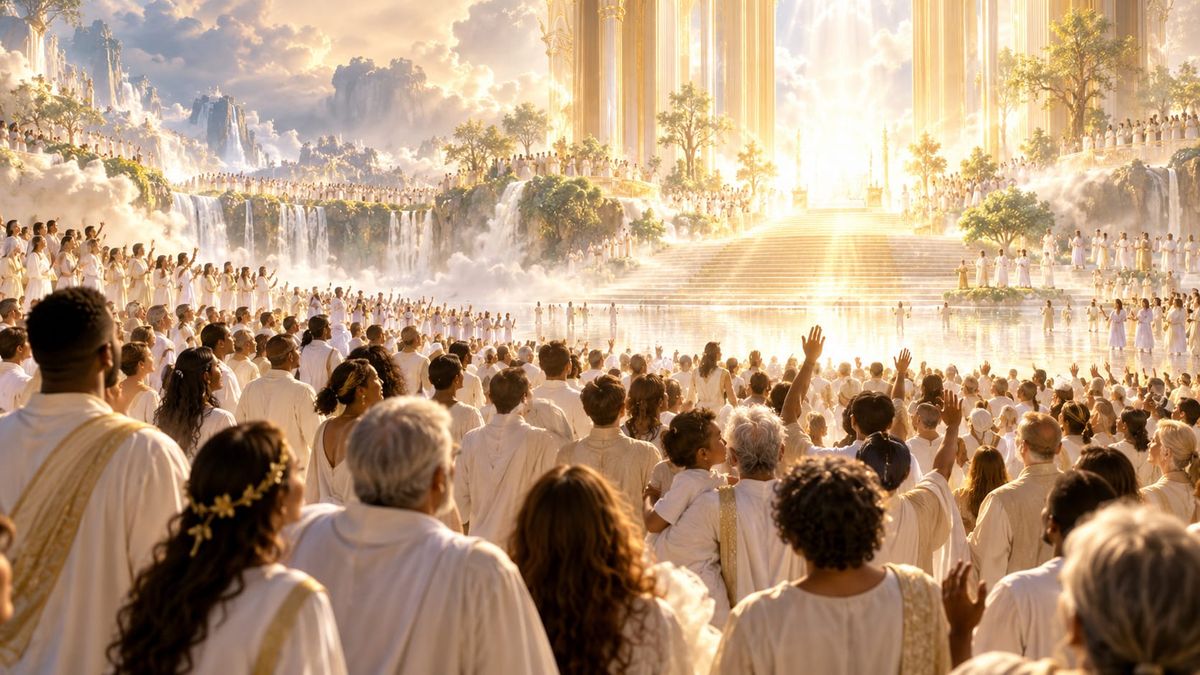
Our Lord promises comfort. In Revelation 7, John sees a great multitude from every nation, tribe, people, and language gathered before God and the Lamb. In verse 17 we hear that “God will wipe away every tear from their eyes” (Revelation 7:17, ESV). That promise points toward the day when Christ will remove every cause of mourning. Our grief is real, but it will not have the final word. This promise does not mean that we know everything about the present condition of the departed, or that every question we have about death can be answered. It means that our Savior knows his people and will not abandon them. The resurrection is not wishful thinking offered to soothe our sadness; it rests upon the victory of Jesus Christ over the grave.
Then in verse 5 Jesus says, “Blessed are the meek, for they shall inherit the earth” (Matthew 5:5, ESV). Notice the connection. Those who recognize their poverty and mourn their sin have little reason for spiritual arrogance. Knowing how much mercy we need should make us humble before God and gentle toward others.
Meekness is not weakness. Jesus describes himself as gentle and lowly, yet he never lacked courage. Meekness is strength governed by humility. Consider how long we can rehearse an offense: someone speaks sharply, overlooks our efforts, or disagrees with us, and we carry the resentment for days. Remembering God's patience with us teaches us that we need not answer every slight with another. And our inheritance does not depend on asserting our importance. God promises his people the renewed creation, the resurrection of the body, and the life of the world to come.
In verse 6 Jesus continues, “Blessed are those who hunger and thirst for righteousness, for they shall be satisfied” (Matthew 5:6, ESV). Our poverty, mourning, and meekness lead us to long for what we cannot produce by our own strength. First we need the righteousness of Christ, received through faith rather than works. And those whom God justifies he also sanctifies. By his Spirit, we begin to desire holiness and to turn from what displeases him. We long, too, for the day when God will put right the injustice and evil that disfigure his creation.
We know this work is unfinished in us. Old habits return, impatience surfaces, and bitterness can take root. But the heart that mourns these failures and longs for righteousness is different from one content to remain in sin as if it weren't that big of a deal. Jesus promises that this hunger will be satisfied. Not because we achieve perfection by effort in this life, but because God will complete his work, bringing his people into resurrection glory.
The next Beatitudes show this same redeemed people from other perspectives. Those who have received mercy become merciful; those humbled by grace seek peace; those belonging to Christ persevere when faithfulness brings opposition. These are not new conditions for entering the Kingdom. They are the fruit of belonging to its King.
In verse 7 Jesus says, “Blessed are the merciful, for they shall receive mercy” (Matthew 5:7, ESV). When someone offends us, we remember that we also stand in need of forgiveness. Mercy does not mean pretending sin is harmless or that every relationship can be easily repaired. It means desiring repentance and restoration rather than enjoying another person's humiliation.
In verse 8 we hear, “Blessed are the pure in heart, for they shall see God” (Matthew 5:8, ESV). God is concerned not only with our outward conduct but with our motives and desires. We might hold our tongue in an argument, yet spend the rest of the day inwardly condemning the other person. The answer is not to conceal our resentment more skillfully. It is to bring our hearts before God in repentance, trusting the Holy Spirit to purify us. And Christ promises that his people shall see God. What we now know by faith will one day be enjoyed in the fullness of his presence.
Then in verse 9 Jesus says, “Blessed are the peacemakers, for they shall be called sons of God” (Matthew 5:9, ESV). Christ has reconciled us to the Father through his cross. His people therefore learn to seek peace rather than cultivate division. Perhaps there is an apology we have avoided or a conversation we need to begin. We seek peace not to purchase God's favor, but because he has already shown us his reconciling mercy. We are first at peace with God because our sins are forgiven and we live out that peace in mercy, forgiveness, grace, and peace with others.
Finally, in verses 10 through 12, Jesus blesses those persecuted for righteousness and for his name. He tells them to rejoice, because their reward is great in heaven. The blessed life is not always comfortable. The prophets suffered, and Christ himself was reviled and rejected. His meekness was not weakness, his mercy was not indifference to sin, and his peacemaking cost him his life. He is more than an example whose standard we must reach. He is our Savior, whose righteousness we receive by faith and whose Spirit conforms us to him.
This is why the Beatitudes belong so naturally to All Saints’ Day. Jesus describes the life of Christ's people as they struggle in this world. Revelation 7 shows the redeemed before God and the Lamb, anticipating the final fulfillment of his promises when Christ raises his people in glory. Those who mourn will be comforted. Those who hunger for righteousness will be satisfied. The pure in heart will see God.
The Church has traditionally spoken of the Church Militant and the Church Triumphant. The Church Militant is the Church still struggling on earth, not against other people but against the world, the flesh, and the devil. We continue to repent, pray, hear God's Word, receive his Sacraments, and persevere in faith. The Church Triumphant is the faithful who have completed their earthly course and now rest in Christ. Their struggle with earthly suffering has ended, but their blessed rest is not yet the final resurrection. Together we await the day when he raises the dead and renews his creation. Calling the departed "triumphant" does not mean that they triumphed by their own strength. Their victory is Christ's victory, shared with those whom he has redeemed. And calling the Church on earth "militant" does not authorize hostility toward our neighbors. Our struggle is to remain faithful to Christ, loving even those who oppose us.
Yet these are not two unrelated churches. It is one church with two campuses: one in heaven, and one here on earth. We are one Body under one Head, Jesus Christ. Those who have died in him have not ceased to belong to him, and neither have they ceased to belong with us to the communion of saints. That fellowship rests on something stronger than memory. It rests upon Christ's saving work.
The Collect for today reminds us that God has “knit together your elect in one communion and fellowship in the mystical Body of your Son.” God is the One who joins us together. We then ask him for grace to follow the saints in virtuous and godly living, that we may come to the joys he has prepared. Even our imitation of their faithful examples depends upon grace. That is why we honor the saints without making them rival mediators. We thank God for his work in them and ask him to form that same faithfulness in us. Their lives point us not toward themselves as the source of salvation, but toward Jesus, who sustained them through every trial.
In a few moments, when we come to the Lord's Table, this communion will be especially meaningful. We will lift up our hearts and join our voices with angels and archangels and all the company of heaven in singing the Sanctus. Our praise here on earth is joined to the worship of heaven.
Think about what that means for us as we gather for worship this morning. We know the faces and voices of the people gathered around us. We also remember those who once worshiped beside us, those whose voices we no longer hear and whose places among us are now empty.
But when we worship, we are not worshiping alone. Our praise is joined to the worship of heaven. We are not calling departed Christians back into our midst, nor are we directing our prayers to them. We are coming to the same living Lord whom they worship, and through him we belong to the same communion.
In the Holy Eucharist, Christ gives us the sacrament of his Body and Blood. We receive by faith the benefits of his once-for-all sacrifice, and he nourishes and strengthens us by his grace. We do not repeat his sacrifice or add anything to the redemption accomplished on the cross. We come to receive his gifts with thanksgiving. This is a foretaste of the fellowship we will enjoy when the whole redeemed people of God are gathered in glory in the Marriage Feast the the Lamb. Think of how our liturgy moves us from the familiar room in which we stand to words of praise that belong to all heaven and earth. We still hear the voices of the people beside us. Yet the Church teaches us that our thanksgiving does not begin and end with this congregation. It belongs to the unending praise of the Lamb.
For those who have buried Christians we love, that is a profound comfort. We cannot see them or hear their voices as we once did. But if they died in Christ, they remain his, just as we are his. The bond he establishes is not broken by death. Their earthly pilgrimage has ended, while ours continues, with all our need for forgiveness, encouragement, and grace.
Some of us can no longer serve in the ways we once did. Strength diminishes, illness limits us, and we may wonder what we can still contribute. But blessedness is not measured by physical strength or worldly achievement. A faithful prayer, a word of encouragement, a willingness to forgive, or a quiet act of love bears witness to God's grace. For those occupied with work and family, holiness likewise appears in ordinary moments: admitting we were wrong, speaking truth when dishonesty would be easier, and patiently loving someone who is difficult.
Our Psalm calls the faithful to sing a new song and rejoice in their Maker and King. In Revelation, John sees the innumerable multitude gathered before the throne and the Lamb. Their praise does not celebrate their achievements. They confess that salvation belongs to God and to the Lamb. Their robes are white because they have been washed in the blood of the Lamb. Their holiness is real, but their hope rests wholly upon Jesus Christ. That is why we can celebrate All Saints’ Day with joy even as we miss those who have died. The center of the feast is not death but the Savior who has overcome it. It is not our ability to remember every name, but the Lord who knows every one of his people and holds them fast.
Brothers and sisters, that is our hope as well. We have not lived without sin, and we cannot save ourselves. But Christ has died for our sins and risen from the grave. When we come to his Table this morning, we belong to a company greater than our eyes can see, joined to the faithful of every generation in him. Together we await the resurrection, when every hunger will be satisfied and every tear wiped away.
So let us give thanks for all the saints, follow their faithful examples by God's grace, and continue our pilgrimage in repentance, faith, and hope. Above all, let us fix our eyes upon Jesus, who has redeemed his people by his blood and will bring them into his everlasting Kingdom.
In the Name of the Father, and of the Son, and of the Holy Spirit. Amen.