Good Shepherd Sunday: An Anglican Perspective
Good Shepherd Sunday invites us to behold Jesus as the loving, sacrificial Shepherd who knows us by name and lays down His life for the sheep. Exploring John 10, Psalm 23, Anglican liturgy, and the call to follow Him, this reflection offers encouragement for every believer this Easter season.
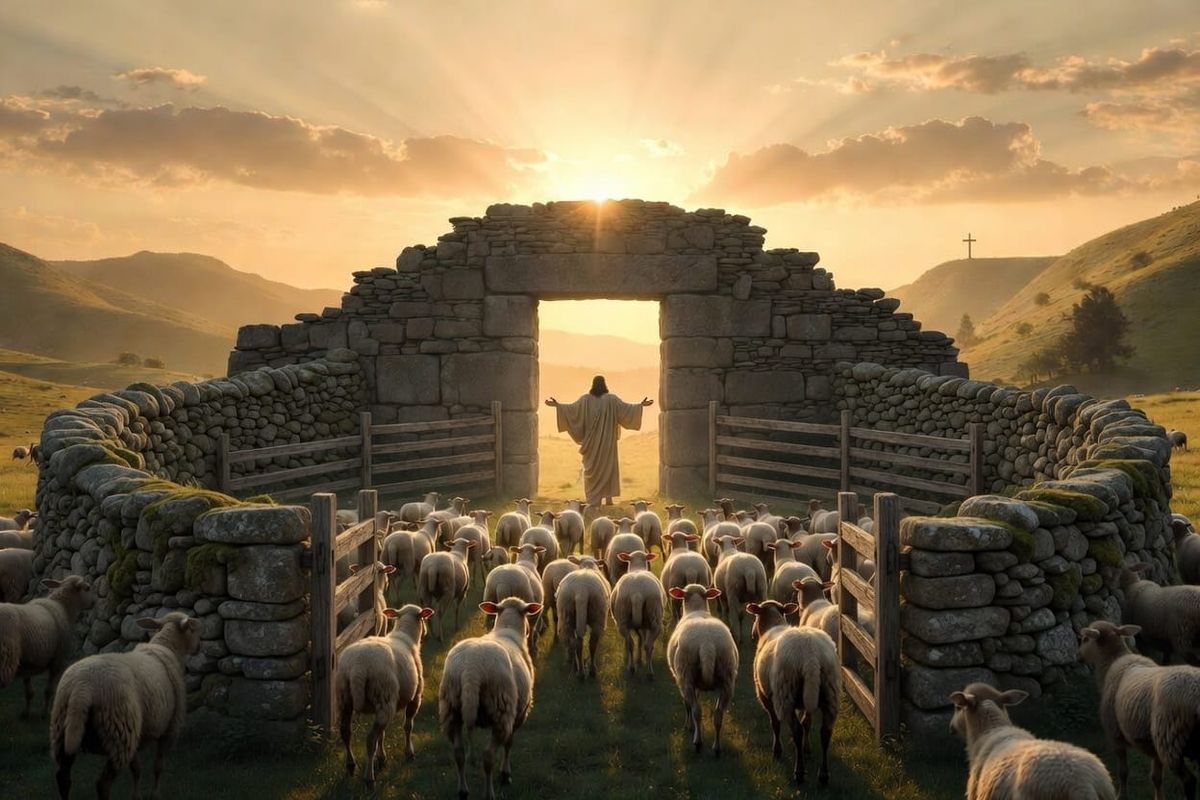
The Fourth Sunday of Easter
The Fourth Sunday of Easter occupies a distinctive place in the Anglican liturgical year. The Anglican calendar is ordered by a hierarchy of holy days, but Good Shepherd Sunday is not a Principal Feast or a Red-Letter Holy Day. It is a Sunday within the Great Fifty Days of Easter, traditionally known as Good Shepherd Sunday. The BCP 2019 itself gives the Fourth Sunday of Easter the designation Good Shepherd and appoints a Collect on page 612 that turns the Church’s attention toward Jesus Christ as “the Good Shepherd of your people.” Across all three years of the Sunday lectionary, the Gospel is drawn from John 10, so the Church returns every Eastertide to the risen Lord as the Shepherd who knows his sheep, calls them, goes before them, gives his life for them, gathers them, and keeps them in his hand.
The name comes from Jesus’ declaration, “I am the good shepherd. The good shepherd lays down his life for the sheep.”(John 10:11, ESV) Good Shepherd Sunday therefore belongs especially well within Easter. The Shepherd is not simply a teacher remembered for caring about his followers. He is the Shepherd who laid down his life and took it up again. The Crucified One is risen, and the one who died for the flock now lives to gather, lead, feed, guard, and finally bring his people home, actively, personally, now.
The Shepherd of Israel
Shepherd imagery runs through the whole of Scripture. Psalm 23 opens with one of the Bible’s most beloved confessions: “The LORD is my shepherd; I shall not want.” (Psalm 23:1, ESV) Israel’s faith was not merely that God behaved somewhat like a shepherd. The LORD himself covenanted to guide, defend, provide for, and dwell with his people.
That imagery becomes especially important in Ezekiel 34. Israel’s human shepherds have failed. They feed themselves instead of the sheep, fail to strengthen the weak, neglect the sick and injured, and allow the flock to scatter. God therefore announces, “Behold, I, I myself will search for my sheep and will seek them out.” (Ezekiel 34:11, ESV) Yet later in the same chapter God also promises, “I will set up over them one shepherd, my servant David, and he shall feed them.”(Ezekiel 34:23, ESV) The promise holds together divine shepherding and the coming Davidic Shepherd.
John 10 brings those promises into focus in Jesus. The Son of David stands before Israel and claims the shepherding work God promised to perform for his scattered people. He knows the sheep, calls them, gathers them, protects them, and gives them life. Good Shepherd Sunday therefore offers more than a comforting pastoral metaphor. It places before the Church a profound claim concerning the identity and saving work of Jesus Christ.
The Good Shepherd
The Greek word translated good in John 10 is kalos (kah-LOSS). It can carry the sense of what is good, noble, beautiful, excellent, or worthy. Jesus is not merely a competent shepherd or one who behaves properly. He is the true and perfect Shepherd, the one in whom everything the shepherd ought to be is fully present.
The decisive mark of his goodness is his willingness to die: “The good shepherd lays down his life for the sheep.” (John 10:11, ESV) Jesus contrasts himself with the hired hand who sees the wolf coming and abandons the flock because the sheep do not belong to him. The Good Shepherd does not flee. He places himself between the flock and death. A few verses later Jesus makes the voluntariness of that gift unmistakable: “I lay down my life that I may take it up again. No one takes it from me, but I lay it down of my own accord.” (John 10:17–18, ESV) The Cross is not an accident that overtakes an otherwise successful ministry. Christ willingly gives himself for his sheep. His death is a voluntary self-offering in obedience to the Father, and his Resurrection reveals that death could not hold the Shepherd who gave himself for the flock. This is why Good Shepherd Sunday belongs so naturally in Eastertide. The Resurrection does not cancel the Cross. It vindicates the crucified Shepherd and reveals his victory over death.
He Knows His Own
Jesus describes the relationship between himself and his people in strikingly personal terms: “I am the good shepherd. I know my own and my own know me, just as the Father knows me and I know the Father; and I lay down my life for the sheep.” (John 10:14–15, ESV)
This is more than the knowledge of a shepherd who has learned to recognize individual animals. Christ knows those who belong to him personally and covenantally. His knowledge of the sheep precedes their following of him. They are not an anonymous mass trying to attract the Shepherd’s attention. They are his own.
The order matters. Jesus does not say that wandering sheep first discover the correct path and thereby persuade him to become their Shepherd. He calls; the sheep hear. He knows; they come to know him. He goes before them; they follow. God is the first mover. The relationship begins with the gracious action of the Shepherd, not with the spiritual initiative of the sheep. That does not make Christian response unreal or unnecessary. Jesus repeatedly speaks of his sheep hearing and following him. But our response is precisely that: response. Grace precedes obedience. The Shepherd calls, gathers, gives life, and leads, and his sheep follow because they have first been addressed by him.
Hearing the Shepherd’s Voice
The BCP Collect makes this one of the central prayers of the day: “Grant that, when we hear his voice, we may know him who calls us each by name, and follow where he leads.” (BCP 2019, p. 612) The movement is from hearing to knowing to following.
This language should not be reduced to the pursuit of private impressions or an inward voice detached from God’s revealed Word. The Shepherd has spoken definitively in Holy Scripture, and his sheep learn his voice by attending to what he has given the Church. Christ addresses his people through the Scriptures proclaimed and taught, through the Gospel faithfully preached, through the Sacraments he instituted, and through pastoral ministry ordered under his Word.
Jesus says, “The sheep follow him, for they know his voice. A stranger they will not follow, but they will flee from him, for they do not know the voice of strangers.” (John 10:4–5, ESV) Knowing the Shepherd’s voice therefore includes discernment. Not every religious claim, cultural pressure, inward desire, or teaching offered in Christ’s name is the voice of Christ. The sheep must know the Shepherd well enough to recognize voices that would lead them away from him, and the Collect consequently asks for grace, not merely attentiveness. We need God to enable us to know the one who calls and to follow where he leads.
The Gate and the Shepherd
Year A appoints John 10:1–10. Jesus first speaks of the shepherd who enters by the door, whose sheep know his voice, and who goes before them. He then declares, “I am the door. If anyone enters by me, he will be saved and will go in and out and find pasture.” (John 10:9, ESV)
The image reinforces the exclusiveness of Christ’s saving work. The sheep do not enter life by finding one of many equally adequate openings into the fold. Jesus himself is the door. Salvation, safety, and pasture are found through him.
Once again, God acts first. The Shepherd does not stand at a distance waiting for sheep to devise a route back into the fold. Christ himself becomes the door and comes that his people “may have life and have it abundantly.” (John 10:10, ESV) The abundant life he gives is not a promise of worldly ease or material prosperity. It is life reconciled to God, life under the Shepherd’s care now, and finally the eternal life over which death has no dominion.
The Shepherd Who Dies for the Sheep
Year B appoints John 10:11–16 and therefore places particular emphasis upon the Shepherd’s sacrificial death. Jesus repeats that he lays down his life for the sheep and contrasts his self-giving care with the hired hand who abandons them when danger arrives.
The language is pastoral, but it is also atoning. The Shepherd does not merely model courage in the presence of danger. He lays down his life for the sheep. His death is on their behalf. The one who saves the flock does so finally by giving himself.
This gives Good Shepherd Sunday a particularly rich relationship with the Proper Preface of Easter. The BCP praises Christ as the true Paschal Lamb who was offered for us and declares that by his death he destroyed death and by his Resurrection won everlasting life. The Shepherd is also the Lamb. He redeems the flock by becoming the sacrifice for sinners. John’s imagery reaches an extraordinary convergence in Revelation: “For the Lamb in the midst of the throne will be their shepherd, and he will guide them to springs of living water.” (Revelation 7:17, ESV) The Lamb who was slain reigns, and the Shepherd who died leads his people into eternal life.
One Flock, One Shepherd
Jesus also says, “I have other sheep that are not of this fold. I must bring them also, and they will listen to my voice. So there will be one flock, one shepherd.” (John 10:16, ESV) The Good Shepherd’s care therefore cannot be reduced to preserving a comfortable religious community already gathered around him.
Christ is gathering a people from beyond the immediate boundaries of Israel. The promise anticipates the Gospel’s movement to the nations and the creation in Christ of one people drawn from Jew and Gentile. The unity of the flock comes finally from the identity of its Shepherd. There is one flock because there is one Christ who gathers and saves it.
The words “I must bring them also” are especially important. Mission begins with Christ’s purpose before it becomes the Church’s activity. The risen Lord has sheep to gather. He sends his apostles and his Church as instruments of that gathering, but the mission belongs first to him. Evangelism is therefore neither the Church’s attempt to manufacture a kingdom nor a religious marketing project. Christ gathers his sheep through the proclamation of his Gospel, and that gives the Church both urgency and confidence. The Gospel must be proclaimed because the Shepherd calls through it, yet the success of the mission does not finally rest upon human ingenuity. Christ knows his own and gathers his flock.
No One Will Snatch Them from His Hand
Year C appoints John 10:22–30, bringing another dimension of the Shepherd’s care into view. Jesus says, “My sheep hear my voice, and I know them, and they follow me. I give them eternal life, and they will never perish.” He then adds, “No one will snatch them out of my hand.” (John 10:27–28, ESV)
The security of the sheep rests ultimately upon the strength of the Shepherd. Jesus does not say that his sheep are safe because they possess sufficient determination never to wander or because their grip upon him can never weaken. They are safe because he gives eternal life and holds them.
He continues, “My Father, who has given them to me, is greater than all, and no one is able to snatch them out of the Father’s hand. I and the Father are one.” (John 10:29–30, ESV) The sheep are held in the hand of the Son and the hand of the Father. Their security is grounded in divine action before it is experienced as human assurance. This promise should not be turned into permission for spiritual complacency, for the sheep hear and follow. Yet Christian perseverance rests beneath a deeper promise: the Shepherd who laid down his life, rose again, and gives eternal life is able to keep those who belong to him.
Psalm 23 and the Shepherd’s Care
Psalm 23 is appointed on Good Shepherd Sunday in Years A and B. Its familiarity can sometimes obscure how comprehensive its promise actually is. The Shepherd provides green pastures and still waters, restores the soul, and leads in paths of righteousness, but the Psalm does not promise that the faithful will remain permanently in pleasant places.
The path passes through “the valley of the shadow of death.” (Psalm 23:4, ESV) The confidence of the Psalm is not that the valley disappears but that the Shepherd remains present within it: “I will fear no evil, for you are with me.” The presence of the Shepherd, rather than the absence of suffering, is the ground of Christian confidence.
The Psalm then moves from pasture to table: “You prepare a table before me in the presence of my enemies.” (Psalm 23:5, ESV) Christian tradition has naturally heard Eucharistic resonance in this image, and Good Shepherd Sunday makes the connection especially fitting. The risen Shepherd who laid down his life for the sheep feeds his Church in the Holy Eucharist. The Shepherd who gave himself for the flock now gives himself as food and drink for the journey. The table is not prepared because every enemy has already disappeared from sight, but in their presence. Christ nourishes his people as they journey toward the house of the Lord.
The BCP 2019 Collect and Proper Preface
The BCP appoints the Collect for the Fourth Sunday of Easter on page 612:
“O God, whose Son Jesus Christ is the Good Shepherd of your people: Grant that, when we hear his voice, we may know him who calls us each by name, and follow where he leads; who, with you and the Holy Spirit, lives and reigns, one God, for ever and ever. Amen.”
The Collect is compact but theologically rich. It begins with God’s gift: his Son is the Good Shepherd of his people. It then asks for grace to hear, know, and follow. Even the sequence of verbs protects the proper order. Christ calls before we follow. Christian discipleship is not self-direction with religious assistance added. It is life under the voice and leadership of the Shepherd. The Prayer Book confirms both this Collect and the Preface of Easter for the Fourth Sunday of Easter.
The BCP appoints the Proper Preface of Easter for this Sunday. The Church gives thanks for the glorious Resurrection of Jesus Christ, the true Paschal Lamb who was offered for us, took away the sin of the world, destroyed death by his death, and won everlasting life by rising again. The Good Shepherd and the Paschal Lamb are not competing images. The Shepherd saves the sheep by giving himself for them, and the Lamb who was slain rises to shepherd his redeemed people.
The Lectionary Across the Three Years
The Sunday lectionary makes the Good Shepherd theme unusually stable. On page 724, Year A appoints John 10:1–10, Year B John 10:11–16, and Year C John 10:22–30. Psalm 23 is appointed in Years A and B, while Year C appoints Psalm 100.
Each year therefore emphasizes a different dimension of the same Christ. Year A presents Jesus as the door through whom salvation and abundant life are found and the shepherd whose sheep know his voice. Year B emphasizes the Good Shepherd who lays down his life and gathers other sheep into one flock. Year C emphasizes the Shepherd who knows his sheep, gives them eternal life, and holds them securely in his hand.
The other readings deepen those emphases. Year A appoints Acts 6:1–9, 7:2a, 51–60 or Nehemiah 9:(1–3)6–15, followed by Psalm 23 and 1 Peter 2:13–25. First Peter concludes by describing Christ as the “Shepherd and Overseer” of our souls. Year B appoints Acts 4:(23–31)32–37 or Ezekiel 34:1–10, Psalm 23, and 1 John 3:1–10. The Ezekiel alternative brings the judgment upon Israel’s false shepherds directly into conversation with Jesus’ declaration that he is the Good Shepherd. Year C appoints Acts 13:14b–16, 26–39 or Numbers 27:12–23, Psalm 100, and Revelation 7:9–17, where the Lamb in the midst of the throne becomes the Shepherd who leads the redeemed to living water. The lectionary therefore gives the Church not a single isolated pastoral image but a biblical theology of Christ’s shepherding care.
The Shepherd and the Pastors of the Church
Good Shepherd Sunday also carries particular weight for ordained ministry. The word pastor comes from the Latin word for shepherd, and the Church’s pastors exercise their ministry only under the Chief Shepherd, Jesus Christ. They do not own the flock. It belongs to him.
The BCP 2019 Ordinal expresses this vocation with particular seriousness in the Examination of a Priest. The Bishop describes the Church and congregation as Christ’s “Bride and Body” and charges the priest to teach, warn, feed, and provide for the Lord’s family and “to seek for Christ’s sheep that are dispersed abroad, and for his children who are in the midst of this fallen world, that they may be saved through Christ for ever.” (BCP 2019, Ordination of a Priest, pp. 489–490) The language places pastoral ministry beneath the saving authority and mission of Christ rather than presenting the priest as an independent spiritual proprietor. The fuller wording was preserved in the earlier website revision and has now been restored.
That places severe limits upon pastoral authority. A priest is not free to reinvent the faith according to personal preference or cultural fashion. The shepherd under Christ must feed the flock with what belongs to Christ, teach the Word entrusted to the Church, guard against teaching that harms the sheep, seek those who are lost, and remember continually that pastor and congregation alike belong to another.
The contrast between the Good Shepherd and the hired hand consequently becomes an examination of conscience for those who hold pastoral office. The hired hand abandons the sheep because his own interests finally matter more than theirs. Christ remains and gives himself. No priest can reproduce Christ’s atoning sacrifice, but every pastor is called to have his ministry shaped by the Shepherd’s self-giving love rather than by ambition, self-preservation, control, or the desire for approval.
The Sheep Under the Shepherd
The congregation is not merely an audience watching clergy imitate pastoral imagery. Every Christian belongs to the flock and must learn what it means to live under the care and authority of Christ.
That begins with receiving rather than achieving. Sheep are not admired for their independence. The biblical image is deliberately humbling. We need to be gathered, fed, guarded, restored, and led. The Christian life begins by acknowledging that we cannot shepherd ourselves into eternal life.
This does not produce passivity. The sheep hear the Shepherd and follow him. Christians are called to know Christ through his Word, receive his gifts, obey his commands, remain within his flock, care for one another, and resist voices that would draw them away. Dependence upon the Shepherd is not spiritual laziness. It is the proper condition of creatures who receive life from Christ.
The Church is also called to reflect the care of her Shepherd toward the weak, wandering, wounded, and vulnerable. Yet even this mutual care remains derivative. We do not become one another’s saviors. We love because Christ first loved us, seek because Christ came seeking sinners, forgive because we have been forgiven, and bear one another’s burdens because the Shepherd first bore ours.
The Final Shepherding
Good Shepherd Sunday points beyond the present life. The care of Christ does not end when his sheep reach the grave. Revelation pictures a multitude from every nation standing before the throne and then gives the astonishing promise that “the Lamb in the midst of the throne will be their shepherd, and he will guide them to springs of living water, and God will wipe away every tear from their eyes.” (Revelation 7:17, ESV) The Lamb is the Shepherd. The one who was slain has conquered, and those redeemed by him are finally brought through tribulation into the presence of God. Psalm 23’s promise of dwelling in the house of the LORD finds its final horizon here.
This gives Christian pastoral care an eschatological direction. Christ does not merely help his sheep manage the difficulties of present life more successfully. He is leading them somewhere. The green pastures, dark valley, prepared table, and protecting rod all belong to a journey whose destination is life in the presence of God.
Observing This Sunday
Good Shepherd Sunday is the Fourth Sunday of Easter. The Collect is found on page 612 and the three-year lectionary on page 724 of the BCP 2019. Pray the Collect slowly, paying particular attention to its movement from Christ’s call to our hearing, knowing, and following. Ask not simply whether you are trying hard enough to follow Jesus but whether your life is being formed by the voice of the Shepherd who first called you.
Read the whole of John 10 if possible rather than only the appointed portion for the year. Reading the chapter as a whole allows the images of door, Shepherd, flock, sacrificial death, mission, eternal life, and security to interpret one another. Read Psalm 23 alongside it, and read Ezekiel 34 to hear the prophetic promise standing behind Jesus’ claims.
Those entrusted with pastoral ministry should use the Sunday for honest self-examination. Ask whether the flock is being fed with Christ’s Word, whether difficult truths are being avoided for the sake of approval, whether the lost are being sought, and whether pastoral authority is being exercised for the good of Christ’s people rather than for the comfort or status of the pastor.
For every Christian, the central invitation is simpler: hear the Shepherd. Receive the life he gives. Follow where he leads. Trust that the one who carried the Cross for his sheep will not abandon them in the valley and that no power stronger than the Shepherd’s hand waits at the end of the road.
Conclusion
Good Shepherd Sunday is not a separate feast or Holy Day in the Prayer Book hierarchy. It is the Fourth Sunday of Easter, given a stable Good Shepherd identity by its Collect and lectionary. That placement is precisely what gives the Sunday its power. The Church contemplates the Shepherd in the light of the empty tomb.
Jesus Christ knows his sheep. He goes before them, gives them life, gathers them into one flock, lays down his life for them, takes it up again, and holds them securely in his hand. Everything begins with him. The sheep do not create the Shepherd’s care by following well enough. They follow because the Shepherd has called, redeemed, gathered, and given them life.
The Collect therefore gives the Church the right posture before him. We ask God for grace that, “when we hear his voice, we may know him who calls us each by name, and follow where he leads.” (BCP 2019, p. 612) The one whose voice we follow is no hired hand and no memory from the past. He is the crucified and risen Good Shepherd, living and shepherding his people actively, personally, now, and leading his flock toward the springs of living water where God will wipe away every tear.