Holy Michael and All Angels: An Anglican Perspective
Michael and his angels truly fight, but Revelation itself identifies the decisive ground of victory: the blood of the Lamb. Angelic warfare serves the victory of Christ; it does not supplement it. Michael is not a second savior standing alongside Jesus.
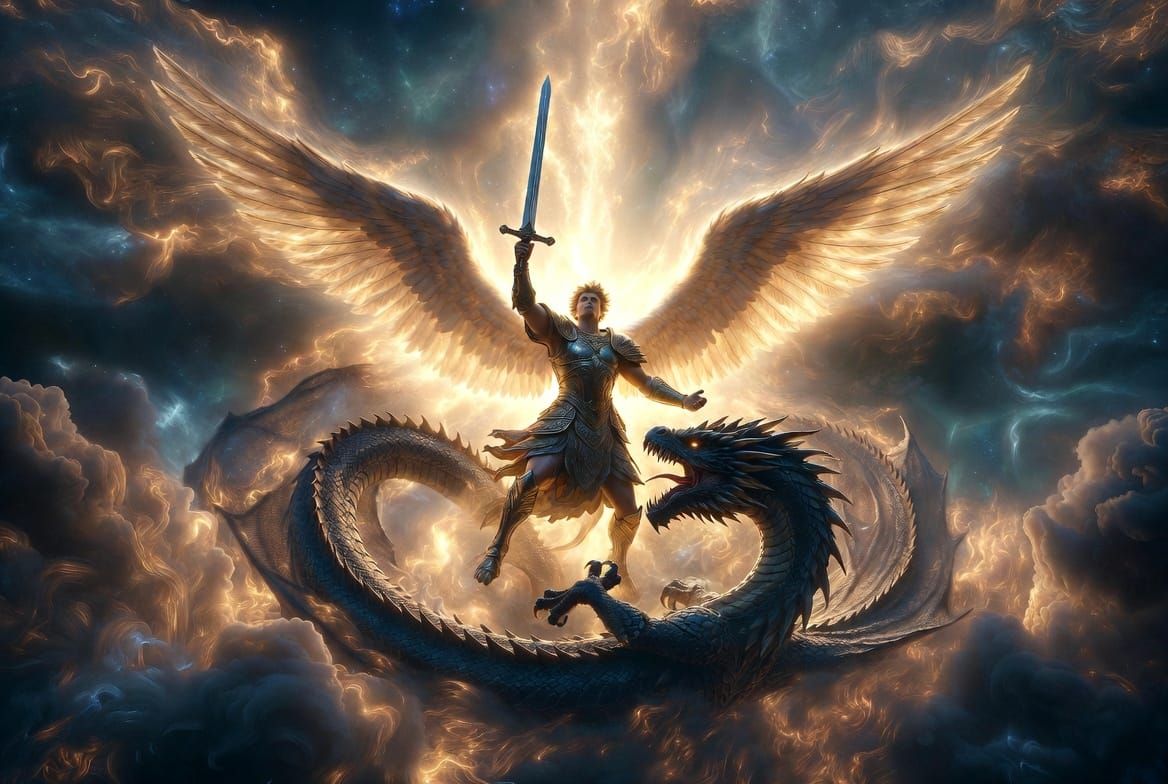
Feast Day: September 29
The Anglican calendar is ordered by a hierarchy of holy days, each carrying a different weight of observance. At the top stand the seven Principal Feasts, the highest-ranking days of the liturgical year. Below them are the Red-Letter Holy Days appointed in the BCP 2019 with their own Collects and propers. Holy Michael and All Angels, observed on September 29, is one of these Red-Letter Holy Days. The BCP appoints its Collect on page 632, the Preface of Trinity Sunday, and the feast’s readings in the Holy Day lectionary on page 731.
The feast is traditionally called Michaelmas (MIK-uhl-mus). In the old English calendar it became one of the quarter days around which rents, contracts, terms, and other parts of civic life were often organized. That cultural prominence has faded, but the feast remains a significant Christian reminder that creation is larger than the visible world. The Church confesses the Maker “of all that is, visible and invisible,” and Michaelmas directs our attention toward part of that invisible creation: the holy angels who worship God, obey his Word, and serve within the order he has established.
Yet the feast is not finally about satisfying curiosity concerning angels. The title itself keeps the emphasis properly ordered: Holy Michael and All Angels. Michael receives particular attention because Scripture names him and the appointed reading from Revelation places him in conflict with the dragon, but the Prayer Book widens the feast to the whole angelic ministry. The angels matter because they belong to God, worship God, carry out God’s will, serve God’s people, and bear witness to the victory of Jesus Christ.
Angels in Holy Scripture
Angelic beings are not marginal figures in the biblical story. Cherubim guard the way to Eden after the Fall. Angels appear throughout the patriarchal narratives and the history of Israel, announce the births of John the Baptist and Jesus Christ, praise God at the Nativity, minister to Jesus, appear at the empty tomb, attend the Ascension, and fill the visions of Revelation. Scripture therefore gives us ample reason to confess their reality without encouraging us to speculate beyond what God has revealed.
Hebrews describes them succinctly as “ministering spirits sent out to serve for the sake of those who are to inherit salvation.” (Hebrews 1:14, ESV) That description gives us a safe and useful starting point. Angels are creatures, not gods. They are servants, not independent supernatural powers. Their ministries are received from God and ordered toward his purposes.
The Collect expresses the same truth when it says that God has “ordained and constituted in a wonderful order the ministries of angels and mortals.” The feast therefore does not invite Christians to construct elaborate speculative systems about the unseen world. It invites us to receive what Scripture reveals: God has created intelligent spiritual beings who worship him, obey him, and minister according to his appointment.
Angels Are Creatures, Not Lesser Gods
Christian teaching about angels must begin with a firm distinction between Creator and creature. Angels are glorious creatures, but they remain creatures. They are not omnipotent, omniscient, or omnipresent. They do not possess divine authority in themselves, and they are never proper objects of Christian worship.
Revelation makes this point dramatically when John falls before an angel and is immediately corrected: “You must not do that! I am a fellow servant with you... Worship God.” (Revelation 22:9, ESV) The angel refuses the worship that belongs to God alone. Michael himself displays the same creaturely humility. Jude calls him “the archangel Michael” and recounts his dispute with the devil over the body of Moses. Yet Michael does not pronounce judgment from his own independent authority. He says, “The Lord rebuke you.” (Jude 9, ESV)
That detail is theologically important. Michael is mighty, but his greatness lies in obedience rather than autonomy. He fights because God appoints him to fight. He rebukes under the Lord’s authority. The holy angels are glorious precisely because they are faithful creatures who know that God is God and they are not.
Michael the Archangel
Michael is one of two angels named in the canonical Scriptures. His name, Mikha’el (mee-khah-EL), means “Who is like God?” The name itself reads almost like a challenge to creaturely pride: who can compare with the Lord?
Daniel calls Michael “one of the chief princes” and later “the great prince who has charge of your people.” (Daniel 10:13; 12:1, ESV) These passages portray him within the unseen conflict surrounding the earthly history of God’s people. Jude names him explicitly as “the archangel Michael,” while Revelation 12 shows him leading angels in battle against the dragon: “Now war arose in heaven, Michael and his angels fighting against the dragon. And the dragon and his angels fought back.” (Revelation 12:7, ESV)
Scripture therefore gives Michael a genuine role of leadership and defense within the angelic ministry. Yet every passage places him beneath God. He is not a rival power standing alongside Christ and certainly not a second divine figure. He is a servant of the Lord whose victory he serves.
Gabriel and Raphael
Gabriel is the other angel named in the canonical Scriptures. His name is commonly understood to mean “God is my strength.” He appears in Daniel interpreting visions and later in Luke as the angel sent to Zechariah and to the Virgin Mary. To Zechariah he says, “I am Gabriel. I stand in the presence of God, and I was sent to speak to you.” (Luke 1:19, ESV) His own words summarize angelic ministry beautifully: he stands before God, and he is sent. His message does not originate within himself. He speaks because God commissions him.
Raphael is named in the Book of Tobit, or Tobias, one of the books traditionally called the Apocrypha. Article VI of the Thirty-Nine Articles places Tobit among those books the Church reads “for example of life and instruction of manners,” while not applying them “to establish any doctrine.” Raphael’s name means “God heals,” and Tobit portrays him as an angel sent within a story of guidance, deliverance, and healing.
These biblical and traditional portraits display something of the variety of angelic ministry: defense against evil, delivery of God’s message, and, in Tobit, healing and guidance. Yet in every case the angel is a servant. God sends. God commands. God heals. God saves. The ministry of angels directs attention beyond the creature toward the Lord whose servants they are.
Michael and the Dragon
The appointed New Testament reading is Revelation 12:7–12. John sees war in heaven, with Michael and his angels fighting against the dragon and his angels. The dragon is then identified plainly as “that ancient serpent, who is called the devil and Satan, the deceiver of the whole world.” (Revelation 12:9, ESV)
Revelation gives the Church a heavenly vision of the conflict surrounding the coming, suffering, exaltation, and victory of Christ. The dragon opposes the woman and her child, the child is caught up to God and his throne, war breaks out in heaven, and the accuser is cast down. The vision gathers the conflict surrounding Christ into apocalyptic imagery rather than giving us a simple chronological diagram of unseen history.
What matters most is the source of victory. After the dragon is cast down, heaven declares, “Now the salvation and the power and the kingdom of our God and the authority of his Christ have come.” The song continues: “They have conquered him by the blood of the Lamb and by the word of their testimony, for they loved not their lives even unto death.” (Revelation 12:10–11, ESV)
Michael and his angels truly fight, but Revelation itself identifies the decisive ground of victory: the blood of the Lamb. Angelic warfare serves the victory of Christ; it does not supplement it. Michael is not a second savior standing alongside Jesus. The archangel fights beneath the authority of the Lamb whose saving work has defeated the accuser.
The Accuser Cast Down
Revelation calls Satan “the accuser of our brothers,” the one who accuses them “day and night before our God.” (Revelation 12:10, ESV) The image reaches deeply into the pastoral life of the Church because accusation is one of the devil’s characteristic works.
Christian conviction of sin and satanic accusation are not the same thing. The Holy Spirit convicts sinners in order to lead them toward repentance, forgiveness, and life. The accuser condemns in order to drive sinners toward despair and away from the mercy of God. Revelation answers the accuser not by pretending that the saints are innocent in themselves but by pointing to the blood of the Lamb. Their confidence rests in what Christ has accomplished. The enemy’s accusations cannot overturn God’s saving verdict upon those who belong to Jesus Christ.
This is one reason Michaelmas can speak powerfully about spiritual conflict without encouraging fascination with demons. Spiritual evil is real, and the devil should not be reduced to a mere symbol for human wickedness. Yet the Church’s attention is not fixed upon the dragon. Revelation fixes our attention upon the Lamb whose blood conquers him.
Spiritual Warfare Without Fascination
Michaelmas reminds the Church that spiritual conflict is real. Scripture speaks plainly of Satan, fallen spiritual powers, temptation, accusation, deception, and forces hostile to God. A Christianity embarrassed by the supernatural world of Scripture has surrendered part of the biblical picture of creation.
But an unhealthy fascination with spiritual warfare can become its own distortion. Christians are not called to obsess over demons, speculate endlessly about ranks of evil spirits, or interpret every difficulty as evidence of hidden supernatural attack. Revelation itself provides the proper balance. The dragon is frightening, but he is not ultimate. Michael fights, but Michael is not the center. The blood of the Lamb is the decisive reality.
The feast therefore teaches Christians neither to deny spiritual conflict nor to become preoccupied with it. The devil is real, temptation is real, accusation is real, and spiritual warfare is real, but Christ has conquered. Christian confidence does not come from knowing more about demons. It comes from knowing the Lord who defeated them.
Jacob at Bethel
The appointed Old Testament reading is Genesis 28:10–17. Jacob leaves Beersheba and, while sleeping with a stone beneath his head, dreams of a ladder or stairway set upon the earth and reaching toward heaven. The angels of God are ascending and descending upon it, and the LORD stands above it and renews the covenant promise given to Abraham and Isaac.
When Jacob wakes, he says, “Surely the LORD is in this place, and I did not know it.” Then: “How awesome is this place! This is none other than the house of God, and this is the gate of heaven.” (Genesis 28:16–17, ESV) The vision reveals a created world open to the action and presence of God. Jacob lies asleep upon an ordinary patch of earth, yet the unseen ministry of heaven is already active. He awakens to discover that reality was larger than what he could see.
That makes Genesis 28 a fitting reading for Michaelmas. The feast asks the Church to awaken from the assumption that the visible world exhausts creation. The angels belong to a real created order ordinarily hidden from human sight but fully present within God’s providence.
The Son of Man and the Opened Heaven
The appointed Gospel, John 1:47–51, deliberately returns to Jacob’s vision. Jesus has just encountered Nathanael and identified him as “an Israelite indeed, in whom there is no deceit.” Then Jesus promises, “Truly, truly, I say to you, you will see heaven opened, and the angels of God ascending and descending on the Son of Man.” (John 1:51, ESV)
Jesus places himself at the center of the reality Jacob saw. The Son of Man is the true meeting place of heaven and earth, the one upon whom the angels ascend and descend. The Christological center of the feast could hardly be clearer. The appointed Gospel for a feast of angels does not finally direct our gaze toward angels. It directs us toward Jesus.
What Jacob glimpsed at Bethel finds its fulfillment in Christ: heaven is opened, and the incarnate Son is the meeting place of God and humanity. The angels serve within that reality. The entire created order finds its meaning beneath his lordship.
Psalm 103 and Creaturely Obedience
Psalm 103 calls the angels into the praise of the whole creation: “Bless the LORD, O you his angels, you mighty ones who do his word, obeying the voice of his word! Bless the LORD, all his hosts, his ministers, who do his will!” (Psalm 103:20–21, ESV)
The Psalm gives one of Scripture’s clearest descriptions of holy angelic life. They are mighty, but their strength is directed toward obedience. They hear God’s Word and do it. They are ministers who perform his will. That obedience exposes the foolishness of creaturely rebellion. The angels do not become glorious by asserting independence from God. Their glory is found precisely in worshiping, serving, and doing his Word.
The same is true of human creatures. Freedom from God is not the path toward greater life. Creation flourishes under the Creator. Michaelmas therefore gives the Church an example of obedient creatureliness: receive the Word of God, worship him, and do his will.
This is not an invitation to become angelic rather than human. God created mortals as mortals and angels as angels. The Collect does not collapse the distinction. It speaks instead of the “ministries of angels and mortals” within one wonderful divine order.
The BCP 2019 Collect
The Collect on page 632 prays, “Everlasting God, you have ordained and constituted in a wonderful order the ministries of angels and mortals: Mercifully grant that, as your holy angels always serve and worship you in heaven, so by your appointment they may help and defend us here on earth; through Jesus Christ our Lord, who lives and reigns with you and the Holy Spirit, one God, for ever and ever. Amen.”
The prayer holds together truths that modern Christians can be tempted to separate. The angels worship God in heaven, and they also minister by his appointment on earth. Heaven and earth are distinct, but they belong to one created order under one Lord. The petition also leaves no room for superstition. Angels do not help because Christians summon them, command them, or possess techniques for manipulating the unseen world. They help and defend “by your appointment.” God remains the giver; angels remain his servants.
That makes the Collect a prayer not to angels but to God. Anglican worship does not turn from the Creator toward created spiritual beings. It asks the everlasting God that the ministry he himself has established may serve his people according to his will. The order is grace-first: God creates the angels, establishes their ministry, appoints them to serve, and the Church receives their help as an expression of divine providence.
Help and Defend Us
Modern Christians may be comfortable saying that angels worship God but more hesitant to pray that they would “help and defend us here on earth.” The Prayer Book does not share that hesitation. Scripture gives ample warrant for confidence in angelic ministry. Hebrews calls angels ministering spirits sent for the sake of those who inherit salvation, Psalm 91 speaks of God commanding his angels concerning his people, and angels repeatedly protect, guide, announce, and minister within the biblical narrative.
Christians do not need to construct a detailed theory in which every individual believer is assigned precisely one personal guardian angel in order to receive the Prayer Book’s teaching. Scripture gives sufficient warrant to confess that God appoints angels to minister for the good of his people.
Jesus’ words in Matthew 18:10 also deserve attention: “See that you do not despise one of these little ones. For I tell you that in heaven their angels always see the face of my Father who is in heaven.” (ESV) The verse clearly associates angels with God’s care for his little ones, even if it does not answer every later question Christians have asked about guardian angels. The Church can therefore pray the Collect confidently while leaving the details to God.
The Preface of Trinity Sunday
The BCP appoints the Preface of Trinity Sunday for Holy Michael and All Angels. That choice prevents the feast from drifting toward fascination with created spiritual beings because it places the entire observance beneath the confession of the Triune God.
The Preface confesses the Father together with the co-eternal Son and Holy Spirit as one God and one Lord, in Trinity of Persons and Unity of Substance, without difference or inequality. The Church therefore celebrates angels by worshiping the God who created them.
Angels belong within the one divine economy of Father, Son, and Holy Spirit. They are creatures of God’s will and servants within his providence, and their ministries are entirely subordinate to the saving work of Christ. Nothing in Michaelmas competes with Christian worship of the Trinity. Christian theology never stops at the creature. The creature becomes occasion for praise of the Creator.
Michael and All Angels
The title Holy Michael and All Angels deserves emphasis. Michael gives the feast its traditional English name, Michaelmas, and Revelation gives him a dramatic place in the appointed readings. Yet the feast is not the celebration of a solitary heavenly hero.
The Collect speaks of “your holy angels.” Psalm 103 summons God’s hosts to bless the LORD. Genesis gives us angels ascending and descending. John places them around the Son of Man. Revelation presents Michael within a company of angels who fight beneath the victory of Christ. The Church therefore gives thanks for the whole unseen company of created servants whom God appoints to worship him and minister according to his will.
Michael is honored precisely as a faithful servant among faithful servants. His name asks, Who is like God? The implied answer is that no creature, not even the greatest angel, compares with the Lord.
Why September 29?
The Western observance of September 29 is ancient and appears to have grown out of the dedication of a church honoring Saint Michael on the Via Salaria outside Rome. Early Western sacramentaries preserve a late-September commemoration connected with that basilica, and by the early medieval period September 29 had become firmly established as Michael’s principal feast in the West.
As the observance developed, its significance widened beyond the dedication of one church. In the English tradition it became Michaelmas, and the Prayer Book tradition eventually placed Saint Michael within the broader celebration of all the holy angels. The date therefore carries an ancient historical inheritance while the theological substance of the feast is supplied by Scripture and the Church’s confession of God as Creator of all things visible and invisible.
Michaelmas also became one of the four traditional English quarter days, together with Lady Day, Midsummer, and Christmas. Rents, leases, contracts, legal terms, and parts of agricultural and academic life were often organized around these dates. Its civic importance is now mostly historical, although the name survives in such expressions as Michaelmas Term.
Michaelmas in Anglican Worship
The BCP 2019 observes September 29 as the Red-Letter Feast of Holy Michael and All Angels. White is customarily used in Anglican worship, fitting a feast of the holy angels who stand before God, worship in his presence, and serve within the glory of his heavenly court. September 29 always occurs during the Season after Pentecost, so the white of the feast interrupts the green ordinarily associated with the long season with a glimpse of the heavenly worship surrounding the Church’s ordinary earthly discipleship.
The feast thereby does what the Christian calendar often does best: it takes a truth Christians confess throughout the year and gives the Church a day to contemplate it directly. We confess every Sunday that God created all things visible and invisible. Michaelmas makes us linger over the invisible part of that confession without allowing us to lose sight of the God who made it.
An Unseen Creation
Michaelmas challenges a specifically modern temptation to imagine that what cannot ordinarily be seen is somehow less real. Scripture does not permit such a narrow universe. The Nicene Creed begins by confessing God as Maker “of all that is, visible and invisible.” Angels belong to that invisible creation. Their reality does not depend upon human perception any more than God’s providence depends upon our ability to trace every act of it.
This should not make Christians credulous about every supernatural claim or eager to assign angelic explanations to ordinary events. Biblical faith is not superstition. But neither should fear of superstition cause us to cut angels out of a Bible filled with them. A healthy Christian doctrine of angels receives what God has revealed and refuses both embarrassment and speculation. Angels are real. They are created. They worship. They serve. Some spiritual creatures rebelled against God, while the holy angels remain obedient to him and minister according to his will.
The Cosmos Is More Crowded Than It Appears
One of the pastoral gifts of Michaelmas is the enlargement of Christian imagination. The cosmos is more crowded than it appears. The ordinary congregation gathered for worship may see a room, an altar, a lectern, other Christians, bread, wine, and ordinary earthly surroundings. Yet Christian worship is directed toward the same Triune God before whom the heavenly host stands in praise.
That does not mean angels and departed saints should be blurred together as though they were the same kind of creature. Human beings remain human beings, and angels remain angels. But all faithful worship is directed toward the one God whose glory fills heaven and earth. Isaiah hears the seraphim cry “Holy, holy, holy.” The shepherds hear the multitude of the heavenly host praising God at Bethlehem. Revelation shows the worship of heaven surrounding the throne.
Michaelmas reminds us that ordinary Christian life takes place within a creation filled with more divine activity than human senses ordinarily perceive. That should produce neither fear nor fantasy, but confidence in the providence of the God who governs everything he has made.
Observing the Feast
Holy Michael and All Angels is observed on September 29. The Collect is found on page 632, the appointed readings are Genesis 28:10–17, Psalm 103, Revelation 12:7–12, and John 1:47–51, and the Preface of Trinity Sunday is appointed. White is customarily used in Anglican worship.
Begin with Genesis 28 and stand with Jacob at Bethel. Allow the passage to challenge the assumption that only visible reality matters. Jacob falls asleep believing he is in an ordinary place and awakens declaring, “Surely the LORD is in this place, and I did not know it.” Then read John 1 and notice where Jesus places the emphasis. The angels are present, but they ascend and descend upon the Son of Man. The Gospel directs our attention to Christ as the meeting place of heaven and earth.
Read Psalm 103 and listen to the description of angelic obedience. They do God’s Word. They obey his voice. They perform his will. Ask where our own resistance to God’s Word has become habitual and whether creaturely freedom has been confused with independence from the Creator.
Then read Revelation 12 without allowing the dragon to dominate the scene. Michael fights, the dragon is cast down, but heaven tells us why the saints conquer: “by the blood of the Lamb.” Let the feast strengthen confidence in Christ rather than anxiety about spiritual warfare.
Finally, pray the Collect without embarrassment. Ask the God who has established the ministries of angels and mortals that his holy angels, by his appointment, may help and defend his people here on earth. The prayer is not superstition. It is trust in the providence of the Creator who governs both the visible and invisible parts of his world.
Conclusion
The Feast of Holy Michael and All Angels is the Church’s annual reminder that the cosmos is more crowded than it appears. The world Scripture reveals contains not only what human eyes can see but the unseen company of spiritual creatures who worship God, obey his Word, and carry out the ministries he has appointed.
Yet Michaelmas opens our eyes to the invisible creation without turning our attention away from Jesus Christ. Michael is mighty because he serves beneath divine authority. The holy angels are glorious because they worship and obey their Creator. Their ministry never competes with Christ but exists entirely within his lordship.
The appointed Gospel makes that order unmistakable. The angels ascend and descend upon the Son of Man. Revelation makes it clearer still. Michael and his angels truly fight, but the saints conquer the dragon “by the blood of the Lamb.” The saving victory of Christ, not angelic strength, is the decisive reality.
The feast therefore gives the Church sober confidence about spiritual reality. Satan is real, the accuser is real, spiritual conflict is real, and the ministry of angels is real. But none of these truths should produce fear or fascination for its own sake. The Lamb has conquered, and the holy angels themselves serve within his victory.
Michaelmas finally calls the Church to join the angels in what they do best: worship and obedience. Psalm 103 summons the mighty ones who do God’s Word to bless the LORD, and the Church on earth joins that praise. We honor Michael best not by making him the center of the feast, but by standing with him beneath the throne of God and confessing that no creature is like the Lord.
The Collect gathers the whole feast into that posture. The everlasting God has established the ministries of angels and mortals, the angels serve and worship him in heaven, and by his appointment they help and defend his people on earth. The Church receives their ministry with gratitude and directs all glory where the angels themselves direct it: to the Father, through Jesus Christ, in the Holy Spirit, one God for ever and ever.