He Changed His Mind and Went (Matthew 21:28–32)
The second son warns us that religious language can become a shelter from obedience. We may know what faithful Christians are supposed to say. We may know how to speak about forgiveness, generosity, prayer, holiness, service, and love. The question is whether our lives are following our confession.
September 27, 2026, Year A, Proper 21, Eighteenth Sunday after Pentecost, Season after Pentecost
Matthew 21:28–32, Psalm 25:1–14, Ezekiel 18:1–4, 25–32
Grace, mercy, and peace from God our Father and the Lord Jesus Christ be with you on this Eighteenth Sunday after Pentecost.
Last Sunday Jesus told us about laborers in a vineyard. Some worked all day, while others came at the eleventh hour, and the workers who had borne the heat resented the master’s generosity toward those who arrived late. Jesus exposed our temptation to believe that long service somehow gives us a claim upon the grace of God.
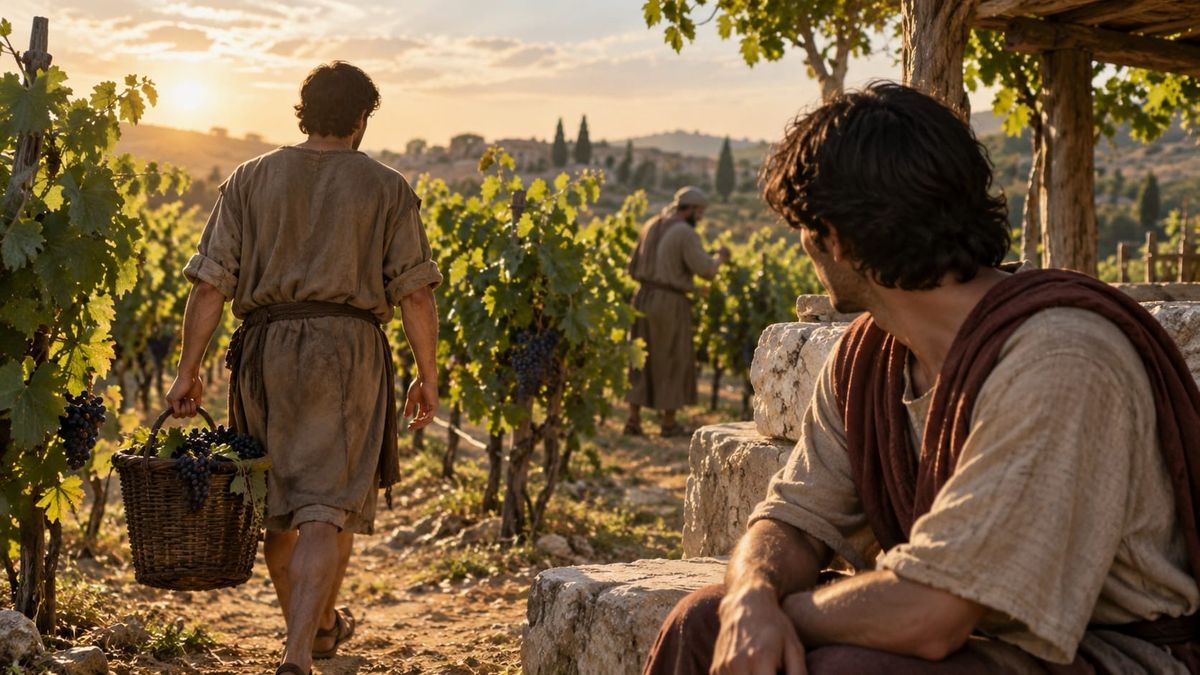
This morning there is a vineyard again. Jesus says, “A man had two sons. And he went to the first and said, ‘Son, go and work in the vineyard today’” (Matthew 21:28). Last week the question was whether we would resent the Master’s generosity toward those who came late. This week the question is even more searching: when the Father tells us to go into the vineyard, will we actually go?
Our Gospel this morning is Matthew 21:28–32. Jesus tells this parable in the middle of a confrontation. He has now entered Jerusalem, ridden into the city as King, and cleansed the temple. Immediately before our Gospel, the chief priests and elders confront him and ask, “By what authority are you doing these things?” (Matthew 21:23).
Jesus answers by asking them about John the Baptist. Was John’s baptism from heaven or from man? They refuse to answer. If they admit that John was sent from God, Jesus can ask why they did not believe him. If they dismiss John as merely human, they fear the crowd because the people regarded John as a prophet. Their problem is not simply a lack of evidence. They know that either answer will require something of them, and they refuse to answer. Then Jesus tells this little parable.
And in the parable that follows, the cost of the Kingdom becomes very personal. The Kingdom costs us the comfortable distance between what we say and what we do. It is not enough to know the right answer or to sound obedient. The Father calls us to go.
In verse 28, the father says to the first son, “Son, go and work in the vineyard today.” The son answers plainly, “I will not” (Matthew 21:29). There is nothing admirable about that first response. The father has spoken, and the son refuses him. He is not misunderstood. He is not confused. He simply says no.
But Jesus continues, “Afterward he changed his mind and went” (Matthew 21:29). That is the turn on which the whole parable moves. His first answer was no, but it was not his last answer. He changes his mind, turns around, and goes where his father sent him.
That is why Ezekiel is such an important companion to the Gospel this morning. Ezekiel is speaking to people who are living under the consequences of generations of rebellion, and they have begun to say, in effect, “We are suffering for what our fathers did.” Earlier in the chapter they repeat the proverb, “The fathers have eaten sour grapes, and the children’s teeth are set on edge” (Ezekiel 18:2). They are tempted to see themselves mainly as victims of someone else’s sin and to accuse God of being unfair.
But the Lord will not let them hide behind the past. Each person stands responsible before him. The son is not condemned simply because of the father’s wickedness, and the wicked person is not trapped forever by yesterday’s wickedness if he turns.
God says, “Repent and turn from all your transgressions, lest iniquity be your ruin” (Ezekiel 18:30). Then he says, “Cast away from you all the transgressions that you have committed, and make yourselves a new heart and a new spirit!” (Ezekiel 18:31). Finally comes the plea, “For I have no pleasure in the death of anyone, declares the Lord GOD; so turn, and live” (Ezekiel 18:32).
Turn and live. Ezekiel is emphasizing our real responsibility to repent, but he is not saying that sinners can simply reach inside themselves and manufacture a new heart. Later in this same book God promises, “I will give you a new heart, and a new spirit I will put within you” (Ezekiel 36:26). God calls us to turn, and God gives the grace by which sinners can turn. Those truths belong together.
So the first son has said no. He has disobeyed. But he does not remain where he is. He changes his mind and goes.
Then in verse 30, the father goes to the second son and gives him the same command. This son gives exactly the answer we expect from an obedient child: “I go, sir” (Matthew 21:30). He is respectful. He acknowledges the father. He says yes without argument. Then Jesus adds, “but did not go” (Matthew 21:30). His mouth says yes, but his life says no.
That is why the second son may be the more dangerous figure for people like us. Open rebellion is easy to recognize. When the first son says, “I will not,” everyone knows where he stands. The second son is harder to see because everything sounds right. He uses the right words. He addresses his father respectfully. If we heard only the conversation and never watched what happened next, we would assume he was the obedient son.
Jesus does not ask which son had better manners or which son gave the more religious answer. In verse 31 he asks, “Which of the two did the will of his father?” (Matthew 21:31). The chief priests and elders have no difficulty answering. “The first.” And with their own answer, Jesus exposes them.
He says, “Truly, I say to you, the tax collectors and the prostitutes go into the kingdom of God before you” (Matthew 21:31). Jesus is not saying that their former lives did not matter. His point is that when John called sinners to repent, they believed him and turned, while the religious leaders did not.
Jesus’ confrontation itself is also an act of mercy. He is not merely pronouncing judgment from a distance and walking away. He is still speaking to these leaders, still exposing their unbelief, and still calling them to repent and believe. They did not recognize what God was doing through John, and they are not recognizing the One now standing before them, but the call to turn has not ceased.
The chief priests and elders have spent their lives publicly saying yes to God. They know the Scriptures. They serve in the temple. They possess religious offices. They look like the second son standing respectfully before his father saying, “I go, sir.” But when God actually called them to repent through John, they did not go.
Jesus makes the contrast explicit in verse 32: “For John came to you in the way of righteousness, and you did not believe him, but the tax collectors and the prostitutes believed him. And even when you saw it, you did not afterward change your minds and believe him” (Matthew 21:32).
That last sentence is the wound. They saw sinners repent. They saw lives changed. They saw people who had been far from God respond to the call of God. Yet even then they did not change their minds and believe.
The contrast is not between good religious people and bad irreligious people. It is between repentant sinners and sinners who do not believe they need to repent. Matthew has shown us this reversal again and again. Those who appear far away respond in faith, while those who appear closest to God do not recognize him when he comes.
That does not mean God rejects those who know the Scriptures, worship faithfully, or live within the covenant community. The warning is subtler than that. Familiarity with holy things can deceive us into assuming that we have already responded to God simply because we know how the response is supposed to sound.
And that is where this parable comes uncomfortably close to us. We are religious people too. We gather for worship. We confess the Creed. We hear the Scriptures. We receive the Sacrament. We know the language of faith, and many of us have known it for years. Those are gifts, not liabilities. But the chief priests and elders warn us that it is possible to be surrounded by holy things, to say the right things about God, and still fail to recognize what God is asking of us. The danger of the second son is not merely hypocrisy somewhere out there. It is the possibility that our lips can say, “Yes, Lord,” while some part of our life quietly says no.
Psalm 25 gives us the opposite posture. The psalmist prays, “Make me to know your ways, O LORD; teach me your paths. Lead me in your truth and teach me” (Psalm 25:4–5). That is not the prayer of someone who assumes he already knows everything God requires. It is the prayer of someone who remains teachable before God.
Then he prays, “Remember your mercy, O LORD, and your steadfast love, for they have been from of old. Remember not the sins of my youth or my transgressions” (Psalm 25:6–7). That is what repentance sounds like. It does not defend the past. It does not excuse the sin. It does not compare itself favorably with someone else. It asks for mercy, and then it asks to be led.
That brings us directly to the Collect we prayed this morning: “O merciful Lord, grant to your faithful people pardon and peace, that we may be cleansed from all our sins and serve you with a quiet mind.”
Notice the order. We ask for pardon and peace, then cleansing, then service. We do not go into the vineyard in order to persuade the Father to forgive us. We do not obey so that God will finally decide we are worth keeping. We ask for pardon because we are sinners, and we ask for peace because our peace must come from his mercy. We ask to be cleansed because we cannot cleanse ourselves, and then, having received mercy, we ask for grace to serve.
Grace makes obedience possible. That matters because this parable could easily be reduced to “Be like the first son and try harder.” But the Gospel is deeper than that. The first son needs mercy because he really did refuse his father. The second son needs mercy because his respectful words conceal his disobedience. Both sons need what we prayed for this morning: pardon, cleansing, and grace to serve.
And beyond both sons stands the true Son, Jesus Christ, whose obedience to the Father will carry him all the way to the cross. He does not merely say yes to the Father. He goes.
So, what does this mean for us today?
First, let us ask where our words and our lives have come apart. The second son warns us that religious language can become a shelter from obedience. We may know what faithful Christians are supposed to say. We may know how to speak about forgiveness, generosity, prayer, holiness, service, and love. The question is whether our lives are following our confession.
So instead of asking vaguely whether we are good Christians, let us ask something more specific this week: Where is the Father saying, “Go,” and where are we still standing still? Perhaps Christ has told us to forgive someone, and we have spent months rehearsing why we should not have to. Perhaps there is a sin we have named a hundred times but still carefully protect. Perhaps there is a relationship in which we owe someone an apology and keep postponing it. Perhaps we know we should be more generous, more faithful in prayer, more present in worship, or more willing to serve, but our obedience remains permanently scheduled for later.
Second, when God shows us one of those places, let us take one concrete step rather than making another general promise. If reconciliation is needed, and direct contact is wise and safe, let us make the call. If confession is needed, let us name the sin plainly before God and, where appropriate, seek the help of another Christian. If there is something we need to stop doing, let us not merely resolve to dislike it more. Let us remove the opportunity, change the habit, and ask for accountability. If there is an act of service we know we have been avoiding, let us do it. If prayer has become almost nonexistent, let us set a time tomorrow morning and keep it.
Repentance moves. The first son did not remain in the house admiring the fact that he had changed his mind. He went. Biblical repentance includes sorrow, but it does not end with sorrow. By the grace of God, it turns.
Third, let us not allow shame to tell us that because we have said no for a long time, we have lost the right to turn around. That is Ezekiel’s word to us: “Turn, and live” (Ezekiel 18:32). The tax collectors and prostitutes had histories they could not erase. Jesus does not pretend otherwise. But their histories did not prevent repentance.
We may have resisted God in the same area for years. We may have failed repeatedly. We may know exactly how many times we have promised to change and then gone back. None of that makes sin less serious, but neither does it make repentance meaningless. The first son said no, but by the grace of God his no did not have to be the end of the story.
Let us pray Psalm 25 this week as a prayer of repentance before we make our own lists of improvements: “Make me to know your ways, O LORD; teach me your paths” (Psalm 25:4). Let us ask God to expose the difference between what we profess and what we practice. Let us ask him to show us where our lives have quietly contradicted our confession, and when he shows us, let us not defend it. Let us turn.
Finally, let us remember the Collect. We obey from pardon, not toward pardon. The Christian life is not a frantic attempt to prove to the Father that we are the better son. Jesus has already destroyed that comparison. The openly rebellious son needed mercy. The outwardly obedient son needed mercy. Tax collectors needed mercy. Prostitutes needed mercy. Chief priests and elders needed mercy. We need mercy.
And Christ has come to give it. The One telling this parable is on his way to the cross. He is the Son who perfectly does the will of the Father, and he will go where obedience leads him. He will bear the judgment of sinners who have said no with their mouths and sinners who have said yes while living no. He will die for the openly rebellious and the respectably religious. He will rise so that sinners may be pardoned, cleansed, and given new life.
That is why repentance is possible. We can turn because mercy has come near.
Jesus is not asking us whether we know which answer sounds better. We already know that. He is asking whether, when the Father speaks, his grace will bring us to repentance and our repentance will bring us to obedience.
So when he shows us the place where our life has said no, let us not hide behind yesterday’s profession or yesterday’s failure. Let us pray for pardon and peace. Let us receive his cleansing. And then, by his grace, let us get up and go.
In the Name of the Father, and of the Son, and of the Holy Spirit. Amen.