Looking Steadfastly: Saint Stephen, Deacon & Martyr: (Acts 6:8-7:2a, 51-60)
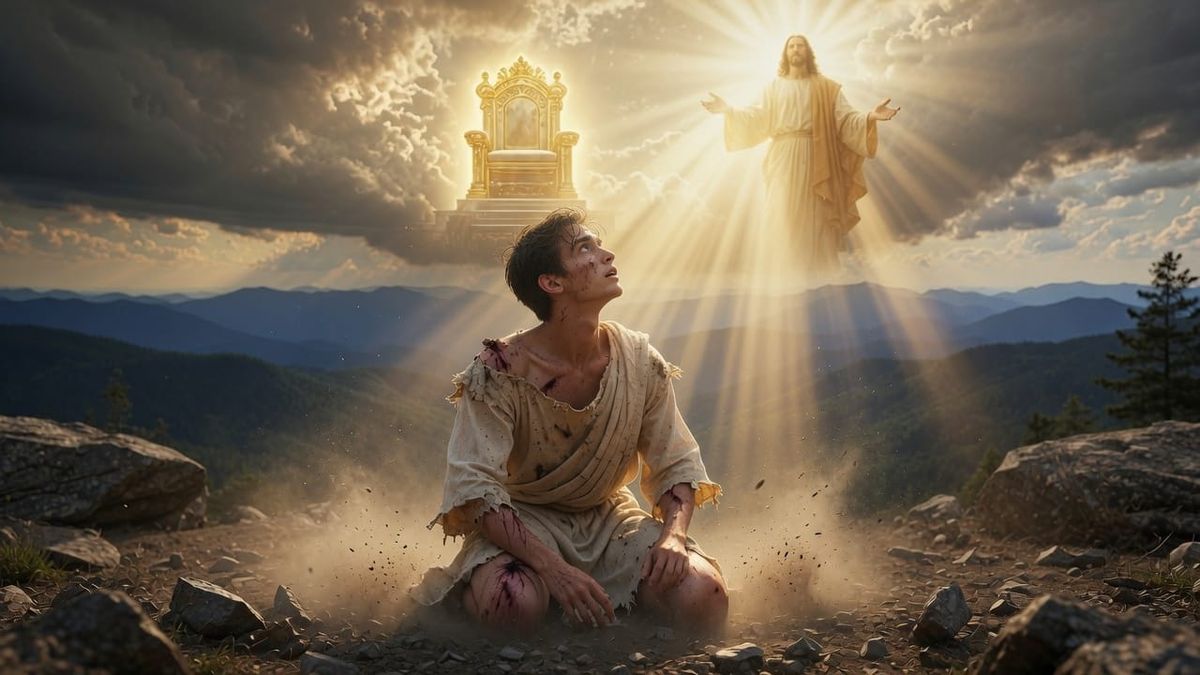
Stephen’s last prayer: Lord, do not hold this sin against them. The first martyr dies the way his Lord died: forgiving. Saul is standing nearby, holding the cloaks. The seed planted that day will grow into the Damascus road.
December 26, 2025, Saint Stephen, Deacon and Martyr, Red-Letter Holy Day, Season of Christmas
Acts 6:8–7:2a, 51–60, Psalm 31:1–6, Matthew 23:29–39, Jeremiah 26:1–15
Grace, mercy, and peace from God our Father and the Lord Jesus Christ be with you on this Feast of Saint Stephen, Deacon and Martyr.
Yesterday was Christmas. The Preface of Christmas, which we use at the Eucharist both yesterday and today, gives us the reason for the season in a single sentence: “Because you gave Jesus Christ, your only Son, to be born for us; who, by the Holy Spirit and the Virgin Mary his mother, was made truly man, yet without the stain of sin, that we might be cleansed from sin and given the right to become your children.” (BCP 2019, p. 152) The Church does not pause between Christmas and today. It moves directly from the feast of the Incarnation to the feast of the first martyr, using the same Preface for both. The theological statement is deliberate: the cradle and the stones belong together. The Word became flesh in a world that would resist and reject him, and the first recorded Christian martyr dies confessing the Lord whose birth we celebrated yesterday. The Incarnation was never going to be safe.
The days immediately following Christmas honor witnesses to Christ in strikingly different ways. Stephen comes first on December 26, then John the Apostle on December 27, and then the Holy Innocents on December 28. The sequence is the calendar’s quiet theology. Christmas does not retreat from the realities of the fallen world in order to preserve its joy. The Child born at Bethlehem has entered precisely this world, and allegiance to him will sometimes be costly. The cradle and the stones are not in tension. They are the same story told in two keys.
Our primary passage today is Acts 6:8 through the end of Acts 7. Stephen first appears in Acts 6 as one of seven men chosen to address a practical crisis in the Jerusalem Church. A complaint has arisen because the Hellenistic Jewish widows are being overlooked in the daily distribution. The apostles call for seven men “of good repute, full of the Spirit and of wisdom” to oversee this ministry, and Stephen is named first, described as “a man full of faith and of the Holy Spirit.” (Acts 6:3, 5, ESV)
Acts does not formally give these Seven the title deacons, but their ministry became foundational to the Church’s understanding of the diaconate, and the Prayer Book explicitly remembers Stephen as Deacon and Martyr. That matters because his ministry refuses any neat division between practical service and spiritual witness. He is appointed because widows are being neglected, and then Acts 6:8 tells us, “And Stephen, full of grace and power, was doing great wonders and signs among the people.” The same man who serves the vulnerable also bears public witness to Christ. He does not graduate from practical service into “real ministry.” He brings the same fullness of the Spirit to the distribution of bread and to his testimony before the council.
His opponents cannot withstand the wisdom and the Spirit with which he speaks. They bring him before the council under accusations concerning Moses, the Temple, and the Law, and the pattern deliberately echoes the opposition faced by Jesus. False witnesses are produced. Charges are brought concerning the holy place. And before Stephen even begins his defense, Luke tells us, “All who sat in the council saw that his face was like the face of an angel.” (Acts 6:15, ESV)
The speech that follows is the longest recorded speech in Acts. Stephen moves through Israel’s history from Abraham to Joseph, Moses, the wilderness, David, and Solomon. His point is not that Israel’s history has failed, but that God has been consistently faithful while his people have repeatedly resisted those whom he sent. Stephen finally brings that history crashing into the present moment: “You stiff-necked people, uncircumcised in heart and ears, you always resist the Holy Spirit.” (Acts 7:51, ESV)
Stephen does not soften the message because of the audience before him. He does not spend his final opportunity constructing the safest possible defense of himself. He bears witness to what God has done and then tells his hearers what their response to God has been. Luke has already told us why Stephen is capable of this. He is not simply a naturally fearless personality. He is full of faith, full of grace, full of power, and full of the Holy Spirit.
Our other readings place Stephen within a much older biblical pattern. Jeremiah 26 gives us a prophet standing before people who want him dead because he has spoken the Word God gave him. Jeremiah answers, “The LORD sent me to prophesy against this house and this city all the words you have heard.” (Jeremiah 26:12, ESV) Jeremiah’s authority rests neither in personal confidence nor in his ability to persuade the crowd. The Lord sent him.
Then Matthew 23 gives us Jesus’ lament over the same pattern: “O Jerusalem, Jerusalem, the city that kills the prophets and stones those who are sent to it!” (Matthew 23:37, ESV) There is grief in those words as well as judgment. Jesus says, “How often would I have gathered your children together as a hen gathers her brood under her wings, and you were not willing!” The tragedy is not that God refused to gather them. The tragedy is that those to whom he came resisted him.
A few verses earlier Jesus says, “Therefore I send you prophets and wise men and scribes, some of whom you will kill and crucify.” (Matthew 23:34, ESV) Stephen becomes one of those witnesses sent in the name of Christ and rejected by those to whom the testimony comes. Jeremiah speaks because the Lord sent him. Stephen speaks because the Spirit fills him. Faithfulness is not measured by whether the hearers approve.
That matters for the Church in every age. We are never authorized to make the Gospel unnecessarily offensive, and there is no holiness in being abrasive for its own sake. But neither are we free to edit the truth entrusted to us in order to ensure that no one objects. The Church serves people in love and tells them the truth in love. Stephen does both. He sees neglected widows and serves them; he stands before the council and refuses to deny what God has revealed.
When the council hears Stephen’s indictment, Luke tells us that they are enraged and grind their teeth at him. But then the scene changes completely. Acts 7:55 says, “But he, full of the Holy Spirit, gazed into heaven and saw the glory of God, and Jesus standing at the right hand of God.” Stephen then says aloud, “Behold, I see the heavens opened, and the Son of Man standing at the right hand of God.” (Acts 7:55–56, ESV)
The New Testament commonly describes the risen and ascended Christ as seated at the Father’s right hand. Here Stephen sees him standing. Luke does not tell us why, but Christians have long seen something beautiful in that posture: the Son of Man rising to receive or vindicate his faithful witness. We should not make more of the detail than Scripture gives us, but neither should we miss its pastoral force. Stephen is not abandoned. Heaven is open, the glory of God is before him, and the Lord for whom he is about to die is alive, reigning, and present to him.
The standing Christ deserves a moment. The one who sent Stephen has not turned away from what is happening to him. The one Stephen has confessed before the council is now the one Stephen sees before him in glory. The stones may be in the hands of his enemies, but Stephen’s life is in the hands of Christ. The sent one is not forgotten by the one who sent him.
Stephen announces what he sees, and his hearers can bear no more. They cry out, stop their ears, rush at him, drag him outside the city, and begin to stone him. Yet Luke’s attention remains not primarily upon the violence of the executioners but upon the faithfulness of the man they are killing.
Psalm 31 gives us the thread that connects Stephen’s death directly to his Lord’s. We prayed today, “Into your hand I commit my spirit; you have redeemed me, O LORD, faithful God.” (Psalm 31:5, ESV) Jesus takes those words upon his lips from the Cross: “Father, into your hands I commit my spirit.” (Luke 23:46, ESV) Then Acts records Stephen praying, “Lord Jesus, receive my spirit.” (Acts 7:59, ESV) The Psalmist entrusts himself to God, Jesus prays the Psalm from the Cross, and Stephen entrusts himself to Jesus.
That is an extraordinary confession of who Stephen believes Jesus to be. At the moment of death, he directs to Jesus the prayer of entrusting his spirit. Stephen is not merely inspired by the memory of a dead teacher. He knows that the crucified Jesus is risen, reigning, and able to receive him.
Then Stephen falls to his knees and cries, “Lord, do not hold this sin against them.” (Acts 7:60, ESV) Once again the resemblance to Jesus is unmistakable. At the Cross Jesus prays for those who crucify him, and now the servant follows his Lord by praying for those who stone him. Stephen’s death is patterned after the death of Jesus because Stephen’s life has been conformed to Jesus.
This brings us to the heart of the feast and to the words from which the title of this sermon comes. The Collect remembers that Stephen looked up to heaven and prayed for his persecutors, and then asks: “Grant that in all our sufferings here upon earth we may love and forgive our enemies, looking steadfastly to Jesus Christ our Lord, who sits at your right hand and intercedes for us.” (BCP 2019, p. 624)
Notice where the Prayer Book directs our attention. It does not first tell us to stare at Stephen until we somehow become courageous enough to imitate him. It directs us with Stephen toward Jesus Christ. The Collect asks that we love and forgive while looking steadfastly to the Lord who sits at the Father’s right hand and intercedes for us.
That is the source of Stephen’s mercy. His forgiveness is derivative before it is exemplary. He does not forgive his killers because he has achieved emotional detachment from what they are doing. The stones are still falling. The evil is still evil. Stephen does not call injustice good or pretend that suffering does not hurt. His eyes are simply fixed somewhere beyond the people throwing the stones.
That matters because forgiveness is difficult precisely when the wound is real. It is easy to speak abstractly about loving enemies when no enemy has done anything that costs us much. It is quite another thing when someone has betrayed us, lied about us, wounded someone we love, damaged a relationship, or harmed us from within the household of faith.
Stephen’s persecutors were not people entirely ignorant of Scripture or religion. They believed they were defending God. That gives his story a particular pastoral force for Christians who have suffered at the hands of people who should have known better, including wounds that occur within churches and Christian relationships. The Collect does not minimize those wounds. It tells us where to look while we carry them.
Looking steadfastly to Jesus does not make the wrong disappear. It places the wrong beneath the greater reality of the risen Christ. The one at the Father’s right hand knows what it is to be falsely accused, rejected by religious authorities, handed over, and killed. And he is not merely sympathetic. The Collect says that he intercedes for us.
So when forgiveness feels beyond us, the Church does not say, “Try harder to feel forgiving.” She teaches us to look to Christ. Receive again the mercy with which he has forgiven us. Remember the Lord who prayed for his enemies. Ask the Holy Spirit who filled Stephen to produce in us what we cannot manufacture by our own strength. Looking steadfastly is the path. The forgiveness follows the looking.
There is another person in the stoning scene whom Luke does not allow us to overlook. Acts 7:58 says that the witnesses laid their garments “at the feet of a young man named Saul,” and Acts 8:1 tells us plainly, “Saul approved of his execution.”
We cannot know what Stephen’s face, his prayer, or his death did inside Saul’s conscience that day. Perhaps Saul buried whatever he saw beneath even greater zeal. What Acts tells us is that he did not immediately soften. He intensified his persecution. Acts 8 says he began “ravaging the church, and entering house after house,” dragging Christians off to prison.
But Saul was there. He saw Stephen die. Years later, after Christ had made him his own, Paul would remember his presence at Stephen’s death and confess before the Lord, “when the blood of Stephen your witness was being shed, I myself was standing by and approving.” (Acts 22:20, ESV) Stephen’s death remained part of the story Paul told about the man he had been before the grace of Christ overtook him.
And then Christ intervened.
On the road to Damascus, the same risen Lord Stephen saw in glory confronted the man who approved Stephen’s death: “Saul, Saul, why are you persecuting me?” (Acts 9:4, ESV) Saul did not gradually reason his way into becoming an apostle. The risen Christ stopped him, revealed himself to him, and made an enemy his own. Stephen dies. Saul persecutes. Christ acts.
The grace of God reaches the persecutor.
There is something pastorally powerful in that sequence. Stephen cannot change Saul’s heart. Stephen cannot live long enough to see what God will do with the man standing beside the executioners. He simply bears faithful witness and entrusts himself to Christ. The result belongs to God. That is worth remembering whenever we wonder whether faithful witness has accomplished anything. We are rarely allowed to see the whole story God is writing in another person.
The persecution itself cannot stop the Gospel either. After Stephen dies, believers are scattered from Jerusalem, but Acts tells us, “those who were scattered went about preaching the word.” (Acts 8:4, ESV) What was intended to suppress the Church becomes, under God’s providence, one of the means through which the Gospel moves outward. The witness is killed, but the Word goes on.
Luke gives Stephen’s death one final description. After praying for his killers, Stephen “fell asleep.” (Acts 7:60, ESV)This is not an attempt to deny the violence of what happened. Stephen has been stoned to death. Yet Luke describes the Christian’s death with the language of sleep because death does not possess him finally. His Lord is risen. In a strange and beautiful sense, the servant who first appeared in Acts tending the Church’s tables has finished his shift. His work is done, and the Lord he served is there to receive him.
That is Christmas truth carried all the way into martyrdom. Yesterday we proclaimed that the Word became flesh. Today we meet a man who can entrust his dying breath to that Word because the incarnate Lord has died and risen before him. The stones can kill Stephen’s body, but they cannot separate him from Christ.
And so Saint Stephen’s Day asks something of us even if none of us ever faces martyrdom. It asks where we look when faithfulness becomes costly. It asks whether the truth of Christ becomes negotiable when speaking it threatens comfort, reputation, relationships, or acceptance. It asks whether our service to those in need and our confession of the Gospel still belong together. And perhaps most searchingly, it asks what we do with the people who wound us.
The answer the Collect gives is not “Be more like Stephen,” as though Stephen were the source of his own holiness. The answer is: look steadfastly to Jesus Christ our Lord. Stephen serves because the Spirit fills him. He speaks because the Spirit gives him wisdom. He sees Christ because heaven is opened to him. He entrusts himself to Christ because Christ is alive. He forgives because the mercy of his Lord has shaped him. The initiative belongs to God throughout.
The Christmas Preface says that the Son was born for us so that we might be cleansed from sin and given the right to become children of God. Stephen shows us what that grace can produce in a human life: humble service, fearless witness, mercy toward enemies, and trust in Christ even at death.
Yesterday we saw the Child lying in the manger. Today Stephen sees that same Lord standing in glory. The infant born at Bethlehem is the Son of Man at the right hand of God. The Word made flesh is crucified, risen, ascended, and reigning, and Stephen can face the stones because he sees the Lord beyond them.
Most of us will never be asked to die as Stephen died. But all of us are called to live as people whose eyes are fixed where Stephen’s were fixed. When we serve, when we speak, when we suffer, when we struggle to forgive, and finally when death itself comes, the Church gives us the same direction: look steadfastly to Jesus Christ our Lord.
In the Name of the Father, and of the Son, and of the Holy Spirit. Amen.