Passion Sunday: An Anglican Perspective
The Fifth Sunday in Lent. Passion Sunday. The collect does not ask for feelings appropriate to Holy Week. It asks that the heart would be fixed where true joys are to be found amid the swift and varied changes of this world. The cross is one week from Palm Sunday. Lent is sharpening.
The Fifth Sunday in Lent
The Fifth Sunday in Lent occupies a distinctive place in the Anglican liturgical year. It is not a separate feast or Red-Letter Holy Day, but the BCP 2019 gives the Sunday its traditional subtitle: Passion Sunday. The Prayer Book appoints its Collect on page 606 and its lectionary readings on page 721. The name marks a change of emphasis within Lent as the Church draws nearer to Holy Week and the suffering and death of Jesus Christ move increasingly into the foreground.
Passion Sunday stands one week before Palm Sunday and two weeks before Easter Day. The penitential disciplines of Lent continue, but the destination toward which they have always pointed is becoming unmistakable. The Collect itself does not mention the Cross directly. Instead, it speaks of “the unruly wills and affections of sinners,” asks for grace to love what God commands and desire what he promises, and prays that our hearts may be fixed where true joys are found. That interior work is not separate from the Passion. It names the human disorder from which Christ has come to save us and for which he willingly goes toward the Cross.
The Sunday therefore serves as a hinge within Lent. The Church has spent weeks examining sin, disciplining appetite, praying, hearing Scripture, and practicing mercy, but none of those disciplines is an end in itself. Passion Sunday turns the gaze more deliberately toward Christ and asks what the Cross reveals about both the depth of our disorder and the grace by which God alone can heal it.
Liturgical Context
Lent is the Church’s forty-day season of penitence and preparation for Easter. It begins on Ash Wednesday, and its disciplines continue through the approach to the Paschal feast. The traditional reckoning of forty fasting days does not count the Sundays, even though the Sundays remain fully within the Lenten season. Passion Sunday is therefore not the end of Lent followed by an unrelated Holy Week. It is the Fifth Sunday in Lent, standing immediately before the week that leads into Holy Week and the concentrated remembrance of Christ’s final days.
The Sundays themselves lead progressively toward the Passion. The First Sunday places Christ in the wilderness, where the faithful Son resists temptation. The intervening Sundays develop differently across the three-year lectionary, but each year carries the Church toward the death and Resurrection of Jesus. By the Fifth Sunday, the Cross is no longer merely a distant horizon. Palm Sunday is one week away, and the Church is being prepared to enter the Lord’s final journey to Jerusalem, betrayal, suffering, and death.
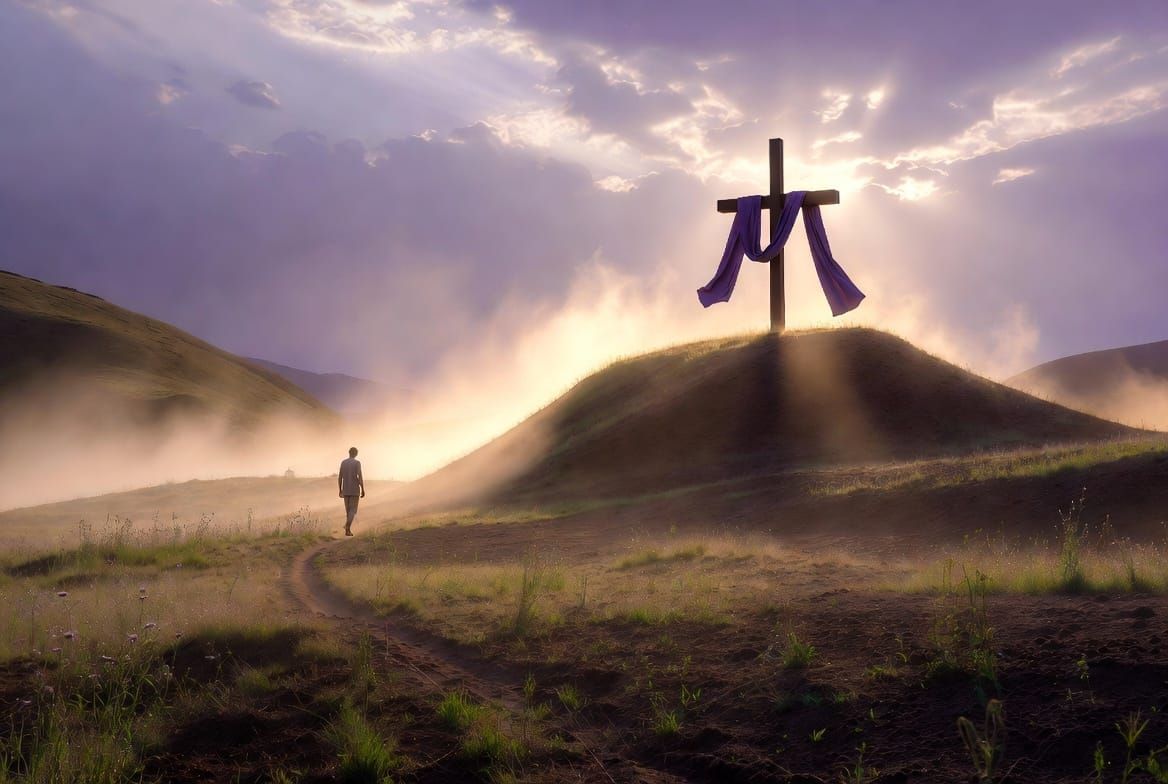
The name Passion Sunday also preserves an older Western inheritance in which the final two weeks before Easter were commonly known as Passiontide. Historically, this period was often marked by intensified attention to Christ’s suffering and by various forms of liturgical restraint. Veiling crosses and images became one familiar practice, along with other local changes in ceremonial and devotion.
The BCP 2019 does not establish Passiontide as a separate liturgical season and does not prescribe those traditional customs. Its retention of the name Passion Sunday, however, preserves the theological instinct behind them: as Lent approaches Holy Week, the Church’s attention narrows increasingly upon the Passion of Jesus Christ.
The Appointed Readings
The lectionary readings for Passion Sunday vary by year, but across the three-year cycle they gather themes of death and life, covenant and obedience, suffering and Resurrection, rejection and divine victory. The readings do not simply prepare the Church to feel appropriately somber before Holy Week. They interpret the Passion as the saving work through which God overcomes sin and death.
In Year A, the readings are Ezekiel 37:1–14, Psalm 130, Romans 6:15–23, and John 11:(1–17)18–44. Ezekiel stands in the valley of dry bones and hears God promise, “Behold, I will open your graves and raise you from your graves, O my people.” (Ezekiel 37:12, ESV) The Gospel then brings Jesus to the grave of Lazarus, where the one who declares himself to be “the resurrection and the life” commands, “Lazarus, come out.” (John 11:25, 43, ESV) Psalm 130 supplies the posture of waiting hope: “Out of the depths I cry to you, O LORD!” (Psalm 130:1, ESV) while Romans contrasts slavery to sin, whose end is death, with the free gift of eternal life in Christ.
Year A therefore moves from death toward life, but it also moves directly toward the Passion. The raising of Lazarus becomes one of the immediate occasions for the authorities to intensify their plot against Jesus. The Lord calls one man out of the grave, and those who oppose him begin planning his death. The irony belongs to the heart of John’s Gospel: the one who gives life to Lazarus will himself enter death, and by entering death will conquer it.
In Year B, the readings are Jeremiah 31:31–34, Psalm 51 or Psalm 51:10–15, Hebrews (4:14–16)5:1–10, and John 12:20–33(34–36). Jeremiah gives the great promise of the New Covenant: “I will put my law within them, and I will write it on their hearts.” (Jeremiah 31:33, ESV) That promise corresponds strikingly with the Collect. Jeremiah promises God’s transformation of the heart, while the Collect asks God to bring unruly wills and affections into order and to give his people grace to love what he commands and desire what he promises. In both cases, the answer to the human heart’s disorder begins with the action of God.
Hebrews presents Christ as the great High Priest whose obedience is bound up with suffering, while John brings the Passion explicitly into view. Jesus announces that his hour has come and says, “Unless a grain of wheat falls into the earth and dies, it remains alone; but if it dies, it bears much fruit.” (John 12:24, ESV) He then speaks of being lifted up from the earth and drawing all people to himself, and John explains that Jesus said this “to show by what kind of death he was going to die.” (John 12:33, ESV) The Passion is not an unforeseen disaster overtaking Jesus. He knows the hour and willingly moves toward it.
In Year C, the readings are Isaiah 43:16–21, Psalm 126, Philippians 3:7–16, and Luke 20:9–19. Isaiah announces, “Behold, I am doing a new thing; now it springs forth, do you not perceive it?” (Isaiah 43:19, ESV) Paul counts everything as loss for the sake of Christ and longs to know “the power of his resurrection” while “sharing his sufferings.” (Philippians 3:10, ESV) Luke then gives the parable of the wicked tenants, in which the owner finally sends his beloved son, only for the tenants to cast him out and kill him. Jesus concludes with the scriptural promise, “The stone that the builders rejected has become the cornerstone.” (Luke 20:17, ESV)
Year C therefore brings the Passion into view through rejection. The beloved son is killed, yet the rejected stone becomes the cornerstone. Human rebellion is real and culpable, but it cannot overturn the saving purpose of God.
Death, Resurrection, and the Approach of the Cross
The three lectionary years differ considerably, yet all of them resist separating the Passion from Resurrection. Year A gives life to dry bones and calls Lazarus from the grave. Year B speaks of the grain of wheat dying precisely so that it may bear much fruit. Year C joins participation in Christ’s sufferings with the power of his Resurrection and declares that the rejected stone becomes the cornerstone.
Passion Sunday therefore does not ask the Church to contemplate suffering as though suffering were the final reality of Christianity. The Cross draws nearer, but Resurrection light is already visible through it. Good Friday and Easter are not competing conclusions to two different stories. They belong to the one saving work of Jesus Christ.
This is important as Holy Week approaches. Christian faith does not glorify pain for its own sake, and the Church does not intensify attention to the Passion because suffering possesses inherent spiritual value. Christ’s Passion matters because through his willing obedience, sacrificial death, and bodily Resurrection he accomplishes the salvation of sinners and defeats the powers of sin and death.
The Unruly Will and the Grace of God
The Collect gives Passion Sunday another dimension that can easily be missed if attention falls only upon the name of the day. It begins, “Almighty God, you alone can bring into order the unruly wills and affections of sinners.” (BCP 2019, p. 606) The diagnosis is deeper than occasional bad decisions. Sin has disordered the human will and affections themselves. We desire what cannot satisfy us, resist what is good, and attach our hearts to created things that cannot bear the weight of our ultimate hope.
The prayer is equally direct about the remedy: “you alone can bring into order.” Lent is therefore not a prolonged exercise in spiritual self-improvement. Fasting, prayer, repentance, almsgiving, self-examination, and meditation upon Scripture matter deeply, but none of those practices possesses the power to regenerate the sinner or reorder the heart by itself. God must act.
This is where Passion Sunday joins the interior work of Lent to the objective saving work of Christ. Humanity does not merely need better habits. We need redemption. We do not simply require enough discipline to become more successful versions of fallen selves. We need the grace of God in Jesus Christ to restore what sin has disordered.
The Collect consequently asks for something deeper than outward conformity. It asks that Christians would love what God commands and desire what he promises. Holiness reaches the affections as well as the actions. Grace does not merely restrain sinful behavior from the outside; by the Holy Spirit, God increasingly reorders the heart so that his people learn to delight in what is good.
That gives the disciplines of Lent their proper place. We fast because appetites need to be brought beneath the lordship of Christ, not because hunger earns salvation. We repent because forgiven sinners are called to turn from what destroys them, not because sorrow purchases forgiveness. We pray because the heart cannot heal itself, and we attend to Scripture because God’s Word tells our restless desires where true joy is actually found.
The Raising of Lazarus and the Passion
Year A gives Passion Sunday one of the most theologically rich passages in the Gospel of John. Jesus comes to Lazarus’s tomb knowing what he is about to do, yet John records the astonishingly simple statement, “Jesus wept.” (John 11:35, ESV) The one who possesses authority over death does not stand before it with indifference. The Word has truly become flesh and entered the grief of a world subjected to death.
Jesus then commands the stone to be removed and cries with a loud voice, “Lazarus, come out.” (John 11:43, ESV) The dead man emerges, but Lazarus’s raising must be distinguished from the Resurrection of Jesus. Lazarus is restored to mortal life and will eventually die again. Jesus will pass bodily through death into the indestructible life of the Resurrection. Lazarus is therefore both beneficiary and sign: his raising reveals who Jesus is and anticipates the greater victory soon to come.
The sign also hastens Jesus toward the Cross. After Lazarus is raised, the council gathers and debates what should be done about Jesus. Caiaphas declares that it is better for one man to die for the people, words John interprets with a meaning far greater than Caiaphas understands, and from that day the authorities make plans to put Jesus to death.
The juxtaposition is deliberate: Jesus calls Lazarus out of a tomb while his enemies begin planning his death. Yet the grave into which Jesus will enter will not hold him. The one who raises Lazarus will himself conquer death not by avoiding it but by passing through it.
The BCP 2019 Collect
The BCP 2019 appoints this Collect on page 606:
“Almighty God, you alone can bring into order the unruly wills and affections of sinners: Grant your people grace to love what you command and desire what you promise; that, among the swift and varied changes of this world, our hearts may surely there be fixed where true joys are to be found; through Jesus Christ our Lord, who lives and reigns with you and the Holy Spirit, one God, now and for ever. Amen.” (BCP 2019, p. 606)
The Collect is one of the most searching prayers of Lent because it begins with both an honest confession and an equally strong confession of divine sufficiency. Human wills and affections are unruly, but God alone can bring them into order. The petition therefore begins not with resolve but with grace: “Grant your people grace.” The Church asks God to give what sinners cannot simply produce through sufficient determination.
The goal is also deeper than correct behavior. The Prayer Book does not ask merely that we grudgingly perform what God commands. It asks that we love it. Nor does it ask simply that we acknowledge God’s promises as doctrinal propositions. It asks that we desire them. Obedience is being drawn toward delight because the heart itself is being reordered.
The phrase “among the swift and varied changes of this world” gives the prayer striking pastoral realism. Circumstances change, bodies age, relationships shift, possessions disappear, political and economic conditions move, and death remains before every human being. The Collect does not ask God to make the created world static. It asks that our hearts be fixed where those changes cannot finally reach, “where true joys are to be found.”
Passion Sunday therefore asks one of Lent’s most important questions just before Holy Week: Where is the heart actually fixed? The Cross exposes the inability of lesser loves to save even as it reveals the God whose love goes to the uttermost for sinners.
The Preface of Lent
The Proper Preface of Lent remains appointed for Passion Sunday. It praises God because he calls his faithful people to cleanse their hearts and prepare with joy for the Paschal feast, so that, fervent in prayer and works of mercy and renewed by his Word and Sacraments, they may come to the fullness of grace he has prepared.
Read on Passion Sunday, the Preface carries particular weight. The Church has now spent most of Lent in the preparation it describes. Prayer, works of mercy, Scripture, Sacraments, repentance, and fasting have never been disconnected religious exercises. They have been preparing the Church with joy for the Paschal feast.
The relationship between Collect and Preface is especially fitting. The Collect asks for the heart to be brought into order and fixed upon true joy, while the Preface describes God’s people being renewed through Word and Sacraments as they prepare for Easter. Both place the entire process within the grace of God. God gives what the Church asks and renews the people he calls to repentance.
When Palm Sunday arrives, the Proper Preface changes from Lent to Holy Week. The liturgical movement corresponds to the calendar’s movement. Passion Sunday has brought the Church near the threshold, and Palm Sunday begins the concentrated observance of the Lord’s Passion and final days.
Passion Sunday in Anglican Worship
The title Passion Sunday belongs explicitly to the BCP 2019. It is therefore more than an antiquarian nickname recovered by parishes attracted to older ceremonial practice. The Prayer Book itself identifies the Fifth Sunday in Lent by this name.
The title also recalls the older inheritance of Passiontide, traditionally associated with the final two weeks before Easter. Various Western customs developed around this period, including veiling crosses and images, reducing certain forms of festal expression, and intensifying meditation upon Christ’s suffering. The details varied considerably by time and place.
The BCP 2019 does not prescribe those Passiontide customs, and they should not be confused with Prayer Book requirements. An Anglican parish may retain some of them as inherited devotional practices, but their value lies in whether they serve the Gospel and direct attention toward Christ rather than simply reproducing historical ceremonial.
Where practiced, veiling crosses or images can function as a form of visual restraint that sharpens attention as Holy Week approaches. It should not be explained as though the Cross were shameful or something Christians must hide until Good Friday. Rather, the temporary restraint can make the Church more attentive when the Cross moves to the center of the liturgy during Holy Week.
Purple is the customary liturgical color for Passion Sunday, fitting the penitential character of Lent. Passion Sunday remains fully within the season, and its distinctive title does not make it a separate feast. Palm Sunday brings the transition into Holy Week, where red is commonly used in connection with the Passion.
Observing This Sunday
Passion Sunday is always the Fifth Sunday in Lent and falls one week before Palm Sunday. Begin with the Collect and allow its diagnosis to become personal. Ask where your will remains unruly, what desires have become disproportionate, what created things have received more trust than they can bear, and whether your heart is actually fixed upon the joys God has promised.
Read the appointed lessons for the year rather than replacing them with a generic Passion narrative. Year A joins Ezekiel’s valley of dry bones to the raising of Lazarus; Year B joins the New Covenant and Christ’s priesthood to the grain of wheat that dies and bears fruit; Year C joins God’s promised new work and Paul’s participation in Christ’s sufferings to the beloved son who is rejected and killed, yet whose rejection points toward the cornerstone. Let the particular Scriptures appointed for the year shape the Church’s approach to Holy Week.
Continue the disciplines of Lent rather than treating Passion Sunday as though Lent were already finished. Prayer, fasting, Scripture, repentance, and works of mercy remain appropriate through the week ahead, but allow their focus to become increasingly Christological. The purpose is not simply to complete a successful Lent but to arrive at Palm Sunday ready to follow the humble King into Holy Week and toward the Cross.
Conclusion
Passion Sunday is not a separate feast or Red-Letter Holy Day. It is the Fifth Sunday in Lent, and the BCP 2019 deliberately gives it a name that tells the Church where the season has brought us. The Passion is no longer a distant destination. Palm Sunday stands one week ahead, and the appointed readings increasingly join death, suffering, rejection, and the Cross with Resurrection, new life, and divine victory.
The Prayer Book does something striking by naming the Sunday for the Passion while giving it a Collect about the human heart. That is deeply fitting. The Passion addresses precisely the disorder the prayer confesses. Sinners cannot finally bring their own wills and affections into order, rescue themselves from sin and death, or secure the true joy for which they were made. Christ goes willingly to the Cross because salvation must come from God, and the grace that saves also begins to reorder the people whom Christ has redeemed.
The Church therefore approaches Holy Week not trusting in the success of its Lenten disciplines but asking once more for grace: “Grant your people grace to love what you command and desire what you promise; that, among the swift and varied changes of this world, our hearts may surely there be fixed where true joys are to be found.” (BCP 2019, p. 606)Passion Sunday brings Lent’s interior work and Christ’s saving Passion together, fixing the Church’s attention upon the one whose Cross exposes the poverty of lesser loves and whose Resurrection reveals where true and everlasting joy is finally found.