Philip and James, Apostles: An Anglican Perspective
May 1: Feast of Philip and James. Philip asked the question that drew the greatest Christological declaration in John’s Gospel. James left no recorded word at all. Both are honored as apostles. Both shapes of witness belong to the Church.
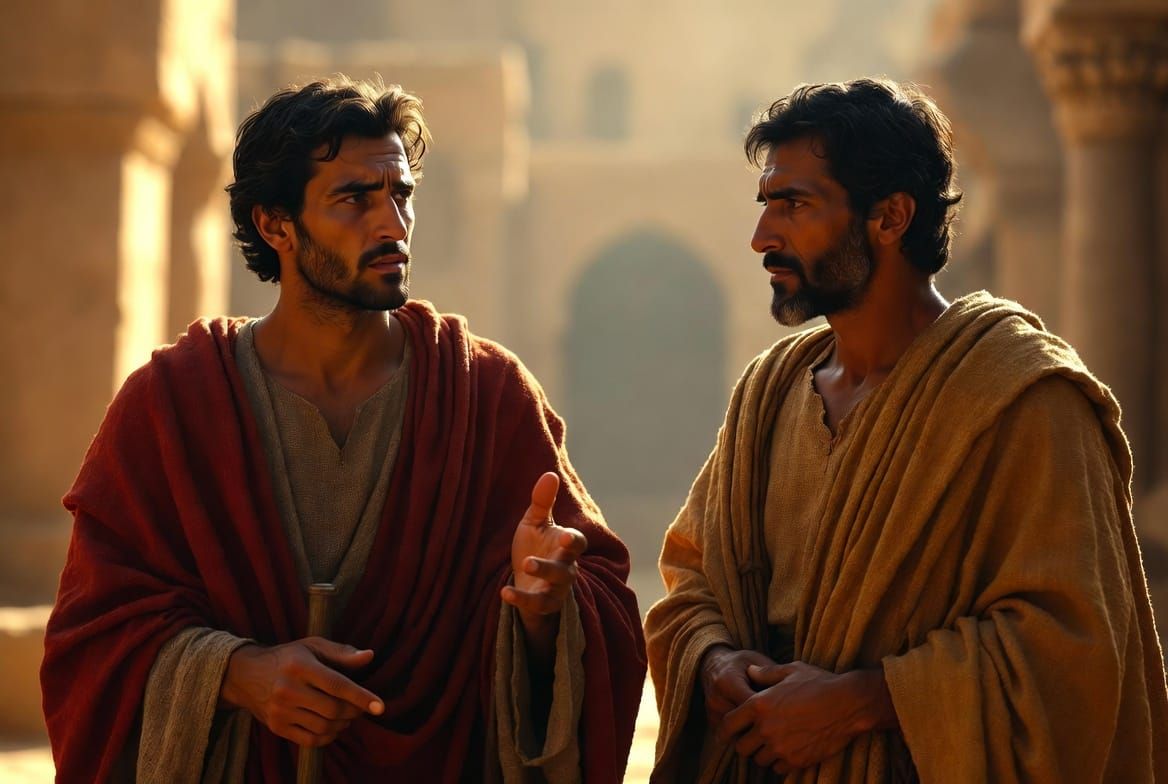
Feast Day: May 1
The Anglican calendar is ordered by a hierarchy of holy days, each carrying a different weight of observance. At the top sit the seven Principal Feasts — the highest days of the liturgical year. Below them are the Red-Letter Holy Days, appointed in the BCP 2019 with their own collects, propers, and lectionary readings, listed on page 688. They are called Red-Letter Days because, in the tradition of printing church calendars, these days appear in red ink, distinguished from the Optional Commemorations which appear in ordinary type. The Feast of Saint Philip and Saint James, Apostles, observed on May 1, is one of these Red-Letter Holy Days.
Philip and James are two distinct apostles honored on a shared feast day, a pairing rooted in the ancient Western tradition. A basilica in Rome was dedicated to both apostles on May 1 in the sixth century, and the date has been their joint feast ever since. They are not paired because of any particular relationship in the Gospels or in the early Church. They share a day because they share a church, and the calendar has kept them together across fifteen centuries. The pairing is a reminder that the calendar is a human and historical document as well as a theological one — and that even in its human arrangements, something theologically fitting can emerge. Philip and James are, in their very different ways, two portraits of apostolic faithfulness: one who asked the question that drew the greatest self-declaration Jesus ever made, and one who served faithfully without leaving a single recorded word.
Philip the Apostle
Philip is one of the more distinctly characterized apostles in John’s Gospel, appearing four times with a recognizable voice. His calling is in John 1:43–46 — Jesus finds Philip and says simply, “Follow me.” Philip’s first response is to go find Nathanael: “We have found him of whom Moses in the Law and also the prophets wrote, Jesus of Nazareth, the son of Joseph.” (John 1:45, ESV) Like Andrew, Philip’s first instinct after meeting Jesus is to bring someone else. He is a connector from the first moment.
In John 6:5–7, Jesus tests Philip before the feeding of the five thousand, asking where they are to buy bread for the crowd. Philip calculates the impossibility: “Two hundred denarii worth of bread would not be enough for each of them to get a little.” (John 6:7, ESV) He is an honest assessor of what is humanly possible. He is not wrong about the math. He simply has not yet learned to factor Jesus into his calculations. In John 12:20–22, Greeks come to Philip wanting to see Jesus. Philip, perhaps uncertain, consults Andrew, and together they bring the request to Jesus. Philip is again the point of contact between the outside world and the Lord within.
Philip’s most theologically significant moment is in John 14:8–11, the appointed Gospel for this feast. At the Last Supper in the Upper Room, Jesus has told his disciples that he is going to prepare a place for them and that they know the way where he is going. Philip’s request is simple and direct: “Lord, show us the Father, and it is enough for us.” (John 14:8, ESV) The desire is entirely reasonable. Moses asked to see God’s glory. The psalms long for the sight of God’s face. Philip is asking for what Israel has always asked for. And Jesus’ response is the most concentrated Christological declaration in the Fourth Gospel: “Have I been with you so long, and you still do not know me, Philip? Whoever has seen me has seen the Father.” (John 14:9, ESV) Philip’s question, born of honest longing rather than theological sophistication, precipitates the statement that gives the feast its theological center. The collect honors both apostles for bearing witness to Jesus as “the way, the truth, and the life” — the declaration Jesus makes in verse 6, just before Philip’s question. Philip is the apostle whose honest asking drew that declaration from the Lord.
James the Apostle
James son of Alphaeus is one of the least documented of the Twelve. He appears in the four apostolic lists in the Gospels and Acts — Matthew 10:3, Mark 3:18, Luke 6:15, Acts 1:13 — and nowhere else in the New Testament with any individual word or action. He is not James son of Zebedee, who has his own feast on July 25. He is not James of Jerusalem, the Lord’s brother, who also has his own feast on October 23. He is simply James son of Alphaeus, one of the Twelve, about whom nothing further is recorded.
This anonymity is itself a kind of testimony. James son of Alphaeus was present throughout the entire ministry of Jesus — at the callings, the teachings, the miracles, the Last Supper, the resurrection appearances, and the gathering in the Upper Room before Pentecost. He is numbered among the twelve witnesses to the resurrection who form the foundation of apostolic testimony. He received the same commission every other apostle received. And then he disappears from the written record entirely, leaving nothing behind except his presence in the lists and his share in the apostolic foundation. The collect prays that the Church would glorify the Name of Christ “in life and death.” James son of Alphaeus did exactly that, in whatever obscure corner of the world he carried the Gospel, without any record that has survived. His feast is the Church’s annual acknowledgment that most faithful witness is unrecorded.
The Theological Significance
Isaiah 30:18–21, the appointed Old Testament reading from the propers on page 730 of the BCP 2019, is the prophetic preparation for Philip’s question and Jesus’ answer: “And your ears shall hear a word behind you, saying, ‘This is the way, walk in it,’ when you turn to the right or when you turn to the left.” (Isaiah 30:21, ESV) The prophet’s vision of the Teacher who will no longer hide himself, whose voice will direct his people in the way, is fulfilled in Jesus’ declaration: “I am the way, and the truth, and the life.” (John 14:6, ESV) Philip asked to be shown the Father. Isaiah promised a teacher who would show the way. Jesus is both: the Way itself, and the voice that says walk in it.
Psalm 119:33–40, the appointed psalm, is the prayer of the one who wants to be taught the way of God’s statutes: “Teach me, O Lord, the way of your statutes; and I will keep it to the end.” (Psalm 119:33, ESV) The psalmist’s desire is Philip’s desire — show us, teach us, lead us in the way. And the feast’s appointed readings together answer that desire with the declaration that the Way is not a set of instructions but a person: the one who has been with the disciples all along, in whom the Father is fully present.
2 Corinthians 4:1–7, the appointed Epistle, gives the apostolic vocation its proper frame: “But we have this treasure in jars of clay, to show that the surpassing power belongs to God and not to us.” (2 Corinthians 4:7, ESV) The treasure is the knowledge of God’s glory in the face of Jesus Christ — exactly what Philip asked to see, exactly what the feast celebrates. The jars of clay are the apostles themselves: Philip who miscalculated the bread, James who left no record, and every subsequent bearer of the apostolic message whose weakness is the very condition under which the power of God is displayed. The feast of Philip and James is the feast of the treasure carried in ordinary clay.
The BCP 2019 Collect and Preface
The BCP 2019 appoints the following collect for the feast on page 628: “Almighty God, you gave to your apostles Philip and James the grace and strength to bear witness to Jesus as the way, the truth, and the life: Grant that we, being mindful of their victory of faith, may glorify in life and death the Name of our Lord Jesus Christ; who lives and reigns with you and the Holy Spirit, one God, now and for ever. Amen.” The collect names the apostles’ witness as a victory of faith — a phrase that honors both the grandeur of Philip’s theological moment and the quiet obscurity of James’s unrecorded faithfulness. Both are victories. The one who asked the question that drew Christ’s greatest self-disclosure and the one who served without leaving a word both bore witness to the same Lord in the same faith. The petition asks that their victory would shape the Church’s witness: to glorify the Name of Christ in life and in death, without qualification.
The Preface of Apostles, found on page 155 of the BCP 2019, is used at the Eucharist for this feast as for all apostolic feasts: “Through the great shepherd of your flock, Jesus Christ our Lord, who after his resurrection sent forth his apostles to preach the Gospel and to teach all nations, and promised to be with them always, even to the end of the ages.” (BCP 2019, p. 155) The preface is fitting for both apostles: Philip who was sent to bear witness to the Way, and James who was sent into obscurity to preach the Gospel where no record followed him.
Philip and James in Anglican Worship
The Feast of Saint Philip and Saint James has been observed on May 1 since the sixth century in the Western Church and was retained in the Church of England at the Reformation as a Red-Letter Holy Day. Red vestments are worn, as for all apostolic feasts. May 1 falls within the Easter season, and the resurrection context of the feast is fitting: Philip’s question in John 14 is asked in the Upper Room on the night before the crucifixion, but it is read and celebrated in the Easter season by the Church that knows the full answer — the one who said I am the way, the truth, and the life has been raised from the dead, vindicating every word of it.
When May 1 falls on a Sunday within the Easter season, the feast may be observed on that Sunday or transferred to the nearest following weekday, per the rubrics on page 689 of the BCP 2019.
Observing This Feast
To observe the feast: pray the collect from BCP 2019, p. 628. Read John 14:6–14 — the appointed Gospel — and hear Philip’s question as the honest longing it is: Lord, show us the Father, and it is enough for us. Let Jesus’ response reframe the whole of Christian faith: whoever has seen me has seen the Father. Read Isaiah 30:18–21 as the prophetic preparation for that declaration. Read 2 Corinthians 4:1–7 and sit with the image of the treasure in jars of clay — the knowledge of God’s glory in the face of Jesus Christ, carried by ordinary, weak, miscalculating human beings. And consider James son of Alphaeus: present throughout, faithful throughout, unrecorded throughout. Ask whether the Church’s unrecorded faithfulness is being offered as fully as its visible witness.
Conclusion
Philip and James are the feast of two apostles whose witness could not be more different in its shape — one who asked the question that drew the greatest Christological declaration in the Fourth Gospel, one who served in silence without leaving a single word. The collect honors both as bearers of the same victory of faith and asks that the Church would glorify the Name of Christ in life and in death. Both shapes of witness are needed. The visible, questioning, bringing, asking witness of Philip. The silent, faithful, unrecorded witness of James. Together they are the whole Church, asked to glorify the same Name by whatever means the Lord has given each one.
“Whoever has seen me has seen the Father. How can you say, ‘Show us the Father’? Do you not believe that I am in the Father and the Father is in me?” (John 14:9–10, ESV)