Saint Mary the Virgin: An Anglican Perspective
The Church can therefore honor Mary without hesitation and without excess. We call her blessed because Scripture calls her blessed, and with Mary we magnify the Lord who has done great things for her and, through her Son, has done great things for us.
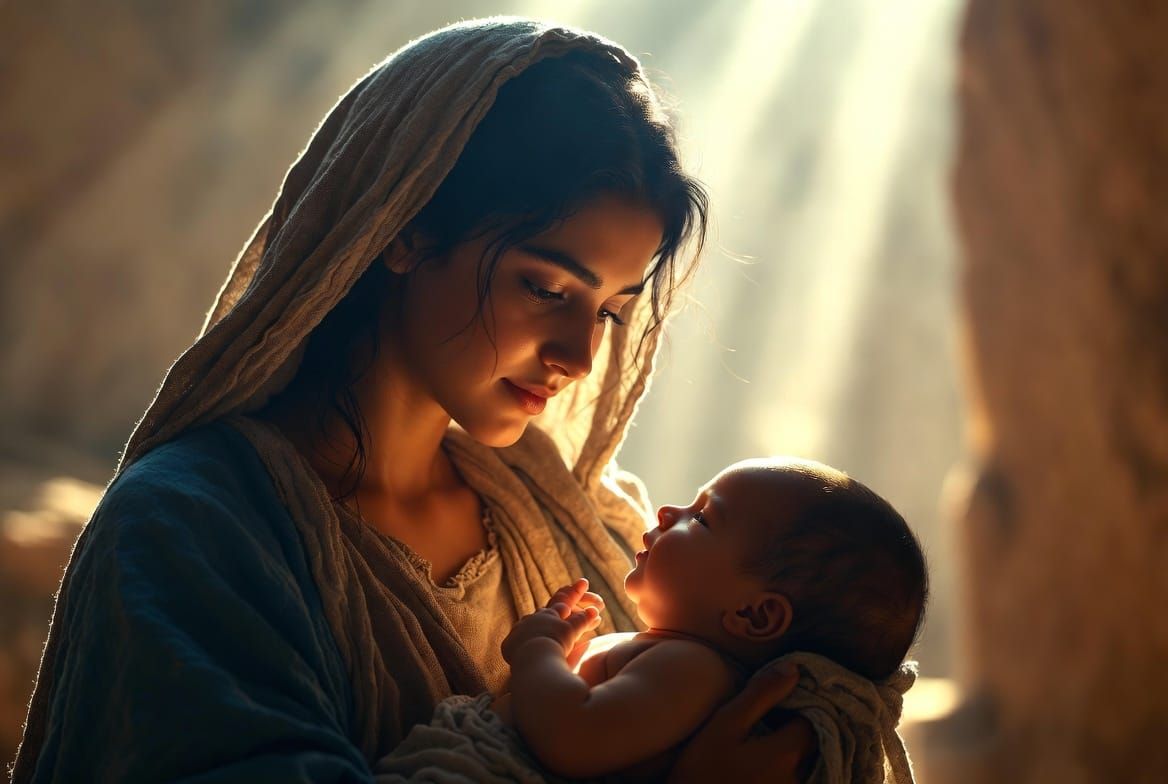
Feast Day: August 15
The Anglican calendar is ordered by a hierarchy of holy days, each carrying a different weight of observance. At the top stand the seven Principal Feasts, the highest-ranking days of the liturgical year. Below them are the Red-Letter Holy Days appointed in the BCP 2019 with their own Collects and propers. Saint Mary the Virgin, observed on August 15, is one of these Red-Letter Holy Days. The BCP appoints its Collect on page 631 and its readings in the Holy Day lectionary on page 731.
August 15 always falls within the Season after Pentecost, nine days after the Transfiguration on August 6. The long green season is interrupted first by the unveiled glory of the Son and then by a feast honoring the woman through whom that Son took our human nature. The appointed Gospel is Mary’s own song, the Magnificat, in which she praises the God who scatters the proud, brings down the mighty, exalts the humble, fills the hungry, and remembers his covenant mercy.
The feast honors Mary because of what God has done for her and through her. She is the Virgin Mother through whom the eternal Son took our flesh, the servant who received the Word of God in faith, the mother who stood near the Cross, and the disciple who waited with the apostles for the promised Holy Spirit. Anglican honor of Mary is at its strongest when it remains where Scripture and the Prayer Book place it: centered upon Jesus Christ.
What August 15 Is
The fuller calendar title of the feast is The Virgin Mary, Mother of Our Lord Jesus Christ. It is not the Assumption, and it is not the Dormition. In the Roman Catholic Church, August 15 is observed as the Assumption of the Blessed Virgin Mary, which includes the dogmatic teaching that Mary, having completed the course of her earthly life, was assumed body and soul into heavenly glory. Pope Pius XII defined that doctrine as dogma in 1950. In the Eastern Orthodox tradition, August 15 is observed as the Dormition of the Theotokos, commemorating Mary’s falling asleep in death and her glorification.
Anglican doctrine does not receive either the Assumption or the Dormition as revealed doctrine binding upon the Church. Scripture does not record the end of Mary’s earthly life, and the Church has no warrant to add later traditions concerning that end to the apostolic faith as though they had been revealed by God. Neither doctrine is necessary to explain or justify the Anglican observance of August 15.
The BCP 2019 therefore gives the day a deliberately different shape. Its Collect says, “O God, you have taken to yourself the blessed Virgin Mary, mother of your incarnate Son.” The prayer affirms that Mary belongs to Christ and shares in the glory of his eternal Kingdom, but it does not tell us how her earthly life ended or require a doctrine of bodily assumption. The Anglican feast rests instead upon what Scripture clearly gives us: Mary is the mother of the incarnate Son of God, the woman who received Gabriel’s announcement in faith, carried Jesus in her womb, gave birth to him, nurtured him, treasured his words, stood near his Cross, and remained with the apostolic Church in prayer before Pentecost. That is more than enough to justify the feast. The biblical Mary does not need to be enlarged by later speculation. She is already the woman whom Scripture says all generations will call blessed.
Mary in Scripture
The New Testament gives Mary a place of extraordinary dignity without making her the center of the Gospel. She appears repeatedly at decisive moments in the story of Christ, and every appearance finally directs us toward her Son. At the Annunciation, Gabriel tells Mary that she will conceive and bear the Son of the Most High. Her answer is one of the clearest expressions of receptive faith in Scripture: “Behold, I am the servant of the Lord; let it be to me according to your word.” (Luke 1:38, ESV)
Mary does not yet know all that obedience will cost. She has not heard Simeon say that a sword will pierce her soul, fled with Joseph and the child into Egypt, watched Jesus leave Nazareth for his public ministry, or stood near the Cross. She receives the Word she has been given and entrusts what she does not yet know to the God who has spoken.
At the Visitation, Mary carries the incarnate Lord to Elizabeth. The child in Elizabeth’s womb leaps at Mary’s greeting, and Elizabeth, filled with the Holy Spirit, calls her “the mother of my Lord.” (Luke 1:43, ESV) Mary responds not by magnifying herself but by magnifying God: “My soul magnifies the Lord, and my spirit rejoices in God my Savior.” (Luke 1:46-47, ESV) Her blessedness is real, but from the beginning she understands that the glory belongs to God.
At the Nativity, Mary receives the testimony of the shepherds and “treasured up all these things, pondering them in her heart.” (Luke 2:19, ESV) At the Presentation, Simeon tells her that “a sword will pierce through your own soul also.” (Luke 2:35, ESV) When the twelve-year-old Jesus remains in the Temple, Mary and Joseph do not fully understand his words, yet Luke again tells us that Mary treasures these things in her heart. Her faith is not presented as perfect comprehension. She receives, remembers, trusts, and continues to walk with the God whose purposes exceed what she can yet see.
At Cana, Mary directs the servants away from herself and toward Christ: “Do whatever he tells you.” (John 2:5, ESV) At the Cross, she remains near her dying Son while Jesus entrusts her to the beloved disciple. After the Ascension, Acts places “Mary the mother of Jesus” among the disciples persevering together in prayer as they await the promised Holy Spirit. (Acts 1:14, ESV) Scripture therefore gives us a remarkably consistent portrait: Mary receives the Word of God, believes his promise, treasures what she does not yet understand, obeys, suffers, waits, and continually points beyond herself to Christ.
The Mother of God
The Nicene Creed names Mary at the heart of its confession of the Incarnation: the eternal Son “was incarnate from the Holy Spirit and the Virgin Mary, and was made man.” Mary matters doctrinally because Jesus matters doctrinally. What the Church says about her serves what the Church confesses about him.
This is the purpose of the ancient title Theotokos (theh-oh-TOH-kos), commonly translated “God-bearer” or “Mother of God.” The Council of Ephesus in AD 431 defended the title because the child born of Mary is not merely a human person somehow existing alongside the divine Son. The one conceived in her womb and born from her body is the eternal Son himself, one Person, truly God and truly man.
Calling Mary Theotokos does not mean that she is the source of Christ’s divinity, that she existed before God, or that the divine nature originated from her. It means that the Person to whom she gave birth is God the Son incarnate. The title is therefore fundamentally a confession about Jesus Christ, protecting the unity of his Person and the reality of the Incarnation. This is thoroughly consistent with the Prayer Book’s own language. The Collect calls Mary “mother of your incarnate Son,” while the Christmas Preface confesses that Jesus Christ, “by the Holy Spirit and the Virgin Mary his mother, was made truly man.” Mary’s honor is inseparable from the mystery of the Word made flesh.
The Appointed Readings
The BCP appoints Isaiah 61:10-11, Psalm 34, Galatians 4:4-7, and Luke 1:46-55 for Saint Mary the Virgin. These fixed Holy Day readings are printed on page 731.
Isaiah begins with joy: “I will greatly rejoice in the LORD; my soul shall exult in my God, for he has clothed me with the garments of salvation.” (Isaiah 61:10, ESV) That rejoicing prepares us to hear the Magnificat, where Mary’s soul also exults, not in her own achievement, but in the saving action of God. Psalm 34 makes the connection still clearer: “Oh, magnify the LORD with me, and let us exalt his name together!” (Psalm 34:3, ESV) Mary will sing, “My soul magnifies the Lord.” Both Psalm and Gospel move from personal experience of God’s mercy into public praise. The person who has received grace calls others to glorify the giver of grace.
Galatians 4:4-7 provides the theological center of the feast: “When the fullness of time had come, God sent forth his Son, born of woman, born under the law, to redeem those who were under the law, so that we might receive adoption as sons.” (Galatians 4:4-5, ESV) Paul does not name Mary here. He says simply, born of woman. Yet that brief phrase matters enormously. The eternal Son truly entered human history by human birth, and the woman from whom he was born is the woman the Church honors on August 15. The movement of the passage is entirely grace-first. God sends his Son. The Son is born of woman. The Son redeems. Through him we receive adoption. Mary stands within that saving action as its uniquely graced human participant, but salvation is accomplished by her Son.
The Magnificat
The appointed Gospel is Luke 1:46-55, the Magnificat. Mary has received Gabriel’s announcement and traveled to Elizabeth, who greets her as blessed and calls the child she carries “my Lord.” Mary then sings, “My soul magnifies the Lord, and my spirit rejoices in God my Savior, for he has looked on the humble estate of his servant.” (Luke 1:46-48, ESV)
Her song is saturated with the Scriptures of Israel, especially Hannah’s song in 1 Samuel 2 and the language of the Psalms. The proud are scattered, the mighty brought down, the humble exalted, the hungry filled, and Israel helped according to God’s covenant promise to Abraham. Mary sings before Bethlehem, before Calvary, before Easter, and before Pentecost, yet she speaks with the confidence of faith because God’s promised fulfillment has already begun in the child she carries.
The Magnificat is not a vague celebration of social reversal detached from the Gospel. The reversals Mary proclaims are the work of the covenant God acting in mercy through the coming of his Messiah. Pride is humbled because God is King. The lowly are exalted because God remembers mercy. Israel is helped because God remains faithful to the promise given to Abraham. Mary’s song begins personally: God has looked upon her, and the Mighty One has done great things for her. Then it opens outward toward Israel. Grace received becomes praise offered, and personal blessing opens into the saving purpose of God.
Mary and Grace
Mary’s own words prevent Christian honor from becoming flattery detached from grace. She does not explain her blessedness by pointing to some independent greatness within herself. She says that God “has looked on the humble estate of his servant” and that “he who is mighty has done great things for me.” (Luke 1:48-49, ESV) Gabriel’s greeting makes the same point: “Greetings, O favored one, the Lord is with you!” (Luke 1:28, ESV)
Grace precedes response. God acts, God calls, God gives, and Mary receives his Word in faith. That makes her obedience more significant, not less. Grace does not make human faith unreal. It creates and sustains the conditions in which faithful response becomes possible. Mary’s “let it be to me according to your word” is a real act of trusting obedience, but it is the response of faith to the prior favor and initiative of God. This keeps the feast within the grammar of the Gospel. Christians do not honor Mary because she displaces Christ or supplies something his saving work lacks. We honor her because God chose her, because she believed his Word, and because through her the eternal Son assumed the human nature in which he redeemed us.
“All Generations Will Call Me Blessed”
Mary herself says, “For behold, from now on all generations will call me blessed.” (Luke 1:48, ESV) Christians should therefore not be embarrassed to call Mary blessed. Scripture tells us to do so, and the Church should not become less generous in its language about Mary than the Bible itself.
Mary immediately tells us why she is blessed: “for he who is mighty has done great things for me, and holy is his name.” (Luke 1:49, ESV) The blessedness truly belongs to Mary, but the glory belongs to God. The same balance appears in Elizabeth’s Spirit-filled greeting: “Blessed are you among women, and blessed is the fruit of your womb!” (Luke 1:42, ESV) Mary is blessed among women because blessed above all is the fruit of her womb.
This gives Anglicans room to honor Mary warmly without either neglect or excess. Some Protestant reactions to later Marian abuses have made Mary nearly invisible, while some later devotion has given her roles and doctrines Scripture does not give. Neither response is necessary. The richest place to stand is exactly where Scripture stands: call Mary blessed, give thanks for her faith, and magnify the Lord who has done great things for her.
Mary’s Virginity
The Prayer Book deliberately names her the Virgin Mary, and that title belongs to the Church’s confession of Christ. Matthew and Luke both testify that Jesus was conceived before Mary and Joseph came together, by the power of the Holy Spirit. Mary herself asks Gabriel, “How will this be, since I am a virgin?” (Luke 1:34, ESV)
The virgin conception is not a decorative detail in the Gospel story. It testifies that the Incarnation begins with divine initiative. The Son does not enter the world through ordinary human generation. He is conceived by the Holy Spirit and born of the Virgin Mary. The Church has therefore continued to name her as the Virgin in its Creeds and worship because her virginity bears witness to the miraculous coming of the Son. Once again, the grace-first order is unmistakable. The Incarnation begins not with human planning or achievement but with the sovereign action of God. Mary receives God’s Word in faith, and by the Holy Spirit the eternal Son takes our flesh from her.
Mary at the Cross
The blessing given to Mary does not spare her suffering. At the Presentation, Simeon tells her that a sword will pierce through her own soul, and that word reaches one of its deepest fulfillments when Mary stands near the Cross while her Son dies. John places her there with the beloved disciple, and Jesus, even in his suffering, entrusts Mary to the disciple and the disciple to Mary.
Mary therefore belongs not only to the joy surrounding Christ’s birth but also to the sorrow of his Passion. She receives the child in Bethlehem and stands near him at Calvary. The woman who once said, “Let it be to me according to your word,” eventually discovers just how costly obedience can become. Yet even there, the saving work belongs to Christ alone. Mary does not stand at the Cross as a co-redeemer or as one who contributes to the atoning sacrifice. She stands there as mother and disciple while her Son gives his life as the one sufficient sacrifice for the sins of the world. The sword pierces her soul, but the blood that redeems the world is his.
Mary and the Apostolic Church
Mary does not disappear from the New Testament at the Cross. Acts places her with the apostles and the wider company of believers after the Ascension: “All these with one accord were devoting themselves to prayer, together with the women and Mary the mother of Jesus.” (Acts 1:14, ESV)
That final biblical picture is deeply fitting. The woman who received the Word from Gabriel now waits with those who have received the Word from Christ. The mother of Jesus stands among the disciples awaiting the promised gift of the Holy Spirit. She does not stand over the apostolic Church but within it, praying and waiting upon God alongside the rest of Christ’s people. Scripture therefore leaves us with a beautiful final picture of Mary: faithful, prayerful, and gathered with the Church around the promise of God. Her final biblical appearance is not one of exaltation above the apostles but of fellowship with them.
The BCP 2019 Collect
The Collect on page 631 prays, “O God, you have taken to yourself the blessed Virgin Mary, mother of your incarnate Son: Grant that we, who have been redeemed by his blood, may share with her the glory of your eternal kingdom; through Jesus Christ our Lord, who lives and reigns with you, in the unity of the Holy Spirit, one God, now and for ever. Amen.”
The prayer moves beautifully through Incarnation, redemption, and glory. Mary is the mother of the incarnate Son. The Church is a people redeemed by his blood. The promised destination is the glory of his eternal Kingdom. The Collect honors Mary while keeping every saving action centered upon Christ.
The phrase “you have taken to yourself” should be allowed to say exactly what it says without being made to carry a doctrine the Prayer Book does not state. Mary is with God and shares the glory of his Kingdom. The Collect does not tell us the manner in which her earthly life ended or teach that her body was assumed into heaven. Nor does it invoke Mary, ask for her intercession, or assign her a mediatorial role beside Christ. The prayer is addressed entirely to God through Jesus Christ. Mary appears within it as the blessed mother of the incarnate Son and as one who shares the glory into which Christ brings his redeemed people. The movement is remarkably compact: the Son took flesh from Mary, shed his blood for sinners, and brings his people into his Kingdom.
The Christmas Preface in August
The BCP appoints the Preface of Christmas for this feast. It gives thanks because God gave Jesus Christ, his only Son, to be born for us, and because by the Holy Spirit and the Virgin Mary his mother he was made truly man, without sin, that we might be cleansed from sin and receive the privileges of God’s children.
The use of the Christmas Preface on August 15 makes the theological center of the feast unmistakable. This is fundamentally an Incarnational feast. Mary is honored because through her the eternal Son entered our human life. The one through whom all things were made was conceived in her womb. The one who upholds the universe was carried in her body. The one who would redeem us by his blood was born of her flesh. The feast therefore does not end with Mary. It leads through Mary to the wonder of the Word made flesh, reminding the Church that the Incarnation was not an appearance or abstraction. The Son truly became man, and he did so by the Holy Spirit and the Virgin Mary his mother.
The Feast in Anglican Worship
August 15 has deep roots in the Christian calendar, but the BCP 2019 does not name the day the Assumption or the Dormition. Its calendar gives August 15 the Red-Letter title The Virgin Mary, Mother of Our Lord Jesus Christ. That distinction matters. Anglicanism does not need a doctrine of Mary’s bodily Assumption or a doctrine of her Dormition in order to honor her. The Church honors what God has revealed: Mary’s unique place in the Incarnation, her faith, her blessedness, her obedience, her suffering, and her presence within the praying apostolic Church.
Nothing is lost by refusing to bind consciences to doctrines Scripture does not teach. The biblical Mary is already worthy of profound Christian gratitude and honor. The Magnificat also gives Mary a place in Anglican worship far beyond August 15. Since the first Book of Common Prayer in 1549, Mary’s song has stood within the Anglican Daily Office tradition. Generation after generation of Anglicans has therefore taken the blessed Virgin’s words upon its own lips and joined her in magnifying the Lord. This is one of the most thoroughly Anglican forms of Marian devotion: the Church honors Mary by singing with her.
The Liturgical Character
White is customarily used for Saint Mary the Virgin in Anglican worship. It is fitting for a feast centered upon the Virgin Mother of the incarnate Son and upon the joy of the Incarnation. August 15 interrupts the green ordinarily associated with the Season after Pentecost and turns the Church’s attention again toward the mystery celebrated at Christmas: the Word made flesh. The brightness of the feast belongs finally to the glory of Christ. Mary is honored because of the Son she bore, and the festal color serves the same Christ-centered movement as the Collect, readings, and Preface.
Observing This Feast
Saint Mary the Virgin is observed on August 15 and always falls within the Season after Pentecost. The Collect is found on page 631, and the appointed readings are Isaiah 61:10-11, Psalm 34, Galatians 4:4-7, and Luke 1:46-55. The Preface of Christmas is appointed, and white is customarily used in Anglican worship.
Begin with the Magnificat and notice where Mary directs the glory. She calls herself blessed, but she magnifies the Lord. She rejoices, but she rejoices in “God my Savior.” She recognizes that something extraordinary has happened to her, but the explanation is that the Mighty One has done great things for her. Her song teaches the Church how to honor her rightly because Mary herself keeps directing attention toward the God who saves.
Read Galatians 4 and linger over the phrase “born of woman.” The Son through whom the universe was created entered the world through the ordinary human realities of conception, gestation, and birth. The Incarnation is not an abstraction. The Word truly became flesh, and Mary’s motherhood bears witness to the reality of that flesh.
Then honor Mary in the manner Scripture itself gives us. Call her blessed, give thanks for her faith, learn from her obedience, join her Magnificat, and hear again her words at Cana: “Do whatever he tells you.” (John 2:5, ESV) Those words provide an enduring pattern for Marian devotion because the Virgin Mother continually directs the Church toward her Son.
Conclusion
Saint Mary the Virgin gives the Church an annual occasion to do what Scripture itself says every generation will do: call Mary blessed. We honor the young woman who received Gabriel’s astonishing announcement in faith, the mother who carried the incarnate Son in her body, the disciple who treasured mysteries she did not yet understand, the mother who stood near the Cross, and the believer who waited in prayer with the apostolic Church.
Yet Mary’s own song prevents the feast from terminating in Mary: “My soul magnifies the Lord, and my spirit rejoices in God my Savior.” (Luke 1:46-47, ESV) Her blessedness displays the grace of God. Her motherhood bears witness to the Incarnation. Her obedience teaches the Church what receptive faith looks like. Her words at Cana direct us toward her Son. Proper Marian honor therefore does not compete with Christ-centered faith. It serves it.
The Collect gathers the feast into that same Christ-centered hope. Mary is honored as the mother of the incarnate Son, but redemption is accomplished by his blood and the Kingdom belongs to him. The Church therefore asks that “we, who have been redeemed by his blood, may share with her the glory of your eternal kingdom.” God acts first: he favors Mary, calls Mary, gives the Son, accomplishes redemption, and brings his people into glory. Mary’s greatness lies in the grace she receives and the faith with which she answers.
The Church can therefore honor Mary without hesitation and without excess. We call her blessed because Scripture calls her blessed, and with Mary we magnify the Lord who has done great things for her and, through her Son, has done great things for us.