She Said Yes: Saint Mary the Virgin (Luke 1:46-55)
The feast of August 15 is therefore, at its heart, a feast about who Jesus is. Mary cannot be honored rightly without Christ remaining at the center. Scripture gives us a portrait of Mary that is both more prominent and more restrained than popular piety has sometimes recognized.
August 15, 2026, Saint Mary the Virgin, Red-Letter Holy Day, Season after Pentecost
Luke 1:46-55; Psalm 34; Galatians 4:4-7; Isaiah 61:10-11
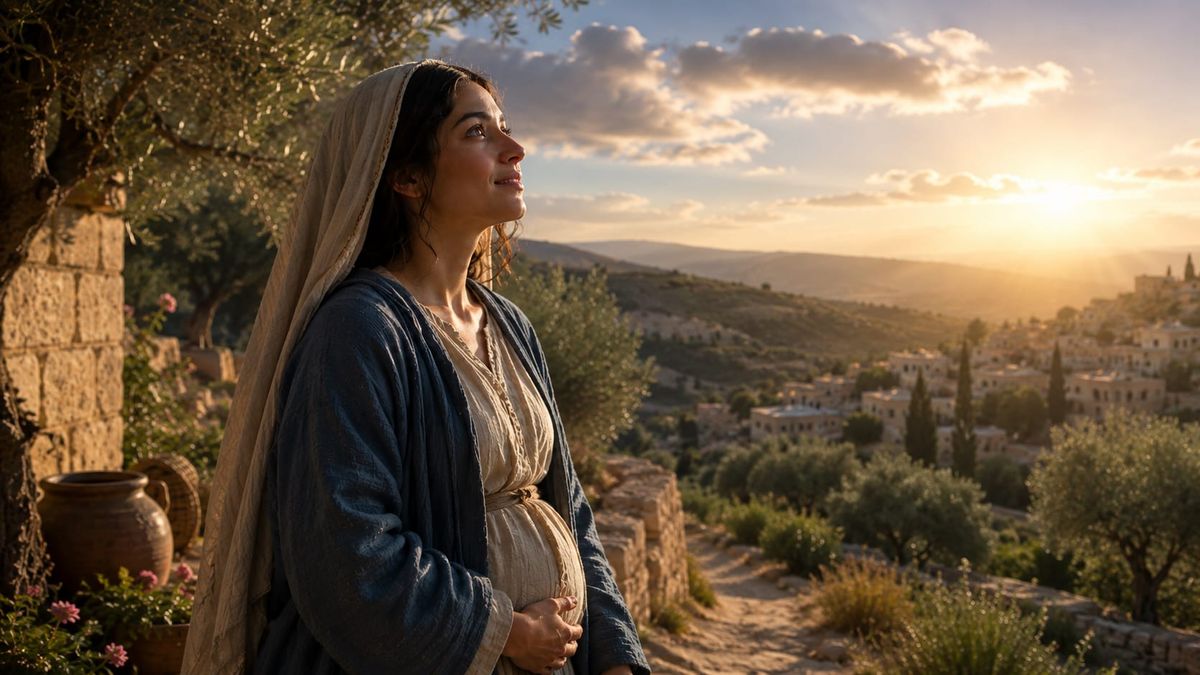
The long green season is interrupted on August 15. The Season after Pentecost stretches for months on either side of this feast, the slow, patient work of formation in the ordinary disciplines of discipleship. Nine days earlier, the feast of the Transfiguration interrupts it with a mountain and the unveiled glory of the Son. Now it is interrupted again, not with a mountain but with a young woman in the hill country of Judea, singing before she knows how any of what she is singing about will be accomplished.
Before we enter the Magnificat, we need to know what this feast is and what it is not. The BCP 2019 names the day Saint Mary the Virgin and gives the fuller calendar title, the Virgin Mary, Mother of Our Lord Jesus Christ. Not the Assumption. Not the Dormition. In the Roman Catholic tradition, August 15 is the Feast of the Assumption, defined as dogma in 1950: the teaching that Mary was taken body and soul into heaven at the end of her earthly life. In the Eastern Orthodox tradition, August 15 is the Feast of the Dormition. Both traditions make specific claims about what happened to Mary at the end of her earthly life. The BCP 2019 does not bind the Church to either claim.
Its Collect says simply, “O God, you have taken to yourself the blessed Virgin Mary, mother of your incarnate Son.” The fact of God’s gracious reception of Mary is affirmed. The manner in which her earthly life ended is not defined. The Anglican feast affirms what Scripture gives us without binding the Church to later claims Scripture does not reveal.
This is not evasion. It is the Anglican way of honoring the fact that Scripture does not record the end of Mary’s earthly life and that the Church is not required to define as revealed doctrine what Scripture does not reveal. The BCP 2019 grounds its Marian observance in what the Scriptures plainly give us: Mary is the mother of the incarnate Son of God. She bore him in her body, nursed him and raised him, stood near the Cross, and after the Ascension was present with the apostles in the upper room, waiting in prayer for the promised Holy Spirit. That is enough to justify a feast.
The BCP makes its own theological statement about August 15 by what it appoints for the feast. It appoints the Christmas Preface. Not a Marian preface. The Christmas Preface. “Because you gave Jesus Christ, your only Son, to be born for us; who, by the Holy Spirit and the Virgin Mary his mother, was made truly man, yet without the stain of sin, that we might be cleansed from sin and given the right to become your children.” (BCP 2019, p. 152)
The Christmas Preface in August is a theological statement, not a liturgical accident. By assigning this Preface, the BCP tells us what this feast is about: the Incarnation. Mary is honored because through her the eternal Son truly entered our human life.
Galatians 4 says exactly that: “when the fullness of time had come, God sent forth his Son, born of woman, born under the law, to redeem those who were under the law, so that we might receive adoption as sons.” (Galatians 4:4-5, ESV) Paul does not name Mary. He says simply, born of woman. She is the particular woman from whom the eternal Son was truly born.
That order matters. God sends his Son. God acts first. God’s promise, grace, and saving purpose come before Mary’s response. Mary is the woman from whom, in the fullness of time, the eternal Son truly took our humanity. Her yes did not initiate God’s saving purpose; it was the faithful response of a servant already addressed and favored by God. Grace came first. Her obedience was real, courageous, and beautiful precisely because it was the response of faith to what God had already spoken.
The Nicene Creed, which the Church confesses on Sundays, Major Feast Days, and other appointed occasions, names Mary at the heart of its confession of the Incarnation: the Son “was incarnate from the Holy Spirit and the Virgin Mary, and was made man.” The Eastern Church’s title Theotokos, God-bearer, was defended at the Council of Ephesus in AD 431 not to exalt Mary beyond what Scripture warrants, but to protect the doctrine of the Incarnation. The child she bore is not merely a man somehow associated with the divine Son. He is God the Son incarnate, truly God and truly man.
The feast of August 15 is therefore, at its heart, a feast about who Jesus is. Mary cannot be honored rightly without Christ remaining at the center.
Scripture gives us a portrait of Mary that is both more prominent and more restrained than popular piety has sometimes recognized. Mary appears at many decisive moments in the Gospel narrative: the Annunciation, the Visitation, the Nativity, the Presentation, the finding in the Temple, the wedding at Cana, the Cross, and then with the apostolic Church after the Ascension. Again and again, she does the same things. She receives. She holds. She obeys. She waits.
The hinge of everything is the Annunciation. The angel Gabriel comes to her in Nazareth with an announcement beyond anything she could have prepared for. Her response is simple and immense: “Behold, I am the servant of the Lord; let it be to me according to your word.” (Luke 1:38, ESV)
She does not fully understand what is happening. She has been told something about the child she will bear. She has not yet heard Simeon speak of a sword piercing her soul. She has not fled with Joseph and the child into Egypt. She has not stood near the Cross. She says yes to what she has been told and entrusts the rest to God.
That yes is extraordinary not because Mary originates the plan of salvation, but because she receives God’s Word in faith before the cost is visible. She says yes to what God has spoken and entrusts what she cannot yet see to him. That is the faith the feast honors: not heroic certainty, but receptive obedience born of grace.
After the Annunciation, Mary travels in haste to Elizabeth in the hill country of Judea. Elizabeth greets her with a Spirit-filled declaration: “Blessed are you among women, and blessed is the fruit of your womb!” (Luke 1:42, ESV) Then Mary sings. What she sings is the Gospel appointed for this feast: the Magnificat.
The Magnificat is one of the great songs of the new covenant. Mary sings before Bethlehem, before Calvary, before Easter, and before Pentecost. Yet she sings with the confidence of faith because God’s promised fulfillment has already begun in the child she carries.
Listen to the movement of her song: “My soul magnifies the Lord, and my spirit rejoices in God my Savior, for he has looked on the humble estate of his servant.” (Luke 1:46-48, ESV) The Magnificat begins personally. Mary is not making an abstract statement about God’s general tendencies toward the humble. She is saying: he has looked on me. He has done great things for me. The song begins in the particular, in one woman’s experience of what God has done.
Then it opens outward. His mercy is for those who fear him from generation to generation. He has shown strength with his arm. He has scattered the proud. He has brought down the mighty from their thrones and exalted those of humble estate. He has filled the hungry with good things, and the rich he has sent away empty. He has helped his servant Israel in remembrance of his mercy, as he spoke to Abraham and to his offspring forever.
The reversal the Magnificat announces is not merely social commentary. It is the shape of God’s action throughout the biblical story. The proud are brought down because pride puts the creature where God alone belongs. The hungry are filled because God is the giver and provider of every good thing. Israel is helped because God remembers his covenant mercy. In the child Mary carries, all of this is coming to its fulfillment.
This is not new theology. It is Hannah’s song from 1 Samuel 2. It is the Psalms of the poor. It is Isaiah 61: “I will greatly rejoice in the LORD; my soul shall exult in my God, for he has clothed me with the garments of salvation.” (Isaiah 61:10, ESV) Psalm 34 says, “Oh, magnify the LORD with me, and let us exalt his name together!” (Psalm 34:3, ESV) Magnificat means magnifies. The psalm and the canticle share the same posture, the same movement from personal deliverance to communal praise.
Mary is not singing a different story from Israel. She is singing Israel’s story as it begins to reach its fulfillment in Christ. What the Law and the Prophets anticipated is arriving in the Son she carries.
“All generations will call me blessed,” she sings, and the Church should do exactly that. But we call Mary blessed not because she is above us and not because she stands as a mediator between us and her Son. The BCP Collect is careful here. It does not ask for Mary’s intercession. It does not attribute to her a mediatorial role. It names her as a fellow recipient of the redemption accomplished by her Son’s blood and asks that the Church may share the glory she has already received: “Grant that we, who have been redeemed by his blood, may share with her the glory of your eternal kingdom.” (BCP 2019, p. 631)
The movement of the Collect is from the Incarnation to the blood of the Cross to the glory of the Kingdom. Mary is not the center of that movement. Christ is. She is within the company of those he redeems.
We honor Mary for what Scripture gives us. We see the obedience of the Annunciation. We see the faith of the Visitation, when she carries the incarnate Lord to Elizabeth and the child in Elizabeth’s womb leaps at her greeting. We see the pondering heart of the Nativity, where she treasures the shepherds’ words. We see her near the Cross, where the sword Simeon foretold pierces her soul while her Son offers the one sufficient sacrifice for the sins of the world. And after the Ascension we see her with the apostles in the upper room, waiting in prayer for the promised Holy Spirit.
Through those moments the pattern remains: she receives, she holds, she obeys, she waits. That is the pattern of her faith. That is what the feast honors.
What does August 15 ask of us? It asks for the same receptive faith we see at the Annunciation: the faith that hears the Word of God and entrusts itself to him before the full cost is visible. It asks for the confidence of the Magnificat, confidence that the God who looked upon the humble estate of his servant is the same God who scatters the proud, fills the hungry, remembers his mercy, and remains faithful to his promises. It asks for the willingness to hold in our hearts what we do not yet fully understand, as Mary treasured what she had received and waited for God to make his purposes clear.
That pattern is also what the Collect places before us. It moves through three moments: the Incarnation, the blood of the Cross, and the glory of the eternal Kingdom. Mary is bound to the first by her unique calling as the mother of the incarnate Son. She stands near the second as mother and disciple. And by God’s grace she shares the third with all whom Christ has redeemed.
The petition asks not that we receive Mary’s help but that we share her destination. “We, who have been redeemed by his blood.” That is what Mary and the whole Church are: the redeemed of Christ. The Collect places her not over the Church but within the communion of those whom her Son saves.
The long Season after Pentecost is about this kind of formation. Not merely accumulating knowledge about God, but learning the posture of reception: hearing the Word and trusting the God who speaks it, obeying before every consequence is visible, holding what we have been given when we do not yet understand it, and waiting in hope because the God who has promised is faithful.
Mary did not save the world by saying yes. God saved the world through his Son. But Mary’s yes shows us what grace-formed faith looks like when God’s Word comes near and calls for trust.
She said yes. He was born. We were redeemed.
All generations shall call her blessed, and the Church should do exactly that. Not because she stands above Christ’s redeemed people, but because she stands among them as the blessed mother of the incarnate Son, a servant who received the Word of God in faith and magnified the Lord who had done great things for her.
“My soul magnifies the Lord, and my spirit rejoices in God my Savior.” (Luke 1:46-47, ESV)
In the Name of the Father, and of the Son, and of the Holy Spirit. Amen.