Show Us the Father: Saint Philip and Saint James (John 14:6-14)
Philip and James remind us that some Christian faithfulness is visible and much of it is hidden. God sees both, gives grace and strength, and calls ordinary people to bear witness to Jesus as the way, the truth, and the life.
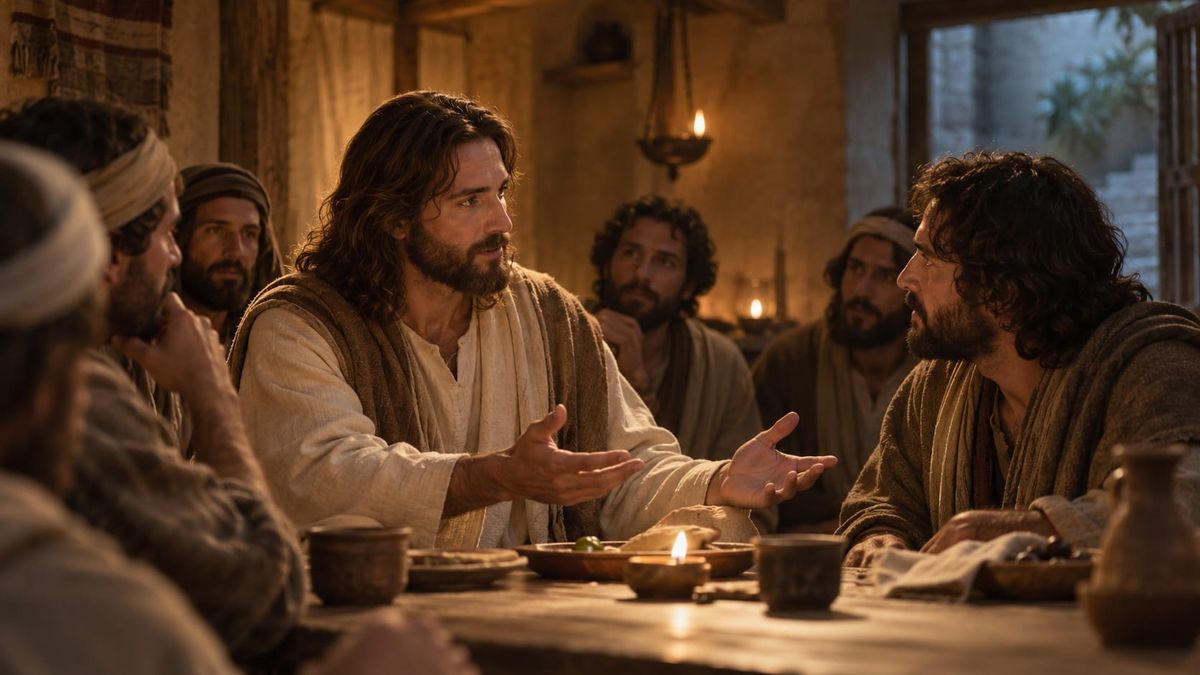
May 1, 2026, Saint Philip and Saint James, Red-Letter Holy Day, Season of Easter
John 14:6–14, Psalm 119:33–40, Isaiah 30:18–21, 2 Corinthians 4:1–7
Alleluia! Christ is risen!
Grace, mercy, and peace from God our Father and the Lord Jesus Christ be with you on this Feast of Saint Philip and Saint James.
The Church places Philip and James together on this day, although Scripture gives us very different pictures of them. Philip appears several times in John’s Gospel, bringing people to Jesus, asking questions, and learning in public. James son of Alphaeus is almost the opposite. Scripture names him among the Twelve but records no individual speech or episode under his name. One apostle is visible; the other is almost entirely hidden. Yet the Collect places them side by side and says that God gave them both “the grace and strength to bear witness to Jesus as the way, the truth, and the life.” That is where this feast begins, not with two remarkable men, but with the grace God gave them and the Christ to whom they bore witness.
Verse 6 of our Gospel gives us the center of the whole feast. Jesus says, “I am the way, and the truth, and the life. No one comes to the Father except through me.” (John 14:6, ESV) We hear that verse so often that it can lose some of its force, but there is nothing modest about the claim Jesus is making. He does not say that he knows the way to God, that he has discovered certain truths about God, or that he can teach us how to obtain spiritual life. He says, “I am the way, and the truth, and the life.” Christianity begins there. The way to the Father is not finally a religious technique. The truth is not finally an idea we master. Eternal life is not something we achieve by becoming sufficiently spiritual, moral, disciplined, or enlightened. The way, the truth, and the life are found in a person, Jesus Christ.
Then Jesus says something our culture finds much harder to hear: “No one comes to the Father except through me.”There is no way to make that sentence mean that Jesus is merely one path among many equally valid paths to God. He does not leave us that option. If Jesus is telling the truth, then the Father is known through the Son, reconciliation with God comes through the Son, and eternal life is found in the Son. But we must also hear when Jesus says it. These words are spoken on the night before the Cross. The one who says, “No one comes to the Father except through me,” is about to give himself so that sinners may come to the Father through him. Jesus is not standing in front of a locked door keeping unworthy people away. He is going to the Cross to open the way that we could never open for ourselves.
That is the difference between Christian exclusivity and human pride. Christianity does not say, “We were clever enough to find the right road.” The Gospel says we were lost, and the Way came looking for us. We were dead in sin, and the Life came to give himself for us. We were blinded by falsehood, and the Truth came among us full of grace and truth. God is the first mover from beginning to end. That is why the Collect is so important this morning. It does not say that Philip and James found enough courage within themselves to become apostles. It says, “Almighty God, you gave to your apostles Philip and James the grace and strength to bear witness.” God gave. They received. Then they bore witness. Grace comes before obedience, before courage, before mission, before anything we might call Christian faithfulness.
Then in verse 8 Philip speaks: “Lord, show us the Father, and it is enough for us.” (John 14:8, ESV) Philip sometimes gets treated as though he has asked a foolish question, but I do not think we should hear him that way. His request reaches very deep into the story of God’s people. Moses asked to see God’s glory. The Psalms long for the face of God. Human beings were made for communion with God, and Philip gives words to that longing: “Show us the Father.” There is something very human in that request. We want to know what God is like, whether he sees us, whether he is merciful, whether his promises can be trusted when life becomes painful, and whether the God who made us can actually be known and not merely discussed.
Verse 9 gives Jesus’ answer: “Have I been with you so long, and you still do not know me, Philip? Whoever has seen me has seen the Father.” (John 14:9, ESV) That is an astonishing answer. Jesus does not say, “Philip, I will point you beyond myself.” He does not say, “I can give you a better description of the Father.” He says, “Whoever has seen me has seen the Father.” The Father and the Son are not the same Person. Jesus makes that clear immediately when he speaks in verses 10 and 11 of being in the Father and the Father being in him. But the Son reveals the Father perfectly because he eternally shares the one divine nature with the Father. If you want to know the heart of God, look at Jesus Christ.
Look at the one who receives sinners and eats with them, who touches the unclean rather than recoiling from them, who speaks hard truth to the self-righteous and mercy to the broken. Look at the one who weeps at Lazarus’s tomb, who washes the feet of disciples who will abandon him before morning, who stretches out his hands on the Cross, and whose tomb stands empty on Easter morning. The God we worship is not hiding behind Jesus. That is exactly where our reading from 2 Corinthians meets the Gospel. Paul says that God has shone in our hearts “to give the light of the knowledge of the glory of God in the face of Jesus Christ.” (2 Corinthians 4:6, ESV) Philip says, “Show us the Father,” and Paul tells us that the glory of God is known in the face of Jesus Christ.
So if our picture of God is different from Jesus, something has gone wrong. If we imagine a Father reluctant to save while Jesus must persuade him to be merciful, that is not the Gospel. The Father sends the Son, the Son gives himself willingly, and the Holy Spirit brings us into that salvation. Father, Son, and Holy Spirit act together in the one saving work of God.
Verse 10 takes us even deeper. Jesus says, “The words that I say to you I do not speak on my own authority, but the Father who dwells in me does his works.” (John 14:10, ESV) Then verse 11 says, “Believe me that I am in the Father and the Father is in me, or else believe on account of the works themselves.” (John 14:11, ESV) Jesus points Philip not toward speculation but toward what has been before his eyes all along: the words, the works, the signs, the mercy, the authority. The whole life of the Son reveals the Father.
Philip had seen more than he understood, and that should encourage us because Philip is not the only disciple who has ever lived with more grace than he fully understood at the time. Philip watched Jesus feed thousands and first saw only the arithmetic. He was not wrong about the math. He simply had not yet learned to factor Jesus into his calculations. We do the same thing. We look at the diagnosis, the bank account, the strained relationship, the church attendance, the age of the congregation, the number of years we have left, the person we have prayed for who still does not believe, and we calculate what appears possible. Sometimes the calculation is perfectly accurate as far as human resources go. The danger comes when we quietly assume that human resources are the only resources in the room. Philip had to learn that the presence of Christ changes the calculation. That does not mean every problem disappears or every prayer receives the answer we would choose. It means that the disciple never evaluates reality as though Jesus Christ were absent from it.
Then the Gospel turns in verse 12. Jesus says, “Truly, truly, I say to you, whoever believes in me will also do the works that I do; and greater works than these will he do, because I am going to the Father.” (John 14:12, ESV) That can sound startling. Greater works than Jesus? But notice the reason he gives: “because I am going to the Father.” Jesus is looking toward the Cross, Resurrection, Ascension, and the sending of the Holy Spirit. And we hear those words in Eastertide from the other side of the empty tomb. The one who spoke these words in the Upper Room is the risen Christ who now sends his apostles into the world.
After Pentecost the Gospel goes from Jerusalem toward the ends of the earth. Jews and Gentiles are gathered into one people, churches are planted, and the risen Christ continues his work through weak human witnesses. That is where Philip and James belong. Philip’s witness is visible to us; James’s is mostly hidden. Yet both belong to the company Christ called and sent.
This is where Paul’s next sentence becomes so important: “But we have this treasure in jars of clay, to show that the surpassing power belongs to God and not to us.” (2 Corinthians 4:7, ESV) Christ is the treasure; the apostles are the vessels carrying what does not belong to them. The Church is always tempted to confuse the vessel with the treasure, to become impressed with eloquence, charisma, success, or influence and imagine that the Gospel advances because someone is unusually gifted. But God has always been perfectly willing to put treasure in clay.
Philip makes that obvious because John allows us to see some of the cracks. He brings Nathanael to Jesus, yet later cannot imagine how Jesus will feed the multitude. At the Last Supper, after years of seeing Jesus’ works and hearing his words, he still says, “Show us the Father.” Yet Jesus does not throw him away. He teaches him, reveals more of himself to him, and gives him grace and strength to bear witness.
That may be one of the most important things some of us need to hear on this feast. Christ is not waiting for you to become an impressive vessel before he can use you. He knows the clay he chose. We remember things we misunderstood, opportunities we missed, seasons when fear governed us, words we wish we had not spoken and words we wish we had spoken. We look back over our Christian lives and think we ought to understand more by now, pray better by now, trust more easily by now. Philip had been with Jesus for years when Jesus asked him, “Have I been with you so long, and you still do not know me?” That is a correction, but it is not rejection. Jesus keeps teaching Philip. The Gospel does not depend upon Philip being flawless. It depends upon Christ being faithful.
James teaches the same truth differently. Scripture gives us almost nothing of his individual story. He belonged to the Twelve, shared in the apostolic mission, and is still named among them after the Ascension as they wait for the Holy Spirit. Later Christian tradition remembers missionary labor and martyrdom, though the details vary. We can receive those traditions with gratitude without pretending Scripture tells us what it does not. James almost disappears from the historical record, and yet the Church remembers him today.
There is something deeply pastoral in that because most Christian faithfulness is hidden. Most prayers will never be written down. Most acts of mercy will never be noticed beyond the person who receives them. Most faithful marriages, years of caregiving, meals delivered, hospital visits, quiet offerings, Scriptures read with children and grandchildren, phone calls to lonely people, sins resisted when nobody was watching, and prayers offered for wandering sons and daughters will never make their way into a history book. There may be no biography, no plaque, and no public record beyond a small circle of people who knew and loved you. But hidden from history is not hidden from God.
Some Christians are more like Philip. Their service is visible and their ministry public. Many more are like James. Their names are known in a small circle, their service happens quietly, and they are faithful for decades while leaving behind little that the world would know how to measure. But Jesus knows the names of his apostles, and he knows the names of his saints. The Collect does not pray that we would become famous enough to be remembered. It asks that, mindful of Philip and James and their “victory of faith,” we may “glorify in life and death the Name of our Lord Jesus Christ.” That is a much better ambition: not that my name would be remembered, but that his Name would be glorified.
Then verses 13 and 14 bring the passage to prayer: “Whatever you ask in my name, this I will do, that the Father may be glorified in the Son. If you ask me anything in my name, I will do it.” (John 14:13–14, ESV) Those are enormous promises, but Jesus is not handing the disciples a blank check and promising to satisfy whatever desire they attach his name to. To ask in Jesus’ name means more than adding the words “in Jesus’ name” to the end of a prayer. His name means who he is, his character, his authority, his saving purpose. To pray in his name is to come to the Father through the Son, trusting Christ and asking as people who belong to him.
Jesus himself tells us the purpose of the promise: “that the Father may be glorified in the Son.” Prayer in Jesus’ name is therefore shaped by that end. We may ask boldly. We may bring him the illness, the wandering child, the broken relationship, the need we cannot meet, the fear we cannot quiet, and the burden we have carried longer than we thought we could. But Christian prayer is never an attempt to recruit God into our plans. It is the prayer of children learning to desire what glorifies the Father through the Son. Sometimes God answers by giving what we ask. Sometimes he answers differently from what we hoped. Sometimes he makes us wait. The promise is not that God becomes our servant. The promise is that the risen Christ hears his people and acts for the glory of the Father and the good of those who belong to him.
That fits everything Jesus has been telling Philip. Philip wants to see the Father. Jesus tells him that the Father is revealed in the Son. Philip has seen the Father’s works in the works of Jesus. And now Jesus teaches these apostles that even their prayer and mission will continue through him. They will not go into the world depending upon their own strength, wisdom, or personality. They will ask in his name, work under his authority, and bear witness by grace. Even here, the power belongs to Christ before it belongs to the apostles.
That is also what Psalm 119 asks for: “Teach me, O LORD, the way of your statutes.” (Psalm 119:33, ESV) Isaiah hears the word, “This is the way, walk in it.” (Isaiah 30:21, ESV) Then Jesus stands before the disciples and says something greater than either text could say on its own: “I am the way.” The Christian life is not ultimately about finding your own path. It is about belonging to Christ.
If you do not know him, then the invitation of this feast is not first to become more religious. It is to come to the one who says, “I am the way, and the truth, and the life.” You do not have to construct a road back to God. You could not. Christ has come to bring sinners to the Father. He died for sin. He rose from the grave. He lives. Repent and trust him.
And if you do belong to him, then Philip and James remind us what comes next. You carry treasure, sometimes publicly and sometimes quietly, sometimes in ways that others may remember and sometimes in ways that no one but God will ever fully see. The jars differ. The treasure does not. And the strength to carry it does not finally come from the jar.
The Collect gives us the prayer we need: Almighty God, you gave Philip and James grace and strength to bear witness. Give us that same grace. Give us strength to speak when we should speak, faithfulness to serve when no one notices, courage to hold fast to Christ when another way appears easier, and humility to remember that the power has never belonged to us.
Philip asked, “Lord, show us the Father.” Jesus answered him: “Whoever has seen me has seen the Father.” So look to Christ, know Christ, trust Christ, and bear witness to Christ, because he is the way, the truth, and the life.
In the Name of the Father, and of the Son, and of the Holy Spirit. Amen.