Saint Philip and Saint James: An Anglican Perspective
May 1: Feast of Philip and James. Philip asked the question that drew the greatest Christological declaration in John’s Gospel. James left no recorded word at all. Both are honored as apostles. Both shapes of witness belong to the Church.
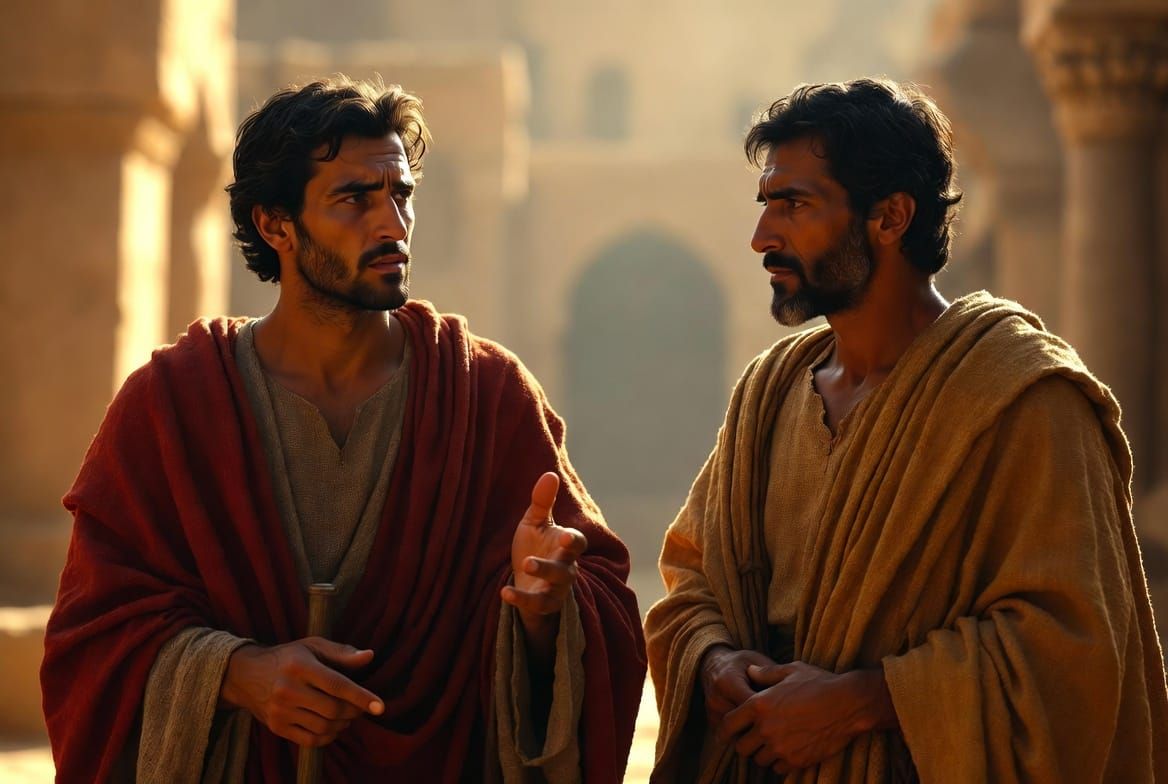
Feast Day: May 1
The Anglican calendar is ordered by a hierarchy of holy days, each carrying a different weight of observance. At the top sit the seven Principal Feasts, the highest days of the liturgical year. Below them are the Holy Days traditionally called Red-Letter Days. The Feast of Saint Philip and Saint James, Apostles, observed on May 1, belongs to this second rank. The BCP 2019 appoints their Collect on page 628 and provides their proper readings in the Holy Day lectionary.
Philip and James are two distinct members of the Twelve who share a feast for historical rather than biblical reasons. Their common observance developed in the Western Church in connection with the Basilica of the Twelve Apostles in Rome, where relics traditionally identified with both apostles came to be venerated together. The translation or deposition of those relics became associated with their common feast, long observed in the West on May 1. The BCP 2019 preserves that older date.
Scripture gives the two men remarkably different profiles. Philip appears repeatedly in John’s Gospel, asking questions, bringing people to Jesus, and receiving some of the Lord’s most profound teaching about his relationship with the Father. James son of Alphaeus is named among the Twelve but says nothing individually in the New Testament and has no deed recorded under his own name. One is relatively visible; the other is almost completely hidden. Yet the Collect places them side by side as apostles to whom God gave “the grace and strength to bear witness to Jesus as the way, the truth, and the life.” Their feast therefore becomes a fitting celebration of apostolic witness in both its visible and hidden forms.
Philip the Apostle
Philip is one of the more distinctly characterized apostles in John’s Gospel. His story begins in John 1:43–46 when Jesus finds him and says simply, “Follow me.” Philip immediately goes to Nathanael and tells him, “We have found him of whom Moses in the Law and also the prophets wrote, Jesus of Nazareth, the son of Joseph.” (John 1:45, ESV) Like Andrew before him, Philip’s response to meeting Jesus is to bring another person to him. He is a connector from the first moment. When Nathanael objects that nothing good can come from Nazareth, Philip does not enter into an extended argument. He simply says, “Come and see.” (John 1:46, ESV)
Philip appears again before the feeding of the five thousand. Jesus asks him, “Where are we to buy bread, so that these people may eat?” John tells us that Jesus already knew what he would do and asked the question to test Philip. Philip calculates the problem honestly: “Two hundred denarii worth of bread would not be enough for each of them to get a little.” (John 6:7, ESV) He is not wrong about the math. He simply has not yet learned to factor Jesus into his calculations. Philip can see accurately what human resources cannot accomplish; he has not yet understood what the presence of Jesus means for the impossible situation before him.
In John 12, Philip again becomes a point of contact between Jesus and people seeking him. Some Greeks who have come to worship at the feast approach Philip and say, “Sir, we wish to see Jesus.” (John 12:21, ESV) Philip tells Andrew, and together they bring the request to Jesus. The scene anticipates the Gospel moving outward toward the nations, and once again Philip appears as someone who helps bring others toward the Lord.
His most theologically significant appearance comes in John 14, the appointed Gospel for this feast. Jesus has told the disciples that he is going to the Father and declares, “I am the way, and the truth, and the life. No one comes to the Father except through me.” (John 14:6, ESV) Philip then asks, “Lord, show us the Father, and it is enough for us.” (John 14:8, ESV) His desire reaches deeply into the biblical longing to behold God. Moses asked to see God’s glory. The Psalms long for the sight of God’s face. Philip is asking for what Israel has always asked for.
Jesus’ answer takes Philip beyond what he expected: “Have I been with you so long, and you still do not know me, Philip? Whoever has seen me has seen the Father.” (John 14:9, ESV) Jesus is not merely a teacher who can direct Philip toward God as though the Father were finally known somewhere beyond him. The Father is perfectly revealed in the Son. The one standing before Philip is the eternal Son made flesh.
James Son of Alphaeus
James son of Alphaeus is one of the least documented members of the Twelve. He appears by name in the apostolic lists in Matthew 10:3, Mark 3:18, Luke 6:15, and Acts 1:13, but the New Testament records no individual speech, question, miracle, or episode belonging specifically to him. Even so, as one of the Twelve he belonged to the company Christ called, taught, gathered at the Last Supper, and commissioned as witnesses of the Resurrection. Scripture does not single him out in those scenes, but his place among the Twelve allows us to understand him as sharing in that common apostolic life and mission.
He should be distinguished from James son of Zebedee, the brother of John, whose feast is observed on July 25. In the BCP 2019 calendar he is also distinguished liturgically from James of Jerusalem, commemorated on October 23 as James the Just, kinsman of the Lord. Christian tradition has sometimes connected these different figures named James in ways that are difficult to untangle with certainty. The Prayer Book’s separate commemorations help us speak carefully while still receiving the Church’s memory with respect.
Later Christian tradition associates James son of Alphaeus with missionary labor and martyrdom. The accounts vary, and the details cannot all be harmonized with confidence. That does not require us to dismiss them. They belong to the Church’s long memory of an apostle whose biblical profile is otherwise very quiet. We can receive that memory appreciatively while allowing Scripture to remain our firmest ground. What Scripture gives us securely is already enough to honor him: Christ chose him as one of the Twelve, formed him within the apostolic company, and sent him as a witness to the Gospel.
His obscurity does not make him insignificant. Jesus deliberately chose him as one of the Twelve and sent that apostolic company to proclaim the Kingdom. Acts 1 still names James son of Alphaeus among the apostles assembled after the Ascension as they await the promised Holy Spirit.
That silence gives James’s feast genuine pastoral force. The Church honors an apostle about whom history has preserved almost nothing beyond his name and calling. Much Christian faithfulness is like that. Most acts of obedience are never recorded, most prayers are never remembered by later generations, and most Christians serve Christ without leaving their names in histories. James reminds us that obscurity before the world is not obscurity before God. Faithfulness does not require fame.
The Appointed Gospel: The Way, the Truth, and the Life
The BCP appoints John 14:6–14 as the Gospel for the feast. The passage begins with one of Jesus’ clearest declarations concerning himself: “I am the way, and the truth, and the life. No one comes to the Father except through me.” (John 14:6, ESV) The Collect deliberately takes its language from this verse, thanking God for giving Philip and James grace and strength to bear witness to Jesus “as the way, the truth, and the life.”
Each part of Christ’s declaration matters. Jesus does not say merely that he teaches the way; he is the way. He does not merely speak true things; he is the truth. He does not merely explain how life may be found; he is the life. Christian faith is therefore irreducibly centered upon the person of Jesus Christ.
The exclusiveness of the next sentence cannot simply be removed without changing Jesus’ claim: “No one comes to the Father except through me.” (John 14:6, ESV) The words exclude not only rival paths to God but also the idea that fallen human beings can find their own way to the Father by spiritual effort, moral improvement, or religious insight.
God is the first mover in salvation. The Father sends the Son. The Son reveals the Father and accomplishes redemption. Sinners come to the Father only through Christ and only by grace. The apostolic mission is therefore necessary because reconciliation with the Father is given in the Son. The Church does not proclaim Jesus as one spiritual possibility among many or as one culturally conditioned path to a universal religious destination. She bears witness to the incarnate Son through whom alone the Father is known.
Philip’s question then allows Jesus to say still more. “Whoever has seen me has seen the Father.” (John 14:9, ESV) This does not mean that the Father and the Son are the same Person. Jesus immediately speaks of being “in the Father” and the Father being “in me.” (John 14:10, ESV) The distinction of Persons remains even as Jesus reveals the profound unity of Father and Son. The passage therefore belongs naturally within the Church’s Trinitarian confession: the Son truly reveals the Father because he eternally shares the one divine nature with the Father.
The Appointed Readings
The BCP 2019 appoints Isaiah 30:18–21, Psalm 119:33–40, 2 Corinthians 4:1–7, and John 14:6–14. The readings form an unusually coherent set around the themes of the way, divine revelation, apostolic witness, and the weakness of those entrusted with the Gospel.
Isaiah 30 promises that God will not leave his people without instruction. The prophet says, “Your Teacher will not hide himself anymore, but your eyes shall see your Teacher,” and then adds, “Your ears shall hear a word behind you, saying, ‘This is the way, walk in it.’” (Isaiah 30:20–21, ESV) The passage finds a striking resonance in Jesus’ declaration in John 14. Isaiah promises divine guidance in the way; Jesus identifies himself as the Way.
Psalm 119:33–40 takes the form of a prayer to be taught: “Teach me, O LORD, the way of your statutes; and I will keep it to the end.” (Psalm 119:33, ESV) The Psalm asks God to give understanding, incline the heart toward his testimonies, turn the eyes from worthless things, and give life in his ways. Read on the feast of Philip and James, the prayer reminds the Church that apostolic faithfulness does not arise from natural insight or strength. God must teach, lead, preserve, and give life.
Second Corinthians 4 gives apostolic ministry its proper frame. Paul says that the God who commanded light to shine out of darkness has shone in our hearts “to give the light of the knowledge of the glory of God in the face of Jesus Christ.” (2 Corinthians 4:6, ESV) Philip asks to see the Father, and Paul says that divine glory is known in the face of Jesus Christ. The connection with the appointed Gospel is difficult to miss.
Paul then immediately adds, “But we have this treasure in jars of clay, to show that the surpassing power belongs to God and not to us.” (2 Corinthians 4:7, ESV) That image could hardly be more fitting for this shared apostolic feast. Philip is a man who can miscalculate what Jesus is about to do and still be used by Christ. James is an apostle about whom almost nothing is remembered. Neither is the treasure. Christ is the treasure. Apostles are earthen vessels entrusted with what belongs to God. The feast of Philip and James is the feast of the treasure carried in ordinary clay.
Apostolic Witness and Human Weakness
The feast therefore offers a helpful corrective to romantic ideas about the apostles. Christ did not choose twelve naturally flawless religious heroes. The Gospels show men who misunderstand, fear, doubt, compete, miscalculate, and sometimes fail spectacularly. Their authority does not rest upon their personal impressiveness but upon the Lord who called, taught, and commissioned them.
Philip makes this particularly visible. He brings Nathanael to Jesus but later struggles to comprehend what Jesus can do. He is approached by Greeks who want to see Jesus but consults Andrew before bringing them forward. At the Last Supper he has been with Jesus for years and still asks to be shown the Father. Yet Jesus does not discard him. He teaches him.
James makes the same point differently. We know almost nothing about his personality, gifts, successes, or struggles. His place among the apostles rests not upon a memorable personal profile but upon Christ’s choice and commission.
The same pattern governs apostolic vocation and Christian faithfulness. God acts first. Christ calls before the apostles follow, gives grace before they bear witness, and entrusts the treasure before the jars of clay can carry it. Even their faithfulness is not self-generated. The Collect makes this explicit when it says that God gave Philip and James the grace and strength to bear witness.
Second Corinthians therefore prevents the feast from becoming a celebration of extraordinary personalities. God places treasure in jars of clay precisely so that the surpassing power may be seen to belong to him. Apostolic witness is glorious because of the Christ proclaimed, not because the messengers cease to be human.
The BCP 2019 Collect and Proper Preface
The BCP appoints the Collect on page 628:
“Almighty God, you gave to your apostles Philip and James the grace and strength to bear witness to Jesus as the way, the truth, and the life: Grant that we, being mindful of their victory of faith, may glorify in life and death the Name of our Lord Jesus Christ; who lives and reigns with you and the Holy Spirit, one God, now and for ever. Amen.”
The order of grace in the prayer is important. Philip and James do not generate apostolic courage from within themselves. God gave them the grace and strength to bear witness. Their faithfulness is real, but it is itself the fruit of divine grace. Only then does the prayer turn toward us and ask that, remembering their “victory of faith,” we may glorify Christ in life and death.
That phrase, victory of faith, allows the Church to honor two very different forms of apostolic witness without pretending that we know more about James than we do. Philip’s witness is visible in the Gospel narratives. James’s appears principally in his belonging to the Twelve and receiving the apostolic commission. What unites them is not equal historical prominence but the Lord to whom both belonged.
The BCP appoints the Preface of Apostles for the feast. It gives thanks through Jesus Christ, the great Shepherd of the flock, “who after his resurrection sent forth his apostles to preach the Gospel and to teach all nations, and promised to be with them always, even to the end of the ages.” The Preface places Philip and James where they belong: under the authority of the risen Christ, sent by him, sustained by his promise, and entrusted with his Gospel.
The Feast Within Easter
May 1 always falls within the Great Fifty Days of Easter. Easter Day can fall as early as March 22 or as late as April 25, which means May 1 always comes before Pentecost. Their feast is therefore permanently situated within the Church’s sustained season of Resurrection joy.
That Easter setting is particularly fitting. John 14 records words spoken before the Crucifixion, when the disciples do not yet understand what is about to happen. The Church hears those words during Easter knowing that the one who declared himself “the way, and the truth, and the life” has passed through death and risen victorious.
The Preface of Apostles makes the Resurrection context even clearer. The apostles are sent after his resurrection to preach the Gospel and teach the nations. Philip and James are therefore not remembered simply as companions of Jesus during his earthly ministry. They belong to the apostolic mission of the risen Lord.
The feast also illustrates the Prayer Book’s rules of precedence. The BCP permits Red-Letter Holy Days falling on Sundays to replace the Sunday or be transferred to the following weekday only when that Sunday is outside Advent, Lent, and Easter. A Sunday in Easter therefore retains its own proper observance when May 1 falls on a Sunday.
Visible and Hidden Faithfulness
The contrast between Philip and James gives this shared feast unusual pastoral depth. Philip is remembered through scenes, conversations, questions, and recognizable characteristics. James is remembered largely through his name in a list. Yet both are apostles, and both are commemorated by the same Collect.
That is a helpful picture of the Church. Some Christian vocations are highly visible. Some people preach, teach, lead, write, build institutions, or serve in ways that leave a public record. Others raise children in the faith, pray quietly, care for the sick, work ordinary jobs faithfully, give generously without recognition, remain faithful in difficult marriages or other painful circumstances, and die almost completely unknown outside a small circle.
The Kingdom of God does not measure these forms of faithfulness by the standards of human visibility. The same Lord who used Philip also chose James. The same grace that strengthens public witness sustains hidden obedience. Much of what God does through his people will never appear in histories, but none of it is hidden from him.
At the same time, James’s obscurity should not become an excuse to invent a biography for him. We can receive the Church’s later memories with gratitude while distinguishing them from what Scripture tells us directly. His witness is powerful precisely because so much of his life remains hidden. The Church can honor what Scripture gives, receive tradition with appropriate respect, and leave what God has not revealed in his hands.
Observing This Feast
Saint Philip and Saint James are observed on May 1. The BCP provides their Collect on page 628 and appoints Isaiah 30:18–21, Psalm 119:33–40, 2 Corinthians 4:1–7, and John 14:6–14 as the proper readings. The Proper Preface is the Preface of Apostles.
Begin with John 14:6–14 and hear Jesus’ declaration before focusing upon Philip’s question. Christ is “the way, and the truth, and the life.” Then hear Philip ask to see the Father and receive Jesus’ answer: “Whoever has seen me has seen the Father.” (John 14:9, ESV) The feast begins with apostles, but its theological center is the identity of Christ.
Read Isaiah 30 and Psalm 119 as prayers to be taught and led in God’s way. Read 2 Corinthians 4 and consider what it means for the Gospel to be treasure carried in jars of clay. The weakness of the vessel does not diminish the treasure. It reveals where the power comes from.
Remember Philip’s visible witness and James’s hidden one together. Ask where Christ has called you to bear witness openly and where he may simply be asking for quiet fidelity without recognition. Then pray the Collect, asking not for prominence or success but for the grace and strength to glorify the Name of Jesus Christ in life and death.
Conclusion
The Feast of Saint Philip and Saint James places two remarkably different apostles beside one another. Philip speaks, asks, calculates, brings others to Jesus, and receives some of the deepest Christological teaching in John’s Gospel. James son of Alphaeus stands almost silently in the biblical record, named among those whom Jesus chose but otherwise largely hidden from view.
Yet the Collect gives them one common identity. God gave both “the grace and strength to bear witness to Jesus as the way, the truth, and the life.” Their significance lies finally not in how much history remembers about either man but in the Lord who called them and the Gospel they were sent to bear.
Their shared feast therefore gives the Church two complementary forms of encouragement. Philip reminds us that honest questions can become occasions for deeper revelation when they are brought to Christ. James reminds us that a life can be nearly invisible to history and still belong wholly to the mission of God.
Second Corinthians gives the proper perspective on both: “We have this treasure in jars of clay, to show that the surpassing power belongs to God and not to us.” (2 Corinthians 4:7, ESV) The jars differ. The treasure does not. The Church’s prayer is therefore not that we might become impressive witnesses, but that by the grace and strength God gives, we may faithfully glorify the Name of Jesus Christ in life and death.