The Circumcision and Holy Name of our Lord Jesus Christ: An Anglican Perspective
The world begins its new year with resolutions. The Church begins it with a name. January 1 is the Feast of the Circumcision and Holy Name of Our Lord, the eighth day of Christmas, when the infant Jesus was circumcised and given the name that means salvation. Not a resolution. A person.
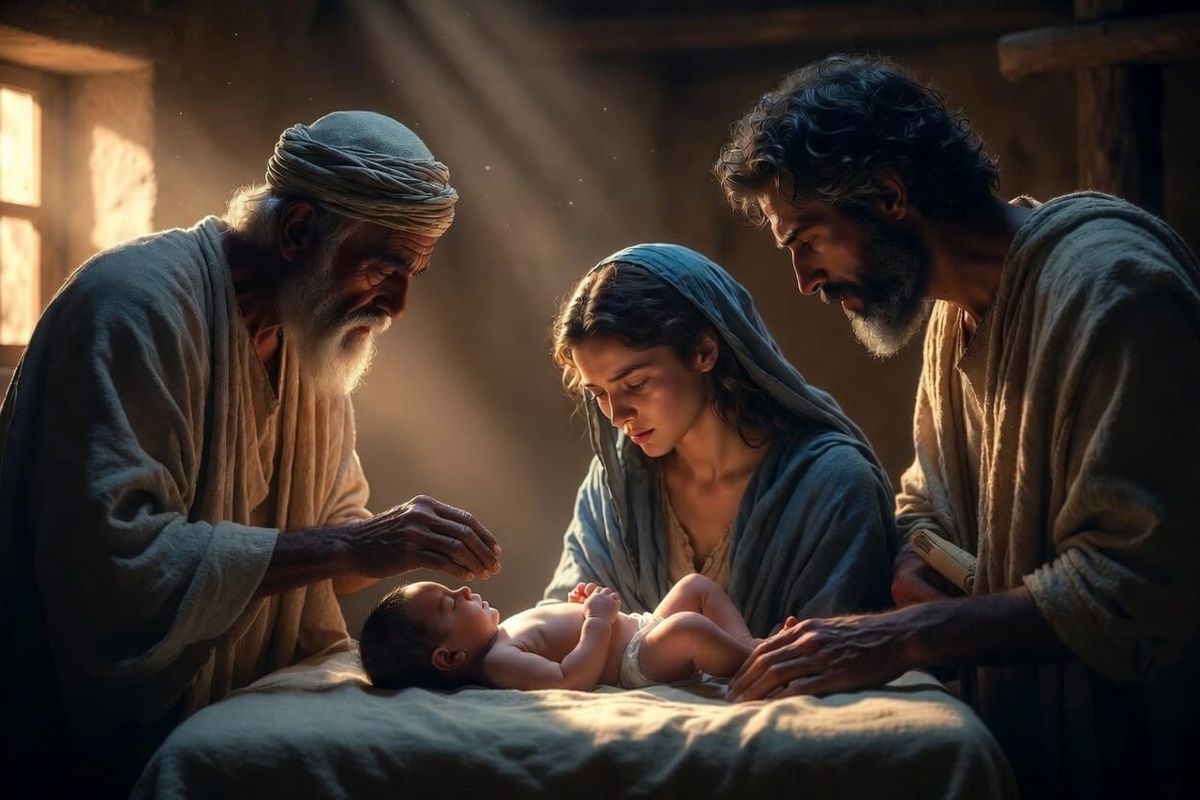
Feast Day: January 1
The Anglican calendar is ordered by a hierarchy of holy days, each carrying a different weight of observance. At the top stand the seven Principal Feasts, the highest-ranking days of the liturgical year. Below them are the Red-Letter Holy Days appointed in the BCP 2019. The Circumcision and Holy Name of Our Lord Jesus Christ, observed on January 1, is one of these Red-Letter Holy Days. The Prayer Book appoints the Collect on page 600, the Preface of the Presentation, and Exodus 34:1–9, Psalm 8, Romans 1:1–7, and Luke 2:15–21 as the readings for the feast.
January 1 is also the beginning of the civil new year, a day commonly associated with resolutions, fresh starts, and the mixture of hope and uncertainty that accompanies an unknown year. The Church does not need to reject those ordinary human instincts in order to say something deeper. On the eighth day of Christmas, she directs our attention not first toward what we intend to do, but toward what God has already done in Jesus Christ. The Child born at Bethlehem is circumcised according to the covenant given to Abraham and receives the Name given by God before his conception. The new year begins for the Church beneath a covenant sign and beneath a Name.
Luke gives the event in a single sentence: “And at the end of eight days, when he was circumcised, he was called Jesus, the name given by the angel before he was conceived in the womb.” (Luke 2:21, ESV) Two events are held together: circumcision and naming. Neither is a decorative detail in the infancy narrative. The circumcision places Jesus fully within the covenant life of Israel into which he has truly been born, while the Name declares the saving work for which he has come.
The Eighth Day
Circumcision was given to Abraham as the sign of God’s covenant. The Lord commanded that every male child among Abraham’s descendants be circumcised on the eighth day: “He who is eight days old among you shall be circumcised.”(Genesis 17:12, ESV) The sign marked the male descendants of Abraham as belonging to the covenant people and visibly identified them with the promises God had given to Abraham and his offspring.
Circumcision was not an act of atonement or absolution. It was the covenant sign given to Abraham and his descendants. The Old Testament itself could speak of the deeper need for the circumcision of the heart, pointing beyond the outward sign toward the inward faithfulness and renewal that only God can finally give.
Jesus receives circumcision because he has truly been born into Israel under the Law. Paul later summarizes the mystery by saying that “when the fullness of time had come, God sent forth his Son, born of woman, born under the law.”(Galatians 4:4, ESV) The incarnate Son does not stand outside Israel’s covenant life as though his humanity were merely apparent. He enters it fully.
The BCP Collect interprets the event directly, saying that God’s blessed Son “fulfilled the covenant of circumcision for our sake.” (BCP 2019, p. 600) Jesus receives the covenant sign as the promised seed of Abraham, the faithful Son, and Israel’s Messiah. He enters the obligations of the people among whom he has been born and fulfills the Law in perfect obedience.
This belongs to the larger pattern of his incarnate life. He is born under the Law, raised within Israel’s covenant life, baptized in obedience to the Father, tempted yet without sin, faithful where Adam and Israel were unfaithful, and obedient even unto death. The saving obedience of Christ is not confined to Good Friday. From infancy onward, the Son lives the faithful human life that reaches its saving climax in the Cross and Resurrection.
The blood shed on the eighth day is small in comparison with Calvary, but it belongs to the same truly human life. The Word has become flesh, and on the eighth day that flesh bears the covenant sign. Christmas has already proclaimed the Incarnation; January 1 makes its bodily reality impossible to sentimentalize.
The Eighth Day and the New Creation
The immediate reason for the eighth day is straightforward: God’s covenant command required circumcision on the eighth day. Yet the number eight also acquired a rich significance in early Christian reflection. Seven days complete the biblical week of creation. Jesus rose on the first day of a new week, and Christians therefore came to speak of the Lord’s Day as both the first day and the eighth day: the day beyond the completed week and a sign of the world to come.
We should not make that later Christian symbolism the hidden explanation of Luke 2:21. Luke tells us that Jesus was circumcised on the eighth day because the Law required it. Yet once the whole Gospel is known, the resonance becomes beautifully fitting. The Child circumcised on the eighth day is the same Lord who will rise bodily from the dead and become “the firstfruits of those who have fallen asleep.” (1 Corinthians 15:20, ESV) Covenant fulfillment and resurrection hope therefore meet naturally in Christian reflection upon the eighth day.
It is also important to distinguish the coming of the Kingdom from the fullness of the new creation. The Kingdom of God does not begin only at Easter. It arrives in the coming of the King himself and is manifested throughout Jesus’ earthly ministry. He announces that the Kingdom has drawn near, forgives sins, heals the sick, casts out demons, gathers disciples, and declares, “If it is by the Spirit of God that I cast out demons, then the kingdom of God has come upon you.”(Matthew 12:28, ESV)
The Cross and Resurrection are therefore not the first arrival of Christ’s Kingdom but the decisive victory of the King over sin, condemnation, Satan, and death. The Ascension manifests the risen Christ’s royal reign at the Father’s right hand, and Pentecost sends the Church into the world in the power of his Spirit. Christ reigns now, while the Church still awaits the final consummation of that Kingdom when he returns.
The language of new creation is related but more specific. The final new creation includes the bodily resurrection of the dead and the renewal of creation itself. Jesus’ bodily Resurrection is the firstfruits of that coming reality. In the risen body of Christ, the life of the age to come has already appeared within this present age.
The Resurrection is therefore not the entirety of the new creation, nor does it mean the present creation has already been fully renewed. Christians still die, creation still groans, and we await the resurrection of the body and the new heavens and new earth. But Easter gives us the firstfruits: what God will finally do for his people and his creation has already happened first in Jesus Christ.
This is why the traditional eighth-day symbolism is fitting. Easter is the first day because a genuinely new order of resurrection life has appeared, and it is the eighth day because it reaches beyond the old week toward the world to come. The Child circumcised on the eighth day is the same Lord whose Resurrection is the firstfruits of the new creation.
Paul gives an even more explicit Christological connection between circumcision and Christian new life in Colossians 2. He says that believers have been circumcised in Christ “with a circumcision made without hands” and immediately joins that reality to Baptism, burial with Christ, and resurrection through faith in the powerful working of God. (Colossians 2:11–12, ESV)
The point is not that Baptism is merely circumcision under a different name. Paul’s argument is richer than a simple one-for-one substitution. In union with Christ, the reality toward which the covenant sign pointed has arrived: the old sinful life is put off, and the believer participates in the saving life of the Messiah.
The Name Jesus
Luke joins the circumcision to the giving of the Name: “he was called Jesus, the name given by the angel before he was conceived in the womb.” (Luke 2:21, ESV) Joseph and Mary are not inventing a fitting name for their firstborn son. They are obeying what God has already revealed.
Matthew gives the meaning explicitly. The angel tells Joseph, “you shall call his name Jesus, for he will save his people from their sins.” (Matthew 1:21, ESV) The Greek name Iēsous comes through the Hebrew Yeshua (yeh-SHOO-ah), related to the fuller form Yehoshua (yeh-ho-SHOO-ah), or Joshua. The Name carries the sense “the LORD saves” or “the LORD is salvation.”
His Name therefore proclaims his mission. Jesus does not merely bring information about salvation or point toward salvation as something lying elsewhere. God saves his people through him.
This is one reason the Church has historically treated the Holy Name with reverence. Its holiness does not arise from the arrangement of syllables as though the Name were a magical formula. It arises from the Person who bears it. Christians honor the Name of Jesus because they honor Jesus himself.
Every time the Church speaks the Name Jesus, she speaks the Name by which the angel interpreted the Child’s mission before he was born. The Name itself keeps telling the Gospel: the Lord saves.
The Name Above Every Name
The BCP Collect says that Christ “was given the Name that is above every name.” (BCP 2019, p. 600) The language echoes Philippians 2, where Paul moves from the humility of the Incarnation and Cross to the exaltation of Christ.
Though existing in the form of God, the Son humbles himself, takes the form of a servant, and becomes obedient unto death. Paul then declares that God highly exalted him so that “at the name of Jesus every knee should bow” and every tongue confess that Jesus Christ is Lord. (Philippians 2:10–11, ESV)
The Name spoken over an eight-day-old infant is therefore the Name before which creation will bow. The contrast is extraordinary. The Child who submits to the covenant sign in humility is the Lord whom heaven and earth will finally acknowledge.
The Name is also inseparable from salvation. Peter tells the rulers in Jerusalem that “there is salvation in no one else,”because “there is no other name under heaven given among men by which we must be saved.” (Acts 4:12, ESV)Christianity is unapologetically particular at this point. Salvation is not found in a principle, a religious technique, or the sincerity of human aspiration. It is found in Jesus Christ.
The feast therefore gives January 1 a quiet but radical confession. The future does not finally belong to luck, fate, the strength of our resolutions, or our ability to control what is coming. It belongs to Jesus Christ.
The Appointed Readings
The BCP 2019 appoints Exodus 34:1–9, Psalm 8, Romans 1:1–7, and Luke 2:15–21 for the feast. The readings move from the revelation of God’s Name, through the majesty of that Name in creation, to the Gospel of God’s Son and finally the naming of the Child Jesus.
Exodus 34 takes the Church back to Sinai after Israel’s sin with the golden calf. Moses ascends with new tablets, and the Lord descends in the cloud and proclaims his Name. The declaration is one of the great self-revelations of God in the Old Testament: “The LORD, the LORD, a God merciful and gracious, slow to anger, and abounding in steadfast love and faithfulness.” (Exodus 34:6, ESV) The divine Name is associated with God’s revealed character: mercy, grace, patience, steadfast love, faithfulness, justice, and forgiveness.
That reading beside Luke 2 is beautifully chosen. At Sinai, God proclaims his Name and character to Moses. In the fullness of time, the eternal Son receives the human Name Jesus, whose meaning announces the saving action of that same covenant God.
We should not collapse the divine Name YHWH into the human name Jesus as though the two were linguistically identical. The theological relationship is Christological rather than merely etymological. The God who revealed himself to Moses as merciful and gracious has acted personally and decisively in the incarnate Son whose Name announces that the Lord saves.
Psalm 8 reinforces the theme from beginning to end: “O LORD, our Lord, how majestic is your name in all the earth!”(Psalm 8:1, ESV) The Psalm marvels that the Creator who established the heavens is mindful of humanity and crowns the son of man with glory and honor.
The New Testament itself gives this Psalm a Christological reading. Hebrews 2 applies its language to Jesus, who was made for a little while lower than the angels and is now crowned with glory and honor because of the suffering of death. (Hebrews 2:5–9) The Psalm appointed for the Holy Name therefore reaches naturally from the majesty of God’s Name toward the incarnate Son in whom humanity’s calling is fulfilled.
The Gospel: Shepherds, Mary, and the Name
The appointed Gospel is Luke 2:15–21, beginning with the shepherds after the angels depart. They go with haste to Bethlehem, find Mary and Joseph with the Child, and then make known what they had been told concerning him.
Luke says, “And all who heard it wondered at what the shepherds told them.” (Luke 2:18, ESV) The shepherds receive revelation and carry it outward. Having heard the heavenly proclamation that a Savior, Christ the Lord, has been born, they return to ordinary life glorifying and praising God.
Luke places Mary beside them in a different posture: “But Mary treasured up all these things, pondering them in her heart.” (Luke 2:19, ESV) The shepherds speak; Mary ponders. Both responses belong within faithful reception of Christ.
There is a valuable pattern here for what the Collect will later call bearing his Name. Christian witness certainly includes speaking openly of Christ, as the shepherds do. It also includes allowing the Word received to take deep root within us, as Mary treasures and ponders what God has done.
Luke then moves directly to the eighth day, when the Child is circumcised and named. The Gospel therefore holds proclamation, contemplation, covenant obedience, and the Holy Name within one short passage. The shepherds return carrying news of Jesus, Mary carries the mystery within her heart, and the Child himself bears in his flesh the covenant sign and carries the Name that declares salvation.
Romans and the Mission of the Name
Romans 1:1–7, the appointed Epistle, opens Paul’s great exposition of the Gospel by identifying its center immediately. The Gospel concerns God’s Son, “who was descended from David according to the flesh” and “was declared to be the Son of God in power according to the Spirit of holiness by his resurrection from the dead.” (Romans 1:3–4, ESV)
Paul is not saying that Jesus became the Son of God only at the Resurrection. He has already identified him as God’s Son. The Resurrection declares him in power as the Son who has conquered death. Christmas and Easter therefore stand together: the Son truly enters David’s human line according to the flesh and is manifested in resurrection power as Jesus Christ our Lord.
Paul then says that through Jesus Christ he has received grace and apostleship “to bring about the obedience of faith for the sake of his name among all the nations.” (Romans 1:5, ESV) The Name is therefore missionary.
God’s purpose is not that the Name remain confined to Bethlehem, Nazareth, or Israel. The Gospel goes to the nations so that people everywhere may be brought into the obedience of faith for the sake of Jesus’ Name.
This gives the Collect’s petition to bear his Name another dimension. Christians bear the Name not merely as a private identity but as a people sent into the world. Baptized into Christ, gathered as his Church, and sent with his Gospel, they are called to make the Name known through word and life.
The Covenant Fulfilled
The title of the feast deliberately keeps Circumcision and Holy Name together, and the BCP Collect gives the theological reason. Christ “fulfilled the covenant of circumcision for our sake” and was given the Name above every name.
This wording protects against treating circumcision as an embarrassing relic of an earlier religion that Christianity simply discarded. Jesus does not reject Israel’s covenant history. He enters it and fulfills it.
He is the promised seed of Abraham, the Son of David, the faithful Israelite, and the Messiah in whom God’s promises reach their fulfillment. Christianity does not arise because God abandoned his promises to Israel and devised another plan. The New Covenant comes through the fulfillment of those promises in Christ.
At the same time, fulfillment means that the old covenant sign cannot simply continue unchanged as though Christ had not come. Paul vigorously rejects the claim that Gentile Christians must receive circumcision in order to belong to the covenant people of God.
The New Covenant gathers Jew and Gentile into one people through faith in and union with Christ. The Church therefore honors Jesus’ circumcision not by imposing the old covenant sign upon Christians but by rejoicing that the Son entered Israel’s covenant life, fulfilled what was required, and brought his people into the saving reality of the New Covenant.
The BCP 2019 Collect
The Collect is among the clearest theological summaries of the feast: “Almighty God, your blessed Son fulfilled the covenant of circumcision for our sake, and was given the Name that is above every name: Give us grace faithfully to bear his Name, and to worship him with pure hearts according to the New Covenant.” (BCP 2019, p. 600)
The prayer moves from Christ’s accomplishment to Christian response. He fulfilled the covenant. He was given the Name. Therefore we ask for grace. That order matters. The Collect does not begin January 1 by asking Christians to develop stronger resolve. It begins with what Christ has done and then asks God to give what faithful response requires.
The two petitions are especially rich: faithfully to bear his Name and to worship him with pure hearts. To bear Christ’s Name means more than using the word Christian. It means belonging publicly to him and being marked by an identity received rather than invented.
The petition for pure worship reaches inward. The Name can be carried outwardly while the heart wanders elsewhere. The Church therefore asks not merely for Christian identification but for worship purified and made whole by grace. The Christian life lies between these two movements: bearing the Name before the world and worshiping the Lord of that Name with a heart being made pure.
The Preface of the Presentation
The BCP appoints the Preface of the Presentation for this feast. Its Incarnational language gives thanks because in the mystery of the Word made flesh God has caused new light to shine in our hearts, giving the knowledge of his glory in the face of Jesus Christ.
The same Preface is used by the Prayer Book for several feasts centered upon the mystery of the Incarnation, including the Presentation, Annunciation, and Transfiguration. Its use on January 1 places the Circumcision and Holy Name squarely within that mystery: the eternal Word has truly become flesh, entered Israel’s covenant life, and bears the human Name by which his saving mission is proclaimed.
The connection with the Presentation is especially fitting. On the eighth day, Jesus receives circumcision and the Name. Later, Mary and Joseph bring him to the Temple according to the Law, where Simeon takes him into his arms and recognizes God’s salvation.
Both scenes show the incarnate Son entering Israel’s covenant life in obedience. The one through whom the Law was given submits to the Law in the human nature he has assumed. Yet in both scenes fulfillment is already appearing: the Child is himself the salvation for which Israel has waited and the light destined for the nations.
The Preface therefore prevents the feast from becoming narrowly about a ritual act or merely about the linguistic meaning of the Name. Circumcision and naming belong to the greater mystery of the Word made flesh.
January 1 and the Christian Year
The observance of Christ’s circumcision on January 1 has deep roots in the Western Christian calendar, reflecting Luke’s statement that he was circumcised on the eighth day. Across Christian history the date has received several related emphases, including the octave of the Nativity, the Circumcision, and the Holy Name. The Anglican Prayer Book tradition long observed January 1 as the Circumcision of Christ, while the BCP 2019 deliberately holds circumcision and naming together in the title The Circumcision and Holy Name of Our Lord Jesus Christ.
It is better not to reduce the feast’s origin to the claim that Christians simply invented it to replace pagan New Year celebrations. Early Christians certainly lived amid Roman observances associated with the civil new year, and Christian preachers sometimes warned against pagan customs, but the liturgical history of January 1 developed over time around the eighth day after the Nativity and the event recorded in Luke 2:21.
What remains striking is the contrast the date creates now. The civil calendar says new year. The Church says Jesus. There is nothing wrong with making sensible resolutions, setting goals, reviewing the previous year, or hoping that something will improve. Christian faith does not require contempt for ordinary planning. It does, however, refuse to put ultimate hope in our ability to remake ourselves. A resolution is only as strong as the person who makes it. The Name rests upon the faithfulness of the Savior who bears it.
The liturgical color is white, fitting both the continued joy of the Christmas season and the feast’s focus upon the incarnate Christ. January 1 remains within the Twelve Days of Christmas, so the brightness of Christmastide continues even as the Church turns from the manger toward covenant and Name. White also fits the feast’s emphasis upon the glory of Christ: the infant who receives the covenant sign in humility is the Lord whose Name will be confessed by every tongue.
The color does not erase the small but real shedding of blood present in circumcision. Christmas has become bodily very quickly. The Word truly became flesh, and on the eighth day that flesh bears the sign given to Abraham. Yet the dominant note remains festal. The Child is named Jesus because the Lord saves.
Bearing the Name
The BCP’s language of bearing Christ’s Name is especially fitting because the New Testament repeatedly speaks of the Name as something entrusted to Christ’s people. The apostles preach in the Name, suffer for the Name, baptize in the Triune Name, pray in Jesus’ Name, and call people into allegiance to the Lord whom they proclaim.
Bearing the Name therefore has ethical consequences. A Christian cannot simply assert that Jesus is Lord while living as though another lord actually governs money, sexuality, speech, relationships, ambition, anger, or political loyalty. The Name we bear makes a claim upon the whole person.
Yet this must not become another version of New Year’s moralism. The Collect does not tell us simply to represent Jesus better. It asks God, “Give us grace faithfully to bear his Name.” (BCP 2019, p. 600) Christian obedience is real, but grace precedes it and sustains it.
When Christians fail to bear the Name faithfully, as every Christian does, the answer is not to construct a better identity or make a more determined resolution. We return in repentance and faith to the one whose Name declares salvation. The New Covenant does not rest upon the stability of our resolutions, and the Savior does not change when our resolve weakens.
Observing This Feast
To observe the feast, begin with Luke 2:15–21 and allow the simplicity of verse 21 to carry its full theological weight. The Child is circumcised according to God’s covenant and receives the Name God commanded before his conception. The event is quiet, but the whole history of promise and fulfillment is gathered into it.
Read Genesis 17 alongside Luke if time permits, then turn to Exodus 34:1–9 and hear God proclaim his Name and character to Moses. Pray Psalm 8, allowing its opening and closing confession of the majesty of God’s Name to frame the beginning of the civil year.
Read Romans 1:1–7 and notice how quickly Paul moves from Christ’s descent from David according to the flesh to Resurrection, apostleship, mission, and “the obedience of faith for the sake of his name among all the nations.” (Romans 1:5, ESV) The Name given in infancy is already moving toward the ends of the earth.
Philippians 2:5–11 is also a fitting additional reading. It allows the Church to see the arc from the humility of the incarnate and obedient Son through the Cross to his exaltation, when every knee bows and every tongue confesses Jesus Christ as Lord.
Pray the Collect and let its two petitions provide a better Christian beginning to the year than mere self-improvement: grace faithfully to bear Christ’s Name and grace to worship him with a pure heart. Those requests reach both public life and the hidden heart.
Finally, remember that January 1 still belongs to Christmas. The Church has not left the Incarnation behind. The Child receiving circumcision and the Name is the same Word made flesh celebrated on December 25. The feast carries that mystery further into covenant obedience, mission, and salvation.
Conclusion
The Feast of the Circumcision and Holy Name of Our Lord Jesus Christ gives the Church a very different beginning to January 1. The world naturally looks toward the unknown year ahead and asks what we will accomplish, change, avoid, or become. The Church first looks backward eight days and sees an infant brought beneath the covenant sign and given the Name appointed by God. Before our plans comes God’s promise; before our resolve comes Christ’s obedience; before the uncertainty of the year comes the Name that declares, the Lord saves.
The BCP Collect gathers that mystery into the life of discipleship. Christ fulfilled the covenant of circumcision for our sake and was given the Name above every name, so the Church asks for grace to bear his Name faithfully and worship him with pure hearts according to the New Covenant. The Kingdom has drawn near in the coming of the King, and through his Cross and Resurrection Christ has secured its decisive victory. His bodily Resurrection is the firstfruits of the new creation, the beginning within this age of the resurrection life that will one day be shared by his people when the dead are raised and creation itself is renewed.
The year ahead will contain difficulties we cannot anticipate and mercies we cannot yet see. Some resolutions will succeed and others will be forgotten before winter ends. None of that changes the one under whose Name the Church begins the year. The infant circumcised on the eighth day is the crucified, risen, ascended, and reigning Lord, the Savior whose Name is above every name and whose faithfulness does not change with the calendar. So the Church begins January 1 with the confession of the appointed Psalm: “O LORD, our Lord, how majestic is your name in all the earth!”(Psalm 8:9, ESV)