From Forsaken to Delighted (Isaiah 61:10-62:5)
Therefore, let us greatly rejoice in the Lord. Let our souls exult in our God. He has clothed us with garments of salvation. He has covered us with the robe of righteousness. He has gathered us into his redeemed people, and he rejoices over his people with gladness and singing, now and forever.
December 28, 2025, Year A, The First Sunday of Christmas
Isaiah 61:10–62:5, Psalm 147:12–20, John 1:1–18
Grace, mercy, and peace from God our Father and the Lord Jesus Christ be with you on this First Sunday of Christmas.
We are still walking in the afterglow of the Nativity. On Christmas Eve we stood with the shepherds in the fields outside Bethlehem and heard the multitude of the heavenly host praising God and saying, “Glory to God in the highest, and on earth peace among those with whom he is pleased!” (Luke 2:14, ESV) We rejoiced in the promise that “The people who walked in darkness have seen a great light; those who dwelt in a land of deep darkness, on them has light shone” (Isaiah 9:2, ESV), and we beheld the child who is “Wonderful Counselor, Mighty God, Everlasting Father, Prince of Peace” (Isaiah 9:6, ESV).
On Christmas Day itself we gazed in awe at the eternal Word through whom all things were made: “In the beginning was the Word, and the Word was with God, and the Word was God… And the Word became flesh and dwelt among us, and we have seen his glory, glory as of the only Son from the Father, full of grace and truth.” (John 1:1, 14, ESV) We heard how God, having spoken long ago in many ways through the prophets, has now in these last days spoken definitively “by his Son, whom he appointed the heir of all things, through whom also he created the world. He is the radiance of the glory of God and the exact imprint of his nature, and he upholds the universe by the word of his power.” (Hebrews 1:1–3, ESV)
The Church has already spent these first days of Christmas remembering Saint Stephen, who bore witness unto death, and Saint John, who bore witness across a long life. Today the calendar also remembers the Holy Innocents, children caught in Herod’s rage. Christmas does not isolate the Incarnation from the world Christ came to save. The light shines precisely into darkness.
The Collect for this First Sunday of Christmas prays that the new light of the incarnate Word, poured upon us and kindled in our hearts, may shine forth in our lives. Isaiah gives us the same movement in prophetic form. God clothes, restores, and delights in his people, and then their righteousness goes forth as brightness before the nations.
Today, the Church invites us to linger yet longer in this mystery, to let the Incarnation sink deeper into our bones, and to hear the prophet Isaiah sing of the consequences of this coming. In the words of Isaiah 61:10–62:5, we encounter a song of exultation so intense that it cannot be contained, a joy that overflows every boundary because God has acted decisively to redeem, restore, and delight in his people. Let us turn there.
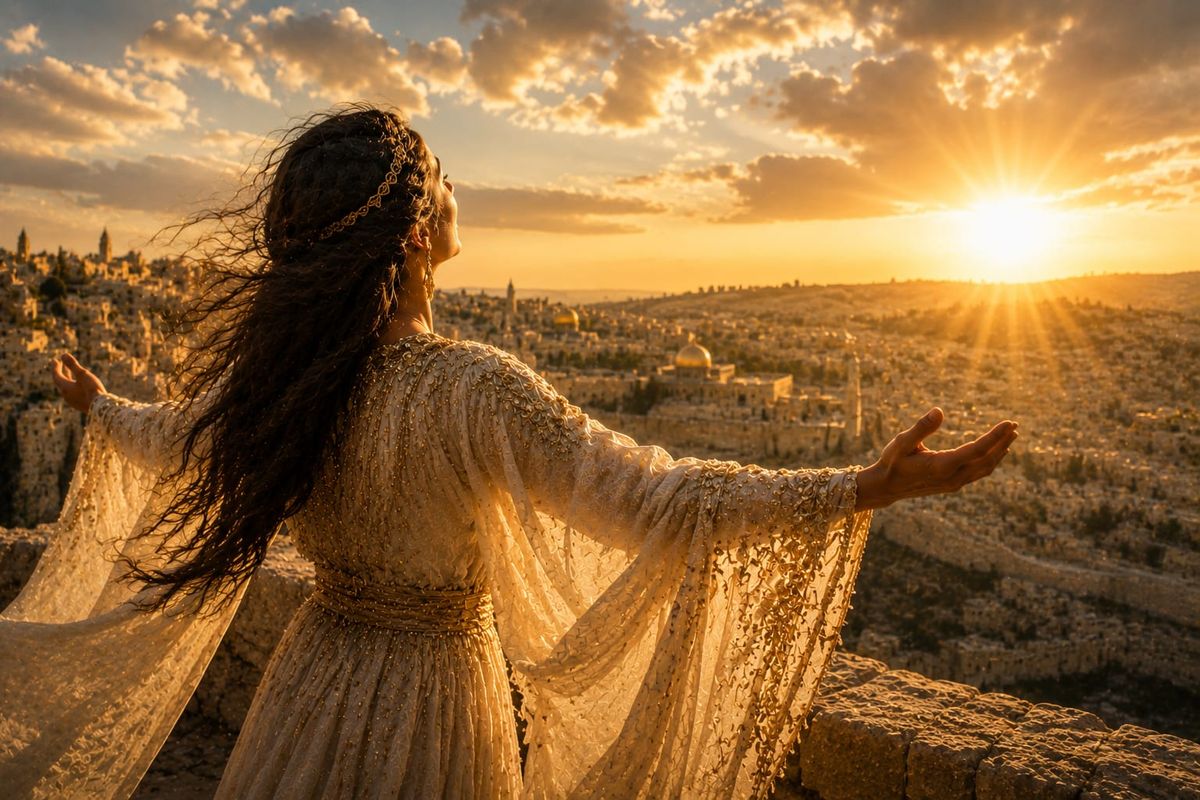
The passage opens with a personal, passionate declaration in verse 10: “I will greatly rejoice in the Lord; my soul shall exult in my God, for he has clothed me with the garments of salvation; he has covered me with the robe of righteousness, as a bridegroom decks himself like a priest with a beautiful headdress, and as a bride adorns herself with her jewels.” (Isaiah 61:10, ESV)
Notice first the intensity of the joy. The speaker does not merely rejoice; the soul “greatly rejoices” and “exults.” This is whole-person delight, body and soul caught up in gladness. And the reason is entirely outside the speaker: God has acted. God has clothed. God has covered. The verbs are divine initiative from start to finish.
In the ancient Near East, clothing could communicate identity, dignity, relationship, and status. To be stripped of clothing was to be stripped of honor. Think of the shame of captivity, the nakedness of exile, the vulnerability of defeat. Israel had known that shame profoundly: carried away to Babylon, the holy city ruined, the temple destroyed, the people scattered and mocked among the nations.
But now God reverses all of that. He does not leave his people in rags. He clothes them afresh with “garments of salvation” and covers them with “the robe of righteousness.” These are not garments they have woven by their own efforts; they are gifts bestowed, lavished, draped over them by divine hands.
The imagery is deliberately bridal and priestly. The bridegroom decks himself “like a priest with a beautiful headdress.” The language evokes the priestly adornment of Israel’s worship, the holy garments associated with service in the presence of God. The bride, for her part, adorns herself “with her jewels,” shining with the splendor appropriate to her new status.
This is no ordinary wedding attire. It is the attire of covenant renewal, of restored relationship, of a people made holy and beautiful in God’s sight. And it points forward, centuries forward, to the ultimate wedding feast of the Lamb, where the Church is presented to Christ “in splendor, without spot or wrinkle or any such thing, that she might be holy and without blemish” (Ephesians 5:27, ESV), clothed in “fine linen, bright and pure, for the fine linen is the righteous deeds of the saints” (Revelation 19:8, ESV), the fruit of grace in those whom Christ has justified and is sanctifying.
In this season of Christmastide, we see the source of these garments in the humility of the manger. The one who was in the beginning with God, through whom all things were made (John 1:1–3, ESV), “became flesh and dwelt among us” (John 1:14, ESV). The radiance of God’s glory lay wrapped in swaddling cloths, vulnerable, dependent, small. Yet this same Son, having made purification for sins, “sat down at the right hand of the Majesty on high.” (Hebrews 1:3, ESV) And from that throne he bestows upon his people the garments he himself has earned by perfect obedience, by atoning death, by victorious resurrection.
The clothing is not superficial decoration; it transforms identity at the deepest level. Verse 11 continues the metaphor with the natural imagery of growth: “For as the earth brings forth its sprouts, and as a garden causes what is sown in it to sprout up, so the Lord God will cause righteousness and praise to sprout up before all the nations.” (Isaiah 61:11, ESV) What God plants in his people is meant to bear fruit, visible before the nations.
Then chapter 62, verse 1, shifts from personal exultation to prophetic determination: “For Zion’s sake I will not keep silent, and for Jerusalem’s sake I will not be quiet, until her righteousness goes forth as brightness, and her salvation as a burning torch.” (Isaiah 62:1, ESV) Someone, whether the prophet himself, the anointed servant of chapter 61, or God speaking through the prophet, vows unrelenting intercession and proclamation until Zion’s vindication is unmistakably manifest.
The result is cosmic in scope in verse 2: “The nations shall see your righteousness, and all the kings your glory.” (Isaiah 62:2, ESV) But the heart of the promise is intensely personal in the rest of the verse into verse 3: “you shall be called by a new name that the mouth of the Lord will give. You shall be a crown of beauty in the hand of the Lord, and a royal diadem in the hand of your God.” (Isaiah 62:2–3, ESV)
Names in Scripture often carry identity, vocation, and relationship. Jacob the heel-grabber became Israel, the one who strives with God and prevails (Genesis 32:28). Abram became Abraham, father of a multitude (Genesis 17:5). Simon became Peter, the rock (Matthew 16:18). Here the city and people once known as Forsaken and Desolate receive new names from the Lord’s own mouth in verse 4: “You shall no more be termed Forsaken, and your land shall no more be termed Desolate, but you shall be called My Delight Is in Her, and your land Married; for the Lord delights in you, and your land shall be married.” (Isaiah 62:4, ESV)
“My Delight Is in Her” and “Married” are names of intimate covenant love. No longer abandoned, no longer barren, no longer objects of divine displeasure. Now the object of divine delight, bound in restored covenant relationship.
The passage reaches its emotional crescendo in verse 5: “For as a young man marries a young woman, so shall your sons marry you, and as the bridegroom rejoices over the bride, so shall your God rejoice over you.” (Isaiah 62:5, ESV) The Hebrew is vivid and somewhat startling, and the wording is difficult: the image is of Zion restored, inhabited, and joined again to her people. But the deeper truth is the joy of the bridegroom. God does not relate to his people with cool detachment or reluctant duty. He rejoices over them with the fresh, exuberant joy of a bridegroom rejoicing over his bride.
This is astonishing love. The Creator of the ends of the earth, the one who upholds the universe by the word of his power, rejoices over his redeemed with gladness. Zephaniah captures the same truth: “The Lord your God is in your midst, a mighty one who will save; he will rejoice over you with gladness; he will quiet you by his love; he will exult over you with loud singing.” (Zephaniah 3:17, ESV) In the lingering quiet of Christmastide, when the frenzy of preparation has faded and the decorations still glimmer, we are invited to hear that biblical promise of divine delight.
Psalm 147:12–20 beautifully complements Isaiah’s vision. Jerusalem is summoned to praise: “Praise the Lord, O Jerusalem! Praise your God, O Zion! For he strengthens the bars of your gates; he blesses your children within you. He makes peace in your borders; he fills you with the finest of wheat.” (Psalm 147:12–14, ESV) Security, blessing, peace, abundance, all gifts of the restoring God. The psalmist then marvels at God’s sovereign word over creation: “He sends out his command to the earth; his word runs swiftly. He gives snow like wool; he scatters frost like ashes. He hurls down his crystals of ice like crumbs; who can stand before his cold? He sends out his word, and melts them; he makes his wind blow and the waters flow.” (Psalm 147:15–18, ESV) The same word that governs winter and spring, snow and melt, is the word uniquely entrusted to Israel: “He declares his word to Jacob, his statutes and rules to Israel. He has not dealt thus with any other nation; they do not know his rules. Praise the Lord!” (Psalm 147:19–20, ESV)
In the Incarnation, the saving light promised through Israel shines out to the nations. “The law was given through Moses; grace and truth came through Jesus Christ” (John 1:17, ESV). From his fullness we all receive grace upon grace (John 1:16, ESV). The righteousness and praise that sprout before all nations (Isaiah 61:11) do so because the light that dawned in Bethlehem now shines to the Gentiles, soon to be manifested at Epiphany.
What does all this mean for us, here, today?
First, it means that our deepest shames are covered. Whatever voices accuse us, memories of failure, wounds of rejection, fears of abandonment, the Lord has spoken a better word. He has clothed us with salvation, covered us with righteousness. When the enemy whispers “Forsaken,” the Lord answers with the promise of a people in whom he delights. When despair cries “Desolate,” the Lord speaks restoration.
Second, it means that God’s disposition toward his people is not reluctant tolerance but delighted love. We are not a burden to him. We are not an obligation. In Christ, the Church is the bride whom the Bridegroom loves and for whom he gave himself. This changes everything about how we approach prayer, worship, obedience, and suffering. We come not as those trying to earn favor, but as those who have received grace, been united to Christ, and been clothed by him.
Third, it means that joy belongs properly to the Christian life. Isaiah’s exultation is a fitting response to being clothed, restored, and delighted in. The shepherds returned “glorifying and praising God.” (Luke 2:20, ESV) The angels sang. The women at the empty tomb ran with fear and great joy. Christian joy does not deny grief, but neither does grief cancel the joy given by God. We are invited into Isaiah’s exultation: “I will greatly rejoice in the Lord; my soul shall exult in my God.” (Isaiah 61:10, ESV)
Fourth, it means that silence is not an option. The prophetic voice in Isaiah 62 refuses to keep quiet until Zion’s righteousness shines like the dawn. Jesus himself took the words of Isaiah 61 upon his lips and declared their fulfillment in his own ministry: good news to the poor, liberty to the captives, and the year of the Lord’s favor. The Church does not replace that mission or accomplish it apart from him. We bear witness to the Christ who has come to redeem. In a world still marked by forsakenness and desolation, we proclaim the One in whom God’s saving promise has come near. This is what the Collect means when it asks that the light kindled in our hearts may shine forth in our lives.
Fifth, it means that we live now as the bride preparing for the wedding feast. Our righteousness is not yet fully visible to the nations; our salvation does not yet burn like a torch before every king. But it will. And in the meantime, we live toward that day, not to earn the garments God gives, but because we have been clothed by grace, growing in holiness, compassion, humility, and love.
As Christmastide continues and we approach Epiphany, let this vision shape us. The child in the manger is the Bridegroom who will one day present his Church radiant and spotless. The light that overcame the darkness now shines in us. In Christ, we have been gathered into the redeemed people over whom God rejoices.
Therefore, let us greatly rejoice in the Lord. Let our souls exult in our God. He has clothed us with garments of salvation. He has covered us with the robe of righteousness. He has gathered us into his redeemed people, and he rejoices over his people with gladness and singing, now and forever.
In the Name of the Father, and of the Son, and of the Holy Spirit. Amen.