The Feast of Mary Magdalene: An Anglican Perspective
July 22: Mary Magdalene. The risen Lord’s first word to any person on Easter morning is a name. He says ‘Mary.’ She recognizes him by her name in his mouth. The first Easter proclamation follows: I have seen the Lord. Four words spoken first by a woman who had been healed and refused to leave.
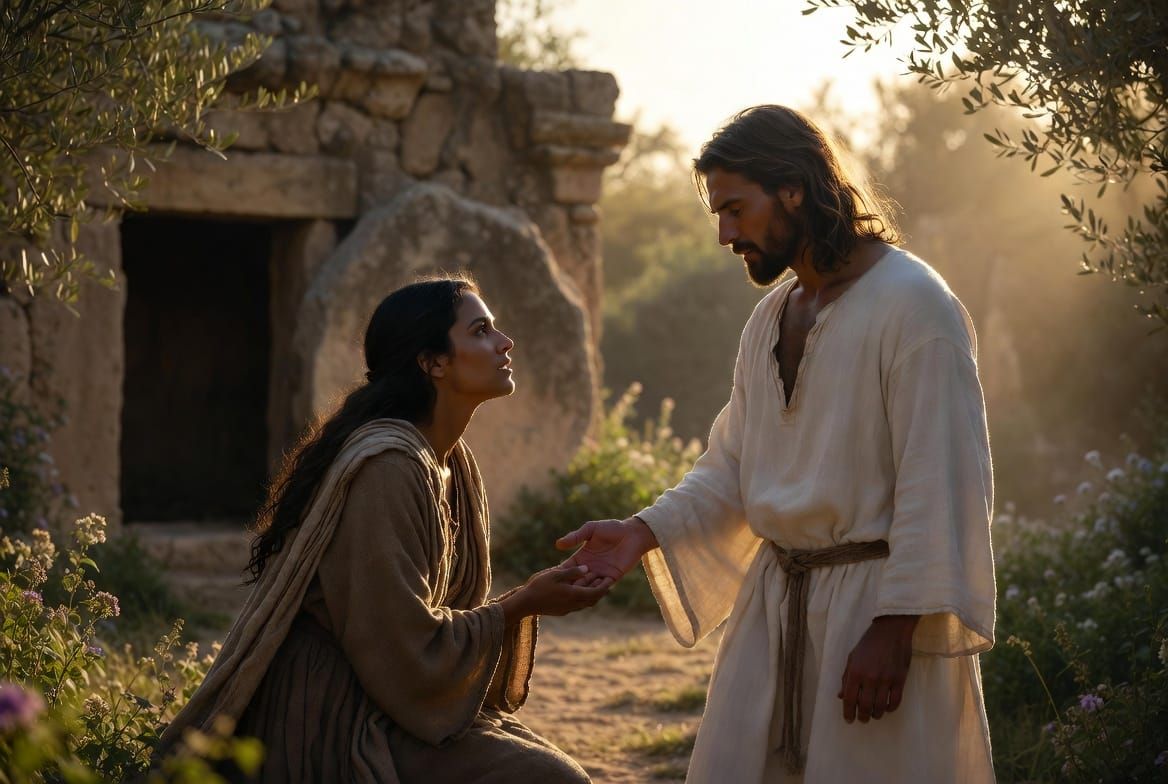
Feast Day: July 22
The Anglican calendar is ordered by a hierarchy of holy days, each carrying a different weight of observance. At the top stand the seven Principal Feasts, the highest-ranking days of the liturgical year. Below them are the Red-Letter Holy Days appointed in the BCP 2019 with their own Collects and propers. The Feast of Saint Mary Magdalene, observed on July 22, is one of these Red-Letter Holy Days. The BCP appoints her Collect on page 630 and her readings in the Holy Day lectionary on page 731. The appointed Proper Preface is Apostles and Ordinations.
Mary Magdalene holds an extraordinary place in the Gospel story. Jesus delivered her from seven demons. She became one of the women who followed him and supported his ministry. She remained among his faithful followers through the terrible events surrounding his Crucifixion and burial, came to the tomb on the first day of the week, and in John’s Gospel became the first person to whom the risen Jesus personally revealed himself. Christ then sent her to his disciples with the announcement upon which the Church’s proclamation rests: “I have seen the Lord.” (John 20:18, ESV)
The BCP Collect wisely refuses to embellish her biography. It remembers two things Scripture makes unmistakable: Christ “restored Mary Magdalene to health of body and of mind” and “called her to be a witness of his resurrection.”Mary’s feast is therefore a feast of grace from beginning to end. Christ finds a woman in bondage and delivers her. Christ finds her weeping at the tomb and reveals himself. Christ speaks her name and then sends her with good news. Before Mary follows, remains, witnesses, or proclaims, Jesus acts.
Mary Called Magdalene
Luke introduces her in a short but striking description. Jesus was traveling through cities and villages proclaiming the Kingdom of God with the Twelve and with women who had been healed of evil spirits and infirmities, including “Mary, called Magdalene, from whom seven demons had gone out.” (Luke 8:2, ESV)
The title Magdalene has traditionally been understood to identify her with Magdala, a Galilean town on the western side of the Sea of Galilee. Scripture tells us nothing certain about her childhood, family, marital status, occupation, or moral history before she encountered Jesus. That silence matters because later Christian imagination supplied a biography the Gospels themselves do not give.
What Scripture does tell us is serious enough. Seven demons had gone out from her. These should not be reduced to a metaphor for emotional difficulty or ordinary mental illness. Luke speaks of genuine demonic oppression, the work of personal spiritual evil. The number seven may underscore the severity or completeness of her affliction, but the central point is clear: Mary had been under terrible bondage, and Jesus set her free.
The BCP Collect describes the result of Christ’s deliverance as restoration to “health of body and of mind.” That language does not redefine the demons as psychological illness. Rather, it recognizes the comprehensiveness of the restoration Christ gave her. The powers that held Mary did not have the final word over her life. Jesus did.
Luke then places Mary among the women who accompanied Jesus and provided for him and the Twelve “out of their means.” (Luke 8:3, ESV) Her discipleship therefore becomes concrete. The woman who has received freely from Christ now gives from what she possesses for the work of his Kingdom.
She Followed Jesus
The Gospels do not give us a continuous narrative of Mary’s life during Jesus’ ministry. What they reveal instead is a pattern of faithful presence. She has been healed, she follows, and she remains associated with Jesus through the events of his Passion and Resurrection.
Matthew and Mark explicitly name Mary Magdalene among the women at the Crucifixion. John likewise places her near the Cross. Luke speaks of the women who had followed Jesus from Galilee standing at a distance and later identifies Mary Magdalene among the women who came to the tomb and announced what they found. Together the Gospel accounts place Mary securely among the faithful women whose discipleship continued through the darkest hours of Jesus’ Passion.
Matthew and Mark also name her in connection with Jesus’ burial. Matthew says Mary Magdalene and “the other Mary”sat opposite the tomb after Joseph of Arimathea laid Jesus’ body there. Mark says Mary Magdalene and Mary the mother of Joses saw where he was laid. (Matthew 27:61; Mark 15:47) They knew where the tomb was because they had remained close enough to see.
This makes Mary’s presence on Easter morning part of a larger pattern rather than an isolated act. She does not suddenly enter the story because the Resurrection needs a convenient witness. She has followed Jesus, remained through his suffering, observed his burial, and returned when the Sabbath was over.
There is something pastorally powerful in that fidelity, provided we do not turn Mary into the source of her own perseverance. The woman who remains is first the woman whom Jesus delivered. Grace has laid hold of her life, and her continuing presence becomes one of its fruits.
Mary at the Empty Tomb
All four Gospels place Mary Magdalene at the heart of the Easter morning testimony, though each tells the story with its own emphasis. Mark names Mary Magdalene, Mary the mother of James, and Salome bringing spices after the Sabbath. Matthew names Mary Magdalene and the other Mary. Luke names Mary Magdalene, Joanna, Mary the mother of James, and other women with them. John focuses closely upon Mary, while her words “we do not know where they have laid him” fit naturally with the other Gospels’ testimony that other women also came to the tomb.
John then tells the story with extraordinary intimacy. Peter and the beloved disciple run to the tomb and eventually leave, but Mary remains outside weeping. She bends down and sees two angels where Jesus’ body had lain. They ask why she is weeping, and she answers, “They have taken away my Lord, and I do not know where they have laid him.” (John 20:13, ESV)
She turns and sees Jesus but does not recognize him. Supposing him to be the gardener, she asks whether he has carried the body away. Then the whole scene turns upon a single word: “Jesus said to her, ‘Mary.’” (John 20:16, ESV)
Mary is seeking Jesus, but the risen Lord is already there. She does not finally find him through the success of her search. He reveals himself to her. He speaks her name, and she knows the voice of her Shepherd. The moment resonates naturally with Jesus’ teaching in John 10: “The sheep hear his voice, and he calls his own sheep by name.” (John 10:3, ESV)
“I Have Seen the Lord”
Jesus then gives Mary a commission: “Go to my brothers and say to them, ‘I am ascending to my Father and your Father, to my God and your God.’” (John 20:17, ESV) Mary obeys. John records her announcement simply: “I have seen the Lord.” (John 20:18, ESV)
Those words make Mary one of the foundational eyewitnesses to the Resurrection. In John’s account, she is the first person shown encountering the risen Jesus and the first person personally sent by him with the Easter announcement to the disciples. The other Gospels likewise place the women among the earliest witnesses and messengers of the Resurrection.
Mary’s witness is unique and unmistakable. She does not offer a theory that Jesus might somehow have survived. She does not merely announce that the tomb appears empty. She bears personal testimony: “I have seen the Lord.”
Christian tradition came to honor Mary with the Latin title apostola apostolorum (ah-POS-toh-lah ah-pos-toh-LOR-um), “apostle to the apostles.” The title expresses something genuinely present in John 20: the risen Christ sends Mary with the Resurrection announcement to those who will themselves become the principal apostolic heralds of that Resurrection.
The title does not make Mary one of the Twelve or place her in the apostolic office in the same sense as Peter or Paul. Nor does her importance need to be inflated by assigning her an office Scripture does not give her. The title honors the extraordinary commission John actually records: the risen Christ sends her to his disciples with the news that he is alive.
Mary Magdalene Is Not the Sinful Woman
Mary Magdalene’s biblical identity became obscured in the medieval Western Church through the conflation of several women in the Gospels. Mary Magdalene came to be identified with Mary of Bethany, the sister of Martha and Lazarus, and with the unnamed “woman of the city, who was a sinner” who anointed Jesus’ feet in Luke 7.
The identification became particularly influential in the West after Gregory the Great preached a homily in AD 591 treating these women as the same person. From this developed the familiar Western image of Mary Magdalene as a notorious sexual sinner, and eventually as a prostitute, who repented and followed Jesus. The Gospels themselves never say this about her.
Mary of Bethany is named in John and belongs to the household of Martha and Lazarus at Bethany. The woman of Luke 7 is not named at all. Mary Magdalene is introduced by Luke immediately afterward as a woman from whom seven demons had gone out. Scripture nowhere identifies these three women with one another.
The Eastern Christian tradition generally preserved the distinction more clearly, while the conflated Western portrait became enormously influential in preaching, art, and devotion. Western Christianity has increasingly recovered the distinction as well. The BCP 2019 wisely says nothing about prostitution or the unnamed woman of Luke 7. Its Collect stays with what Scripture actually gives us: Mary was restored by Christ and called to witness his Resurrection.
Correcting the conflation does not make Mary less a testimony to grace. She had been under severe demonic oppression and was delivered by Christ. She, like every Christian, needed the mercy of God. We simply do not honor Scripture by assigning her particular sins that Scripture never attributes to her.
The Appointed Readings
The BCP 2019 appoints Judges 4:4–10 or Judith 9:1, 11–14; Psalm 42:1–7, with verses 8–15 permitted; 2 Corinthians 5:14–20a; and John 20:11–18 for Saint Mary Magdalene. The readings are found on page 731 and remain the same across the three-year cycle.
Judges 4 introduces Deborah, prophetess and judge of Israel. She summons Barak with the command of the LORD and accompanies him when he refuses to go without her. The text presents a woman through whom God speaks and whose faithful service is bound up with the deliverance he gives Israel. Read on Mary Magdalene’s feast, the passage naturally places before the Church another woman given a significant role within God’s saving work.
The alternative reading from Judith is a prayer offered in an hour of grave danger. Judith confesses that God is the God of the lowly and the helper of the oppressed, and she asks him to act against the enemies threatening his people. Read on Mary Magdalene’s feast, the passage emphasizes divine power working through one who possesses no worldly strength in which to boast.
Psalm 42 gives voice to longing for God: “As a deer pants for flowing streams, so pants my soul for you, O God.” (Psalm 42:1, ESV) Its language of tears, absence, memory, and longing resonates naturally with Mary weeping outside the empty tomb. She believes the Lord has been taken from her, but the reality is more glorious than she can yet imagine. The one for whom she grieves is already alive and standing near her.
New Creation and Reconciliation
The Epistle, 2 Corinthians 5:14–20a, moves the feast from the garden outward into the Church’s mission. Paul declares, “If anyone is in Christ, he is a new creation. The old has passed away; behold, the new has come.” (2 Corinthians 5:17, ESV) He then says that all this is from God, “who through Christ reconciled us to himself and gave us the ministry of reconciliation.” (2 Corinthians 5:18, ESV)
The sequence begins where the whole feast begins: “All this is from God.” God reconciles. God makes new. God gives the ministry of reconciliation. Christian witness is response to a saving reality already accomplished in Christ.
The connection with John 20 is especially fitting because Mary encounters the risen Jesus in a garden on the first day of the week. The Christ who was dead now lives with a life death cannot end. Mary therefore carries more than information about an empty tomb. She announces the risen Lord himself.
The BCP Collect expresses the same reality not by asking merely that we remember Mary’s experience but that we “know you in the power of his unending life.” The Resurrection is an historical event, but because Jesus is alive it is never merely past.
The BCP 2019 Collect
The Collect on page 630 prays, “Almighty God, whose blessed Son restored Mary Magdalene to health of body and of mind, and called her to be a witness of his resurrection: Mercifully grant that, by your grace, we may be healed from all our infirmities and know you in the power of his unending life; who with you and the Holy Spirit lives and reigns, one God, now and for ever. Amen.”
The prayer moves beautifully from the particular grace given to Mary toward the Church’s continuing need. Christ restored her, and therefore we ask to be healed. Christ called her to witness the Resurrection, and therefore we ask to know God in the power of Christ’s unending life.
The wording keeps grace in the first position. The Church asks that “by your grace” we may be healed. Mary’s story likewise begins not with a woman who manages to free herself from bondage but with Christ who delivers her. At the tomb, recognition begins not because Mary finally reasons correctly about the evidence but because Jesus comes to her and calls her by name.
God is the first mover. Mary genuinely follows, remains, seeks, turns, recognizes, obeys, and proclaims, but each response exists because Christ has already acted.
The phrase “health of body and of mind” also gives the feast a whole-person character without explaining away Mary’s demonic deliverance. Christ’s salvation concerns human beings in their created wholeness. The final consummation of that salvation is not escape from embodied existence but resurrection life, the very reality Mary is called to witness.
The Proper Preface
The Collects section of the BCP directs the use of the Preface of Apostles for Mary Magdalene. The full heading of that Proper Preface in the Eucharistic materials is Apostles and Ordinations. Its text gives thanks through Jesus Christ, the great Shepherd of his flock, who after his Resurrection sent forth his apostles to preach the Gospel and teach all nations.
The choice is striking and fitting. Mary’s feast belongs within the great outward movement of Resurrection witness. Jesus tells her to go to his brothers and speak, and she goes. Her witness is genuinely sent witness: the risen Christ commissions her with good news.
The important thing is not to make Mary compete with the apostles. John does not. Christ sends Mary to them, and later he sends them into the world. The movements belong together because the same risen Lord initiates both.
Recognition and the Voice of the Shepherd
One of the strongest pastoral gifts of the feast is that Mary recognizes Jesus when he speaks her name. She has already seen the empty tomb. She has seen angels. She has even seen Jesus physically standing before her, yet she still does not know who he is. Then Jesus says, “Mary.”
The grace-first order is beautiful. Mary is seeking Jesus, but Jesus has already come to her. She does not finally find him through the success of her search. He reveals himself to her. Recognition comes because the living Lord addresses her.
That personal encounter does not reduce Christianity to subjective religious experience. The tomb really is empty. Jesus really has bodily risen from death. Mary really encounters him. Yet the objective truth becomes intensely personal when the Lord who lives speaks to the disciple who grieves.
The Good Shepherd knows his sheep. The Lord who conquered death is not indifferent to the particular people he came to save.
Faithful Presence at the Cross and Tomb
Mary’s faithfulness through the Passion is worth honoring. She remains connected with Jesus when association with a condemned man offers no advantage. There is no expectation of Easter triumph motivating her presence at the tomb. She comes in grief because Jesus is dead.
This distinguishes Christian hope from optimism. Mary does not stand outside the tomb because she has successfully convinced herself that events will turn out well. She weeps because she believes she has lost the one who delivered her.
Then God acts. The Resurrection does not emerge from Mary’s hope. Mary’s hope is rebuilt by the Resurrection. She has come looking for a corpse and encounters the living Lord.
That is one reason the feast speaks so powerfully to Christians who endure seasons in which God seems absent. The Gospel does not shame Mary for weeping or suggest that stronger faith would have prevented her grief. Jesus comes to her in the midst of it. The answer to her grief is not a technique for producing religious feeling. It is the living Christ.
Mary Magdalene and Christian Witness
Mary’s announcement provides a model of Christian witness precisely because it is so simple: “I have seen the Lord.”She tells what Christ has revealed and what Christ commanded her to tell.
Christian witness likewise does not begin with inventing a religious message that will attract an audience. The Church has received news. Christ has died. Christ has risen. Christ reigns. Sinners are called to repentance and faith because reconciliation with God is given through him.
Mary’s witness is therefore both personal and objective. She has encountered Jesus herself, yet the content of her testimony is not merely how the encounter made her feel. It concerns something that happened outside her: the crucified Jesus is alive.
This distinction remains essential. Christianity is not sustained simply by the sincerity of Christian experience. Mary’s testimony matters because the Lord she saw had actually risen. At the same time, the Resurrection is not a sterile fact from which the believer remains personally detached. The risen Lord knows, calls, restores, and sends.
A Woman Sent with the Easter News
Mary’s commission has rightly made her a major biblical example of the important role women played in Jesus’ ministry and in the earliest proclamation of the Resurrection. Luke names women who accompanied Jesus and supported his work. All four Gospel traditions make women central to the discovery and announcement of the empty tomb, and John gives Mary Magdalene this particularly intimate encounter and commission.
That testimony should be allowed its full force without either diminishing or exaggerating it. Whatever limitations particular ancient societies placed upon women’s public roles, the Evangelists make no attempt to remove the women from the Easter testimony. They tell us that women came to the tomb, and John gives Mary Magdalene an especially prominent place as an eyewitness of the risen Jesus.
At the same time, Mary’s unique commission should be honored according to the categories Scripture actually gives. John 20 is not an ordination narrative, nor does calling Mary apostle to the apostles make her one of the Twelve or establish that she occupied the same apostolic office as Peter or Paul. She does not need to be transformed into Peter or Paul in order to matter.
Christ gave Mary the vocation that was hers: to stand before his disciples and say that she had seen their risen Lord. That calling is extraordinary enough without requiring us either to diminish it or to turn it into something else.
Tradition After the New Testament
After the New Testament, traditions concerning Mary Magdalene multiply and often disagree. Some later Western traditions brought her together with Martha and Lazarus and eventually located her final years in southern Gaul. Eastern traditions more commonly associated her later life with Ephesus. These accounts belong to the history of Christian remembrance but do not carry the authority or historical security of the Gospel record.
The Church does not need those later stories to make Mary significant. Scripture has already given her a remarkable place. She is a disciple delivered from demonic oppression, a supporter of Jesus’ ministry, a witness associated with his Passion and burial, a visitor to the empty tomb, and the woman whom John shows encountering the risen Christ and carrying his message to the disciples.
Later traditions may be remembered as part of Christian history, but they should not be allowed to replace the biblical Mary with a more dramatic figure of our own construction. Scripture itself says enough to justify profound honor and gratitude.
The Liturgical Character
Mary Magdalene’s feast has deep roots in Western Christian worship and remained in the English calendar through the Reformation. The BCP 2019 gives July 22 Red-Letter status, its own Collect and appointed readings, and directs the use of the apostolic Proper Preface.
White is customarily used for Saint Mary Magdalene in Anglican worship. It fittingly connects the feast with Resurrection joy and with Mary’s witness to the risen Christ.
Because July 22 always falls after Pentecost, the feast always occurs during the Season after Pentecost. Its customary white therefore interrupts the green ordinarily associated with the long season with the proclamation that gives every Christian season its meaning: Jesus Christ is risen from the dead.
The permanent article should not tie the feast to a particular Proper, lectionary year, or nearby Sunday Gospel. Those relationships change from year to year. Mary Magdalene’s own propers give the feast its stable biblical and liturgical character.
When July 22 Falls on Sunday
Saint Mary Magdalene is a Red-Letter Holy Day rather than a Principal Feast, so the BCP’s general rules of precedence govern its observance when July 22 falls on Sunday. Because July 22 necessarily falls after Pentecost, it does not encounter the Advent, Lent, or Easter restrictions that affect some other fixed Holy Days.
When July 22 coincides with an ordinary Sunday in the Season after Pentecost, the Holy Day may be observed on that Sunday according to the Prayer Book’s provisions or transferred according to its calendar rules. Its fixed date should therefore not be permanently tied to any particular numbered Proper.
This allows the Church to honor Mary’s Resurrection witness fully while keeping her feast within the ordered hierarchy of the Christian year.
Observing This Feast
Saint Mary Magdalene is observed on July 22. The Collect is found on page 630, the appointed Proper Preface is Apostles and Ordinations, and the readings are Judges 4:4–10 or Judith 9:1, 11–14; Psalm 42:1–7, with verses 8–15 permitted; 2 Corinthians 5:14–20a; and John 20:11–18. White is customarily used in Anglican worship.
Begin with John 20 and remain with the movement of the passage. Mary weeps, looks, turns, sees, fails to recognize, hears her name, recognizes Jesus, receives his command, and goes. Notice how much Christ does before Mary can say, “I have seen the Lord.”
Read Luke 8:1–3 as well and remember that Easter morning is not the beginning of her story with Jesus. The Lord who speaks her name in the garden is the Lord who had already delivered her from terrible spiritual bondage. Her witness to the Resurrection grows out of a life that had already been claimed by his mercy.
Psalm 42 gives language for those times when the Lord seems absent. Pray it without pretending that grief is unbelief. Mary wept at the tomb of Jesus and was not rebuked for loving him too deeply. Yet let John 20 answer the Psalm’s longing: the Lord whom she seeks is alive and nearer than she knows.
Then read 2 Corinthians 5 and hear the theological horizon into which Mary’s proclamation opens. The Resurrection belongs to the new creation, and reconciliation originates wholly in God. The Church bears witness because God has acted in Christ.
Finally, pray the Collect. Ask not merely to admire Mary’s healing and witness but to receive what the prayer actually seeks: grace, healing from our infirmities, and knowledge of God “in the power of his unending life.”
Conclusion
Mary Magdalene’s feast is a feast of the living Christ before it is a feast about Mary. Her biblical story begins in bondage. Seven demons have gone out from her because Jesus has delivered her. She becomes his disciple, follows him, supports his ministry, remains among the women who witness the terrible end of his earthly life, and returns to the place where his body had been laid.
She comes to the tomb looking for the dead Jesus. That detail matters. Mary does not generate Easter by faith strong enough to overcome death. She does not discover the Resurrection because she understands Jesus’ predictions more quickly than the other disciples. She comes grieving, and the risen Lord is already there.
He speaks her name, and her recognition follows his call. Her proclamation then follows his commission. Grace remains first from beginning to end. The Lord delivered her before she followed him, revealed himself before she recognized him, and sent her before she announced him.
The Church rightly remembers the words with which she returned to the disciples: “I have seen the Lord.” (John 20:18, ESV) They are not a vague statement of spiritual experience. They are eyewitness testimony to the crucified Jesus alive again.
That is why Mary Magdalene matters. She does not draw the Church away from Christ into fascination with herself. The Mary of the Gospels continually brings us back to him: the Lord who delivers from bondage, stands alive beyond death, calls his sheep by name, and sends those who have received his grace to bear witness to what he has done.
The Collect asks that the same Lord who restored Mary would grant that “by your grace, we may be healed from all our infirmities and know you in the power of his unending life.” That is ultimately the feast’s invitation: not merely to know that Mary once saw him, but to know the living Christ to whom she bore witness.