Until the Harvest (Matthew 13:24–30; 34–43)
Proper 11. The wheat and the tares. Let both grow until the harvest. The patience God requires is not indifference to evil; it is the refusal to execute a judgment that belongs to the Son of Man alone. Creation groans. The righteous wait. The harvest is certain.
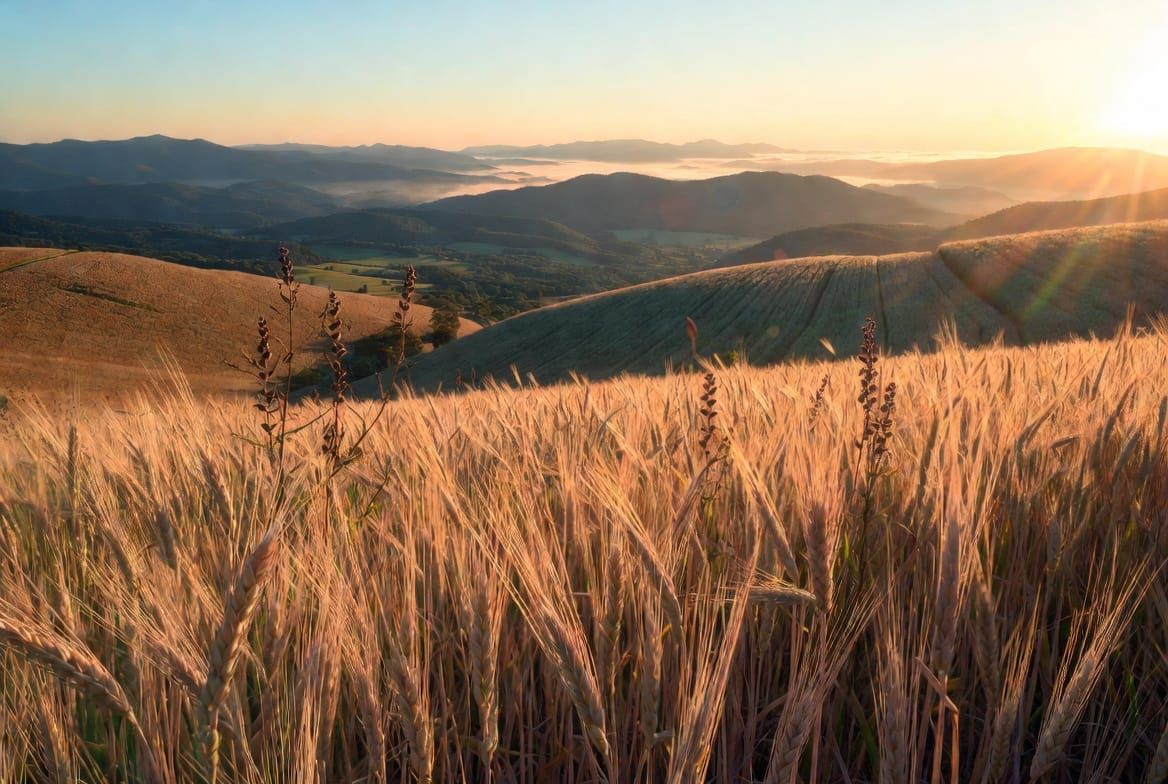
July 19, 2026, Year A, Proper 11, Season after Pentecost
Matthew 13:24–30; 34–43, Psalm 86, Romans 8:18–25
Grace, mercy, and peace from God our Father and the Lord Jesus Christ be with you on this Eighth Sunday after Pentecost.
Last week we sat with the parable of the sower: the word going out generously onto every kind of ground, the harvest exceeding all expectation in the good soil that hears and understands. This week Jesus gives the disciples the parable that follows it, pressing the same questions from a different angle. Not what happens to the word when it enters different hearts, but what happens in the world while the Kingdom grows. Our primary passage is Matthew 13:24–30; 34–43.
The parable is brief and vivid. A man sows good seed in his field. While his servants sleep, an enemy sows weeds among the wheat. When the plants come up, the problem is visible, and the servants want to fix it immediately. The master says no. Why? Because the weed Jesus describes is zizania (zi-ZAN-ee-ah), bearded darnel, a weed that in its early stages is virtually indistinguishable from wheat. The root systems become entangled beneath the surface. To pull the weed is to pull the wheat alongside it. The judgment that can separate them requires a maturity the field has not yet reached. So the master says: let both grow until the harvest.
The servants’ impulse is one most of us have felt. Perhaps we have prayed for someone across twenty or thirty years and watched them walk further away from faith rather than closer. Perhaps we have watched the Church wounded from within by people who should have known better. Perhaps we have seen institutions we trusted fail, or watched the community around us change in ways we cannot stop, or simply lived long enough to accumulate a weight of unanswered questions about why God allows what he allows.
The servants are not wrong to want the weeds gone. Every faithful person who has ever asked “how long, O Lord” is standing in their shoes. They are wrong only in thinking that pulling the weeds is their job.
There is a further precision in the parable worth holding. The master does not say: let both grow because we cannot tell them apart. He says: let both grow because pulling the weeds would uproot the wheat. He knows exactly where the enemy has sown. The problem is that the root systems have become entangled. Judgment now would destroy what should be preserved. This is not divine indifference; it is divine providence. God withholds the immediate destruction of evil not because he cannot see it but because the timing of judgment belongs to the purposes of his mercy.
The disciples press for the interpretation, and Jesus gives it fully in verses 36 through 43. The field is the world. Not Israel only, not the Church, but the whole world. The good seed is the sons of the Kingdom; the weeds are the sons of the evil one; the enemy is the devil; the harvest is the close of the age; the reapers are angels. The righteous have always lived in the midst of the unrighteous, from Abel to the present day. This is not a new problem that has gotten worse in our generation. Every generation of the Church has looked at the field and wondered how long. The master’s answer has always been the same.
Why does the master wait? The elect are scattered throughout the world, and the harvest of their salvation is not yet complete. To execute judgment now would be to cut the harvest short. Peter is writing to the elect, and his word is that God is patient toward them: “not wishing that any should perish, but that all should reach repentance.” (2 Peter 3:9, ESV) The “any” and the “all” refer to the elect still being gathered. God withholds the harvest not from indifference to evil but because there are still those he has chosen who have not yet been brought fully in. The patience is not passive; it is the active mercy of the one who sees what is still ripening in the field.
Verse 34 is the hinge between the parable and its explanation: “All these things Jesus said to the crowds in parables; indeed, he said nothing to them without a parable.” (Matthew 13:34, ESV) Fulfilling the word of the psalmist: “I will open my mouth in parables; I will utter what has been hidden since the foundation of the world.” (Matthew 13:35, ESV) What has been hidden since the foundation of the world is now being disclosed. The parables are not decorative illustrations; they are the form in which the mystery of the Kingdom is given to those with ears to hear.
Verse 41 contains a claim the disciples would have felt in their bones: “The Son of Man will send his angels.” (Matthew 13:41, ESV) Not that Father will send them. Not that a prophet announces what God will do. Jesus, speaking in the first person, assumes the divine prerogative without apology. The same teacher who speaks from a borrowed boat by the sea is the one who will command the angels at the close of the age. This is one of the most unambiguous Christological self-disclosures in Matthew’s Gospel. The one who tells this parable is the one who will execute its end.
And what that judgment accomplishes is worth noting precisely. The angels will gather out of his kingdom “all causes of sin and all law-breakers.” (Matthew 13:41, ESV) Two categories: causes of sin, the objective sources of stumbling in the world; and law-breakers, those who have broken it. The final judgment is therefore not only a separation of the ungodly from the godly. It is also a separation of ungodliness from the godly.
The wheat itself is purged of what clings to it. This is, in theological terms, glorification: the final completion of what the Spirit has been doing in the believer across a lifetime, the fulfillment of the confidence Paul expresses in Philippians 1:6 that he who began a good work will bring it to completion at the day of Jesus Christ; his second coming at the resurrection of the dead. The harvest does not merely rescue us from the presence of the wicked; it completes us. The Kingdom that arrives at the close of the age is not a slightly improved version of the present world. It is a world from which everything that causes sin has been removed, and from which everything in us that was not yet fully righteous has been made whole.
And then verse 43, the promise the parable has been building toward: “Then the righteous will shine like the sun in the kingdom of their Father.” (Matthew 13:43, ESV) Jesus is echoing Daniel 12:3: “Those who are wise shall shine like the brightness of the sky above; and those who turn many to righteousness, like the stars forever and ever.” (Daniel 12:3, ESV) Daniel 12 is a resurrection passage: the dead who sleep in the dust will awake, some to everlasting life. Jesus is not simply offering his disciples comfort for a difficult season. He is telling them that the close of the age is the moment when everything Daniel saw will be completely fulfilled. The harvest is the resurrection. The shining is the glory of the age to come.
Let that promise land for a moment. The righteous will shine like the sun. Think about what that means for the people in this room: people who have prayed faithfully for decades, who have served and given and endured and shown up week after week through grief and illness and the long ordinary weight of years.
That is not survival language. That is not “they will merely make it through.” That is transformation language. The patience of the present age is the growth season in which the wheat is becoming what it will shine as. Every year of faithfulness, every prayer offered in a weedy world, every act of mercy that no one noticed: these are not simply endured. They are the formation of those who will shine like the sun in the Kingdom of their Father.
The practical word this parable speaks to the wheat is not a warning but a release. We do not have to fix the field. The harvest belongs to the Son of Man who commanded it, and he sees the field more clearly than any of us do.
The temptation to appoint ourselves judges of who belongs in the Kingdom and who does not is the servants’ error dressed in religious clothing. Our task is to grow, to bear fruit, to shine where we are planted, and to wait for the one who has promised to send his angels at the close of the age. This is not resignation; it is freedom. The weight of the world’s weeds does not fall on us to manage.
This does not mean silence. The wheat does not pretend the weeds are wheat. We are still called to name evil as evil, to pray against it, to speak prophetically where injustice flourishes, and to practice the discipline that the New Testament assigns to the household of faith. The prophets never stopped naming what was wrong, and the Church is not called to stop either. What the parable prohibits is not the naming of evil or the groaning against it, but the presumption that we can execute the final separation that belongs to the Son of Man alone.
Romans 8 gives the same waiting a cosmic frame. Paul writes: “For the creation waits with eager longing for the revealing of the sons of God… the whole creation has been groaning together in the pains of childbirth until now. And not only the creation, but we ourselves, who have the firstfruits of the Spirit, groan inwardly as we wait eagerly for adoption as sons, the redemption of our bodies.” (Romans 8:19, 22–23, ESV) The groaning is not despair. It is childbirth: purposeful pain on the way to new creation.
We are not alone in the waiting. The whole created order waits alongside us. And the firstfruits of the Spirit we already hold are the guarantee that the harvest is real: we do not wait in a vacuum but in the possession of the down payment of what is coming.
Romans 8:25: “But if we hope for what we do not see, we wait for it with patience.” (Romans 8:25, ESV) The patience here is not gritted-teeth endurance. It is the patience of those who have tasted enough of what is coming to know it is worth waiting for. And it is worth naming plainly that this waiting is hard. It is not easy to watch the field and not pull. It is not easy to pray for outcomes we cannot control. The patience Romans 8 describes is not the absence of longing but its presence: we groan because we want the harvest, because we have tasted enough of the Kingdom to know that what is coming is more than what we can presently see.
Psalm 86 is the prayer of the wheat in a weedy world. “Incline your ear, O Lord, and answer me, for I am poor and needy… For you, O Lord, are good and forgiving, abounding in steadfast love to all who call upon you.” (Psalm 86:1, 5, ESV) The psalmist does not fix the world. He does not pull the weeds. He calls upon the one who is good and forgiving and abounding in steadfast love.
This is the wisdom the parable teaches: the servants who wanted to pull weeds would have done better to pray. And this congregation has been praying Psalm 86 in its own words across many years. We have brought things to God that we could not fix. We have trusted him with outcomes we could not control. That is not weakness. That is the posture of the wheat.
The collect for this Sunday says something remarkable about God’s power: “O God, you declare your almighty power chiefly in showing mercy and pity: Grant us the fullness of your grace, that we, running to obtain your promises, may become partakers of your heavenly treasure.” (BCP 2019, p. 618) Almighty power declared chiefly in mercy and pity. The master who says “let both grow” is not abdicating power; he is expressing it in the form most characteristic of who God is. His restraint is his power. His patience is his mercy. And the grace he gives us is not the grace to manage the field but the grace to run toward the promises.
Two feast days fall this week, and articles on both will be posted on the church website later this week. Mary Magdalene on Wednesday, July 22: the woman who came to the tomb before dawn, who wept in the garden, who heard her name spoken by the risen Lord and became the first to say “I have seen the Lord.” James the Apostle on Saturday, July 25: the first apostle martyred, beheaded by Herod in Acts 12, cut down in the earliest years of the Church.
In the week the sermon preaches patience with the harvest, the calendar shows us two people for whom the harvest looked entirely different. Some of us have lost people we loved long before we thought their work was finished, before we thought their harvest was complete. The parable does not answer every question about the timing of God’s purposes. What it does is relocate the question: the harvest belongs to the Son of Man who sees what is ripening in ways we cannot. The parable is not a promise that we will all be given the same number of seasons. It is a promise that the harvest is the Son of Man’s to command, and that both Mary and James arrived at the same place: the righteous shining like the sun in the Kingdom of their Father.
What does this waiting look like in practice? Psalm 86 shows us one face of it: prayer, the cry of the poor and needy who know where to bring what they cannot carry. The collect shows us another: running toward the promises rather than standing in the field trying to manage what is not ours to manage. And the parable shows us a third: growing. The wheat does not pull weeds. It grows. It puts down roots. It produces grain. The formation that will one day shine like the sun is happening right now, in every act of faithfulness that goes unnoticed, in every prayer that feels unanswered but is not, in every week of showing up when staying home would have been easier. This is the work of the wheat while the harvest waits.
“He who has ears, let him hear.” (Matthew 13:43, ESV)
The weeds are real. The field is genuinely mixed. The waiting is sometimes long and sometimes costly. But the one who sowed the good seed is the Son of Man, and he has not lost track of a single stalk of wheat. He sees what is ripening. He knows the hour of the harvest. And the promise he has made is not that the field will get tidier before the end, but that when the end comes, the righteous will shine like the sun. The wheat waits with confidence, not because the field is improving, but because the one who commanded the harvest has not changed his mind. The harvest belongs to him. Until that day, this is the work: grow, pray, name what is wrong, groan for what is coming, run toward the promises.
In the Name of the Father, and of the Son, and of the Holy Spirit. Amen.