The Feast of the Nativity of John the Baptist: An Anglican Perspective
June 24: the Nativity of John the Baptist. One of only two births celebrated in the Anglican calendar, the other being Christmas. The Church does not observe birthdays generally. That it has kept June 24 since the fourth century says everything about John’s place in salvation history.
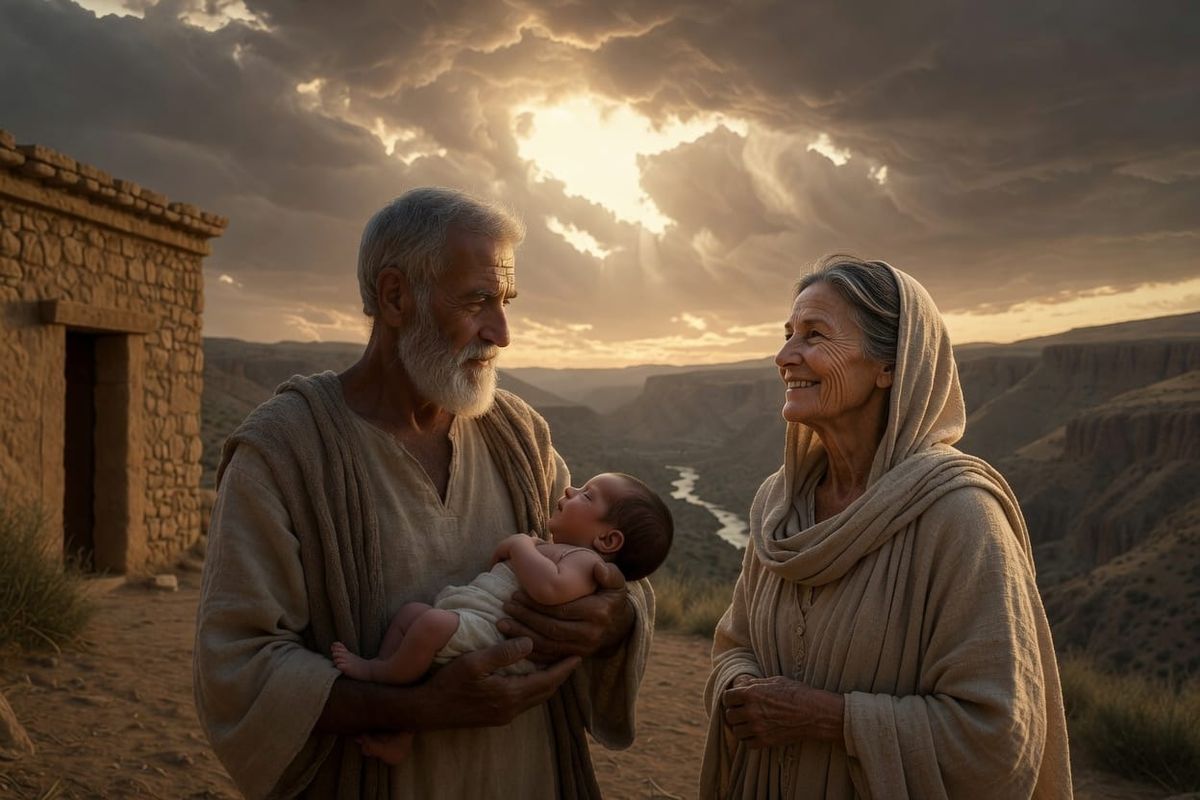
Feast Day: June 24
The Anglican calendar is ordered by a hierarchy of holy days, each carrying a different weight of observance. At the top sit the seven Principal Feasts, the highest days of the liturgical year. Below them are the Red-Letter Holy Days, appointed in the BCP 2019 with their own collects, propers, and lectionary readings, listed on page 688. They are called Red-Letter Days because, in the tradition of printing church calendars, these days appear in red ink, distinguished from the Optional Commemorations which appear in ordinary type. The Nativity of John the Baptist, observed on June 24, is one of these Red-Letter Holy Days. The BCP 2019 appoints a collect on page 629 and lectionary readings on page 731 for this feast.
June 24 falls squarely in the Season after Pentecost, in the long green arc of ordinary time that runs from Trinity Sunday to Christ the King. In most years it lands in the week of Proper 7, the Sunday on which the lectionary appoints Matthew 10:16–33, the cost of speaking truth, the warning about arrest and betrayal and the demand to confess Christ before men. The proximity is fitting: John the Baptist is the New Testament's supreme embodiment of exactly what that passage describes. He preached, was imprisoned, and was beheaded. His feast interrupts the ordinary season with a life that was anything but ordinary.
The Nativity of John the Baptist is one of only two births celebrated in the Anglican liturgical calendar. The other is Christmas. The Church does not observe birthdays as a general practice; it observes the feast days of saints, which in most cases are the anniversaries of their deaths and their entrance into eternal life. John is the exception, along with Jesus himself. That the Church has marked June 24 as a feast of John's birth since at least the fourth century is a testimony to his singular place in the economy of salvation. He is not merely a notable saint. He is the one whose birth announced the approaching birth of the Lord.
The Biblical Portrait
The story of John's birth is told in Luke 1:57–80, the appointed Gospel for this feast. His birth was itself miraculous. His father Zechariah was a priest who had served faithfully his entire life, and he and his wife Elizabeth were old and had no children. The angel Gabriel appeared to Zechariah in the temple while he was burning incense and announced that Elizabeth would bear a son, and that Zechariah should name him John. "He will be great before the Lord. And he must not drink wine or strong drink, and he will be filled with the Holy Spirit, even from his mother's womb. And he will turn many of the children of Israel to the Lord their God." (Luke 1:15–16, ESV) Zechariah doubted the angel's word and was struck mute. He would not speak again until the day of the child's circumcision and naming, eight days after the birth.
When the day came to name the child, the neighbors and relatives assumed he would be called Zechariah after his father. Elizabeth said: no, he shall be called John. They objected that no one in the family bore that name. They made signs to Zechariah, who asked for a writing tablet and wrote: his name is John. "And immediately his mouth was opened and his tongue loosed, and he spoke, blessing God." (Luke 1:64, ESV) The name John is from the Hebrew Yəhochanan, God is gracious. The child who will announce the grace of God is given a name that means exactly that. And the moment the right name is written, the months of silence are ended, and Zechariah's first words are blessing.
Those first words are the Benedictus, Luke 1:68–79, one of the great canticles of the New Testament and a centerpiece of the Daily Office at Morning Prayer. Zechariah sings of the God who has visited and redeemed his people, who has raised up a horn of salvation in the house of David, who has remembered his holy covenant and the oath sworn to Abraham. And then he turns to his son: "And you, child, will be called the prophet of the Most High; for you will go before the Lord to prepare his ways, to give knowledge of salvation to his people in the forgiveness of their sins." (Luke 1:76–77, ESV) In the Benedictus, John's whole life is compressed into two verses. He will be called the prophet of the Most High. He will go before the Lord. He will prepare the way. He will give knowledge of salvation. All of this before he has done anything at all, before he has spoken a single word of preaching or baptized a single person in the Jordan. John's identity precedes his ministry.
The Hinge of the Testaments
John the Baptist occupies a unique position in the history of salvation. Jesus himself names it plainly in Matthew 11:13: "All the Prophets and the Law prophesied until John." (Matthew 11:13, ESV) John is the last of the prophets, the final voice in the prophetic tradition of Israel that runs from Moses through Malachi and ends at the Jordan. Everything the prophets said about the coming of the Lord, the restoration of Israel, the new covenant, the Servant of the Lord, the shoot from the stump of Jesse, all of it was said in anticipation of what John would be the first to see. The last prophet stands at the edge of what all the prophets had promised, points across the Jordan, and says: there he is.
Isaiah 40:1–11, the appointed Old Testament reading for this feast, is the text the Gospels quote when they identify John's mission. The voice crying in the wilderness, the command to prepare the way of the Lord, the making straight of the crooked paths, all of this Isaiah spoke as prophecy, and all of it the Evangelists saw fulfilled in John. The passage opens with "Comfort, comfort my people, says your God." (Isaiah 40:1, ESV) The comfort that Isaiah announces is the arrival of God himself. The one who is coming is not a messenger sent ahead of God but God himself, coming in the arm of his strength, coming as a shepherd who will gather the lambs. John stands at the moment when that comfort, announced in the eighth century BC, is arriving. He is the voice that announces the arrival. Everything Isaiah said, John is now saying: behold, the Lord is coming.
In Acts 13:14b–26, the appointed Epistle, Paul summarizes the Gospel at the synagogue in Antioch of Pisidia. He traces the story of salvation from the Exodus through David, and then: "Before his coming, John had proclaimed a baptism of repentance to all the people of Israel. And as John was finishing his course, he said, 'What do you suppose that I am? I am not he. No, but behold, after me one is coming, the sandals of whose feet I am not worthy to untie.'" (Acts 13:24–25, ESV) What you suppose that I am, I am not he. John's greatest word is a word of negation. He is defined as much by what he is not as by what he is. He is not the Christ. He is not the light. He is the voice, not the Word. He is the lamp, not the sun. And his willingness to be the lesser one, to decrease so that the greater might increase, is the quality the collect asks the Church to imitate.
The sixth month of Elizabeth's pregnancy and the first day of Mary's is where the Visitation places the two lives in direct contact. The child in Elizabeth's womb leaps at the greeting of the one who carries the Lord. Before either has been born, before either has spoken, the forerunner already recognizes the one he will spend his life pointing toward. John's identity as the herald precedes even his birth. The calendar reflects this: June 24 is exactly six months before December 25. The liturgical year honors the chronology of Luke's Gospel.
The Appointed Readings
The lectionary for the Nativity of John the Baptist is found on page 731 of the BCP 2019, the same across all three years. Isaiah 40:1–11 is the prophetic ground of John's ministry, the voice crying in the wilderness whose words he fulfills. Psalm 85:7–13 is the psalm of the meeting of the covenants: "Steadfast love and faithfulness meet; righteousness and peace kiss each other. Faithfulness springs up from the ground, and righteousness looks down from the sky." (Psalm 85:10–11, ESV) The psalm names in poetic compression what John's ministry accomplishes: it is the moment when the long faithfulness of the Old Covenant meets the righteousness of the New, when what God promised to Abraham and David and Isaiah is about to be fulfilled in the one John is baptizing. The kiss of righteousness and peace is the moment John points to at the Jordan.
Acts 13:14b–26 is Paul's account of John's role in the Gospel story, the apostolic proclamation of what John's ministry meant and why it was necessary. And Luke 1:57–80 is the birth narrative itself, culminating in the Benedictus. Read together, these four texts form a complete portrait: the prophecy, the psalm, the apostolic proclamation, and the birth. The feast day gives the Church the entire theological arc of John's life in a single liturgy.
The BCP 2019 Collect and Preface
The BCP 2019 appoints the following collect for June 24 on page 629: "Almighty God, by whose providence your servant John the Baptist was wonderfully born, and sent to prepare the way of your Son our Savior by preaching repentance: Make us so to follow his teaching and holy life, that we may truly repent, boldly rebuke vice, patiently suffer for the sake of truth, and proclaim the coming of Jesus Christ our Lord; who lives and reigns with you and the Holy Spirit, one God, for ever and ever. Amen." The collect names four qualities that characterized John's ministry and asks that the Church would share them: truly repent, boldly rebuke vice, patiently suffer for the sake of truth, and proclaim the coming of Jesus Christ. These four petitions are not a generic list of virtues. They are a description of what happens when a life is given entirely to preparing the way. John truly repented, the preacher of repentance was himself repentant. John boldly rebuked vice, he told Herod plainly that it was not lawful for him to have his brother's wife, and that word cost him his freedom and his head. John patiently suffered for the sake of truth, he waited in prison without the vindication he may have wondered about, even sending his disciples to ask Jesus: are you the one, or do we wait for another? And John proclaimed the coming of Jesus Christ, that was his entire life, from the leaping in the womb to the word at the Jordan: behold, the Lamb of God.
The Preface appointed for this feast is the Preface of Advent, found on page 153 of the BCP 2019: "Because you sent your beloved Son to redeem us from sin and death, and to make us heirs in him of everlasting life; that when he shall come again in power and great glory to judge the world, we may without shame or fear rejoice to behold his appearing." (BCP 2019, p. 153) The appointment of the Advent preface on a June feast is deliberate and theologically rich. John's entire ministry was an Advent ministry: he was the voice of preparation, the herald of the coming, the one who pointed forward. Even in midsummer, John's feast is celebrated with the preface of expectation. The Church on June 24 is briefly returned to Advent's posture, the watchful, expectant, preparatory spirit that John embodied throughout his life.
The Feast in Anglican Worship
Red vestments are worn on the Nativity of John the Baptist, honoring both his birth and his martyrdom. Although June 24 is a birth feast rather than a martyrdom feast, John died as a martyr, beheaded by Herod Antipas for his bold rebuke of Herod's unlawful marriage. The Church honors his birth with the martyr's color, acknowledging that his birth was the beginning of a life that would end in witness unto death. The red of June 24 in the green of the Season after Pentecost is the same interruption John himself made in the ordinary life of Israel: a sudden, vivid summons to attention.
The Benedictus, Luke 1:68–79, is one of the canticles of Morning Prayer in the BCP 2019, appointed for regular use at the Daily Office. This means that on the Nativity of John the Baptist, the congregation may hear the Benedictus both at Morning Prayer as the daily canticle and in the Gospel reading at the Eucharist. Zechariah's song is one of the great theological summaries of the Old Testament's hope and the New Testament's fulfillment, and the feast provides a natural occasion to preach it in its full context.
The feast has been observed in the Western Church since the fourth century and appears in every edition of the Book of Common Prayer. Cranmer retained it in 1549 and in every subsequent revision it has held its place as a Red-Letter Holy Day. John's place as the herald of the Lord, the last of the prophets, and the one who identified Jesus as the Lamb of God at the Jordan has given this feast a theological permanence that no revision of the calendar has seen fit to disturb.
Observing the Feast
The Nativity of John the Baptist falls on June 24 and always lands in the Season after Pentecost. The collect is on page 629 of the BCP 2019 and the lectionary readings are on page 731. Red vestments are worn.
To observe the feast: pray the collect and let its four petitions be the day's examination of conscience, truly repent, boldly rebuke vice, patiently suffer for the sake of truth, proclaim the coming of Jesus Christ. Read Luke 1:57–80 in full and sit with the Benedictus. Zechariah's song is a lifetime of priestly faithfulness suddenly given voice, a father's first words after nine months of silence, and one of the most theologically dense canticles in Scripture. Read Isaiah 40:1–11 and hear the comfort that John was born to announce. And read Acts 13:24–25, Paul's summary of John's self-understanding: what do you suppose that I am? I am not he.
If June 24 falls near a Sunday sermon on Matthew 10 or on the cost of speaking truth, John's life is the sermon's embodiment. The preaching calendar of the Season after Pentecost in Year A places the feast in the week of Proper 7, when the lectionary appoints Matthew 10:16–33, the passage about arrest, betrayal, and confessing Christ before men. No life in the New Testament illustrates that passage more completely than John's.
Conclusion
The Nativity of John the Baptist is the Church's annual recognition that some lives are given entirely to pointing beyond themselves. John's greatness, Jesus says in Matthew 11:11, exceeds that of any person born of woman, and yet the one who is least in the Kingdom of heaven is greater than he. John stands at the threshold, belonging entirely to both sides of it. He is the voice of the Old Covenant's final word and the herald of the New Covenant's first arrival. His birth is celebrated because it was the beginning of the last announcement before everything the prophets had promised was fulfilled. On June 24 the Church pauses in its long green summer, puts on red, and remembers the one who said: I am not he. Behold, after me one is coming.
"Almighty God, by whose providence your servant John the Baptist was wonderfully born, and sent to prepare the way of your Son our Savior by preaching repentance: Make us so to follow his teaching and holy life, that we may truly repent, boldly rebuke vice, patiently suffer for the sake of truth, and proclaim the coming of Jesus Christ our Lord." (BCP 2019, p. 629)