The Great Litany: An Anglican Perspective
The Great Litany is one of the oldest and most distinctive prayers in the Anglican tradition. Long before the first Book of Common Prayer appeared in 1549, English Christians were already praying a form of the Litany in their own language.
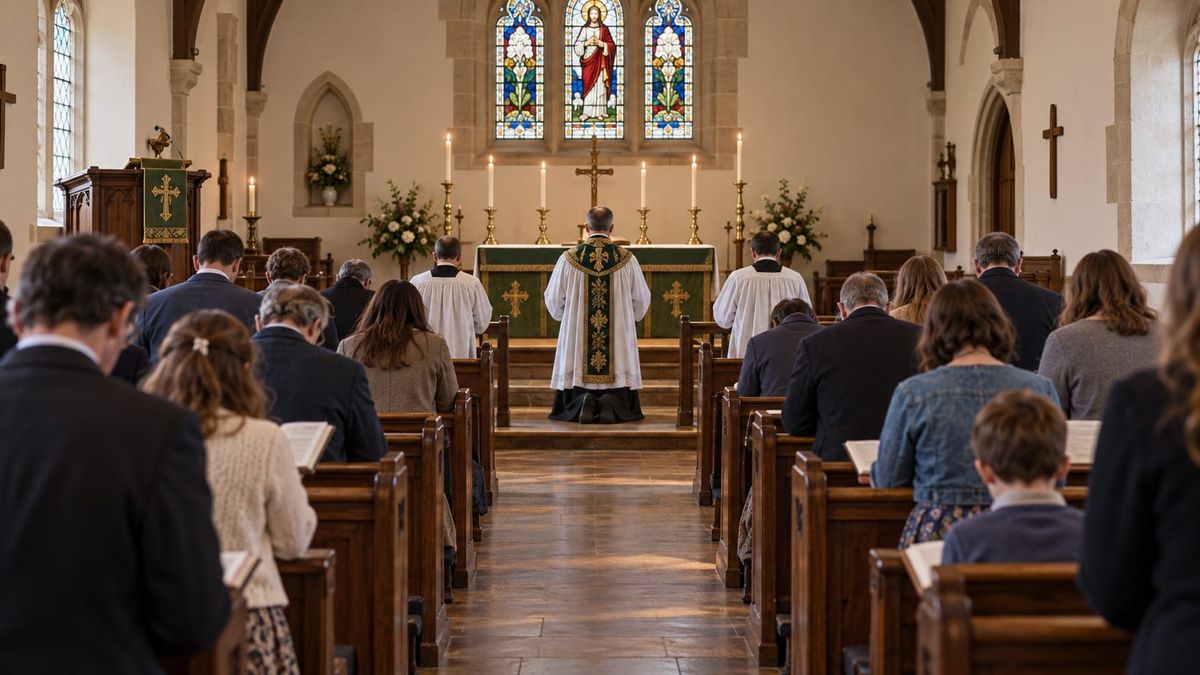
The Church’s Prayer of Repentance, Deliverance, and Comprehensive Intercession
The Great Litany is one of the oldest and most distinctive prayers in the Anglican tradition. Long before the first Book of Common Prayer appeared in 1549, English Christians were already praying a form of the Litany in their own language. Its repeated cries, “Good Lord, deliver us” and “We beseech you to hear us, good Lord,” have taught generations of Anglicans how to pray when ordinary words seem too small for the needs of the Church and the world.
The Book of Common Prayer 2019 does not treat the Great Litany as an optional curiosity from Anglican history. It names Morning and Evening Prayer, the Great Litany, Holy Communion, Baptism, and Confirmation among the regular liturgies appointed for worship in the Anglican Church in North America. It says the Litany is commonly used before the Holy Eucharist on the First Sunday of Advent and the First Sunday in Lent, and is especially appropriate for Rogation Days, other days of fasting or thanksgiving, and occasions of “solemn and comprehensive entreaty.” It may also be used independently or at the conclusion of Morning or Evening Prayer.
That description captures much of the Great Litany’s character. It is solemn because it refuses to make light of sin, suffering, evil, judgment, or death. It is comprehensive because it teaches the Church to pray for far more than the concerns that happen to be foremost in our own minds. And it is Christian from beginning to end because every plea for mercy and deliverance rests upon the saving work of Jesus Christ.
The History of the Great Litany
The Anglican Great Litany took recognizable English form in 1544 under Archbishop Thomas Cranmer, five years before the first Book of Common Prayer. It was issued during the reign of Henry VIII as an English form of common prayer at a time when much of the Church’s public worship was still conducted in Latin. Histories of Anglican worship commonly describe it as the first major authorized English service of the Reformation era, an important step toward the vernacular Prayer Book of 1549.
Cranmer did not invent litany prayer from nothing. Litanies had a long history in Western Christianity, including use in penitential and Rogation observances, and medieval English worship supplied an inherited framework with which Cranmer was familiar. His work also reflects Reformation-era influence, including material associated with Martin Luther’s litany. The result anticipated what would become characteristically Anglican: received Christian forms retained, translated, reformed, and ordered for common prayer in the language of the people.
The 1544 Litany therefore stands at an important threshold in Anglican history. It belongs to the older Christian practice of corporate supplication, yet it also anticipates the central Prayer Book conviction that the whole congregation should hear, understand, and participate in the Church’s worship.
Its survival is equally significant. The Litany entered the Prayer Book tradition and continued through succeeding Anglican revisions. The exact wording and some petitions have changed over the centuries, but its basic movement remains recognizable: the Church invokes the Triune God, asks deliverance from evil, pleads the saving acts of Christ, intercedes for the Church and world, asks for repentance and perseverance, and ends in renewed dependence upon divine mercy.
The Great Litany is therefore not merely old. It is received prayer, handed down because it continues to teach the Church how to stand before God.
The Great Litany in Anglican Worship
The BCP 2019 allows the Great Litany to be said or sung, kneeling, standing, or in procession. That flexibility is important because the Litany is not tied to only one physical or musical expression. A congregation may pray it quietly on its knees, sing it in a solemn procession, or use it as an independent act of corporate intercession.
When it is used with Morning or Evening Prayer, it follows the Collects and concludes the Office. When used before the Holy Eucharist, it precedes the Eucharistic liturgy. It may also stand alone. The BCP’s Additional Directions repeat this flexibility and permit the Officiant, where pastoral need or local circumstance requires, to reduce the number of petitions and responses.
This makes the Litany unusually adaptable without making it shapeless. Its form remains recognizably fixed, but the Prayer Book acknowledges that a parish congregation, a weekday Office, a Rogation observance, a procession, or a time of public crisis may require somewhat different use.
Litanies had long been associated in Western Christianity with corporate supplication and, in many settings, with processional prayer. Cranmer’s 1544 English Litany emerged from that inherited world of public entreaty without requiring us to imagine that every historical use took the form of a physical procession. The modern Prayer Book preserves the processional possibility explicitly, while the essential point remains the same: the congregation does not merely hear petitions offered on its behalf. The people answer again and again, joining their voices to the prayer. That repeated participation is central to what the Litany does. It makes supplication common prayer.
The Structure of the Great Litany
The Litany begins with God, not with our problems. Father, Son, and Holy Spirit are invoked in turn, and then the Church addresses the Holy Trinity. Before we name war, sickness, false doctrine, temptation, disaster, poverty, death, or judgment, we name the God from whom mercy comes.
This Trinitarian opening establishes the whole prayer. The Litany is not an inventory of anxieties launched into an uncertain universe. Christians pray to the Father, through the Son, in the Holy Spirit, trusting the God who has made himself known.
From there the Church asks for deliverance. The petitions are deliberately comprehensive. We ask to be delivered from evil and wickedness, from sin, from the assaults of the devil, from hardness of heart, false doctrine, heresy, schism, pride, hypocrisy, hatred, disordered affections, natural disaster, famine, violence, war, murder, sudden death, and everlasting condemnation.
Some of those petitions sound severe to modern ears, and that is part of their usefulness. The Litany refuses to pretend that evil is merely psychological discomfort or that all human problems can be managed by technique. It teaches Christians to take seriously the world, the flesh, and the devil. It names false doctrine as dangerous, charity as necessary, death as unavoidable, judgment as real, and spiritual deception as something from which we need God’s deliverance.
The Church does not improve the Litany by becoming embarrassed about those petitions. We may instead discover that the older prayer understands the depth of our need better than we do. Yet the Great Litany does not leave us staring at evil. Its next movement turns directly to Jesus Christ.
Deliverance Through the Saving Work of Christ
One of the most beautiful features of the Great Litany is the way it places the whole life and saving work of Jesus between the Church and the evil from which she seeks deliverance.
We plead the mystery of his Incarnation, his Nativity, his submission to the Law, his Baptism, fasting, and temptation. We plead his agony and bloody sweat, his Cross and Passion, his precious death and burial. We plead his glorious Resurrection and Ascension, the sending of the Holy Spirit, his heavenly intercession, and his coming again in power and great glory.
The Litany therefore compresses the Gospel into prayer, and this matters because the Church is not trying to persuade a reluctant God to become merciful. Our prayer rests on mercy already revealed. The Son of God has taken our nature, suffered for our sins, died, risen, ascended, poured out the Holy Spirit, intercedes for us, and will return in glory. We ask for deliverance because God has acted to save.
The repeated response “Good Lord, deliver us” is therefore not despair but faith. Even the petitions concerning death and judgment stand inside that Gospel. Christians do not deny that we will die or that Christ will judge the living and the dead. We ask instead that the Lord who has redeemed us will preserve us in tribulation and prosperity, in the hour of death, and on the day when all things are brought into the light.
The Great Litany is penitential, but its penitence is not hopeless. Grace comes first.
Praying for the Church and the World
After asking deliverance, the Litany turns outward. The Church prays for the whole Church, for bishops, priests, and deacons, for laborers in the harvest, for the spread of the Gospel, for those who have wandered from truth, and for the faithful to hear and obey God’s Word. The circle then widens further.
The Litany prays for civil authorities and judges, for those serving in the armed forces, for those whose labor and learning serve their communities, for the fruits of the earth, for peace among the nations, and for the poor, oppressed, sick, suffering, and dying. In its fuller BCP 2019 form it continues through the many conditions of human life before asking finally for true repentance, perseverance, the faithful departed, and the heavenly kingdom.
This is one of the Great Litany’s great pastoral gifts. Left to ourselves, our prayers can become very small. We remember our family, our parish, our illness, our immediate worries, and perhaps the crisis dominating the news. The Litany refuses to let the Church stop there. It teaches us whom we have forgotten and makes the comfortable pray for the oppressed, the healthy for the sick, civilians for those in danger, congregations for clergy, Christians for civil rulers, the well-fed for the harvest, the settled for travelers, and the wounded for their enemies.
The repeated “We beseech you to hear us, good Lord” forms the congregation in intercession. Prayer becomes less a spontaneous expression of our present concerns and more an apprenticeship in the concerns of the Church.
The Great Litany and Advent
The BCP 2019 says that the Great Litany is commonly used before the Holy Eucharist on the First Sunday of Advent. That is not accidental.
Advent begins with the coming of Christ before it arrives at Bethlehem. The season teaches the Church to watch for the Lord who has come in humility and who will come again in glory. Its Scriptures confront us with judgment, repentance, readiness, promise, and hope.
The Great Litany speaks naturally into that world. It asks deliverance “in the day of judgment.” It appeals to Christ’s “coming again in power and great glory.” It prays that God would hasten the coming of his kingdom. Its breadth reminds us that the return of Christ is not merely a private religious hope but the consummation toward which the Church and the world are moving.
Its penitential tone also keeps Advent from dissolving into an early Christmas celebration. The Church begins the year not by congratulating herself but by crying for mercy. Before we celebrate the child in the manger, Advent reminds us why the Son of God came and why we need him to come again.
The Litany therefore gives the First Sunday of Advent a properly sober hope. We confess the darkness, ask deliverance, pray for the world, and wait for the King.
The Great Litany and Lent
The Litany’s relationship to Lent is even more immediately recognizable. The BCP specifically names the First Sunday in Lent as one of its customary occasions.
Lent is a season of repentance, fasting, self-examination, and renewed obedience as the Church prepares to keep the Paschal mystery. The Litany gives those themes corporate form. We ask deliverance from sin, spiritual blindness, pride, hypocrisy, hatred, false doctrine, hardness of heart, and “all the deceits of the world, the flesh, and the devil.” We plead Christ’s fasting and temptation, his agony and bloody sweat, his Cross and Passion, his death and burial.
This makes the Great Litany especially appropriate at the beginning of the Lenten journey. It reminds us that Lent is not a private self-improvement program. We do not fast in order to demonstrate spiritual strength. We begin by admitting weakness and asking God to deliver us.
That same pattern makes the Litany useful beyond the First Sunday. Christians may profitably pray it personally or in households during Lent, especially when its repetition helps focus self-examination and intercession. The Prayer Book does not require a daily private Litany discipline, but it gives Anglicans a prayer rich enough to sustain repeated use.
The language of the Litany also guards Lent against becoming preoccupied with ourselves. Even during a season of intensified self-examination, the Church continues to pray for rulers, clergy, the poor, the suffering, the nations, the harvest, enemies, and the whole world. Repentance enlarges prayer rather than narrowing it.
Rogation Days and Other Occasions
The BCP also says the Great Litany is “especially appropriate” for Rogation Days. This preserves an ancient connection between litanies and the Church’s prayers for God’s provision.
Rogation Days teach the Church to ask. We pray for the fruits of the earth, human labor, daily bread, faithful stewardship, and the needs of the community. The Great Litany already contains petitions for those who labor, for the fruits of the earth, for peace, for protection, and for the many conditions upon which human life depends. Its use at Rogation therefore feels less like an addition to the observance than a natural expression of it.
The BCP extends the principle further. The Litany is suitable on days of fasting or thanksgiving and on occasions of “solemn and comprehensive entreaty.” That deliberately broad phrase gives the Church a ready-made prayer for times when a situation is too large to reduce to a single Collect.
A national tragedy, widespread disaster, war, social upheaval, epidemic, grave danger, or a season of unusual anxiety may all reveal how quickly spontaneous prayer can fail us. We may not know what to say, or we may know only how to say the same frightened thing repeatedly. In such moments, the Great Litany gives the Church words.
The Supplication
The Prayer Book also provides the Supplication, a related but distinct devotion. It may replace the versicle and Collect following the Lord’s Prayer in the Great Litany, follow Morning or Evening Prayer, or be used separately. The BCP says it is especially appropriate “in times of war, or of great anxiety, or of disaster.”
Its repeated cry is stark:
O Lord, arise and help us;
And deliver us for your Name’s sake.
The Supplication does not offer an explanation for suffering. It asks God to act. It remembers his mighty works, confesses the sorrows and sins of his people, and places confidence in his mercy through Jesus Christ, “our only Mediator and Advocate.”
That distinction is worth preserving. The Supplication is not simply another name for the Great Litany. It is an authorized extension or separate devotion for circumstances of unusual distress. When Christians face events for which ordinary words seem inadequate, the Prayer Book does not require eloquence. It gives us the language of dependence.
Praying the Great Litany Today
The Great Litany can sound demanding because it is demanding. It takes time, repeats responses, forces us to pray about matters we may prefer not to consider, and asks us to name the devil, judgment, false doctrine, sudden death, war, famine, hatred, enemies, and the possibility that our own hearts need repentance. That is precisely why it remains useful.
Modern prayer can easily become therapeutic, individual, and immediate. We ask God to resolve what troubles us today. The Great Litany teaches a larger vocabulary. It makes us pray historically, ecclesially, for public life, materially, spiritually, and eschatologically. It places our personal lives inside the communion of the Church and the needs of the world.
It also teaches us what not to be embarrassed about. Christians still need deliverance from pride and hypocrisy. Churches still suffer from false doctrine and schism. Nations still wage war. Communities still endure flood, fire, famine, disease, and disaster. People still die suddenly and unprepared. Christians still need courage in tribulation and humility in prosperity. The devil has not become an obsolete category because modern people are uncomfortable naming him.
Received prayer can therefore correct us. Instead of rewriting the Litany until it says only what we would already have chosen to pray, we should allow it to teach us where our prayers have become narrow.
The same is true of its corporate character. Whether prayed kneeling in a small parish, sung in procession, used at the Daily Office, or prayed privately during Lent, its grammar remains “we.” It teaches us that Christian prayer is never finally solitary. We stand before God as members of Christ’s Body, carrying one another and the world in prayer.
The Great Litany in Its Own Words
The Great Litany is too comprehensive to reproduce in full here, but its structure is worth encountering directly. The BCP 2019 directs that it may be said or sung, kneeling, standing, or in procession.
It begins by invoking the Father, the Son, the Holy Spirit, and the Holy Trinity:
Officiant: O God the Father, Creator of heaven and earth,
People: Have mercy upon us.
Officiant: O God the Son, Redeemer of the world,
People: Have mercy upon us.
Officiant: O God the Holy Spirit, Sanctifier of the faithful,
People: Have mercy upon us.
Officiant: O holy, blessed, and glorious Trinity, one God,
People: Have mercy upon us.
From there the Litany turns to prayers for deliverance from sin, spiritual danger, false doctrine, calamity, violence, death, and judgment. Again and again the people respond:
People: Good Lord, deliver us.
The prayer then moves directly through the saving work of Jesus Christ:
Officiant: By the mystery of your holy incarnation; by your holy nativity and submission to the Law; by your baptism, fasting, and temptation,
People: Good Lord, deliver us.
Officiant: By your agony and bloody sweat; by your Cross and passion; by your precious death and burial,
People: Good Lord, deliver us.
Officiant: By your glorious resurrection and ascension; by the sending of the Holy Spirit; by your heavenly intercession; and by your coming again in power and great glory,
People: Good Lord, deliver us.
The Litany then widens into intercession for the Church, her ministers, civil authorities, those who serve their communities, the nations, prisoners and refugees, families, the unborn, the grieving, the sick, those in danger, enemies, the faithful departed, and all who need God’s mercy. Its recurring response becomes:
People: We beseech you to hear us, good Lord.
The Litany finally turns again toward repentance, mercy, perseverance, peace, and the heavenly kingdom before moving to the Agnus Dei and Kyrie. When it is prayed immediately before the Eucharist, it ends there and the Eucharist begins with the Salutation and Collect of the Day. On other occasions, the Lord’s Prayer and concluding prayers follow.
The complete Great Litany is found in the Book of Common Prayer 2019, beginning on page 91.
Read the complete Great Litany in the official BCP 2019 PDF
Conclusion
The Great Litany endures because the needs it names endure. The Church still needs mercy. We still need deliverance from sin, error, violence, disaster, temptation, and death. The Church still needs faithful bishops, priests, and deacons. The nations still need peace and justice. The poor still need relief, the sick still need comfort, sinners still need repentance, and the whole creation still waits for the coming Kingdom.
But the Litany does more than catalogue human need. Its deepest movement is toward Jesus Christ. We plead his Incarnation, his Nativity, his Baptism, fasting, and temptation; his agony, Cross, Passion, death, and burial; his Resurrection and Ascension; the gift of the Holy Spirit; his heavenly intercession; and his coming again in glory. The prayer moves through the entire Gospel because Christian supplication rests on what God has already done in his Son.
That is why the repeated cries of the Great Litany are not the language of panic. “Good Lord, deliver us” is the prayer of a people who know where deliverance comes from. “We beseech you to hear us, good Lord” is the prayer of those who trust that the God who commands us to pray is also the God who hears.
Its place at the beginning of Advent and Lent, its use on Rogation Days, and its appropriateness in times of particular need all arise from the same truth: the Church depends upon God’s mercy. The Great Litany teaches us to kneel before the Triune God with open eyes. It does not minimize evil, flatter human strength, or narrow prayer to private concerns. It teaches us to confess, intercede, hope, and ask.
And through all of it, the Church prays as she always must: not trusting in the sufficiency of her own words, but in the mercy of the Father revealed through Jesus Christ and made present by the Holy Spirit.