The Transfiguration: An Anglican Perspective
The Transfiguration therefore gives the Church something she needs in every season: not an escape from ordinary life, but a clearer sight of the Lord who stands at its center. The green weeks continue, the Church descends again into ordinary discipleship, and the world remains disquieted.
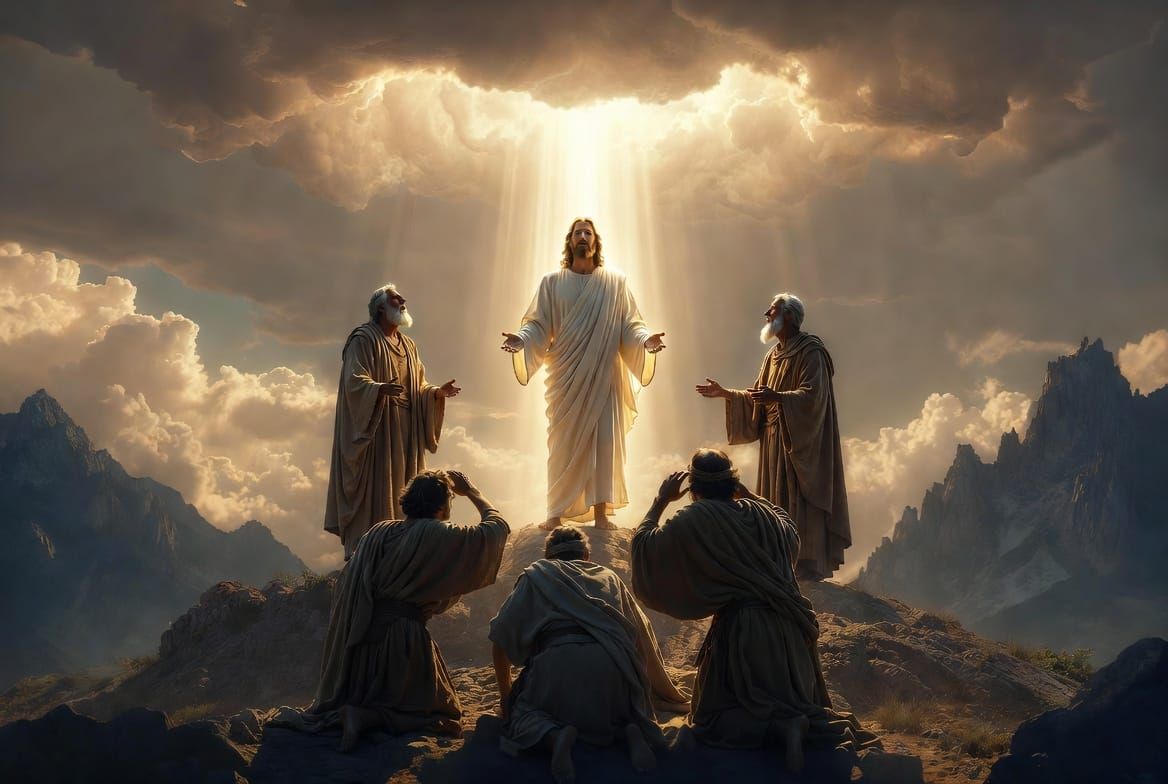
Feast Day: August 6
The Anglican calendar is ordered by a hierarchy of holy days, each carrying a different weight of observance. At the top stand the seven Principal Feasts, the highest-ranking days of the liturgical year. Below them are the Red-Letter Holy Days appointed in the BCP 2019 with their own Collects and propers. The Transfiguration, observed on August 6, is one of these Red-Letter Holy Days. The BCP appoints its Collect on page 630 and its fixed readings in the Holy Day lectionary on page 731.
The Transfiguration occupies a distinctive place in the Anglican calendar because the Church encounters the same Gospel event in two different liturgical settings. The Last Sunday of Epiphany is Transfiguration Sunday, where the mountain stands immediately before Lent and reveals the glory of Christ before the Passion. August 6 returns to the same event in the middle of the Season after Pentecost as the fixed Feast of the Transfiguration. The two observances are related but distinct, with different Collects, different lectionary settings, and different places within the Christian year.
The Last Sunday of Epiphany looks from the mountain toward the Cross, asking that, beholding Christ’s glory by faith, the Church may be strengthened to bear the cross and changed into his likeness. The August 6 Collect asks that, delivered from the disquietude of this world, we may “by faith behold the King in his beauty.” The fixed feast therefore allows the Church to stand again before the revealed glory of Christ in the middle of the long green season and remember who it is she follows, worships, hears in Scripture, and receives by faith.
The Biblical Event
The appointed Gospel for August 6 is Luke 9:28-36. About eight days after Jesus has told the disciples that the Son of Man must suffer, be rejected, killed, and raised, he takes Peter, John, and James up the mountain to pray. While Jesus is praying, “the appearance of his face was altered, and his clothing became dazzling white.” (Luke 9:29, ESV) Moses and Elijah appear in glory and speak with him.
Luke tells us what they are discussing: Jesus’s “departure, which he was about to accomplish at Jerusalem.” (Luke 9:31, ESV) The Greek word is exodos (EX-oh-dos), the word from which we receive Exodus. The conversation on the mountain of glory is about the saving work that will be accomplished at Jerusalem.
That word opens a profound biblical connection. The first Exodus delivered Israel from bondage in Egypt and brought God’s people through the waters toward covenant and inheritance. Christ’s Exodus will pass through Jerusalem, the Cross, Resurrection, and ultimately his departure to the Father. He is accomplishing the redemption toward which Israel’s history and Scriptures had long pointed.
The sequence is powerful. Jesus speaks of the Cross before the disciples see the glory. The Transfiguration reveals the identity of the one who is going to Jerusalem. The man who will be mocked, beaten, crucified, and buried is the beloved Son whose glory shines before them upon the mountain. The Cross does not contradict his glory. It belongs to the saving mission of the glorious Son.
The Glory Was Already His
The Transfiguration does not mean that Jesus becomes divine on the mountain. The eternal Son does not receive a divine status he previously lacked. What the disciples witness is a manifestation of the glory that already belongs to the incarnate Son.
The contrast with Moses in the appointed Old Testament reading helps illuminate the scene. Exodus 34:29-35 tells us that Moses descends from Sinai with the skin of his face shining because he has been speaking with God. His radiance belongs to his encounter with the presence of the LORD.
Jesus stands before the disciples as something greater than another shining prophet. Matthew says that “his face shone like the sun,” while Luke tells us that his appearance is transformed as he prays. (Matthew 17:2; Luke 9:29) The Gospel writers do not invite us to speculate about the physical mechanism of that brightness. They show us the identity of Jesus. The humble rabbi walking the roads of Galilee is the eternal Son, true God and true man, and on the mountain his majesty is revealed before chosen witnesses.
This is one of the great Christological gifts of the feast. Jesus is not an ordinary man temporarily elevated into divinity, nor is his humanity an illusion concealing a merely apparent human life. The Word truly became flesh. The one whose face shines is the same Jesus who hungered, grew tired, touched lepers, wept, slept, and walked toward the Cross. Glory and humility belong to the same Christ.
Moses and Elijah
Moses and Elijah stand with Jesus as great representatives of the Law and the Prophets. Their presence gathers the Scriptures and promises of Israel around the Son.
Moses had stood on Sinai in the cloud of divine presence. Elijah had encountered God upon Horeb and had become one of Israel’s great prophetic witnesses. Now both appear in glory with Jesus and speak about the saving work he is about to accomplish at Jerusalem.
Peter responds by proposing three tents, one for Jesus, one for Moses, and one for Elijah. Before anything can come of the suggestion, the cloud overshadows them and the Father speaks: “This is my Son, my Chosen One; listen to him!” (Luke 9:35, ESV) When the voice has spoken, Moses and Elijah are gone, and Jesus remains.
The Law and the Prophets do not compete with Christ. They bear witness to him. Moses and Elijah take their proper place when they direct attention toward the Son, and the Father’s command gives the feast one of its simplest and most enduring applications: listen to him. The Church receives Moses, the Prophets, the apostles, the Creeds, and faithful Christian teaching rightly when they bring her under the Word and authority of Christ.
The Cloud and the Voice
The cloud carries a deep biblical history. A cloud accompanies Israel through the wilderness. The glory of the LORD fills the Tabernacle in a cloud. Moses enters the cloud on Sinai. Solomon’s Temple is filled with the cloud of divine glory. When the cloud overshadows the disciples on the mountain, they are being drawn into one of Scripture’s great signs of the presence of God.
Psalm 99, appointed for the feast, gives the Church language for the scene: “The LORD reigns; let the peoples tremble!” (Psalm 99:1, ESV) It remembers that God spoke to his servants “in the pillar of the cloud.” (Psalm 99:7, ESV) The Psalm’s language of kingship, holiness, mountain, cloud, and divine speech prepares us to hear the Father’s voice in Luke.
There is continuity with Sinai, but now the divine command is concentrated upon Jesus: “listen to him.” The Father does not present his Son as one religious teacher among many. Moses is there. Elijah is there. Yet Jesus is uniquely identified as the Son, and after the voice has spoken, Jesus alone remains before the disciples.
The scene therefore gives no support to a Christianity in which Jesus can simply be placed alongside other religious authorities. The Father himself identifies the Son and commands his people to hear him.
Peter, James, and John
Jesus chooses Peter, James, and John to witness the event. The same three had been admitted to the room when Jesus raised Jairus’s daughter, and they will later go farther with him into Gethsemane.
Luke notes that on the mountain they are “heavy with sleep,” though they become fully awake and see Jesus’s glory. (Luke 9:32, ESV) Later, in Gethsemane, they will again struggle to remain awake while Jesus prays in anguish. The men closest to these extraordinary moments are still frail disciples. Peter has only recently resisted Jesus’s teaching concerning the Cross, and he will later deny the Lord. James and John will still misunderstand greatness and seek the highest places in the Kingdom.
Yet Jesus takes them up the mountain and shows them his glory before those failures. The revelation is not a reward for disciples who have already understood everything. Christ chooses them and reveals himself. Grace comes first, and their understanding of what they have seen will unfold only as Christ continues to form them.
This grace-first character of the event matters. Christianity begins not with humanity climbing successfully toward God but with God making himself known. Peter, James, and John do not achieve the vision through spiritual mastery. Jesus takes them with him, and the Father speaks.
Peter’s Tents and Christ’s Descent
Peter’s proposal to make three tents reveals that he has not yet understood what the moment means. The Father’s voice corrects the confusion. Jesus is not simply one sacred figure among three. Moses and Elijah bear witness to him, and the disciples are commanded to listen to the Son.
Nor does Jesus remain on the mountain. He descends into the valley, where a desperate father and a demon-oppressed child are waiting. The revealed glory does not lead Christ away from suffering humanity. The one whose majesty has been displayed above descends again into pain, bondage, confusion, and need.
This movement is profoundly consistent with the Incarnation. The Son does not save the world by remaining distant in heavenly splendor. He comes among sinners, the suffering, the frightened, the possessed, and eventually the dying. The Transfiguration reveals the glory of the one who will descend all the way to the Cross.
Christian faith therefore does not seek permanent escape into extraordinary religious experience. The disciples who have seen the glory must follow Christ down the mountain and eventually toward Jerusalem. The vision changes how they see the valley because they now know more clearly who has descended into it with them.
The Appointed Readings
The BCP 2019 appoints Exodus 34:29-35, Psalm 99, 2 Peter 1:13-21, and Luke 9:28-36 for the Feast of the Transfiguration on August 6. These are fixed Holy Day readings rather than a three-year cycle.
Exodus 34 gives the shining face of Moses and the Sinai background. Psalm 99 gives the holy mountain, divine kingship, and the voice from the cloud. Luke narrates the Transfiguration itself. Second Peter then gives the Church the testimony of an apostolic eyewitness.
Peter insists, “we did not follow cleverly devised myths when we made known to you the power and coming of our Lord Jesus Christ,” because “we were eyewitnesses of his majesty.” (2 Peter 1:16, ESV) He remembers the voice from heaven and says, “we ourselves heard this very voice borne from heaven, for we were with him on the holy mountain.” (2 Peter 1:18, ESV)
The Transfiguration is therefore not merely a symbol of spiritual enlightenment. Peter speaks as an eyewitness to what God actually did. The Church’s theology grows out of God’s acts in history, and Peter joins that apostolic eyewitness with the prophetic Scriptures, telling the Church to attend to the Word “as to a lamp shining in a dark place.” (2 Peter 1:19, ESV)
The Prophetic Lamp
Peter’s image of the lamp is especially fitting for this feast. The Church does not recreate the mountain by trying to manufacture extraordinary religious experiences. She receives the prophetic and apostolic Word that bears witness to Christ.
That Word shines in darkness until the day dawns and the morning star rises in the hearts of God’s people. The light Peter saw becomes, through the apostolic testimony preserved in Scripture, a lamp for those who were not physically present upon the mountain.
The feast therefore does not teach Christians to chase visions. It teaches them to receive the Christ to whom Scripture bears witness. Peter saw the majesty with his own eyes, heard the Father’s voice with his own ears, and then directs the Church toward the Word that continues to shine until faith gives way to sight.
There is something deeply Anglican in that pattern. The Church honors the mystery of the Transfiguration not by seeking secret knowledge beyond Scripture but by hearing the Scriptures more attentively and listening to the Son to whom they bear witness.
Transfiguration Sunday and the Feast of the Transfiguration
The Anglican calendar gives the Church two distinct regular observances of the same Gospel event. The Last Sunday of Epiphany is Transfiguration Sunday. The Transfiguration is the fixed Red-Letter Holy Day on August 6.
Transfiguration Sunday stands at the end of the Season of Epiphany and immediately before Lent. Its Collect begins, “O God, who before the passion of your only-begotten Son revealed his glory upon the holy mountain.” It asks that, beholding Christ by faith, the Church may be “strengthened to bear our cross” and “changed into his likeness from glory to glory.” Its placement interprets the event through the approaching Passion: the Church sees who Christ is before she follows him into Lent. The BCP permits the Epiphany Proper Preface or the Transfiguration Proper Preface on that Sunday.
The August 6 Collect prays, “O God, who on the holy mount revealed to chosen witnesses your well-beloved Son, wonderfully transfigured, in raiment white and glistening: Mercifully grant that we, being delivered from the disquietude of this world, may by faith behold the King in his beauty.” The fixed feast carries a different accent. In the middle of the Season after Pentecost, the Church is called again to look toward Christ and recover a vision too easily obscured by the noise and agitation of ordinary life.
The two observances belong together without becoming interchangeable. One stands at Epiphany’s threshold into Lent and asks for strength to bear the Cross. The other rises within the long green season and asks that the Church behold again the King in his beauty. Both lead to the same crucified, risen, and glorious Lord.
The King in His Beauty
The phrase “the King in his beauty” echoes Isaiah 33:17: “Your eyes will behold the king in his beauty.” (ESV) The Collect gives that prophetic hope a Christological center. The King whom the Church longs to behold is Jesus Christ.
The Prayer Book’s word disquietude is especially powerful. The world’s disquiet is more than mere busyness. It includes fear, anxiety, anger, ambition, distraction, resentment, political agitation, endless novelty, and the continual pressure of lesser things demanding to become ultimate things.
The Collect does not ask Christians to escape from the world God made. Jesus himself descends the mountain. It asks instead that the world’s disquiet no longer control our vision. To behold Christ rightly is not to become indifferent to the valley but to return to it knowing who reigns over it.
The Church needs this prayer precisely because the long green season can feel so ordinary. August 6 interrupts that ordinariness with the vision of the King, not so that Christians may flee their responsibilities, but so that every responsibility may be reordered beneath the lordship and beauty of Christ.
The BCP 2019 Collect
The Collect on page 630 begins with God’s revelation. God reveals the Son to chosen witnesses before the prayer asks anything of the Church. Once again, divine initiative comes first. The disciples do not uncover Christ’s glory. God reveals it.
The petition then asks that we be delivered from “the disquietude of this world.” This is not a request to be removed from creaturely life, work, family, civic responsibility, or even suffering. The Christ revealed upon the mountain immediately descends from it. Rather, the prayer asks that the disturbance and distraction of a fallen world cease to govern our sight.
The purpose is that we may “by faith behold the King in his beauty.” Faith does not invent the beauty. It receives the King God has revealed. The prayer therefore joins the Transfiguration itself to the ordinary Christian life: God reveals, God delivers, and God grants the sight of faith.
The feast is contemplative without becoming escapist. We look so that we may follow more faithfully.
The Proper Preface
On page 630, the BCP directs the Preface of the Transfiguration. The full heading of that Proper Preface on page 153 is Presentation, Annunciation, and Transfiguration. It gives thanks through Jesus Christ because “in the mystery of the Word made flesh” God has caused new light to shine in our hearts, giving knowledge of his glory in the face of his Son Jesus Christ.
The Preface places the feast squarely within the doctrine of the Incarnation. The face that shines is a human face because the eternal Word truly became flesh, yet in that face the glory of God is revealed.
This keeps us from separating the Christ of glory from Jesus of Nazareth. The one who shines on the mountain is the one who will bleed at Calvary. His humility does not diminish his glory, and his glory does not make his humiliation unreal. The incarnate Son is one and the same Lord in both.
The Transfiguration is therefore not an escape from the Incarnation but one of its great revelations. God’s glory is seen in the face of the man Jesus Christ because the man Jesus Christ is the eternal Son made flesh.
Saint James and the Mountain
The calendar places Saint James and the Transfiguration only twelve days apart. On July 25 the Church remembers James son of Zebedee as the first of the Twelve to suffer martyrdom; on August 6 she returns to the mountain where James once stood beside Peter and John and saw the glory of Christ.
James would later drink the cup of suffering Jesus had told him he would drink. The apostle who later faced the sword had first been shown the King in his beauty. Glory did not eliminate the cup, and the cup did not overturn the glory.
The relationship between the two feasts therefore reinforces the same pattern found within Luke’s Gospel. The glory of Christ and the suffering of discipleship belong within one story. James did not earn glory by martyrdom. He belonged by grace to the Lord who had first revealed his glory and first given himself for him.
The History of the Feast
The Feast of the Transfiguration has ancient roots in the Christian East and spread gradually through the West. August 6 became established as its principal date. Western observance remained varied for centuries, and in 1456 Pope Callixtus III extended the August 6 feast throughout the Western Church following the victory at Belgrade.
That later development should not obscure the much older mystery being celebrated. The feast did not create Christian belief in the Transfiguration. Christians had long received the event through the Gospels and apostolic testimony. The liturgical feast gave the Church a fixed annual occasion to contemplate more deliberately what Scripture already proclaimed.
The Anglican calendar receives that inheritance in a strongly scriptural and Christological form. The BCP 2019 gives August 6 Red-Letter status with its own Collect, fixed readings, and Proper Preface.
The history is therefore secondary to the biblical event. Christians did not invent the glory celebrated on August 6. The Church learned to stop each year and contemplate what the Gospels had long proclaimed: the incarnate Son is the King in his beauty.
The Liturgical Character
White is customarily used for the Transfiguration in Anglican worship. It fittingly reflects the dazzling garments of the Gospel and the manifestation of Christ’s glory.
August 6 always falls within the Season after Pentecost, so the customary white of the feast interrupts the green ordinarily associated with the long season. The interruption is fitting. In the midst of steady growth, teaching, discipleship, and the ordinary life of the Church, the calendar leads us again to the holy mountain.
The feast does not tell us that ordinary discipleship is unimportant. It reminds us whose glory fills that ordinary discipleship even when it is not spectacularly visible.
Observing the Feast
The Transfiguration is observed on August 6. The Collect is found on page 630, and the appointed readings are Exodus 34:29-35, Psalm 99, 2 Peter 1:13-21, and Luke 9:28-36. The Collect directs the Preface of the Transfiguration, whose full Proper Preface heading is Presentation, Annunciation, and Transfiguration. White is customarily used in Anglican worship.
Begin with Luke 9 and notice the movement. Jesus has already spoken of the Cross. He goes up the mountain to pray. His glory is revealed. Moses and Elijah speak of the Exodus he will accomplish at Jerusalem. The Father commands the disciples to listen to the Son. Then Jesus descends again into the needs of the world below.
Read Exodus 34 alongside the Gospel and notice both continuity and fulfillment. Moses shines after speaking with God; Jesus stands at the center while Moses himself bears witness to him. Read Psalm 99 and let its cloud, mountain, holiness, kingship, and divine voice form the biblical setting for Luke’s account.
Then read 2 Peter 1 and receive the event through apostolic testimony. Peter remembers what he saw and heard, then directs the Church to the prophetic Word that shines as a lamp in darkness. The Christian who was not physically present upon the mountain nevertheless receives the testimony of one who was.
Finally, pray both Transfiguration Collects. Let the Last Sunday of Epiphany prayer ask whether beholding Christ is strengthening you to bear the Cross and changing you into his likeness. Let the August 6 prayer ask what disquiet has crowded Christ from your attention and whether you are willing to have your vision reordered around the King in his beauty. The two prayers lead to the same Lord. The Christian cannot remain forever on the mountain, but neither should he descend without having looked.
Conclusion
The Transfiguration interrupts the long green season with light, but that light is not foreign to the Jesus whom the Church has been following all along. The glory was already his. The eternal Word had become flesh, and the Son had walked among ordinary people in true human humility. On the mountain, before three chosen witnesses, the majesty belonging to that same incarnate Son was revealed with extraordinary clarity.
Moses and Elijah appeared, the cloud overshadowed the disciples, and the Father commanded them to listen to his Son. The vision did not abolish the Cross. Moses and Elijah spoke of the Exodus Jesus would accomplish at Jerusalem. The King in his beauty is the same King who will wear a crown of thorns. Divine glory and saving humiliation belong to the one Christ.
Nor did the vision allow the disciples to escape from the world below. Jesus descended the mountain. The suffering, the oppressed, the confused, and eventually Jerusalem were waiting. The August 6 Collect therefore does not ask for permanent withdrawal into spiritual spectacle. It asks for something deeper: that God would deliver us from the disquietude by which lesser things seize our attention and grant that, by faith, we may behold the King in his beauty.
That beholding begins with grace. The disciples do not discover Christ’s glory through superior spiritual insight. Jesus chooses them, takes them up the mountain, and reveals himself. Peter does not create the majesty he later remembers; he receives it. The Church does not manufacture the light by religious effort; she receives the apostolic and prophetic Word that bears witness to Christ. God acts first by revealing the Son, and then he commands his people to listen.
The Transfiguration therefore gives the Church something she needs in every season: not an escape from ordinary life, but a clearer sight of the Lord who stands at its center. The green weeks continue, the Church descends again into ordinary discipleship, and the world remains disquieted. But the face of Christ has been shown, the Father has spoken, and the prophetic lamp continues to shine until the day dawns.