Trinity Sunday: An Anglican Perspective
Trinity Sunday is unlike any other Principal Feast. It doesn't commemorate an event; it celebrates who God eternally is: Father, Son, and Holy Spirit. This week we explore the history, doctrine, and significance of the day the church sets aside to worship the Triune God.
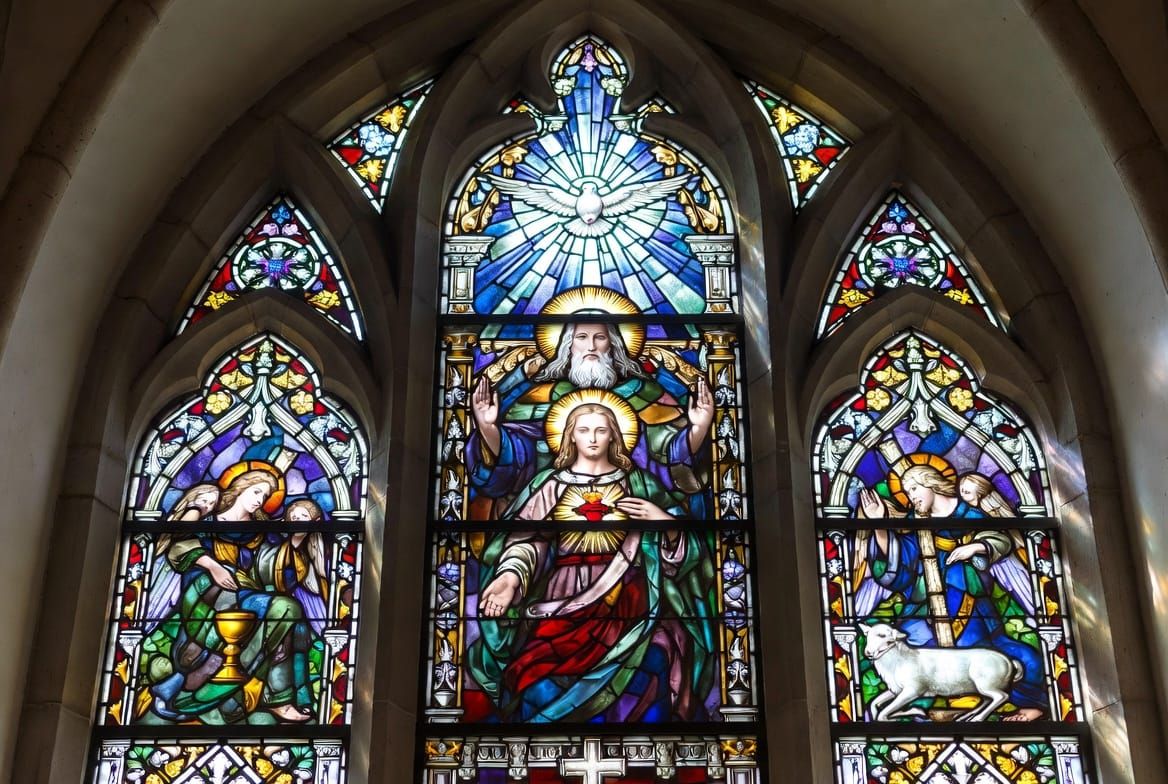
Principal Feast, First Sunday after Pentecost
The Anglican calendar is ordered by a hierarchy of holy days, each carrying a different weight of observance. At the very top stand the seven Principal Feasts, the highest-ranking days of the liturgical year: Easter Day, Christmas Day, Ascension Day, the Day of Pentecost, Trinity Sunday, the Epiphany, and All Saints’ Day. The Book of Common Prayer 2019 directs that these Principal Feasts take precedence over every other day or observance. Trinity Sunday, celebrated on the First Sunday after Pentecost, therefore belongs to the highest rank of the Anglican calendar.
Trinity Sunday is unusual among the Principal Feasts. Many of the great feasts turn the Church’s attention toward a particular act of God in salvation history: the Incarnation, Resurrection, Ascension, or outpouring of the Holy Spirit. Trinity Sunday gathers those mighty works and asks the question beneath them all: Who is the God who has done these things? The Father sends the Son. The eternal Son becomes incarnate for our salvation, dies, rises, and ascends to the Father’s right hand. The promised Holy Spirit is poured out upon the Church. After walking through that great movement of salvation from Advent through Pentecost, the Church pauses to confess the God who has acted: Father, Son, and Holy Spirit, one God in Trinity and Trinity in Unity.
This is not a theological appendix added to the Christian year after the important events have already happened. The doctrine of the Trinity is the Christian answer to the question raised by the whole story of redemption: Who is the God who has saved us? The answer is not an abstract divine being hidden somewhere behind the Father, Son, and Holy Spirit. The God who saves is the God who eternally is Father, Son, and Holy Spirit, three distinct Persons, one living and true God, equal in glory, majesty, power, and eternity. Trinity Sunday is the feast of that confession and, more importantly, of the God whom the confession names.
The Biblical Foundation
The word Trinity does not appear in Holy Scripture, but the reality confessed by the doctrine arises from Scripture itself. The Church did not begin with a philosophical theory of threeness and oneness and then impose it upon the biblical text. She was compelled toward Trinitarian confession because Scripture simultaneously teaches truths Christians cannot surrender: there is one God; the Father is God; the Son is God; the Holy Spirit is God; and yet the Father, the Son, and the Holy Spirit are personally distinct from one another.
Israel’s foundational confession remains Christian confession: “Hear, O Israel: The LORD our God, the LORD is one.”(Deuteronomy 6:4, ESV) Christianity does not replace biblical monotheism with belief in three gods. Jesus himself receives and affirms Israel’s confession of the one God. Yet the New Testament speaks of the Father as God, identifies the eternal Word who became flesh as God, and speaks of the Holy Spirit in ways that belong properly to God.
John begins his Gospel by declaring, “In the beginning was the Word, and the Word was with God, and the Word was God.” (John 1:1, ESV) The language gives us both distinction and unity. The Word is with God and therefore is not simply another name for the Father, yet the Word is God. John then tells us that this eternal Word became flesh in Jesus Christ. Near the end of the Gospel, Thomas falls before the risen Jesus and confesses, “My Lord and my God!” (John 20:28, ESV)
Scripture speaks no less seriously about the Holy Spirit. Peter tells Ananias that he has lied to the Holy Spirit and then says, “You have not lied to man but to God.” (Acts 5:3–4, ESV) Paul describes Christians collectively as God’s temple because God’s Spirit dwells in them, and he says that the Spirit searches even “the depths of God.” (1 Corinthians 2:10, ESV) The Spirit gives life, sanctifies, speaks, teaches, wills, sends, and can be grieved. He is not an impersonal force but the divine Person whom the Nicene Creed rightly calls “the Lord, the giver of life.”
At Jesus’ Baptism, the distinction of the three Persons appears with particular clarity. The Son stands in the Jordan, the Spirit descends upon him like a dove, and the Father speaks from heaven: “This is my beloved Son, with whom I am well pleased.” (Matthew 3:17, ESV) The Father is not the Son, the Son is not the Spirit, and the Spirit is not the Father. Yet Scripture never asks us to worship three gods.
The appointed Year A Gospel brings the confession explicitly into the Church’s sacramental and missionary life. The risen Jesus commands the apostles to make disciples of all nations, “baptizing them in the name of the Father and of the Son and of the Holy Spirit.” (Matthew 28:19, ESV) The singular name and the threefold naming belong together. Christians are baptized into the one divine Name, the Name of the Father and of the Son and of the Holy Spirit.
One God in Three Persons
The Church therefore confesses one God in three Persons. Both parts of that confession are necessary. If we confess three Persons but lose the one God, we fall into tritheism. If we preserve divine unity by making Father, Son, and Holy Spirit merely three names, appearances, or modes of one Person, we fall into modalism. If we make the Son or the Spirit lesser beings beneath the Father, we abandon the full deity Scripture attributes to them.
The word Person can also mislead modern ears if we imagine three separate human-style individuals standing alongside one another. Classical Christian teaching does not confess three independent divine beings cooperating perfectly. Father, Son, and Holy Spirit possess the one undivided divine nature. Each Person is fully and eternally God, not one-third of God, and the divine essence is not divided into shares.
Article I of the Thirty-Nine Articles gives the classical Anglican confession with admirable brevity. It declares that there is “but one living and true God” and that “in unity of this Godhead there be three Persons, of one substance, power, and eternity; the Father, the Son, and the Holy Ghost.” That language guards both sides of the mystery. There are truly three Persons, yet one substance, one divine power, and one divine eternity.
The distinctions between the Persons are likewise real and eternal. The Father is eternally Father, the Son eternally Son, and the Holy Spirit eternally Holy Spirit. The Son is begotten of the Father, not made. The Holy Spirit proceeds. These are not temporary roles adopted only when creation and redemption begin. They belong to who God eternally is.
This is why the doctrine of the Trinity is a mystery without being a contradiction. Christianity does not claim that God is one Person and three Persons in the same sense, or one God and three gods. It confesses one God in three distinct Persons. We can know this truly because God has revealed himself, while never imagining that finite creatures can exhaustively comprehend the infinite Creator.
The Danger of Easy Analogies
Because the Trinity exceeds our comprehension, Christians have often reached for analogies. Most become misleading precisely when they seem easiest to understand. Water existing as ice, liquid, and vapor can suggest that one divine Person merely appears in three different modes. An egg divided into shell, white, and yolk can suggest that each Person constitutes only part of God. A three-leaf clover can produce much the same problem.
Created analogies may occasionally illuminate some limited feature of Trinitarian doctrine, but none should be allowed to define God. The safest Christian posture is to let Holy Scripture, the Creeds, and the Church’s tested theological language establish the boundaries of confession. God is not required to fit comfortably inside an illustration borrowed from creation.
The mystery should therefore produce humility rather than embarrassment. We should expect the infinite God to exceed our intellectual mastery. If God could be comprehensively contained within a simple analogy, the thing we had comprehended would no longer be the God whom Scripture reveals. Trinity Sunday invites the mind to think carefully, but it finally summons the whole person to worship.
Nicaea and Constantinople
The Church’s Trinitarian language developed through sustained engagement with Scripture and through controversies that forced Christians to state more precisely what they already confessed in worship. The Council of Nicaea in AD 325 addressed especially the identity of the Son in response to Arius and those who denied that the Son was eternally God in the same sense as the Father.
Nicaea answered with the word homoousios (ho-mo-OO-see-oss), confessing the Son to be of one substance with the Father. The Son is not the highest creature, a demigod, or an intermediary standing somewhere between God and creation. He is “God from God, Light from Light, true God from true God,” begotten and not made.
The controversy did not end in 325. Decades of argument, exile, political pressure, shifting alliances, and theological clarification followed. The Council of Constantinople in 381 reaffirmed the Church’s confession of the full deity of the Son and gave fuller expression to the confession of the Holy Spirit as “the Lord, the giver of life,” who with the Father and the Son is worshiped and glorified.
The Creed commonly called the Nicene Creed therefore bears the fruit of this fourth-century settlement. Its original conciliar form did not contain the later Western phrase Filioque, meaning “and the Son,” in the clause concerning the Spirit’s procession. The Western Church later added that phrase, and the 1662 Book of Common Prayer received the Creed in that form. The BCP 2019, however, makes an important distinction: the ACNA identifies the original conciliar text as the normative form of the Nicene Creed while also acknowledging that the traditional Western form containing “and the Son” may be used. Article V of the Thirty-Nine Articles likewise retains the classical Anglican doctrinal confession that the Holy Ghost proceeds from the Father and the Son. The Prayer Book therefore preserves the Anglican theological inheritance while also recognizing the ecumenical importance of the Creed’s original form.
These struggles were not theological trivia. If the Son is not truly God, then in Christ God himself has not come to save us. If the Holy Spirit is not truly God, then the indwelling Spirit is not God dwelling within his people. The Church’s insistence upon the full deity of the Son and the Spirit therefore protects the Gospel itself. Only God saves, and in Jesus Christ and the gift of the Holy Spirit, God himself has acted for our salvation.
The Origins of Trinity Sunday
The doctrine is much older than the annual feast devoted specifically to it. The early Church confessed and worshiped the Triune God long before a universal Trinity Sunday existed. Trinitarian faith permeated Baptism, Eucharistic worship, prayer, doxology, and the Creeds without requiring a separate annual festival.
Specific liturgical observances honoring the Holy Trinity developed gradually in the medieval West. By the early tenth century, Stephen of Liège had a hand in an Office of the Holy Trinity, probably revising and establishing material already in use. The observance was not yet universal, nor was the Sunday after Pentecost everywhere devoted specifically to the Trinity.
England later developed a particularly strong association with the feast. Thomas Becket was consecrated Archbishop of Canterbury on the Sunday after Pentecost in 1162, a day already associated in some places with the Holy Trinity, and English tradition connected his episcopate with strengthening the observance on that Sunday. He should not be described as the inventor of Trinity Sunday, since observances of the Trinity clearly predated him, but his association with the day helped establish its particular prominence in England. In 1334 Pope John XXII extended the feast throughout the Western Church on the First Sunday after Pentecost.
The English Reformation retained Trinity Sunday, and the Book of Common Prayer preserved the long English habit of numbering the following Sundays after Trinity. The BCP 2019 continues to permit that designation even while calling the larger period The Season after Pentecost.
The Athanasian Creed
Trinity Sunday has a particularly rich resource in the Athanasian Creed, traditionally known from its opening Latin words as the Quicunque Vult (kwee-KOON-kweh vult). Despite its traditional name, the Creed was not written by Saint Athanasius himself. It arose later in the Western Church, but it faithfully expresses the mature Trinitarian and Christological faith for which Athanasius had contended.
The BCP prints the Athanasian Creed beginning on page 769 and specifically permits it to be used in place of the Nicene Creed on Trinity Sunday and on other appropriate occasions. That makes the feast an especially fitting occasion to recover one of Anglicanism’s clearest extended statements of Trinitarian and Christological doctrine.
The Creed states the central confession carefully: “We worship one God in Trinity, and Trinity in Unity; neither confounding the Persons, nor dividing the Substance.” It then works patiently through the doctrine. Father, Son, and Holy Spirit are each God, yet not three Gods but one God. Each is eternal, uncreated, and almighty, while the divine nature itself remains one and undivided.
The Athanasian Creed can sound repetitive to modern ears, but the repetition is deliberate. It closes one theological escape route after another. We may not preserve God’s unity by confusing the Persons, and we may not preserve their distinction by dividing the Godhead. The Creed trains Christians to speak faithfully at precisely the points where casual language tends to go wrong.
Its strong opening and closing warnings can also sound severe to modern ears. They should not be treated as though salvation depended upon passing a theology examination. Rather, the Creed is insisting that the God in whom Christians trust is not a God of our own invention. Saving faith is faith in the true God who has revealed himself as Father, Son, and Holy Spirit, and in Jesus Christ, true God and true man. Christian doctrine matters because the identity of the Savior matters.
The Appointed Readings
The appointed readings for Trinity Sunday are found on page 725 of the BCP 2019 and vary across the three-year lectionary cycle.
Year A appoints Genesis 1:1–2:3, Psalm 150, 2 Corinthians 13:5–14, and Matthew 28:16–20.
Year B appoints Exodus 3:1–6, Psalm 93, Romans 8:12–17, and John 3:1–16.
Year C appoints Isaiah 6:1–7, Psalm 29, Revelation 4:1–11, and John 16:(5–11)12–15.
Year A begins at creation. Genesis does not present a fully developed doctrine of the Trinity, and Christians should resist forcing later dogmatic precision into every plural or every reference to God’s Spirit in the chapter. Yet read in the light of the whole canon, creation is the work of the one Triune God. The Gospel then brings the Trinitarian Name explicitly into the Church’s mission as Jesus commands Baptism in the name of the Father, the Son, and the Holy Spirit. Paul’s closing blessing gathers the same faith into Christian worship: “The grace of the Lord Jesus Christ and the love of God and the fellowship of the Holy Spirit be with you all.” (2 Corinthians 13:14, ESV)
Year B moves from the holy God who reveals himself to Moses at the burning bush to the astonishing Christian promise of adoption. Romans declares that believers receive the Spirit of adoption by whom we cry, “Abba! Father!” and that “the Spirit himself bears witness with our spirit that we are children of God.” (Romans 8:15–16, ESV) John 3 then places new birth by the Spirit and the Father’s giving of the Son within the same saving revelation.
Year C is dominated by worship and revelation. Isaiah sees the Lord high and lifted up and hears the seraphim cry, “Holy, holy, holy is the LORD of hosts.” (Isaiah 6:3, ESV) Revelation 4 takes up the same heavenly worship. John 16 records Jesus promising that the Spirit of truth will guide the apostles, glorify the Son, and receive what belongs to the Son, while Jesus declares that all the Father has is his. The appointed readings therefore do not offer an abstract treatise on the Trinity. They place the congregation before the God who creates, reveals, redeems, adopts, sanctifies, speaks, and receives the worship of heaven and earth.
The BCP 2019 Collect
The Collect for Trinity Sunday is found on page 615 of the BCP 2019:
“Almighty and everlasting God, you have given to us your servants grace, by the confession of a true faith, to acknowledge the glory of the eternal Trinity, and in the power of your divine Majesty to worship the Unity: Keep us steadfast in this faith and worship, and bring us at last to see you in your one and eternal glory, O Father; who with the Son and the Holy Spirit live and reign, one God, for ever and ever. Amen.”
The prayer begins where Christian faith always begins: grace. It does not congratulate the Church for solving the intellectual problem of the Trinity. God has “given to us your servants grace” to confess the true faith. Even orthodox confession is received before it is achieved. The God whom we know is the God who has first made himself known.
The Collect then joins faith and worship. We acknowledge the glory of the eternal Trinity and worship the Unity. Doctrine and doxology belong together. The purpose of learning to say one substance, three Persons is not to win theological arguments but to worship the living God truthfully.
Finally, the prayer moves from confession to perseverance and then to glory. We ask God to keep us steadfast in the faith he has given and to “bring us at last to see you in your one and eternal glory.” The doctrine we confess now concerns the God whom the redeemed will enjoy forever. Theology reaches its proper end in the vision and worship of God.
The Proper Preface of Trinity Sunday
The Proper Preface of Trinity Sunday gives the feast one of the most concentrated doctrinal texts in Anglican worship. Addressing the Father, it confesses that he, with his co-eternal Son and Holy Spirit, is “one God, one Lord, in Trinity of Persons and in Unity of Substance.” It then declares that what the Church believes of the Father’s glory she believes of the Son and the Holy Spirit “without any difference or inequality.” (BCP 2019, p. 154)
That final phrase matters enormously. The Son is not less divine than the Father, and the Holy Spirit is not a lesser divine agent beneath Father and Son. Whatever belongs to the one divine nature belongs fully and eternally to all three Persons. The Father is not more God than the Son, and the Son is not more God than the Spirit.
Yet equality does not erase personal distinction. The Father is not the Son, the Son is not the Spirit, and the Spirit is not the Father. Christian worship is therefore irreducibly Trinitarian. We come to the Father through the Son in the Holy Spirit because the God who saves us is eternally Father, Son, and Holy Spirit.
God Acts First
Trinity Sunday also reveals why grace is not something external to the Christian understanding of God. Salvation begins in God because all things begin in God. The Father sends the Son. The Son does not wait for fallen humanity to discover a path upward to heaven but comes down for us and for our salvation. The Father gives the promised Spirit through the exalted Son, and the Holy Spirit awakens faith, unites sinners to Christ, sanctifies the Church, and brings God’s saving work toward its appointed completion.
The Collect expresses this order when it says that God has given grace to confess the true faith. We do not reason our way upward until we discover the Trinity. God reveals himself. We do not generate the life by which we enter communion with him. God acts first, and we receive.
Human response is nevertheless real. Christians believe, worship, obey, pray, love, and persevere. But Christian life remains response from beginning to end. The Triune God is the first mover in creation, revelation, redemption, sanctification, and final glorification. Grace is not merely one doctrine among others. It reflects the character of the God who acts before we can answer.
The Trinity and Salvation
The doctrine matters because salvation itself is Trinitarian. Paul writes that through Christ “we both have access in one Spirit to the Father.” (Ephesians 2:18, ESV) The Christian does not approach an undefined deity with Jesus and the Spirit acting as optional religious aids. We come to the Father through the Son in the Holy Spirit.
The Father sends the Son. The Son becomes incarnate and gives himself for us. The Spirit gives life and joins us to Christ. Yet these works should not be divided as though the three Persons acted independently. The outward works of the Trinity are the undivided works of the one God. Father, Son, and Holy Spirit do not perform three competing or separable salvations.
At the same time, Scripture does reveal real distinctions in the personal missions of the Son and the Spirit. The Father is not incarnate; the Son is. The Spirit is poured out and sent to dwell within the Church. We should therefore neither collapse the Persons into one another nor speak as though they were three separate divine agents coordinating a common project.
This is why the fourth-century controversies mattered so greatly. If Christ were merely a creature, however exalted, union with Christ would not be communion with God himself. If the Spirit were merely a created spiritual power, his indwelling would not be God dwelling within his people. The Nicene Fathers understood that the Gospel itself was at stake. Only God saves, and Scripture declares that the one God has come for us in the Son and gives himself to us in the Holy Spirit.
The Trinity and Christian Worship
Christian worship is Trinitarian even on Sundays when the doctrine is not the explicit theme. Christians are baptized in the Name of the Father and of the Son and of the Holy Spirit. The Gloria Patri gives glory to Father, Son, and Holy Spirit. The Creeds confess the Father, the Son, and the Holy Spirit. Eucharistic prayer is offered to the Father through the Son in the Holy Spirit, and the people are blessed in the Name of the Triune God.
Trinity Sunday makes explicit what Christian worship has been doing all year. Christmas worshiped the God who sent the Son, the Son who became incarnate, and the Holy Spirit by whom he was conceived. Easter proclaimed the Resurrection of the Son and the victory of the Triune God over sin and death. Ascension confessed the incarnate Son exalted at the Father’s right hand. Pentecost celebrated the Spirit promised by the Father and poured out through the exalted Son. Trinity Sunday does not replace those events with an abstract doctrine. It names the one God whose saving work the Church has been celebrating.
The BCP gives Trinity Sunday two particularly substantial Anglican resources. Its Additional Directions permit the Athanasian Creed to replace the Nicene Creed on this day, and they state that the Exhortation is traditionally read on the First Sunday of Advent, the First Sunday in Lent, and Trinity Sunday. The feast can therefore become not merely an occasion for speaking about doctrine but an opportunity to hear some of the Prayer Book tradition’s strongest forms of confession and pastoral exhortation.
The Trinity and the Life of the Church
The unity of the Church ultimately comes from God rather than from institutional agreement or human goodwill. Jesus prays that his disciples may be one and grounds that prayer in his own communion with the Father. (John 17:20–23) We should handle that connection carefully. The Church does not reproduce the inner life of the Trinity, and human community should never be treated as an analogy capable of defining God. Yet the one God who reconciles us to himself also reconciles us to one another, and Christian unity flows from our common union with Christ in the Holy Spirit.
Paul makes the connection directly when he writes, “There is one body and one Spirit,” just as there is “one Lord, one faith, one baptism, one God and Father of all.” (Ephesians 4:4–6, ESV) The Church is one because she belongs to the one Triune God.
That makes division, bitterness, falsehood, and lovelessness within the Church more than organizational problems. They contradict the communion into which Christians have been called. At the same time, Christian unity cannot be purchased by abandoning the truth about God. The Collect holds faith and worship together. The Church is called to unity in the true faith, not unity manufactured by treating revealed doctrine as negotiable.
This gives Trinity Sunday a distinctly pastoral edge. The doctrine is not only something we defend against ancient heresies. It tells us whose people we are. We belong to the Father through the Son in the Holy Spirit. We do not create the Church by agreeing with one another strongly enough. Christ gathers his people, the Spirit joins us to Christ and to one another, and the Father receives us as his children. Christian fellowship is therefore gift before it is achievement, just as Christian salvation is.
The Liturgical Character
White is customarily used for Trinity Sunday in Anglican worship, fittingly expressing the joy, holiness, glory, and majesty of the God whom the Church worships. The day stands between two strongly marked liturgical moments: Pentecost concludes the Great Fifty Days in red, Trinity Sunday follows as a Principal Feast commonly in white, and the subsequent Sundays of the Season after Pentecost ordinarily settle into green.
The transition is theologically fitting. Before the Church enters the long season of Christian formation, she is anchored again in the identity of the God who creates, redeems, sanctifies, and sustains his people. The months ahead are not simply a stretch of Sundays between Pentecost and Advent. They are life lived under the grace of the Father, through the Son, in the Holy Spirit.
Observing Trinity Sunday
Trinity Sunday is a Principal Feast and always falls on the First Sunday after Pentecost. The Collect is found on page 615, the Proper Preface of Trinity Sunday on page 154, and the readings on page 725 of the BCP 2019. The Athanasian Creed begins on page 769 and may be used in place of the Nicene Creed on this day. The Prayer Book also notes the traditional use of the Exhortation on Trinity Sunday.
Pray the Collect slowly and notice that the ability to confess the true faith is itself described as grace. Read the appointed lessons for the year and allow them to show that Trinitarian doctrine arises from biblical revelation rather than floating above it. In Year A, linger over the singular Name into which the nations are baptized. In Year B, consider the Spirit of adoption by whom Christians cry to the Father. In Year C, hear the worship of heaven and Jesus’ promise of the Spirit of truth.
Read Article I of the Thirty-Nine Articles and compare its concise confession with the Nicene Creed. Read Article V alongside the Creed’s confession of the Holy Spirit. If possible, read or use the Athanasian Creed, especially its insistence that Christians must neither confuse the Persons nor divide the divine substance. These texts do not compete with one another. Together they show how carefully the Anglican inheritance has received and preserved the ancient catholic faith.
Then allow doctrine to become worship. The point of Trinity Sunday is not to leave church able to draw a better diagram of the Godhead. It is to know more truthfully the God before whom we kneel, to recognize more clearly the grace by which he has saved us, and to worship the Father, through the Son, in the Holy Spirit.
Conclusion
Trinity Sunday gathers the great story the Church has proclaimed from Advent through Pentecost and names the God who stands at its center. The Father who sends, the Son who became flesh, died, rose, and ascended, and the Holy Spirit who gives life and was poured out upon the Church are not three gods participating in a common project. They are the one living and true God: Father, Son, and Holy Spirit, three Persons of one substance, power, and eternity.
The doctrine is demanding because God is greater than our minds, but mystery is not darkness in which nothing can be known. God has truly revealed himself. The Church therefore refuses both the arrogance of pretending to comprehend him exhaustively and the false humility that claims nothing definite can be known. We confess what God has made known because God himself has made it known.
The Collect gives the feast its proper movement. God first gives grace to confess the true faith. He keeps his servants steadfast in that faith and worship. And the end toward which that grace carries us is not mastery of a doctrine but communion with God himself, as the Church asks him to “bring us at last to see you in your one and eternal glory.”
That is where Trinity Sunday finally leaves us. Not standing before a diagram, but kneeling before God. Not congratulating ourselves for understanding a mystery, but receiving again the revelation and grace of the Father who created us, the Son who redeemed us, and the Holy Spirit who gives us life. Christian theology reaches its proper end when true confession becomes adoration.