Abide in Me: Rogation Sunday 2026 (John 15:1-11)
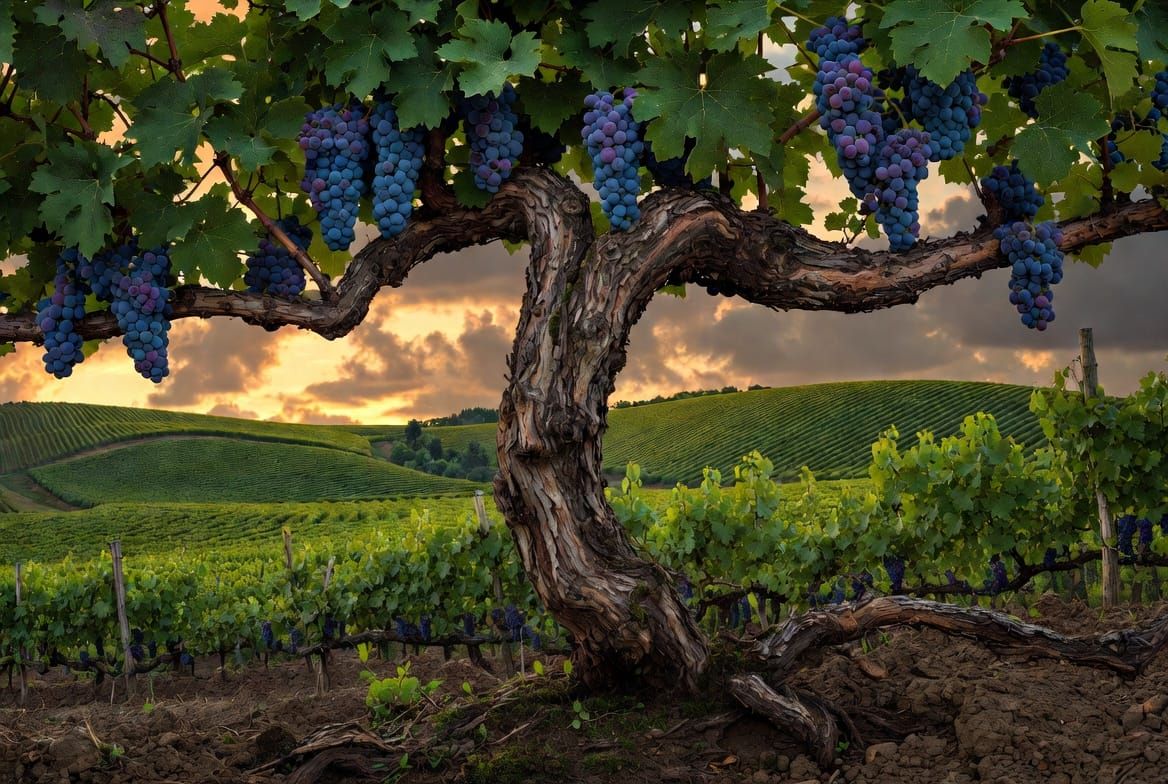
Jesus says abide in me; not a dramatic command, just stay connected. The branch doesn't produce fruit by trying harder. It produces fruit by staying on the vine. Apart from him we can do nothing. But abide in him, and the fruit comes. And at the end of it all: our joy will be full.
May 10, 2026, Year A, Sixth Sunday of Easter, Rogation Sunday, Season of Easter
John 15:1–11, Psalm 148, 1 Peter 3:8–18
Alleluia! He is risen!
Grace, mercy, and peace from God our Father and the Lord Jesus Christ be with you on this Sixth Sunday of Easter, Rogation Sunday.
Before we open John 15, a word about this Sunday’s name. Rogation Sunday takes its name from the ancient Rogation observance associated with the days before Ascension. The word comes from the Latin rogare (roh-GAH-reh), to ask. The Rogation Days are the three days before Ascension Thursday, this year May 11 through 13, when the Church has traditionally prayed for God’s provision and asked his blessing upon agriculture and human labor.
The Rogation Day Collects in the BCP 2019 are on page 635 under Agriculture and Industry, and nearby Occasional Prayers include prayers for rain, harvest, the fruits of the earth, and those who work the land. These prayers acknowledge that every loaf of bread and glass of water depends on a chain of provision that began with God. The same is true of all honest labor: whatever our work, we depend upon gifts we did not create and a world we do not control.
And in Year A, the appointed Gospel gives Rogation Sunday an especially fitting image. Jesus speaks of himself as the true vine. What we ask God to bless in the fields and in our work reflects what Jesus describes in the Upper Room: the relationship between vine and branches, rootedness and fruitfulness, abiding in the source and bearing something worth harvesting.
We are still in the Upper Room. Last Sunday we were in John 14, where Jesus was speaking on Maundy Thursday night, the night before the crucifixion. John 15 continues without interruption, the same evening, the same conversation. Jesus has just told the disciples he is the way, the truth, and the life. Now he reaches for another image drawn from the vineyards covering the hillsides of Judea.
Starting in verse 1: “I am the true vine, and my Father is the vinedresser.” (John 15:1, ESV) This is the last of the great “I AM” sayings of John’s Gospel before the cross. Throughout John, these sayings resonate with the divine name revealed to Moses at the burning bush: “I AM WHO I AM.” Jesus has said, “I am the bread of life,” “I am the light of the world,” “I am the gate,” “I am the way.” Now he says, “I am the true vine.”
And that also reaches deeply into Israel’s Scriptures. The vine is a recurring image for the people of God. Isaiah 5, Psalm 80, Jeremiah 2: Israel is God’s vine, planted and tended by him, but again and again failing to produce the fruit he desired. Jesus is the true vine, the faithful Israel, everything God’s people were called to be and could never become apart from him.
The first thing Jesus says about the Father is that he is the vinedresser, the one who tends the vine and knows it completely. In verse 2 he says two things that belong together: “Every branch in me that does not bear fruit he takes away, and every branch that does bear fruit he prunes, that it may bear more fruit.” (John 15:2, ESV)
The first is sobering. The second is the word worth sitting with: pruning. The Father prunes the fruitful branches. The barren ones are removed; the fruitful ones are cut back. Every gardener in this room knows what pruning does. It looks like damage. It feels, to the branch, like loss. And I can tell you from experience that it feels the same from the inside.
Years ago I went through a season that felt like nothing but cutting, doors closing, a path I had been walking suddenly gone, things I had worked hard to build taken away one by one. It felt like diminishment, the slow removal of things I had thought were fruit. I was beginning to wonder if God had left, or if he was a hard man, or had forgotten about me, all those things I was projecting on God from my own woundedness that I spoke about two Sundays ago.
I do not mean that every loss can be neatly explained as God’s pruning, or that every wound will make sense to us in this life. Scripture gives us more than one category for suffering. But in that season, what I could not see from inside the branch was that the vinedresser had not abandoned me. He was preparing something. The season that followed produced more than anything before it. I only understood it a little along the way, but mostly afterward, the way the Emmaus disciples only recognized the burning in their hearts after the bread was broken. The pruning was not punishment. It was preparation.
Then he adds in verse 3, almost as reassurance: “Already you are clean because of the word that I have spoken to you.”(John 15:3, ESV) The word for clean here is from the same root as the word for pruned in verse 2. The disciples have already been cleansed and prepared by Jesus’ word, through everything he has taught and done in their presence over these three years. They do not fully know what is coming. They will.
Then Jesus gives the command that runs through this passage like a thread: abide. He uses the word again and again, from every direction. Abide in me. My words abide in you. Abide in my love. Whoever abides in me. It begins in verse 4: “Abide in me, and I in you. As the branch cannot bear fruit by itself, unless it abides in the vine, neither can you, unless you abide in me.” (John 15:4, ESV)
The word in Greek is meno (MEN-oh), to remain, to stay, to dwell. It is not a dramatic word or a mountaintop moment. It is simply staying, remaining connected to the source. A branch does not produce fruit from itself. It bears fruit because the life of the vine flows into it.
This is the arc that has been running through the entire Easter season: stay in the room, stay in the conversation, stay at the table, and now, in the language of the vine, stay on the vine. The invitation has always been the same: remain with Christ, receive his life, and watch what grows.
In verse 5 we read: “I am the vine; you are the branches. Whoever abides in me and I in him, he it is that bears much fruit, for apart from me you can do nothing.” (John 15:5, ESV) Apart from me you can do nothing. This is not hyperbole; it is botany applied to the soul. A branch severed from the vine bears no fruit at all. It withers, dries, and dies. Every bit of Christian fruitfulness comes from Christ because every bit of Christian life comes from Christ.
And Jesus does not soften the other side of that truth. In verse 6 he says, “If anyone does not abide in me he is thrown away like a branch and withers; and the branches are gathered, thrown into the fire, and burned.” (John 15:6, ESV)Abiding is therefore more than a technique for becoming a more fruitful Christian. Jesus is talking about life itself. There is no independent Christian life apart from Christ. Separated from the vine, the branch does not merely become less productive. It dies.
That warning should also keep us from turning “abide” into one more religious task by which we save ourselves. Fruit does not earn our union with Christ; it reveals the life of Christ at work in those who abide in him. Our hope is not that we possess enough spiritual strength to keep ourselves alive. All the life we need is in Christ.
Then in verse 7 the passage turns in a direction that speaks directly to Rogation: “If you abide in me, and my words abide in you, ask whatever you wish, and it will be done for you.” (John 15:7, ESV) The asking here is not separate from the abiding; it flows from it. This is not a blank check. Notice what governs the promise: “If you abide in me, and my words abide in you.” Remember what Martin Luther said last week: “We by our praying are rather instructing ourselves than him.” The prayer of the abiding branch is not an attempt to inform the vinedresser or primarily to bend his will. It is the natural outpouring of someone whose desires are being shaped by the life and Word of Christ.
What the abiding branch asks for will increasingly be aligned with what the vinedresser wants because the life of the vine has been flowing through it long enough to change what it wants. And so Jesus says in verse 8: “By this my Father is glorified, that you bear much fruit and so prove to be my disciples.” (John 15:8, ESV) The Father’s glory is the end toward which the asking and the fruitfulness are ordered. The fruit glorifies the Father, not the branch. The Father tends the vine, prunes it, and gives the growth. The branch’s fruit is testimony that the vine is alive and good.
This is Rogation prayer at its best, not demanding a harvest but asking the vinedresser. We ask because we are dependent. We ask for rain because we cannot command the clouds. We ask for the harvest because we cannot make a seed live. We ask for the work of our hands because skill, strength, opportunity, and time itself are gifts. Asking is the language of creatures who know they are not the Creator.
Psalm 148 is our appointed Psalm this Rogation Sunday, and it is easy to see why. The whole creation is called to praise: angels and heavenly hosts, sun and moon and stars, mountains and hills, fruit trees and cedars, beasts and livestock, kings and peoples, young and old. Everything is called to praise the name of the LORD.
“Mountains and all hills, fruit trees and all cedars! Beasts and all livestock, creeping things and flying birds!” (Psalm 148:9–10, ESV) The psalm is not merely being poetic. It is making a theological claim: creation’s proper response to its Creator is praise, and creation praises God by being what it was made to be. The fruit tree praises God by bearing fruit. The mountain praises God by being a mountain. The stormy wind fulfills his word. The sea creatures do what sea creatures do, and the doing of it is praise.
I think about our dog, Gertie. She wanders into the woods, digs holes, rolls in things and eats things she has absolutely no business with, and arrives back at the door with complete satisfaction. And we laugh, even when it is inconvenient, because she is being completely what she was made to be, a dog, curious and alive and fully herself. There is something in watching that which delights in the Creator’s design. Gertie glorifies God simply by being Gertie. “Beasts and all livestock” includes her.
The psalm calls the whole created order to its proper praise. Rogation Sunday lets the Church step into that chorus, asking the God who gives the fruit of the earth to cause that fruit to come, and asking that our own work would become praise as well.
The vinedresser who prunes the branches is the same God who established the heavens forever and ever, who causes the seasons to turn, who holds the rain in his hands. The fruit of the vine, the field, and human labor all come from the same source. The asking and the abiding belong together.
Then in verse 9 our Gospel opens into something more personal, and we arrive at the heart of it: “As the Father has loved me, so have I loved you. Abide in my love.” (John 15:9, ESV) The image of the vine was about connection and fruitfulness. Now Jesus names what the connection actually is. It is love. The life flowing from Christ into his people is the love with which the Father loves the Son and the Son loves his disciples. The measure of Christ’s love for us is nothing less than the Father’s love for him. There is no higher standard.
“Abide in my love” is not merely an instruction. It is an invitation into the very life of God, into communion with the Father through the Son in the Holy Spirit.
And then verse 10: “If you keep my commandments, you will abide in my love, just as I have kept my Father’s commandments and abide in his love.” (John 15:10, ESV) Obedience here is not a condition for earning love; it is a description of what abiding looks like from the outside. And this is where it is easy to put the cart before the horse. People sometimes read this passage and conclude: if I am obedient enough, I will earn the right to abide in his love. But that gets it entirely backwards. The abiding comes first, and the obedience flows from it.
A branch that is truly connected to the vine will grow in the direction the vine grows. A disciple who is truly abiding in Jesus will move toward what Jesus moves toward, toward the Father, toward holiness, toward love, toward the commandment to love one another that he is about to give them. Keeping the commandments is not how you earn your way into the vine. It is what the life of the vine begins to produce in you.
And if obedience feels like nothing but strain, the answer is not simply to try harder as though holiness could be manufactured apart from Christ. Abide more deeply. Let the Word open. Let the bread be broken. Pray. Repent. Receive again the life that is already yours in him, and then walk in the obedience that his grace produces. Grace does not make obedience unnecessary. Grace makes obedience possible.
1 Peter 3 speaks to a community under pressure, people suffering for doing good and being asked to give an account of themselves. Peter’s instruction in verse 15 is: “always being prepared to make a defense to anyone who asks you for a reason for the hope that is in you; yet do it with gentleness and respect.” (1 Peter 3:15, ESV) The fruit of abiding is a hope visible enough that people ask about it. When they do, be ready, not merely with an argument, but with the testimony of a life that has stayed close enough to Christ for his hope to become visible in us.
And Peter tells us where that hope comes from: “For Christ also suffered once for sins, the righteous for the unrighteous, that he might bring us to God.” (1 Peter 3:18, ESV) This is the Gospel beneath everything we have been saying. We do not attach ourselves to Christ by making ourselves worthy. Christ suffered once for sins, the righteous for the unrighteous, to bring us to God. The life we receive is purchased for sinners by the death of the Son and vindicated in his resurrection.
So if you have spent your life trying to produce the fruit of a Christian life without actually belonging to Christ, hear his invitation today. You do not need to manufacture life; you need the Vine. Repent of your sin and trust in Jesus Christ, who died for sinners and rose again, and receive the life that only he can give. And if you already belong to him but live as though everything depends on you, hear the invitation again: abide in me.
So this is what we ask on Rogation Sunday: for rain and sun in their seasons, for the soil to receive what is planted, for the harvest to come, for the animals and the land and the watersheds to be sustained. And we ask God’s blessing upon all honest human labor, upon those who build and repair, teach and heal, manufacture and transport, buy and sell, lead and serve, that the work of our hands may serve our neighbors and glorify God.
But more than that, we ask that the work of our hands would be the fruit of branches connected to the vine. We ask that we would not mistake our productivity for the source of life, and that we would remember, in the middle of our planting and tending and building and teaching and healing and harvesting, the word that runs through John 15 again and again: abide.
Abide in me, stay connected to the Vine, and do not detach. The fruit will come, not because you created life within yourself, but because the vine is alive and his life is flowing into you.
Then finally in verse 11: “These things I have spoken to you, that my joy may be in you, and that your joy may be full.”(John 15:11, ESV) The goal of abiding is not productivity but joy. The vinedresser prunes for more fruit, yes, but Jesus speaks these things so that his joy may be in his people and their joy may be full. The fruitfulness is for the Father’s glory. The joy is for the branches.
We began this Easter season with Mary weeping in the dark outside an empty tomb, then a locked room full of fear, and then two disciples walking away from Jerusalem with past-tense hope. Six Sundays later, this is where we have arrived: abide in my love, and your joy will be full. Stay in the vine and stay in the conversation. The fruit will come in its season.
In the Name of the Father, and of the Son, and of the Holy Spirit. Amen.