Holy Cross Day: An Anglican Perspective
The Cross is not a charm, a tribal emblem, or merely decorative shorthand for Christianity. It is the sign of the crucified Lord.
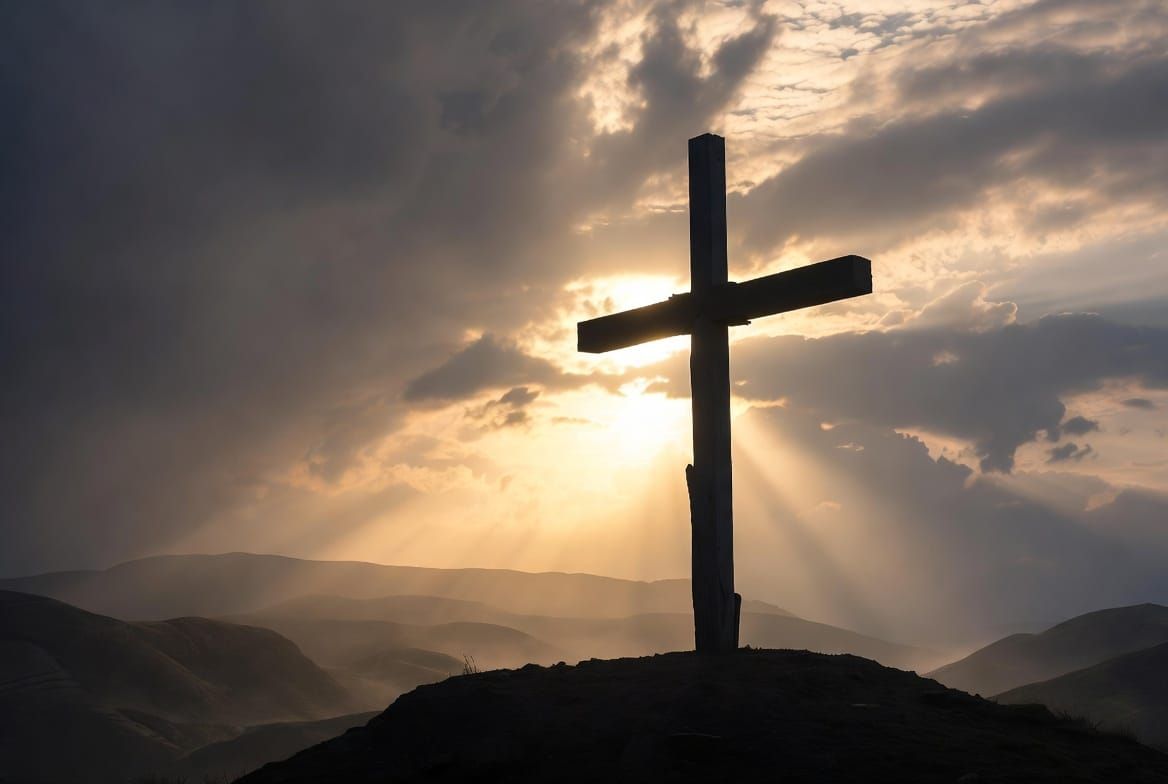
Feast Day: September 14
The Anglican calendar is ordered by a hierarchy of holy days, each carrying a different weight of observance. At the top stand the seven Principal Feasts, the highest-ranking days of the liturgical year. Below them are the Red-Letter Holy Days appointed in the BCP 2019 with their own Collects and propers. Holy Cross Day, observed on September 14, is one of these Red-Letter Holy Days. The BCP appoints its Collect on page 631, the Proper Preface of Holy Week on page 153, and the feast’s readings in the Holy Day lectionary on page 731.
Holy Cross Day does something unusual in the Church year. The Cross already stands at the heart of Holy Week, especially on Good Friday, when the Church gathers in solemn remembrance of the Passion and death of Jesus Christ. Yet in September, in the middle of the long Season after Pentecost, the Church deliberately returns to the Cross and calls it glorious. The BCP Collect speaks of Christ being “lifted high upon the Cross” and of Christians who “glory in the mystery of our redemption.”
This is not because Christians delight in suffering for its own sake or because an instrument of Roman execution somehow became holy apart from the one who died upon it. The Cross is glorious because of Jesus Christ and because of what he accomplished there. The place of shame became the place where the Son bore our sins, accomplished redemption, defeated the powers of darkness, and reconciled sinners to God. The instrument intended to announce Rome’s power over a condemned man became the sign of the victory of the crucified and risen King.
Why September 14?
Holy Cross Day has its historical roots in fourth-century Jerusalem. During the reign of Constantine, the places associated with Christ’s Crucifixion and Resurrection were excavated and monumental churches were built over Golgotha and the tomb, forming the complex that eventually became known as the Church of the Holy Sepulchre. Christian tradition also came to associate Constantine’s mother, Helena, with the discovery of wood identified as the Cross of Christ during this period.
The precise details surrounding Helena and the discovery accumulated in later tradition, so they should not all be treated with equal historical certainty. What is secure is that veneration of a relic believed to be the Cross was established at Jerusalem in the fourth century and became closely connected with the dedication celebrations of Constantine’s church complex in September 335. September 14 emerged as the day especially associated with the showing or exaltation of the Cross.
A later historical episode further strengthened the feast. Persian forces captured Jerusalem in AD 614 and carried away the revered Cross relic. After the Byzantine emperor Heraclius defeated the Persian Empire, the relic was returned, and Christian memory linked its restoration with the continuing celebration of the Cross. Over time, September 14 became firmly established as the Feast of the Exaltation or Holy Cross in Eastern and Western Christianity.
Those traditions explain how September 14 acquired its place in the calendar, but they are not the theological foundation of the Anglican feast. The BCP does not ask the Church to put her faith in a relic, in the details of Helena’s discovery, or in the military victories of an emperor. Its Collect, readings, and Proper Preface direct us instead toward the Cross of Christ itself and the redemption accomplished there.
The Cross in Scripture
The appointed Gospel is John 12:31–36a. Jesus is in Jerusalem, and Gentiles have come asking to see him. Their arrival becomes the occasion for Jesus to announce the hour that is approaching: “Now is the judgment of this world; now will the ruler of this world be cast out. And I, when I am lifted up from the earth, will draw all people to myself.” John immediately explains, “He said this to show by what kind of death he was going to die.” (John 12:31–33, ESV)
The Greek verb translated “lifted up” is hypsōō (hoop-SOH-oh), a word that can carry the sense of exaltation as well as physical elevation. John deliberately brings crucifixion and exaltation together. Jesus will literally be lifted above the earth upon the Cross, yet this humiliating death is also bound up with his glorification. What looks to the world like defeat becomes the means by which the Son accomplishes his saving work.
The Cross therefore cannot be separated from judgment and victory. Jesus says, “Now is the judgment of this world; now will the ruler of this world be cast out.” (John 12:31, ESV) Calvary is not merely the tragic death of an innocent teacher. The powers of sin, death, and the devil meet the saving purpose of God there. The ruler of this world is cast out through the apparent weakness of the crucified Christ.
Nor can Christ’s drawing of the world to himself be separated from his saving death. Jesus draws sinners through the Cross upon which he gives himself for them. Sin is borne, judgment falls upon the sin-bearing Son, reconciliation is accomplished, and the enemy is defeated. The Cross is therefore sacrifice and victory, humiliation and exaltation, suffering and glory.
“I Will Draw All People to Myself”
The Collect closely echoes John 12: Christ was “lifted high upon the Cross that he might draw the whole world to himself.” The scope of the Gospel is universal. Jesus is not merely the Savior of one nation, one ethnicity, or one corner of the world. He is the one Savior proclaimed to every people.
That universal scope should not be confused with universalism. The words do not teach that every person will finally be saved irrespective of repentance and faith. They proclaim the universal reach and sufficiency of the crucified Christ: he is the Savior offered to the whole world, and there is no different Savior for the nations and no alternative salvation outside him.
The arrival of the Greeks immediately before Jesus speaks these words makes the point vivid. Representatives of the nations are beginning to come, and Jesus announces that the means by which the world will be gathered is his being lifted upon the Cross. The Church’s mission therefore flows from Calvary. We do not invite the nations merely toward a moral teacher, spiritual example, or source of religious inspiration. We proclaim Christ crucified and risen, the one through whom sinners are reconciled to the Father.
The Servant Who Became Obedient unto Death
The appointed Epistle, Philippians 2:5–11, takes the Church still deeper into the mystery of the Cross. Paul tells Christians to have among themselves the mind that was in Christ Jesus, “who, though he was in the form of God, did not count equality with God a thing to be grasped, but emptied himself, by taking the form of a servant.” (Philippians 2:6–7, ESV)
The eternal Son does not cease to be divine or surrender his divine nature. His self-emptying is expressed in the form Paul himself gives it: he takes the form of a servant and enters fully into our human condition. Paul continues, “And being found in human form, he humbled himself by becoming obedient to the point of death, even death on a cross.” (Philippians 2:8, ESV)
The Cross is therefore the deepest point of the Son’s voluntary humiliation within the Incarnation. The one who shares eternally in divine glory enters the shame of a criminal’s execution. Yet the passage does not end there: “Therefore God has highly exalted him and bestowed on him the name that is above every name.” (Philippians 2:9, ESV)
This exaltation does not mean that Jesus becomes divine only after the Cross or receives a divine dignity he lacked before the Incarnation. The Son is already in the form of God. Paul describes the exaltation and universal vindication of the incarnate, obedient, crucified Christ, before whom every knee will finally bow and every tongue confess that Jesus Christ is Lord.
The movement of Philippians therefore fits Holy Cross Day perfectly. The Cross is the place of deepest humiliation, yet the Crucified One is Lord. The one who takes the form of a servant is the one before whom heaven, earth, and the realm beneath the earth must bow.
Every Knee Shall Bow
Philippians draws directly upon the appointed Old Testament reading, Isaiah 45:21–25. The LORD declares, “There is no other god besides me, a righteous God and a Savior; there is none besides me.” Then comes the universal summons: “Turn to me and be saved, all the ends of the earth! For I am God, and there is no other.” (Isaiah 45:21–22, ESV)
God continues, “To me every knee shall bow, every tongue shall swear allegiance.” (Isaiah 45:23, ESV) Paul takes this language belonging to the LORD and places Jesus Christ at the center of its fulfillment. Every knee bows and every tongue confesses that Jesus Christ is Lord.
The connection is profoundly Christological. The crucified Jesus is not merely God’s favored representative standing alongside the God of Israel. The divine confession of Isaiah reaches its New Testament expression in the universal lordship of Christ. The one hanging upon the Cross is the incarnate Son. His humiliation is voluntary obedience, and his exaltation vindicates before creation the lordship that is his.
Yet the promise that every knee will bow should not be confused with universal salvation. Scripture distinguishes between those who bow willingly before Christ in repentance and faith and those who will finally acknowledge his lordship when they stand before him in judgment. For the redeemed, the confession “Jesus Christ is Lord” is the joyful confession of faith. For those who have rejected him, his lordship will nevertheless be undeniable, but that acknowledgment will not itself become saving faith or erase the judgment they face.
Isaiah gives the passage its evangelical urgency: “Turn to me and be saved, all the ends of the earth! For I am God, and there is no other.” (Isaiah 45:22, ESV) The universal lordship of Christ therefore grounds a universal summons to repentance and faith. The nations are called to turn now and be saved, because the Lord before whom every knee will finally bow is also the Savior who now calls sinners to himself.
Sing to the LORD a New Song
Psalm 98 provides the feast with a note of triumph: “Oh sing to the LORD a new song, for he has done marvelous things!” (Psalm 98:1, ESV) It calls upon all the earth to rejoice because the LORD has made known his salvation and revealed his righteousness in the sight of the nations.
That may initially seem an unexpected Psalm for a feast centered upon the Cross, but Holy Cross Day is not Good Friday repeated in September. The Church stands on the far side of Easter. She knows that the Crucified One has risen, that death could not hold him, and that the apparent defeat at Calvary was the saving victory of God.
Psalm 98 therefore teaches us how to glory in the Cross without glorifying suffering. Christians do not rejoice because Jesus was tortured. We rejoice because through the suffering he willingly bore, God accomplished our salvation. The shameful death has become the proclamation of victory because the one who died lives forever.
The Psalm’s universal horizon also binds the appointed readings together. God has revealed his righteousness before the nations. All the earth is called to sing. Isaiah summons the ends of the earth to salvation. Jesus says he will draw all people to himself. Philippians sees every knee bowing and every tongue confessing. Holy Cross Day is a feast of the Cross for the world.
The BCP 2019 Collect
The Collect on page 631 prays, “Almighty God, whose Son our Savior Jesus Christ was lifted high upon the Cross that he might draw the whole world to himself: Mercifully grant that we, who glory in the mystery of our redemption, may have grace to take up our cross and follow him; who lives and reigns with you and the Holy Spirit, one God, in glory everlasting. Amen.”
The prayer begins with Christ’s action rather than ours. He is lifted high upon the Cross and accomplishes the redemption in which the Church glories before the Collect ever turns toward Christian discipleship. That order is essential. Our taking up of the cross does not redeem us. Christ’s Cross does. His death is saving in a way ours can never be. He gives himself for sinners and reconciles us to God, and only because he has first accomplished redemption can the Christian then be called to follow him in self-denying obedience.
The Collect therefore asks for grace to take up our cross. Even our discipleship begins with divine initiative. The Church does not look upon Christ’s sacrifice and then summon enough independent moral determination to imitate him. She asks God to give what faithful following requires. The grace-first movement runs through the whole prayer: Christ acts, sinners are redeemed, the Church glories in his work, and God gives grace for the redeemed to follow.
Glorying in the Mystery of Our Redemption
The Collect’s language is deliberately bold: Christians “glory in the mystery of our redemption.” Paul uses similar language in Galatians: “Far be it from me to boast except in the cross of our Lord Jesus Christ.” (Galatians 6:14, ESV)
To glory in the Cross does not mean taking pleasure in brutality or treating suffering as intrinsically sacred. We glory in the Cross because of the one who offered himself there and the redemption he accomplished. The Cross reveals simultaneously the seriousness of sin, the holiness and justice of God, the love of God for sinners, and the astonishing cost of our salvation.
Christianity cannot turn Calvary into a sentimental symbol of generic love. The love revealed there is costly because sin is real. God does not forgive by pretending evil does not matter. The Son willingly gives himself for sinners according to the saving purpose of the Father.
Neither should Christians speak as though the Father were an angry deity coercing an unwilling Son to suffer. The saving work of the Cross is the work of the Triune God. The Son offers himself willingly in obedience to the Father, the Father gives the Son in love for the world, and the Holy Spirit is not absent from the self-offering of Christ. Redemption reveals the unity of the divine purpose, not conflict within God.
At the Cross, holiness, justice, mercy, and love meet without any being diminished. Sin is judged, and sinners are saved through the self-offering of the Son. Christ bears what we could not bear and gives what we could not earn.
The Cross as Sacrifice and Victory
Christian tradition has rightly spoken of the Cross through more than one biblical image because Scripture itself does. Christ is the Lamb who bears sin, the ransom given for many, the priest who offers himself, the representative whose obedience answers Adam’s disobedience, and the victorious Lord who triumphs over the powers.
These are not competing explanations from which the Church must select one and discard the others. They describe different dimensions of the one saving work of Jesus Christ. Holy Cross Day especially holds sacrifice and victory together. John tells us that when Jesus is lifted up, judgment comes upon the world and its ruler is cast out. Yet the victory comes through the death by which Christ gives himself for sinners. The conqueror wins by being crucified.
This is the strange wisdom of God that Paul proclaims elsewhere: “The word of the cross is folly to those who are perishing, but to us who are being saved it is the power of God.” (1 Corinthians 1:18, ESV) Rome’s symbol of humiliation becomes the proclamation of divine power because God’s victory does not follow the world’s expectations.
The Church therefore does not need to choose between Christ dying for us and Christ triumphing for us. The Lamb who is slain is the victorious King.
Good Friday and Holy Cross Day
Holy Cross Day is not a second Good Friday. Good Friday belongs to the Paschal Triduum and stands within Holy Week as a day of profound solemnity, total abstinence, special prayer, and contemplation of the death of the Lord. The Passion itself is placed before the Church in the setting of the days immediately preceding Easter.
September 14 approaches the same Cross from another liturgical angle. Holy Cross Day is a feast, and the Church looks upon Calvary through the Resurrection and calls the Cross glorious because she knows what God accomplished there and who the Crucified One has been revealed to be. Good Friday places the Passion before the Church in concentrated solemnity, while Holy Cross Day receives that same Cross from the far side of Easter and celebrates the redemption accomplished through it.
Yet the distinction should never become separation. The Good Friday liturgy itself proclaims, “We glory in your Cross, O Lord, and praise and glorify your holy resurrection; for by virtue of your Cross joy has come to the whole world.” Cross and Resurrection belong together. We do not have a defeated Jesus on Friday who only becomes victorious on Sunday. The saving victory is accomplished through the Cross and publicly vindicated in the Resurrection.
Holy Cross Day therefore allows the Church to return in September to what Good Friday has already taught her: the Crucified One is risen, and the Cross that appeared to be the world’s verdict upon Jesus became the place where God judged sin, defeated death, and accomplished salvation.
The Proper Preface of Holy Week
The BCP appoints the Proper Preface of Holy Week for Holy Cross Day. It gives thanks through Jesus Christ because for our sins he was lifted high upon the Cross, drawing the world to himself, and through his suffering and death became the author of eternal salvation for those who put their trust in him.
This is one of the clearest theological keys to the feast. Christ was lifted high for our sins. His suffering and death accomplish salvation, and that salvation is received through faith. The universal scope of the Gospel and the necessity of trusting Christ are therefore held together within the Prayer Book’s own Eucharistic proclamation.
The appointment of this Preface does not make September 14 liturgically identical to Holy Week. Instead, it places the theology of the Passion again before the Church during the Season after Pentecost. The Cross proclaimed with concentrated solemnity in Holy Week remains the center of Christian faith and discipleship throughout the year.
Take Up Your Cross and Follow
The Collect does not permit Christians merely to admire Calvary from a distance. Having confessed Christ’s saving Cross, it asks for “grace to take up our cross and follow him.” Jesus uses this language repeatedly in the Gospels: “If anyone would come after me, let him deny himself and take up his cross and follow me.” (Matthew 16:24, ESV) Before the Crucifixion, those words would have carried a terrible clarity. A person carrying a cross was not engaged in spiritual self-improvement. He was walking toward death.
Christian cross-bearing therefore means more than enduring ordinary inconvenience. It is the death of the self as final lord. It means belonging to Christ so completely that obedience to him takes precedence over comfort, reputation, ambition, possessions, desires, and even life itself.
That does not mean Christians should seek suffering, confuse abuse with holiness, or imagine that every painful circumstance is automatically a cross appointed by Christ. Suffering is not sanctifying merely because it hurts. Christian cross-bearing is the self-denying obedience of disciples who belong to Jesus, including the suffering that may arise precisely because they remain faithful to him.
Again, the order matters. Christ’s Cross comes first. Our crosses are never atoning. We do not complete his sacrifice or add anything to the redemption he accomplished. We carry our crosses because we have already been redeemed by his.
The Cross and Christian Identity
The Cross became Christianity’s most recognizable symbol because it summarizes the faith with remarkable completeness. It tells us who Jesus is, what sin costs, how deeply God loves sinners, what redemption required, and what discipleship looks like.
Yet the ubiquity of the symbol can make it easy to stop seeing it. Crosses appear on churches, around necks, upon altars, in cemeteries, and throughout Christian art. What was once an object designed to terrify conquered peoples can become visually familiar.
Holy Cross Day interrupts that familiarity and asks us to remember what the sign means. The Cross is not a charm, a tribal emblem, or merely decorative shorthand for Christianity. It is the sign of the crucified Lord. To make the sign of the Cross, wear a cross, place one in a church, or look upon one in prayer is meaningful only insofar as it directs us to Jesus Christ. Christians do not worship wood. We worship the Son who was crucified and lives forever.
The symbol also cannot be separated from the call embedded within it. The Christian who glories in Christ’s Cross is also asking for grace to live cruciformly, with life reordered around the one who gave himself for us.
The Autumn Ember Days
The BCP appoints the autumn Ember Days on the Wednesday, Friday, and Saturday following Holy Cross Day, and this calendrical sequence gives the feast a natural relationship to the Church’s prayer for those called to Holy Orders.
The relationship is fitting. The Church first looks toward the Cross and then prays for those who will be called, formed, ordained, and sent to serve beneath its sign. Christian ministry does not exist to build personal platforms or satisfy clerical ambition. It exists to proclaim the crucified and risen Christ.
The Ember Days therefore extend the feast’s call into the life of the Church. The Cross shapes not only individual discipleship but ordained ministry. Bishops, priests, and deacons are servants of a Lord who came not to be served but to serve and to give his life as a ransom for many.
The exact dates of the autumn Ember Days vary from year to year because they are the Wednesday, Friday, and Saturday after Holy Cross Day. Their relation to September 14, however, remains fixed. The Church looks first to the Cross and then gives special prayer to those called to Holy Orders.
Holy Cross Day in Anglican Worship
Holy Cross Day remains part of the Anglican calendar, and the BCP 2019 observes September 14 as a Red-Letter Holy Day with its own Collect, appointed readings, and the Proper Preface of Holy Week.
Red is customarily used for Holy Cross Day in Anglican worship, fitting the feast’s concentration upon the Passion and the blood shed by Christ upon the Cross. In the middle of the green ordinarily associated with the Season after Pentecost, the red of the feast directs the Church again toward Calvary.
The feast is nevertheless celebratory rather than simply penitential. Its tone is captured by the Collect: “we, who glory in the mystery of our redemption.” The Cross is remembered with solemnity because of the cost of redemption, but also with joy because redemption has been accomplished. That combination of solemnity and glory distinguishes Holy Cross Day beautifully. Christians never trivialize what happened at Golgotha, but neither do we stand before it as though Easter never came.
When September 14 Falls on Sunday
Holy Cross Day is a Red-Letter Holy Day rather than one of the seven Principal Feasts. Under the BCP’s calendar provisions, Holy Days of this class falling on a Sunday outside Advent, Lent, and Easter may be observed on that Sunday or transferred to the nearest following weekday.
Because September 14 always falls during the Season after Pentecost, Holy Cross Day may therefore be observed on the Sunday when the dates coincide or transferred according to the Prayer Book rubric. Its fixed date should not be tied permanently to any particular numbered Proper or lectionary year. The feast’s own Collect and readings provide its stable liturgical and theological frame.
Observing Holy Cross Day
Holy Cross Day is observed on September 14. The Collect is found on page 631 of the BCP 2019, the Proper Preface of Holy Week on page 153, and the appointed readings are Isaiah 45:21–25, Psalm 98, Philippians 2:5–11, and John 12:31–36a. Red is customarily used in Anglican worship.
Begin with John 12 and notice that Jesus speaks of judgment, victory, drawing, and death in the same breath. The Cross is not an unfortunate interruption in his mission. The Evangelist tells us explicitly that Jesus is speaking about the manner in which he will die, and Jesus speaks of that death as the hour in which the ruler of this world is cast out.
Then read Isaiah 45 and Philippians 2 together. Isaiah declares that there is one God and Savior and that every knee will bow before him. Paul takes that confession and places Jesus at its center. The man obedient unto death on a Cross is the Lord before whom every knee will bow. For those who belong to him, that confession is already the joyful language of faith; for those who reject him, his lordship will nevertheless finally be undeniable.
Let Psalm 98 supply the proper response. The Church sings because God “has done marvelous things.” Holy Cross Day is not an invitation to morbid fascination with suffering. It is an invitation to praise the God who has accomplished salvation through what the world regarded as weakness and shame.
Pray the Collect slowly and notice its order. Christ is lifted up, draws the world toward himself, and accomplishes the redemption in which the Church glories before she asks for grace to follow. Christian self-denial does not purchase salvation; it flows from salvation.
Finally, allow the Cross to examine what currently governs your life. What comfort cannot be surrendered? What ambition has become too important? What truth are you tempted to soften because faithfulness would be costly? What obedience have you postponed? To glory in Christ’s Cross while refusing every cross of discipleship would turn the feast into sentiment rather than faithful response to grace.
Conclusion
Holy Cross Day brings the Church back to the center of the Christian faith in the middle of the long green season. The Cross does not belong only to Lent or Good Friday. It stands over the entire Christian life because the Crucified One stands at the center of our redemption.
We glory in the Cross not because suffering is good in itself, but because Jesus Christ gave himself there for sinners. The Son who took the form of a servant became obedient unto death, even death on a Cross. He bore our sins, accomplished reconciliation, defeated the ruler of this world, and was vindicated in Resurrection glory. The instrument of shame became the sign of salvation because of the one who hung upon it.
The order of the feast is therefore the order of the Gospel: Christ’s Cross comes first, and ours follows only because he has already acted for us. He redeems before we obey and gives himself before asking us to give ourselves, and even then the Collect asks for grace to take up our cross because Christian faithfulness is never the achievement of autonomous human strength.
This is why the Church can look upon the Cross and glory. The Crucified One is the risen Lord. The one lifted up in shame is the one before whom every knee will bow. Some bow before him now in the joy of repentance and faith; others will finally acknowledge the lordship they refused when they stand before him in judgment. The Gospel therefore summons the whole world not merely to acknowledge Christ eventually, but to turn to him now and be saved.
Holy Cross Day therefore does not ask us merely to remember an object, recover a relic, or admire an ancient event. It asks us to behold the saving work of Jesus Christ, to glory in the redemption he accomplished there, and then, because we have first been redeemed, to ask for the grace to take up our own cross and follow him.