Not His Own Renown: Saint Barnabas the Apostle (Matthew 10:7-16)
On the Feast of Saint Barnabas, we meet a man who lived the commissioning of Matthew 10:7–16. He sold his field to help the poor, vouched for Paul when no one else would, and stepped aside so the Gospel could advance. Barnabas sought not his own renown but the well-being of the Church.
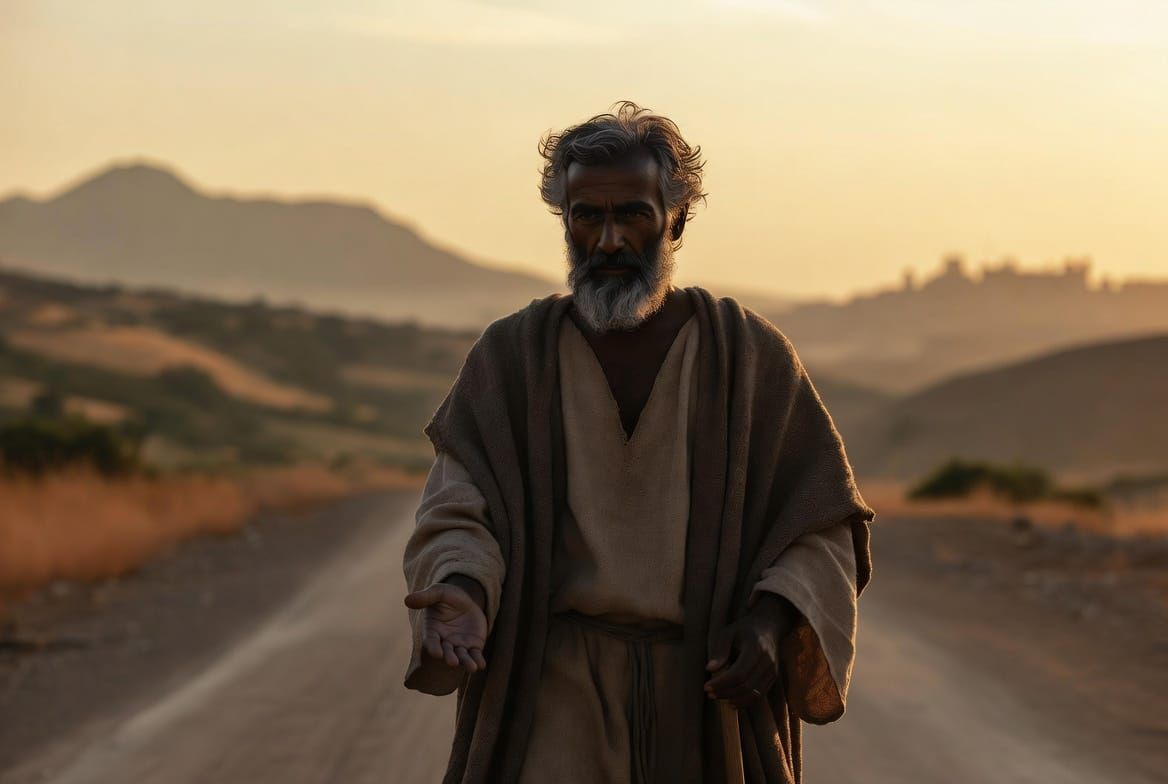
June 11, 2026, Saint Barnabas the Apostle, Red-Letter Holy Day, Season after Pentecost
Matthew 10:7–16, Psalm 112, Acts 11:19–30; 13:1–3, Isaiah 42:5–12
Grace, mercy, and peace from God our Father and the Lord Jesus Christ be with you on this Feast of Saint Barnabas the Apostle.
Today the Church remembers Barnabas, the man Acts introduces as Joseph, a Levite from Cyprus, whom the apostles called Barnabas, “which means son of encouragement.” (Acts 4:36, ESV) That name fits him remarkably well. Again and again, Barnabas appears in Acts strengthening someone else, making room for someone else, giving something away, recognizing the grace of God, or going where the Holy Spirit sends him.
But the Collect for his feast gives us another phrase that may reach even deeper into his character. Barnabas sought “not his own renown but the well-being of your Church.” That is a remarkable description of a Christian life. Not his own renown. Not his own name at the center. The well-being of the Church and the spread of the Gospel mattered more.
Our primary text, Matthew 10:7–16, helps us understand why that matters. Jesus is speaking here to the Twelve. Barnabas was not one of the Twelve, but he belongs to the wider apostolic mission that flows from Christ’s sending, and the pattern Jesus establishes here becomes visible in the life Barnabas later lives.
Verse 7 begins with the mission itself: “And proclaim as you go, saying, ‘The kingdom of heaven is at hand.’” (Matthew 10:7, ESV) The disciples do not go out carrying a message about themselves. They go announcing a kingdom, and the kingdom belongs to God. Their authority is received authority. Their message is a received message. Their mission begins with Jesus and points back to Jesus.
That is already important for a feast honoring an apostle. The Church does not remember Barnabas because Barnabas built a religious career around the name Barnabas. We remember him because Christ used him in the spread of a kingdom that did not belong to him.
Then Jesus says in verse 8, “Heal the sick, raise the dead, cleanse lepers, cast out demons.” These signs mark the authority Jesus gives the Twelve. Acts does not record Barnabas performing this particular list of signs, though signs and wonders later accompany the mission of Barnabas and Paul. But listen to what Jesus says immediately afterward: “You received without paying; give without pay.” (Matthew 10:8, ESV) There is the theological center. They have received from Christ before they are commanded to give anything away. Grace comes first.
And what have we received? Not merely an example or a religious assignment. The Son of God gave himself for sinners. Jesus bore our sins on the cross, died the death we deserved, rose bodily from the grave, and gives forgiveness and eternal life to everyone who trusts in him. Barnabas is not the Gospel. Jesus Christ is the Gospel. Barnabas gives because Christ first gave himself for Barnabas, and for us.
That gift is not merely something to admire. It is something to receive. Christ calls sinners to repent and believe the Gospel, to stop trying to establish ourselves before God and trust the Savior who has done for us what we could never do for ourselves. Before we ask how we can become more like Barnabas, we first receive the Christ who made Barnabas what he became.
That pattern fits Barnabas beautifully. Acts first shows him in chapter 4 selling a field and laying the proceeds at the apostles’ feet for the needs of the Church. His generosity does not purchase grace. It is the fruit of grace already received. He gives because he has received something greater than the field.
Psalm 112 gives us the same picture. It describes the righteous man who fears the LORD and says, “He has distributed freely; he has given to the poor; his righteousness endures forever.” (Psalm 112:9, ESV) Barnabas does not become righteous by giving away his property. His generosity is the outward fruit of a life turned toward God.
That distinction matters because Christian service can quietly become another way of trying to establish ourselves. We can give and still want our name on the gift. We can serve and still want recognition for the service. We can preach and secretly measure success by whether people remember the preacher. We can volunteer, sacrifice, work, lead, and even suffer while still keeping one eye on our own renown. Jesus gives us a different grammar: we received, therefore we give. Grace first, then service.
Verses 9 and 10 continue: “Acquire no gold or silver or copper for your belts, no bag for your journey, or two tunics or sandals or a staff, for the laborer deserves his food.” (Matthew 10:9–10, ESV) Jesus sends the Twelve without the normal securities a traveler might want to accumulate before setting out. The mission requires dependence.
Again, we should not force every detail onto Barnabas as though Acts tells us whether he packed a second tunic. The connection is deeper. Barnabas lives as a man who does not organize his life around protecting what is his. He releases property. He risks reputation. And he continues serving even as the ministry of the man he once went to find becomes more prominent than his own.
Acts 9 gives us one of the clearest examples. Saul has met the risen Jesus on the Damascus road, been baptized, and begun preaching Christ. But when he comes to Jerusalem, the disciples are afraid of him. That fear makes sense. Saul had persecuted Christians. He had approved Stephen’s execution. The Church knew what he had done.
Acts 9:27 then gives us one of the most characteristic sentences in Barnabas’s life: “But Barnabas took him and brought him to the apostles.” (Acts 9:27, ESV) Barnabas does not convert Saul. Jesus has already done that. Barnabas does not give Saul his calling. Jesus has already done that too. Barnabas recognizes what Christ has done and stakes his own credibility on it.
There is a cost to that kind of encouragement. Barnabas is not merely saying something pleasant to Saul. He is standing beside a man other Christians fear and saying, in effect, “I have seen the evidence of grace here. Christ has changed this man.” He does not ignore Saul’s past, but neither will he allow Saul’s past to outweigh what Christ has now done.
That is why Christian encouragement is not sentimentality. It is not pretending that failure never happened or that discernment does not matter. Barnabas knows Saul’s past. He also sees Christ’s present work. Grace teaches him not to confuse the two.
Then verses 11 through 13 of Matthew 10 speak about receiving hospitality. Jesus tells the Twelve to find a worthy house, stay there, and let their peace rest upon it. These instructions concern the houses and towns that receive Christ’s messengers, but the larger pattern is clear: Christ sends people to people. The Gospel travels through doors and houses and gathers communities around the Word.
We see that larger pattern in Barnabas at Antioch. Acts 11 tells us that believers scattered by persecution have begun proclaiming Jesus to Gentiles there. Luke says, “the hand of the Lord was with them, and a great number who believed turned to the Lord.” (Acts 11:21, ESV) Notice the order. God is already at work before Barnabas arrives.
The Jerusalem church sends Barnabas to see what is happening, and verse 23 says, “When he came and saw the grace of God, he was glad.” (Acts 11:23, ESV) That sentence may tell us more about Barnabas than almost anything else Luke records. He did not arrive suspicious because somebody else had begun the ministry. He did not need the work to carry his name. He saw God at work among people whose background differed from his own, and his first response was joy.
Luke then tells us that Barnabas “exhorted them all to remain faithful to the Lord with steadfast purpose.” (Acts 11:23, ESV) His encouragement has content. He points people toward faithfulness to Jesus. Christian encouragement is therefore more than reassurance. Sometimes the most encouraging thing we can say is, “Remain faithful to the Lord. Keep believing. Keep obeying. Keep walking. Christ has not abandoned you.”
Barnabas then leaves Antioch for Tarsus, finds Saul, and brings him back. The two spend a year teaching the Church together. Barnabas sees what God is doing in Antioch and brings another gifted servant into the work rather than trying to carry it alone.
Sometimes ministry becomes unhealthy because leaders begin to believe usefulness requires indispensability. Barnabas shows us another way. He recognizes another man’s gifts and makes room for them. As Acts progresses, the familiar order Barnabas and Saul increasingly gives way to Paul and Barnabas. Paul becomes the more prominent figure, and nothing in Acts suggests that Barnabas resents it. His usefulness was never dependent upon being the most important name in the room.
That brings us directly back to the Collect: “seeking not his own renown but the well-being of your Church.” What would happen in the Church if that became one of our habitual prayers? Not my renown, Lord, but the well-being of your Church. Not my recognition, but the spread of your Gospel. Not whether I receive the credit, but whether Christ is proclaimed. Not whether people remember that I served, but whether the person beside me is strengthened to serve.
Then verses 14 and 15 give the mission a harder edge. Jesus says that if a house or town will not receive the disciples or listen to their words, they are to shake the dust from their feet and move on. The kingdom is offered freely, but rejecting the King is not morally neutral. The messengers do not manipulate people into belief, and they do not remain forever where Christ’s word is refused. They bear witness faithfully and leave judgment to God.
Barnabas would later live this part of the commission too. In Acts 13, when the Gospel is rejected at Pisidian Antioch, Luke says of Paul and Barnabas, “they shook off the dust from their feet against them and went to Iconium.” (Acts 13:51, ESV) The son of encouragement was not soft about unbelief. Christian encouragement does not mean pretending every response is faithful or every rejection harmless. Barnabas could rejoice when he saw the grace of God, and he could also move on when the Gospel was refused.
Then verse 16 gives us one of the most memorable sayings in the chapter: “Behold, I am sending you out as sheep in the midst of wolves, so be wise as serpents and innocent as doves.” (Matthew 10:16, ESV) Jesus does not send naïve disciples into a harmless world. The mission requires wisdom. It also requires innocence. The disciple must learn to recognize danger without becoming deceitful, to exercise judgment without becoming cynical, and to speak truth without becoming manipulative.
Barnabas himself does not always get every judgment right. Galatians 2 tells us that even Barnabas was carried away by hypocrisy during the dispute over table fellowship with Gentile believers. Acts 15 tells us that he and Paul later reached a sharp disagreement over John Mark. Scripture does not give us saints made of stained glass. It gives us redeemed sinners, and that matters because otherwise Barnabas becomes merely another impossible example.
Barnabas needed grace too. He needed the Christ he proclaimed. He needed forgiveness and correction. He needed the Holy Spirit. When anything good came through his ministry, the glory belonged finally to God.
His disagreement with Paul over John Mark is especially revealing. Mark had withdrawn from the earlier missionary journey. When Paul later proposed revisiting the churches, Barnabas wanted to take Mark again, and Paul did not. Acts says the disagreement became sharp, and Barnabas took Mark with him to Cyprus.
We should not pretend Barnabas possessed perfect insight into every part of that dispute. But we do know what happened later. Paul would eventually tell Timothy, “Get Mark and bring him with you, for he is very useful to me for ministry.” (2 Timothy 4:11, ESV) Failure did not have the final word over Mark, and Barnabas was willing to make room for that possibility.
That does not mean every failed leader should immediately be restored to every responsibility. Grace is not gullibility. Barnabas himself teaches us that encouragement and discernment belong together. But Christians should be very careful about treating a person’s worst moment as though it were the final word Christ is permitted to speak over that life. Barnabas knew what it meant to stand beside somebody whose past made others hesitant. He had already done it for Saul.
Our Acts reading gives us one more scene. In Acts 13, the Church at Antioch is worshiping and fasting when the Holy Spirit says, “Set apart for me Barnabas and Saul for the work to which I have called them.” (Acts 13:2, ESV) Once again, grace comes first. Barnabas does not announce his own calling or construct his own platform and then ask God to bless it. The Holy Spirit calls. The Church prays and fasts. Hands are laid upon Barnabas and Saul, and they are sent. The Lord calls, and the Church responds.
Isaiah 42 helps us see the larger mission into which Barnabas is being drawn. The prophet speaks of the Servant of the LORD, whom God calls in righteousness, takes by the hand, and gives “as a covenant for the people, a light for the nations.” (Isaiah 42:6, ESV) The Servant’s mission finds its fulfillment in Jesus Christ. Barnabas does not become the Servant. By the Holy Spirit, Barnabas is drawn into the mission of the Servant.
Isaiah continues, “Sing to the LORD a new song, his praise from the end of the earth.” (Isaiah 42:10, ESV) Barnabas will cross the sea. He will go to Cyprus and onward in mission with Paul. He will preach Christ because Christ has first called him and sent him. The light goes to the nations because Christ sends his people.
That returns us to Matthew 10. Jesus says, “Proclaim as you go.” He says, “You received without paying; give without pay.” He says, “Be wise as serpents and innocent as doves.” Barnabas does not fulfill every detail of the Twelve’s commission, and the Church does not honor him by pretending that he does. We honor him by seeing in his life the same grace-shaped pattern of Christian mission: receive from Christ, give freely, depend upon God, seek the good of his Church, and go when he sends.
The Collect gathers all of that into one prayer: “Grant, O God, that we may follow the example of your faithful servant Barnabas, who, seeking not his own renown but the well-being of your Church, gave generously of his life and substance for the relief of the poor, and went forth courageously in mission for the spread of the Gospel; through Jesus Christ our Lord, who lives and reigns with you and the Holy Spirit, one God, for ever and ever. Amen.” That prayer does not ask God to make us impressive. It asks him to make us useful, and there is a difference.
A Christian can spend a lifetime trying to be impressive and accomplish very little for the kingdom of God. Another Christian may never become widely known, but may stand beside the person everyone else has written off, give quietly where there is need, recognize grace in a ministry he did not begin, bring another gifted person into the work, encourage someone who is ready to quit, and go faithfully where Christ sends. The world may never know that Christian’s name, but the Church may be stronger because that Christian lived.
Even then, Barnabas does not receive the last word. Christ does. Barnabas could not convert Saul; Christ did that. Barnabas could not create the Church at Antioch; the hand of the Lord was already there. Barnabas could not call himself into mission; the Holy Spirit said, “Set apart for me Barnabas and Saul.” Barnabas could not guarantee what Mark would become. He could only take him along and continue the work. Barnabas served, and God gave the growth.
So the question this feast puts before us is not whether our names will be remembered. The question is whether we are willing to receive freely and give freely, whether we can rejoice when grace appears somewhere we did not create it, whether we can make room for the gifts of others, whether we can risk our reputation to stand beside someone Christ has changed, and whether we will go when the Lord sends.
Not our own renown, but the well-being of his Church. That is the prayer Barnabas gives us, and all of it begins with grace. We received without paying. Let us give without pay.
In the Name of the Father, and of the Son, and of the Holy Spirit. Amen.