The Annunciation of our Lord Jesus Christ to the Virgin Mary: An Anglican Perspective
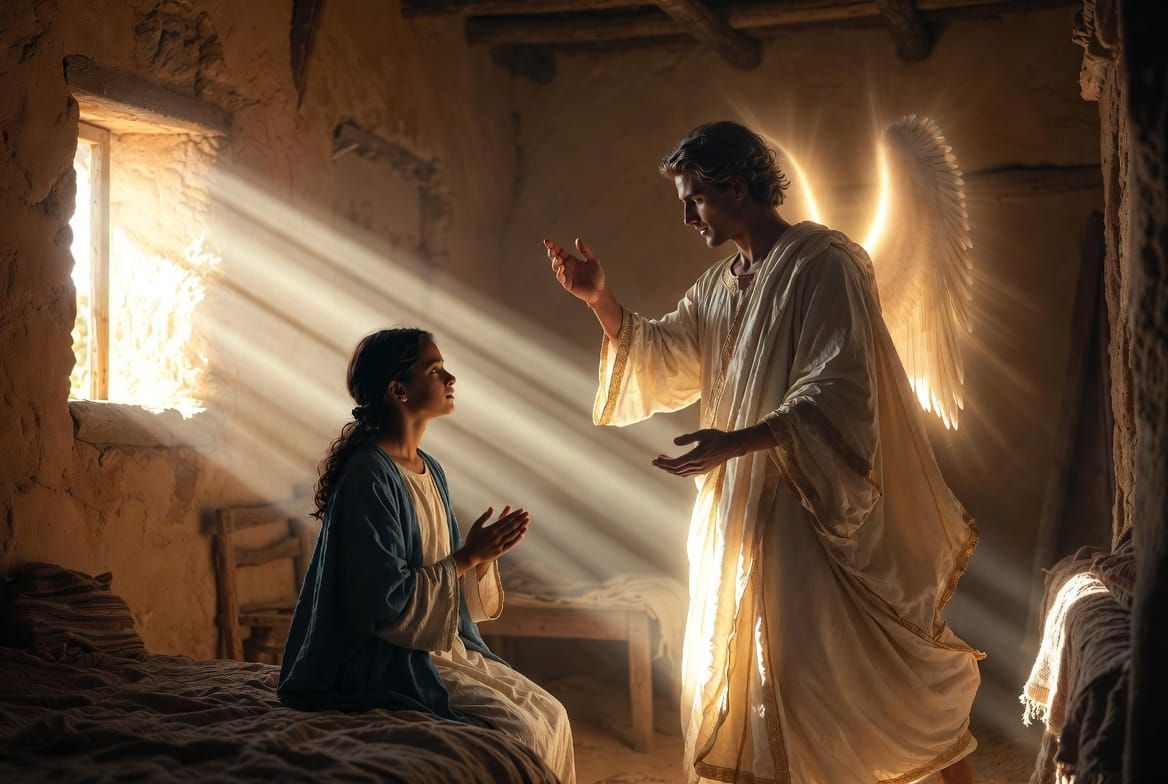
March 25 is the Feast of the Annunciation — nine months before Christmas. Today we celebrate the moment the eternal Word became flesh in the womb of the Virgin Mary. An angel’s message. A young woman’s humble yes.
Feast Day: March 25
The Anglican calendar is ordered by a hierarchy of holy days, each carrying a different weight of observance. At the top sit the seven Principal Feasts, the highest days of the liturgical year. Below them are the Red-Letter Holy Days appointed in the BCP 2019 with their own Collects and propers. The Annunciation of our Lord Jesus Christ to the Virgin Mary, observed on March 25, is one of these Red-Letter Holy Days. The Prayer Book lists the feast under this full title in the calendar, while its Holy Days summary, Collect, and lectionary use the shorter form The Annunciation.
March 25 falls exactly nine months before December 25. The relationship is not accidental. Christmas celebrates the birth of the incarnate Son in Bethlehem; the Annunciation celebrates the mystery that precedes it, when the eternal Word takes our human nature in the womb of the Virgin Mary. As the Nicene Creed confesses, he was incarnate by the Holy Spirit and the Virgin Mary, and was made man. The feast therefore directs the Church to the beginning of the Incarnation itself.
The feast is named for the announcement, the angel Gabriel’s declaration to Mary that she would conceive and bear the Son of the Most High. Its theological heart lies in the divine initiative and the faithful human response that receives it. Mary’s fiat (FEE-aht), Latin for “let it be,” is not the cause of the Incarnation but the response of faith to the grace and promise of God: “Behold, I am the servant of the Lord; let it be to me according to your word.” (Luke 1:38, ESV)
The Biblical Event
The account is found in Luke 1:26–38, the appointed Gospel for the feast. Gabriel comes to a young virgin woman in Nazareth, betrothed to a man of the house of David named Joseph. Luke is explicit that Mary is a virgin, and her own question confirms the point: “How will this be, since I am a virgin?” (Luke 1:34, ESV) The conception that follows is therefore not the result of ordinary human generation but the miraculous work of God.
The angel’s opening greeting is startling: “Greetings, O favored one, the Lord is with you!” (Luke 1:28, ESV) Mary is greatly troubled by the greeting and tries to discern what it means. Gabriel reassures her and then announces: “Do not be afraid, Mary, for you have found favor with God. And behold, you will conceive in your womb and bear a son, and you shall call his name Jesus. He will be great and will be called the Son of the Most High. And the Lord God will give to him the throne of his father David, and he will reign over the house of Jacob forever, and of his kingdom there will be no end.”(Luke 1:30–33, ESV)
The announcement gathers Israel’s hope into a few sentences: the Son of David, the eternal throne, the house of Jacob, and the kingdom without end. The promise comes not in Jerusalem or in a royal court but to a virgin in a small Galilean town of no political or religious prominence.
Mary’s question is not a refusal to believe the promise. She asks how it will be fulfilled precisely because she has not known a man. Gabriel’s answer is the Church’s confession of the virginal conception: “The Holy Spirit will come upon you, and the power of the Most High will overshadow you; therefore the child to be born will be called holy, the Son of God.” (Luke 1:35, ESV)
Luke’s language of the Spirit “overshadowing” Mary recalls the Septuagint’s language for the cloud of divine glory overshadowing the tabernacle in Exodus 40:35. The comparison does not make Mary identical with the tabernacle in every respect, but it strongly evokes the presence of God coming to dwell among his people.
Gabriel then gives Mary the sign of Elizabeth’s pregnancy and declares, “For nothing will be impossible with God.”(Luke 1:37, ESV) Mary responds, “Behold, I am the servant of the Lord; let it be to me according to your word.” (Luke 1:38, ESV) Her fiat is the faithful human response to the divine initiative by which the Incarnation enters history. God acts first; Mary receives his word in trust and obedience.
The Theological Significance
The propers for the feast are found on page 730 of the BCP 2019. The appointed readings are Isaiah 7:10–14, Psalm 40:1–13 or the Magnificat, Hebrews 10:5–10, and Luke 1:26–38.
Isaiah 7:10–14, the appointed Old Testament reading, is the prophetic text Matthew applies to the virginal conception of Jesus. The oracle is originally given to King Ahaz in the context of the Syro-Ephraimite crisis: “Therefore the Lord himself will give you a sign. Behold, the virgin shall conceive and bear a son, and shall call his name Immanuel.” (Isaiah 7:14, ESV)
Isaiah’s sign belongs first to its own historical setting, but the New Testament identifies its fullest meaning in Jesus Christ. Matthew declares that the conception of Jesus fulfills the word spoken by the prophet and interprets the name Immanuel as “God with us.” The Annunciation therefore celebrates not merely the announcement of a remarkable birth but the coming of God among his people in the person of the Son.
Hebrews 10:5–10, the appointed Epistle, interprets the Incarnation through Psalm 40. The writer places the words of the Psalm on the lips of Christ as he comes into the world: “Sacrifices and offerings you have not desired, but a body have you prepared for me... Then I said, ‘Behold, I have come to do your will, O God.’” (Hebrews 10:5–7, ESV)
The language is especially fitting for the Annunciation. The eternal Son assumes a true human body in order to accomplish the Father’s saving will. That body is not an incidental vessel. It is the human nature in which Christ will obey, suffer, die, and rise again. From the first moment of the Incarnation, the Son is moving toward the saving obedience that will culminate at the Cross. The body assumed in the womb of the Virgin is the body he will offer in obedience for the salvation of the world.
The appointed Psalm is Psalm 40:1–13, with the Magnificat, Luke 1:46–55, provided as an alternative canticle. Mary’s song begins, “My soul magnifies the Lord, and my spirit rejoices in God my Savior, for he has looked on the humble estate of his servant.” (Luke 1:46–48, ESV) It goes on to proclaim the great reversals of God’s kingdom: the proud scattered, the mighty brought down, the humble exalted, the hungry filled, and the rich sent away empty.
Mary’s song shows that she recognizes the coming of this child as an act of God’s covenant mercy that overturns human pride and exalts the lowly. The Magnificat is therefore not merely private devotion. It is a scriptural proclamation of what the Incarnation means for Israel and for the world.
The BCP 2019 Collect and Preface
The BCP 2019 appoints this Collect for the feast on page 627:
“Pour your grace into our hearts, O Lord, that we who have known the incarnation of your Son Jesus Christ, announced by an angel to the Virgin Mary, may by his Cross and passion be brought to the glory of his resurrection; who lives and reigns with you, in the unity of the Holy Spirit, one God, now and for ever. Amen.”
The Collect holds together the full arc of the Gospel in a single sentence: the Incarnation announced to Mary, the Cross and Passion of Christ, and the glory of his Resurrection. It refuses to isolate the Annunciation from the rest of the saving work. The Son who takes flesh is the Son who will give that flesh for the life of the world and rise again in glory.
The prayer also begins where Christian discipleship must begin: “Pour your grace into our hearts.” Mary’s faithful response is never presented as autonomous human achievement, and neither is ours. The grace of God precedes and enables the faithful response of his people.
The BCP appoints the Preface of the Annunciation for the Eucharist on this feast. It praises God because “in the mystery of the Word made flesh, you have caused a new light to shine in our hearts, to give the knowledge of your glory in the face of your Son Jesus Christ our Lord.” (BCP 2019, p. 153) The same preface text is also used for the Presentation and the Transfiguration, but the Prayer Book specifically names it here as the Preface of the Annunciation.
The Preface names the mystery at the center of the feast: the Word made flesh. The Annunciation celebrates the hidden beginning of that mystery, when the eternal Son assumes our humanity in the womb of the Virgin Mary.
The Annunciation in Anglican Worship and History
The Feast of the Annunciation was firmly established in the Western Church by the early Middle Ages and has roots reaching back into late antiquity. Its date of March 25 is ancient and reflects the calculation of Christ’s conception nine months before Christmas. The feast was retained in the calendar of the English Reformation and has remained part of Anglican liturgical life.
March 25 was also associated in some early Christian chronological traditions with Christ’s Crucifixion. Whether those chronological calculations correspond to the historical dates cannot be demonstrated with certainty, but the theological instinct is significant: the Incarnation and the Passion belong to one saving work. The BCP Collect expresses the same connection by moving directly from the Incarnation announced by an angel to the Cross and Passion and then to the glory of the Resurrection.
The Magnificat has held a central place in Anglican Evening Prayer since the first Book of Common Prayer in 1549. The Church therefore sings Mary’s words continually throughout the year. On the Annunciation, those familiar words are heard within the narrative that gives rise to them: God has acted in covenant mercy, and Mary responds with praise.
The BCP 2019 Collect does not address Mary or ask for her intercession. It addresses God and asks that the grace of the Incarnation announced to Mary would bring us through Christ’s Cross and Passion to the glory of his Resurrection. Whatever differences exist among Anglicans concerning wider Marian devotion, the Prayer Book’s emphasis on this feast is clear: Mary is honored as the Virgin who receives God’s word in faith, while the saving action remains God’s work in Jesus Christ.
White is the customary liturgical color for the Annunciation, fitting its festal and Incarnational character. March 25 frequently falls during Lent, so the white of the feast can provide a striking Christological interruption within the season’s customary purple. That interruption is fitting: even in a penitential season, the Church rejoices that the Son of God has taken our human nature for our salvation.
The Virgin Conception and the Incarnation
The virginal conception is not an ornamental detail in the story of Jesus. Luke places it at the center of Gabriel’s announcement, and the Church confesses it because it belongs to the identity of the one who is conceived. Jesus is not the product of ordinary human generation followed by divine adoption. He is the eternal Son who assumes our human nature through the miraculous work of the Holy Spirit.
This is why the Church’s language must remain precise. Mary is truly the mother of Jesus according to his humanity, and the child she bears is truly God the Son incarnate. The miracle does not make his humanity less real. He receives from Mary the same human nature that he comes to redeem. He is not half divine and half human, nor a divine person merely appearing in human form. He is one person, Jesus Christ, truly God and truly man.
The Annunciation therefore protects the reality of the Incarnation from two opposite errors. It refuses to reduce Jesus to a merely human religious teacher, because the child is conceived by the Holy Spirit and called the Son of God. It also refuses to treat his humanity as a disguise, because he is truly conceived in Mary’s womb and truly takes flesh from her.
The feast directs the Church toward the mystery confessed in the Creed: the eternal Son “was incarnate by the Holy Spirit and the Virgin Mary, and was made man.” The Incarnation begins not at Bethlehem but here, hidden from the world, when the Son assumes the human nature in which he will live, suffer, die, rise, and reign.
Mary’s Faith and the Grace of God
Mary’s response has rightly been treasured by Christians as an example of faith: “Behold, I am the servant of the Lord; let it be to me according to your word.” (Luke 1:38, ESV) Yet the order matters. Gabriel does not wait for Mary to initiate the saving plan. God sends the angel. God gives the promise. God declares what he will do. The Holy Spirit will come upon her, and the power of the Most High will overshadow her.
Mary receives what God gives.
That keeps the feast from becoming a celebration of autonomous human achievement. Mary’s obedience is genuine and beautiful, but it is response rather than cause. Grace precedes faith. God acts first, and faith receives his word.
That same order governs Christian discipleship. We are not saved because we first make ourselves receptive enough for God. We receive because he gives. We believe because he speaks. We obey because grace has already come to us in Christ. Mary’s unique vocation cannot be repeated, but the shape of her response remains instructive for every Christian: “I am the servant of the Lord.”
The Annunciation therefore teaches not only what happened in Nazareth but something about the character of faith itself. Faith does not require that every consequence be visible in advance. Mary cannot yet see Bethlehem, Egypt, Nazareth, Jerusalem, the Cross, or the empty tomb. She receives the word she has been given and entrusts herself to the God who speaks.
Observing This Feast
March 25 frequently falls during Lent. Because the Annunciation is a Red-Letter Holy Day centered upon the Incarnation, its festal character stands in deliberate contrast to the penitential season surrounding it.
The Prayer Book’s calendar rules nevertheless protect the higher-ranking observances of the Christian year. A Red-Letter Holy Day does not displace a Sunday in Lent, and no Holy Day or other observance may replace the fixed propers of Ash Wednesday, Holy Week, or Easter Week. Where March 25 encounters one of those observances, the Annunciation yields to the governing calendar rubrics rather than displacing them.
To observe the feast, pray the Collect from BCP 2019, page 627. Read Luke 1:26–38 slowly, noticing the divine initiative, Mary’s question, Gabriel’s answer, and Mary’s faithful response. Pay particular attention to the virginal conception: the child is not conceived through ordinary human generation but by the Holy Spirit, exactly as Gabriel declares.
Read Isaiah 7:10–14 and hear the promise of Immanuel, God with us. Read Hebrews 10:5–10 and hear the Son’s coming into the world as an act of obedient self-giving: “a body have you prepared for me.” Pray or sing the Magnificat, Luke 1:46–55, and receive Mary’s praise as the Church’s own proclamation of God’s covenant mercy.
The feast also offers a fitting occasion to pray for grace to receive the Word of God with the same posture of trust and obedience. Mary’s circumstances are unique, and the Incarnation is unrepeatable, but the pattern of discipleship remains: God speaks, grace is given, faith receives, and obedience follows.
Conclusion
The Annunciation of our Lord Jesus Christ to the Virgin Mary commemorates the hidden beginning of the Incarnation. Gabriel comes to a young virgin woman in Nazareth and announces what no human being could have conceived or accomplished: she will bear the Son of the Most High, the heir of David’s throne, whose kingdom will have no end. The Holy Spirit will come upon her, and the power of the Most High will overshadow her.
The eternal Son enters the world by the sovereign grace and action of God, and Mary receives that astonishing gift in faith. Her response, “Behold, I am the servant of the Lord; let it be to me according to your word,” is therefore not the cause of the Incarnation but one of Scripture’s clearest pictures of faith receiving what God alone can give.
The feast ultimately directs our attention beyond Nazareth toward the whole saving work of Christ. The Son who takes flesh will carry that human nature to the Cross and through the grave into the glory of the Resurrection. The Collect gathers the mystery into its final petition: “Pour your grace into our hearts, O Lord, that we who have known the incarnation of your Son Jesus Christ, announced by an angel to the Virgin Mary, may by his Cross and passion be brought to the glory of his resurrection.” (BCP 2019, p. 627)