The Nativity of Our Lord Jesus Christ: An Anglican Perspective
The Nativity of Our Lord Jesus Christ (Christmas Day). Not a heartwarming story about a baby in a manger — the announcement that the eternal Word through whom all things were made became one of the things he made. The Word became flesh and pitched his tent among us. That is Christmas.
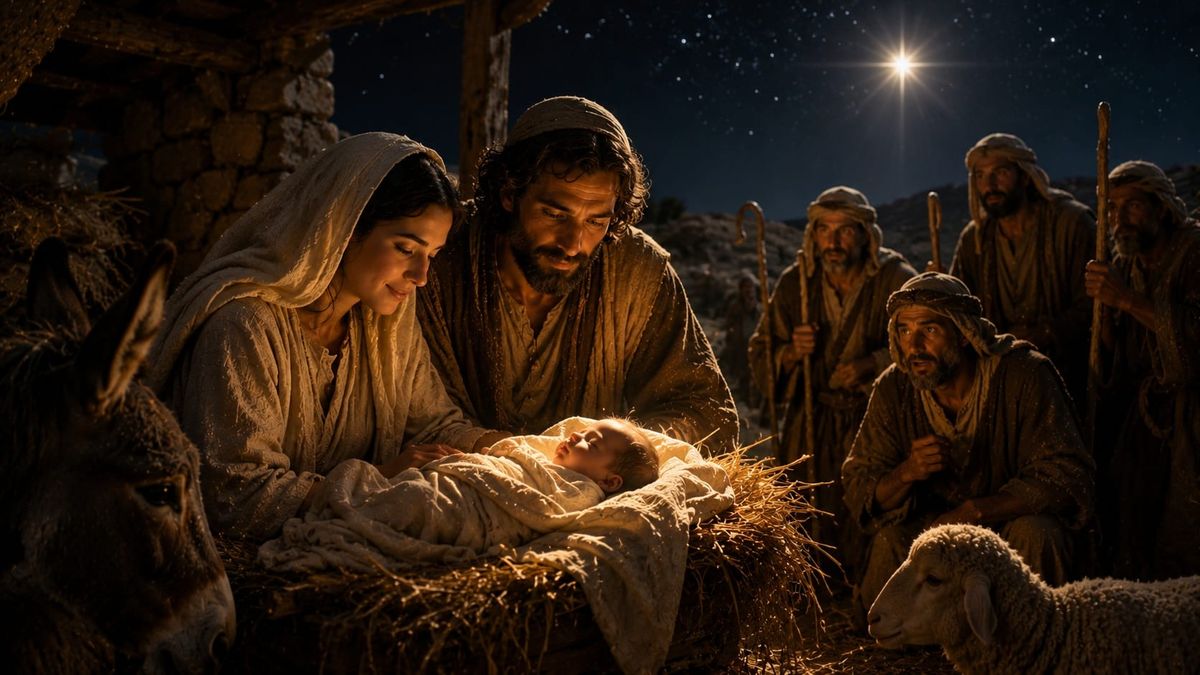
Principal Feast: December 25
The Anglican calendar is ordered by a hierarchy of holy days, each carrying a different weight of observance. At the very top stand the seven Principal Feasts, which the BCP 2019 says take precedence over every other day or observance. The Nativity of Our Lord Jesus Christ, commonly called Christmas Day and observed on December 25, is one of these Principal Feasts. Christmas stands with Easter among the great poles around which the Christian year turns, celebrating the mystery of the Incarnation: the eternal Son of God took our human nature from the Virgin Mary and was born among us. The Prayer Book appoints the Christmas Day Collect on page 600, the Proper Preface of Christmas, and three sets of Scripture readings for the feast.
The world surrounding Christmas in December is loud, commercial, sentimental, and often exhausting. The Church’s proclamation is quieter and far more radical. Christmas is not finally a heartwarming story about a baby in a manger. It is the announcement that the eternal Word through whom all things were made entered the world he made as one of us, taking flesh that could be touched and held, flesh that could hunger and grow weary, and eventually flesh that could be nailed to a Cross. The Creator entered his creation. The Word became flesh.
The Biblical Event
Luke 2 gives us the most familiar account of the Nativity. Caesar Augustus issues a decree that the world should be registered, and Joseph travels with Mary from Nazareth to Bethlehem because he belongs to the house and lineage of David. While they are there, Mary gives birth to her firstborn son, wraps him in swaddling cloths, and lays him in a manger because there is no place for them in the guest room. Luke narrates the birth with remarkable restraint: “And she gave birth to her firstborn son and wrapped him in swaddling cloths and laid him in a manger.” (Luke 2:7, ESV)
There is no visible display of divine glory surrounding the manger itself. The Lord of heaven enters the world through a real human birth, in humble and inconvenient circumstances, and is laid where animals are fed. The simplicity of Luke’s description makes the scene more astonishing rather than less, because the question Christmas forces upon us is not whether the surroundings are impressive but who this child actually is.
The heavenly announcement comes not to Caesar, Herod, priests, or scholars but to shepherds keeping watch over their flock. The angel tells them, “For unto you is born this day in the city of David a Savior, who is Christ the Lord.” (Luke 2:11, ESV) Those titles carry enormous weight: Savior, Messiah, Lord. The imperial decree may have moved Joseph and Mary toward Bethlehem, but Caesar does not finally govern the story. Into a world in which emperors claimed lordship, the one who truly is Lord is born in obscurity.
The heavenly host then praises God and announces peace, and the shepherds go to Bethlehem to see what God has made known. After finding Mary, Joseph, and the child, they make known what they have heard concerning him and return glorifying and praising God. The Nativity already contains a pattern that will characterize Christian witness throughout the Gospel: revelation is received, Christ is encountered, and the good news is made known.
The Word Became Flesh
John 1:1–18 gives the Nativity its fullest theological interpretation. John does not begin with a census, a journey, shepherds, or Bethlehem. He begins before creation: “In the beginning was the Word, and the Word was with God, and the Word was God.” (John 1:1, ESV) Everything that was made came into being through this Word, and then John reaches the astonishing center of Christmas: “And the Word became flesh and dwelt among us.” (John 1:14, ESV)
The Greek verb translated dwelt is eskēnōsen (es-kay-NOH-sen), a word associated with dwelling in a tent or tabernacle. John’s language naturally recalls the biblical theme of God dwelling among his people, first in the tabernacle and later in the temple. Yet Jesus is not simply another sanctuary temporarily inhabited by deity. The eternal Son himself became man, and the glory of God has come among us personally in him.
The child at Bethlehem is one Person, the eternal Son, possessing the divine nature he has eternally shared with the Father and the complete human nature he assumed from Mary. He did not cease to be God when he became man, nor did his humanity consist merely of an outward appearance. Christmas therefore proclaims something far greater than God coming unusually near to humanity. God the Son has truly taken our nature into personal union with himself.
The phrase became flesh is deliberately concrete. John does not say merely that the Word appeared human, spoke through a human representative, or temporarily inhabited a human body. The Son entered the full reality of human existence through conception, gestation, birth, growth, hunger, weariness, suffering, and death, while remaining without sin. The infant lying in the manger is the eternal Word through whom the manger itself was made.
Truly God and Truly Man
The doctrine of the Incarnation protects two truths that must never be separated: Jesus Christ is truly God and truly man. The early Church had to defend both because errors arose in opposite directions. Some diminished or denied the reality of Christ’s humanity, while others denied that the Son shares fully in the divine nature of the Father. Christmas requires the Church to confess both truths without weakening either one.
The Nicene Creed gives Christians enduring language for that confession. The Son is “God of God, Light of Light, very God of very God, begotten, not made,” and for us and for our salvation he “was incarnate by the Holy Spirit and the Virgin Mary, and was made man.” The child born of Mary is therefore neither a lesser deity nor an exalted creature, and neither is he merely a holy man uniquely favored by God. He is the eternal Son made man for us and for our salvation.
Article II of the Thirty-Nine Articles expresses the same faith in specifically Anglican formulary language. The Son, the Word of the Father, took human nature in the womb of the Blessed Virgin, so that the divine and human natures are joined together in one Person, “never to be divided.” The Incarnation is therefore not a temporary condition the Son assumed only during his earthly ministry. The crucified, risen, ascended, and reigning Lord remains the incarnate Son, truly God and truly man.
This is what gives Christmas its extraordinary claim upon Christian faith. Christianity does not merely announce that God communicated with humanity or sent a particularly holy messenger. It confesses that the eternal Son truly assumed our nature without surrendering his divinity. The one lying in Mary’s arms is the Lord through whom heaven and earth were made.
Born of the Virgin Mary
Christmas also requires Christians to say plainly what Matthew and Luke say plainly: Jesus was conceived while Mary was a virgin. Mary conceived by the Holy Spirit before she had been with a man, and the child born from her is the incarnate Son of God. The virginal conception is not decorative material around the edges of the Christmas story. It belongs to the biblical testimony concerning who Jesus is and how he entered the world.
The Christmas Day Collect remembers that God’s only-begotten Son took our nature upon him and was born “of a pure virgin.” (BCP 2019, p. 600) The Proper Preface of Christmas likewise confesses that Jesus Christ, by the Holy Spirit and the Virgin Mary his mother, “was made truly man.” Anglican worship therefore places the virginal conception within the Church’s ordinary confession of the Incarnation rather than treating it as an optional pious detail.
Mary’s role is unique, but its theological importance is finally Christological. The eternal Son truly received his human nature from her. He did not descend from heaven with an already formed appearance of humanity but was conceived in her womb, carried by her, and born from her in the ordinary bodily reality of human birth. The Son entered human life from its beginning, assuming the nature he came to redeem.
Why the Incarnation Matters for Salvation
The Incarnation is essential to salvation, but it should never be isolated from the rest of Christ’s saving work. Christmas does not teach that humanity is redeemed merely because the Son became man. The Gospel moves from Bethlehem through Christ’s obedient life to the Cross, Resurrection, Ascension, present reign, and the gift of the Holy Spirit. The Incarnation makes that saving work possible because the eternal Son has truly become one of us.
The Son assumes our nature without assuming our sin. He lives the obedience humanity owes to God, bears our sins in his body upon the Cross, rises bodily from the grave, and carries glorified humanity into the presence of the Father. The one who saves us is truly divine and therefore possesses the power to save, while also truly sharing the human nature in which our salvation is accomplished.
Christmas therefore already points toward Good Friday and Easter. Matthew makes the purpose explicit before the birth when Joseph is told, “you shall call his name Jesus, for he will save his people from their sins.” (Matthew 1:21, ESV) The angel at Bethlehem likewise announces not merely that a remarkable child has been born but that a Savior has come. The flesh that can be touched and held at Bethlehem is the flesh that will be given for us upon the Cross and raised from the grave.
This does not make Christmas gloomy or turn the manger prematurely into Calvary. It explains why Christmas is joyful. The child is born with a saving purpose, and the Church knows the whole story into which his birth leads. Bethlehem belongs to the same Gospel as the Cross and the empty tomb.
Adoption and Grace
The Christmas Day Collect draws a beautiful line from Christ’s birth to the new birth of Christians. It asks God, who gave his only-begotten Son to take our nature and be born of the Virgin, to grant that those who have been “born again and made your children by adoption and grace” may be daily renewed by the Holy Spirit. (BCP 2019, p. 600) The Collect therefore does not allow Christmas to remain an event Christians admire from a distance. The Incarnation has consequences for those united to the incarnate Son.
John makes the same movement in his prologue. The Word becomes flesh, and those who receive him are given the right to become children of God. (John 1:12–14) Jesus is the Son eternally and by nature; Christians become sons and daughters of God by adoption and grace through union with him. We do not become divine by nature, cease to be creatures, or merge into God. We receive a relationship and inheritance that could never belong to sinners by right.
The Prayer Book’s language of adoption and grace expresses the mystery with both richness and restraint. The Son descends to us so that in him we may receive what we could never obtain for ourselves. Christmas therefore reveals not only the humility of Christ but the generosity of God, who receives sinners as children because his eternal Son has come among us for our salvation.
The Three Sets of Christmas Propers
The BCP 2019 provides three sets of readings designated Christmas Day I, II, and III. These stand within the ancient Western pattern of celebrating the Nativity at different times from the holy night into Christmas Day, although the Prayer Book does not require every congregation to celebrate three Eucharists. Christmas Day I is also the set used with the Christmas Eve celebration, while Christmas Day II and III offer distinct but complementary ways of entering the mystery.
Christmas Day I appoints Isaiah 9:1–7, Psalm 96, Titus 2:11–14, and Luke 2:1–14, with verses 15–20 optionally included. Isaiah announces the child upon whose shoulders government rests and whose names include Mighty God and Prince of Peace. Titus interprets Christ’s coming as the appearing of God’s saving grace, while Luke places the Church before the birth itself and beneath the angelic proclamation. The readings hold royal majesty and visible humility together: the King whose government will have no end lies in a manger.
Christmas Day II appoints Isaiah 62:6–12, Psalm 97, Titus 3:4–7, and Luke 2:15–20, with Luke 2:1–14 optionally included before those verses. The emphasis moves naturally toward the shepherds’ response as they go, see, make known what they have heard, and return glorifying God. Titus gives the set its soteriological center: “when the goodness and loving kindness of God our Savior appeared, he saved us, not because of works done by us in righteousness, but according to his own mercy.” (Titus 3:4–5, ESV) Christmas is gift before it becomes response.
Christmas Day III appoints Isaiah 52:7–12, Psalm 98, Hebrews 1:1–12, and John 1:1–18. Here the identity of the child comes into the sharpest theological focus. Hebrews declares that the Son is the radiance of God’s glory and the exact imprint of his nature, the one through whom God made the world, while John identifies him as the eternal Word who was God and became flesh. The familiar manger scene and the Church’s deepest Christological confession belong together because doctrine tells us who is lying in the manger.
Taken together, the three sets move from prophetic promise and angelic proclamation through human response to the fullest theological confession of the Incarnation. The Church may hear the story from several directions, but every set leads to the same Lord. The Savior born in Bethlehem is the eternal Son through whom God made the world and through whom he saves it.
The BCP Collect and Proper Preface
The Christmas Day Collect is one of the Prayer Book’s most compact statements of Incarnational theology. God gives his only-begotten Son, the Son takes our nature, he is born of the Virgin, Christians are born again and adopted by grace, and the Holy Spirit renews them daily. The whole Trinity is active, and the Incarnation leads directly into the sanctified life of the Church.
The petition is especially pastoral because it asks not for a feeling appropriate to December 25 but for daily renewal by the Holy Spirit. Christmas is not a religious experience Christians must manufacture once each year and then preserve sentimentally. It announces an objective saving reality: the Son has taken our nature, and those united to him are continually renewed by the Spirit. Christmas joy therefore rests upon what God has done rather than upon our ability to feel festive.
The Christmas Eve Collect approaches the same mystery through the imagery of light. It asks God, who has caused the holy night to shine with the brightness of the true Light, that those who have known the mystery of that Light on earth may also enjoy him perfectly in heaven. (BCP 2019, p. 599) Even at the beginning of Christmas, the Prayer Book looks beyond the manger toward the final enjoyment of Christ in glory.
The Proper Preface of Christmas gives the saving purpose of the feast with equal clarity. The Church gives thanks because God gave Jesus Christ, his only Son, to be born for us, who by the Holy Spirit and the Virgin Mary his mother was made truly man, yet without sin, so that we might be cleansed from sin and given the right to become God’s children. Every phrase bears weight. Christ was born for us, was made truly man, remained without sin, and came for the saving purpose of cleansing sinners and bringing them into God’s family.
The History of Christmas
The New Testament gives no date for the birth of Jesus, and the earliest Christians have left no evidence of a universally observed annual feast of his Nativity on December 25. The celebration of Christ’s birth developed in the early centuries of the Church, and by the fourth century December 25 is clearly attested as the feast of the Nativity at Rome. The historical date of Jesus’ birth remains unknown.
The reasons December 25 came to be used have long been debated. One explanation emphasizes the Roman midwinter environment and the relationship of the date to celebrations connected with the sun. Another points to an ancient Christian calculation that associated Christ’s conception with March 25 and then placed his birth nine months later on December 25. The surviving evidence does not require the history to be reduced to the popular claim that Christians simply copied a pagan festival, nor does it establish one explanation beyond all dispute.
What matters for the Church’s observance is that December 25 became the fixed Western celebration of the biblical Nativity, while January 6 developed as the distinct feast of the Epiphany. The Anglican Prayer Book tradition inherited that calendar and places both feasts within the Incarnation Cycle. Christmas therefore does not claim that Scripture revealed December 25 as Jesus’ historical birthday. The Church keeps a fixed liturgical commemoration of an event whose historical reality, rather than its precise calendar date, stands at the center of Christian confession.
Christmas Day and the Twelve Days
Christmas Day begins rather than concludes the Church’s Christmas celebration. The BCP describes the Incarnation Cycle as placing the Lord’s birth on December 25, with Advent preceding it and the Season of Epiphany following the twelve days of Christmas. Christmas therefore runs from December 25 through January 5, with the distinct Principal Feast of the Epiphany on January 6.
This is almost the reverse of the surrounding cultural rhythm. Decorations and Christmas music often begin disappearing immediately after December 25, while the Church has only just begun her feast. Advent waits and prepares; Christmas celebrates what Advent awaited. The Christian calendar therefore gives the Church permission to resist both the premature Christmas of December’s commercial season and the premature ending of Christmas once December 25 has passed.
The twelve days are not twelve repetitions of Christmas Day. Saint Stephen, Saint John, and the Holy Innocents have their own Holy Days on December 26, 27, and 28, while January 1 is the Circumcision and Holy Name of Our Lord Jesus Christ. The Sundays of Christmas likewise have their own propers when they occur. Christmastide holds these observances together without erasing their distinctive voices.
The Prayer Book makes a more limited provision for the ordinary weekdays of the season. The Christmas Day Collect and any of the three sets of Christmas lessons may serve for weekdays between Holy Innocents’ Day and the First Sunday of Christmas. The BCP also exempts the twelve days from the ordinary Friday fasting discipline, reinforcing the genuinely festal character of the season.
Christmas and Epiphany
Christmas and Epiphany belong closely together, but neither should be reduced to the other. Christmas proclaims that the Word became flesh and was born among us. Epiphany proclaims the manifestation of the incarnate Christ to the Gentiles and opens a season in which his identity continues to be revealed through his Baptism, teaching, signs, saving authority, and finally the Transfiguration.
Epiphany therefore advances the movement begun at Christmas. The child born at Bethlehem is manifested to the nations, declared the beloved Son at the Jordan, and revealed in glory upon the mountain. What Christmas announces in the hidden humility of birth becomes increasingly manifest as the Gospel unfolds.
This connection protects Christmas from becoming an isolated story about Jesus’ infancy. The child grows, teaches, heals, goes to the Cross, rises, ascends, reigns, and will come again. The Christian calendar distinguishes the mysteries of Christ’s life so that the Church may contemplate them more carefully, but it never divides the one Christ or the one Gospel.
The Crèche and the Manger
The crèche (kresh), or Nativity scene, has become one of Christianity’s most recognizable visual devotions. Francis of Assisi is famously associated with the living Nativity at Greccio in 1223, which helped popularize this form of devotion in the medieval West, although artistic representations of Christ’s birth are much older. At its best, the crèche serves as a visual catechism, placing the humility of the Incarnation before the eyes.
The child, his mother, Joseph, the manger, and the shepherds remind us that the one through whom all things were made entered his own creation in poverty and dependence. Some familiar elements combine different biblical moments or come from later Christian tradition. Matthew’s Magi do not belong to Luke’s birth-night narrative, Scripture does not tell us that there were exactly three of them, and Luke does not explicitly describe animals gathered around the manger.
Such traditional elements need not make a Nativity scene objectionable, but they should not be confused with details actually supplied by Scripture. Properly understood, the crèche directs the imagination toward the mystery confessed in the Christmas liturgy. The visual simplicity of the scene points beyond itself to the extraordinary reality that the Lord of creation has entered the life of his creatures.
Christmas in Anglican Worship
White is customarily used for Christmas in Anglican worship, fitting the joy, light, purity, and glory of the Incarnation. After Advent’s season of preparation, the brightness of Christmas announces that the feast has arrived. Yet Christmas does not pretend that darkness has disappeared from the world. Within days the calendar remembers Stephen’s martyrdom and the slaughter of the Holy Innocents, while the Nativity itself occurs within a world already marked by sin, suffering, violence, and death.
The brightness of Christmas therefore makes a theological claim rather than a sentimental one. The Light has entered the darkness, and the darkness will not overcome it. Christmas joy is not denial of the world’s sorrow but confidence that God has entered that sorrow in the person of his Son and begun the saving work that will finally renew all things.
As a Principal Feast, Christmas finds its natural liturgical center in the Eucharistic assembly of the Church. The people of God gather to hear the Word announcing the Incarnation and to receive the Sacrament instituted by the same incarnate Lord. There is a profound coherence between the Incarnation and the Eucharist, but Bethlehem and the altar should not be collapsed into one another. The Eucharist is given specifically as the sacramental memorial of Christ’s once-for-all sacrifice and as true participation in the benefits of his Passion.
Christmas therefore does not turn Holy Communion into a reenactment of the manger. The child whose birth the Church hears proclaimed is the same Jesus Christ who was crucified, raised, ascended, and now reigns. The incarnate Lord who once lay in Mary’s arms is the Lord who gives himself sacramentally to his people and nourishes them with the benefits of his saving work.
Observing This Feast
Christmas Day is a Principal Feast fixed on December 25 and takes precedence over every other day or observance. The Church’s celebration may begin on the evening of December 24 with the Christmas Eve Collect and Christmas Day I readings, while Christmas Day itself also offers the second and third sets of appointed propers. The form and hour of celebration may vary, but the feast itself remains centered upon the Nativity of the Lord.
The most fitting observance is to gather with the Church for the Holy Eucharist. Whether the congregation celebrates on Christmas Eve, during the night, early in the morning, or during Christmas Day, the purpose is not simply to preserve a beloved seasonal custom. The Church gathers to worship the incarnate Lord through the Word and Sacrament he has given.
Read Luke 2:1–20 slowly and resist allowing familiarity to make the story small. Notice the contrast between Caesar’s decree and the true Lord in the manger, between the ordinary circumstances of the birth and the heavenly announcement, and between the shepherds’ humble social position and the extraordinary privilege given to them as the first hearers of the good news. Then read John 1:1–18 alongside Luke, allowing John to answer the question Luke’s story raises: who is this child?
Hebrews 1:1–12 deepens the confession further by identifying the Son as the radiance of God’s glory and the one through whom the world was created. Pray the Nicene Creed slowly as Christmas theology, paying particular attention to the confession that the one who is God of God, Light of Light, and very God of very God came down from heaven for us and for our salvation, was incarnate by the Holy Spirit and the Virgin Mary, and was made man. The Creed does not move away from Bethlehem into abstract theology. It tells us who was born there.
The Christmas Day Collect should also shape the feast beyond December 25. Its petition is not that we might feel appropriately festive but that those made God’s children by adoption and grace may be daily renewed by the Holy Spirit. Christmas joy becomes durable when it is rooted not in seasonal emotion but in the saving reality the season announces.
Finally, allow Christmas to remain Christmas after December 25. Keep the twelve days as the Church gives them, receiving Saint Stephen, Saint John, the Holy Innocents, the Holy Name, and the Sundays of Christmas as part of the Church’s sustained contemplation of the Incarnation. The surrounding culture may begin dismantling Christmas immediately. The Church has only begun to consider what it means that the Word became flesh.
Conclusion
The Nativity of Our Lord Jesus Christ celebrates one of the most astonishing mysteries of the Christian faith: the eternal Son of God, through whom all things were made, truly took our human nature and was born of the Virgin Mary. He was wrapped in swaddling cloths, laid in a manger, and announced by angels to shepherds. He was not God wearing a human costume or merely appearing among us in human form. The Word became flesh, entering human life from within as one Person who is truly God and truly man.
The BCP Collect and Proper Preface place the saving purpose of that mystery at the center of the feast. The only-begotten Son takes our nature so that those united to him may become God’s children by adoption and grace, cleansed from sin and daily renewed by the Holy Spirit. Christmas therefore asks for something deeper than seasonal feeling. The Incarnation establishes a saving reality in which Christians are called to live every day: the Son has come among us for our salvation, and in him God is making sinners his children.
The manger consequently directs the Church beyond itself toward Jesus Christ. He is the promised Son of David, the Savior announced to the shepherds, the eternal Word made flesh, and the Lord whose saving work leads from Bethlehem to the Cross, the empty tomb, the Father’s right hand, and finally the renewal of all things. The Word has dwelt among us, and in his face the glory of God has come near, “full of grace and truth.” (John 1:14, ESV)