The Confession of Saint Peter: An Anglican Perspective
January 18 is the Feast of the Confession of Peter. Not a feast about a great man, but about a great answer to a great question: ‘You are the Christ, the Son of the living God.’ The Father revealed it. Peter said it. The Church has been asked to keep saying it ever since.
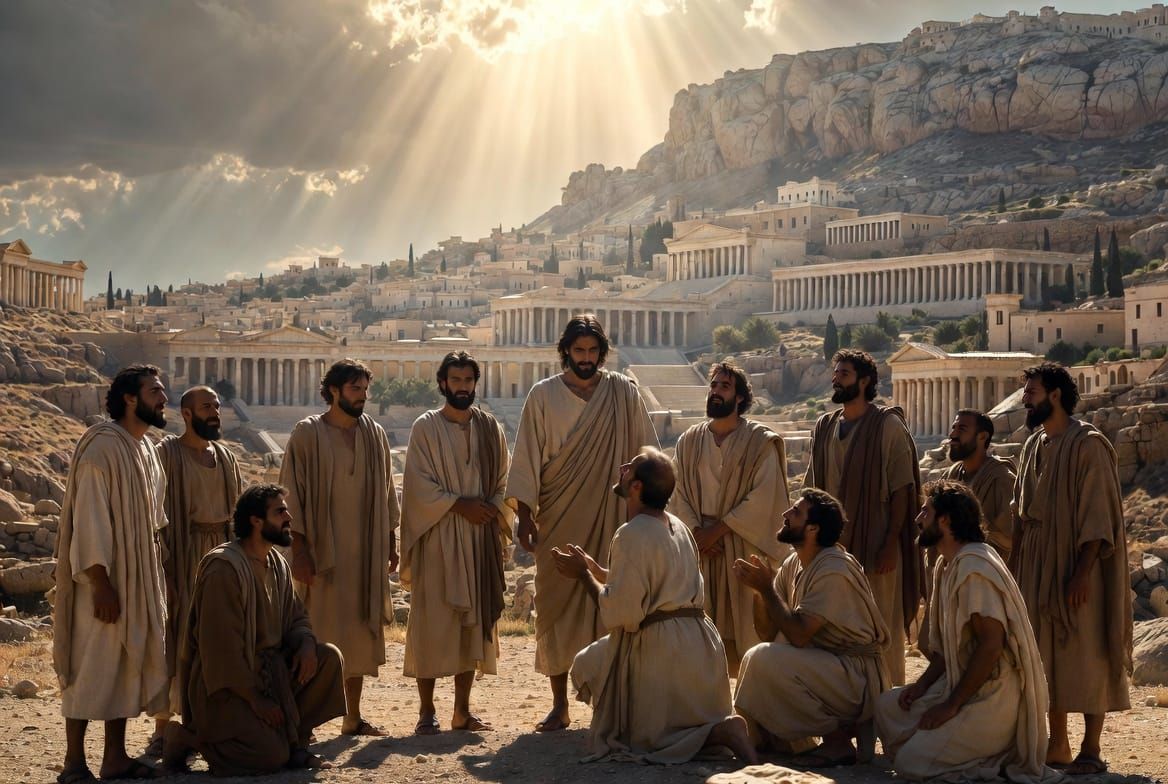
Feast Day: January 18
The Anglican calendar is ordered by a hierarchy of holy days, each carrying a different weight of observance. At the top stand the seven Principal Feasts, the highest days of the liturgical year. Below them are the Red-Letter Holy Days appointed in the BCP 2019 with their own Collects and propers. The Confession of Saint Peter, observed on January 18, is one of these Red-Letter Holy Days. The BCP 2019 appoints its Collect on page 626 and its lectionary readings on page 730.
The feast commemorates not Peter’s martyrdom, which is remembered together with Saint Paul on June 29, but a moment of revelation and confession. At Caesarea Philippi, Jesus asks his disciples the question upon which every Christian confession finally turns: “But who do you say that I am?” Peter answers, “You are the Christ, the Son of the living God.”(Matthew 16:15–16, ESV)
Jesus immediately identifies the source of Peter’s confession: “Blessed are you, Simon Bar-Jonah! For flesh and blood has not revealed this to you, but my Father who is in heaven.” (Matthew 16:17, ESV) The feast therefore honors Peter, but it begins even more fundamentally with the action of God. Peter confesses because the Father has revealed the Son. His confession begins in grace: the Father reveals, Peter receives, and Peter confesses.
The Biblical Event
The appointed Gospel is Matthew 16:13–19. Jesus and his disciples have come into the district of Caesarea Philippi, north of Galilee near the base of Mount Hermon. The location carried powerful religious and political associations. The area had long been connected with pagan worship, particularly the cult of Pan, and Philip the tetrarch had developed the city and named it Caesarea Philippi in honor of Caesar and himself.
Against that setting Jesus asks, “Who do people say that the Son of Man is?” (Matthew 16:13, ESV) The disciples report the opinions circulating among the crowds: John the Baptist, Elijah, Jeremiah, or one of the prophets. These are not contemptuous answers. Each recognizes something extraordinary in Jesus, but none goes far enough.
Then Jesus turns the question directly toward the disciples: “But who do you say that I am?” (Matthew 16:15, ESV) They have been with him through healings, controversies, the feeding of the multitude, the calming of the sea, and his walking upon the water. They possess more evidence than the crowds. Yet the question now presses them beyond observation and report into confession.
Peter answers, “You are the Christ, the Son of the living God.” (Matthew 16:16, ESV) The title Christos (khris-TOSS)means Anointed One and corresponds to the Hebrew title Messiah. Peter identifies Jesus as the promised King toward whom Israel’s Scriptures have been pointing and as the Son of the living God.
This is not the first time the disciples have confessed Jesus as the Son of God. After Jesus walked upon the sea and entered the boat, they worshiped him and said, “Truly you are the Son of God.” (Matthew 14:33, ESV) Caesarea Philippi nevertheless marks an important development. Peter now adds the messianic title Christ, the confession does not arise immediately from a miraculous rescue, and Jesus explicitly identifies the Father as the source of Peter’s recognition.
Jesus therefore does not congratulate Peter upon having finally assembled the evidence correctly. He says the Father revealed it. Evidence matters, and Peter’s confession is not irrational or detached from what he has seen. Yet recognition of Jesus for who he truly is is finally the work of divine revelation. The Church does not invent the confession. She receives it. The Father reveals, Peter receives, and then Peter confesses.
Peter, the Rock, and the Church
Jesus continues, “And I tell you, you are Peter, and on this rock I will build my church, and the gates of hell shall not prevail against it.” (Matthew 16:18, ESV)
The Greek wordplay is unmistakable: Petros (PEH-tros), Peter, and petra (PEH-trah), rock. Older Protestant interpretation sometimes tried to drive too sharp a wedge between the two, arguing that the grammatical distinction proves Peter himself has no connection with the rock. That argument asks more of the Greek than it can bear. Jesus deliberately gives Simon the name Peter in connection with the rock upon which he promises to build.
At the same time, the passage must be read within the whole New Testament. Peter is the apostle who has just made the climactic confession revealed by the Father, and he genuinely receives a foundational role within the apostolic Church. Yet Peter cannot be separated from the confession he bears, nor can either be separated from Christ himself.
Paul writes, “For no one can lay a foundation other than that which is laid, which is Jesus Christ.” (1 Corinthians 3:11, ESV) Ephesians describes the household of God as “built on the foundation of the apostles and prophets, Christ Jesus himself being the cornerstone.” (Ephesians 2:20, ESV)
An Anglican reading therefore need not choose simplistically between Peter and Peter’s confession as though affirming one required denying the other. Peter is intimately connected with the rock because he is the apostolic spokesman who makes this climactic confession revealed by the Father: Jesus is the Christ, the Son of the living God. Christ remains the ultimate foundation and cornerstone, while Peter and the other apostles have a genuine foundational ministry because they bear authoritative witness to him.
The BCP Collect expresses that balance with unusual precision. It calls Peter “first among the apostles” and then asks God to keep his Church “steadfast upon the rock of this faith.”
Peter’s Primacy and the Anglican Understanding
The New Testament gives Peter a real prominence among the Twelve. He frequently speaks for the apostolic company, appears first in apostolic lists, makes the confession at Caesarea Philippi, preaches at Pentecost, and plays a leading role in the early chapters of Acts. The BCP’s description of him as “first among the apostles” appropriately recognizes this biblical primacy.
A classical Anglican reading can therefore acknowledge Peter as first among equals within the apostolic company without treating him as merely interchangeable with every other apostle. His leadership is real.
What Matthew 16 does not establish, however, is a perpetual office of universal jurisdiction belonging uniquely to the bishops of Rome. Nor does the passage itself teach the later doctrines of papal supremacy or papal infallibility. Those are further historical and theological claims that cannot simply be read back into Jesus’ words to Peter.
The rest of the New Testament makes the shared character of apostolic authority clear. Peter can be corrected when his conduct contradicts the Gospel, as Paul recounts in Galatians 2. The Jerusalem Council in Acts 15 does not function as the decree of a solitary universal bishop. Peter bears important witness, but James also speaks decisively, and the apostles and elders act corporately.
Peter’s primacy therefore belongs within the fellowship of the apostles and beneath the lordship of Christ. He is first among the apostles, not lord over them. The authority he exercises serves the confession Christ has given his Church.
The Gates of Hades
Jesus promises that “the gates of hell shall not prevail against” the Church he builds. (Matthew 16:18, ESV) The Greek word is Hadēs (HAY-deez), the realm of the dead.
Gates are defensive structures. The picture is therefore not primarily of hell launching an assault while the Church desperately tries to survive behind her walls. The gates of death will not be able to hold against what Christ is building.
The reason is ultimately Christological. Death cannot finally imprison Christ’s Church because death could not imprison Christ. He entered the grave and rose bodily from it. The Church he builds belongs to the risen Lord.
This is not a promise that every congregation, diocese, denomination, or ecclesiastical institution will survive indefinitely. Churches can decline. Congregations can close. Christian institutions can corrupt themselves. Believers can suffer persecution and die.
Jesus promises something greater than institutional longevity. Death itself will not have the final word over the Church united to the risen Christ. The sheep may walk among wolves, but the grave cannot keep those who belong to the Shepherd who has conquered it. The promise therefore rests not upon the strength of the Church but upon the Resurrection of her Lord.
The Keys of the Kingdom
Jesus then tells Peter, “I will give you the keys of the kingdom of heaven, and whatever you bind on earth shall be bound in heaven, and whatever you loose on earth shall be loosed in heaven.” (Matthew 16:19, ESV)
The image of keys signifies delegated authority. Isaiah 22 provides an important Old Testament background, where the key of the house of David signifies the steward’s authority to open and shut on behalf of the king. Jesus now gives Peter the keys of the Kingdom in connection with the confession he has just made.
Binding and loosing carried the sense of authoritative judgment, including determining what was permitted or forbidden and making judgments within the covenant community. Within the life of the Church, this authority encompasses the faithful proclamation and application of the Gospel, authoritative teaching according to the Word of Christ, the declaration of forgiveness to the penitent, and the exercise of Christian discipline.
Yet this authority is not Peter’s private possession. In Matthew 18:18 Jesus gives the authority to bind and loose to the disciples collectively. After the Resurrection, he commissions the apostolic company and speaks of the forgiveness and retention of sins. (John 20:21–23)
Peter receives the keys personally and representatively, but the apostolic authority they signify belongs within the wider ministry Christ entrusts to his Church. It is not an autonomous power possessed by an individual office independently of the Word of God.
The Church therefore does not have authority to invent truth. She bears the King’s keys and speaks in the King’s name. Her authority is ministerial and derivative, not sovereign. Christ remains Lord of the house.
The Appointed Readings
The propers for the feast are Acts 4:8–13, Psalm 23, 1 Peter 5:1–11, and Matthew 16:13–19. Together they show the confession received, proclaimed, shepherded, and preserved.
Acts 4 presents Peter before the rulers, elders, and scribes after the healing of the lame man. Filled with the Holy Spirit, he declares that the man was healed by “the name of Jesus Christ of Nazareth, whom you crucified, whom God raised from the dead.” (Acts 4:10, ESV)
Then comes one of the clearest declarations of Christ’s uniqueness in the New Testament: “And there is salvation in no one else, for there is no other name under heaven given among men by which we must be saved.” (Acts 4:12, ESV)
The confession made in the hills of Caesarea Philippi is now made in the courtroom before authorities capable of punishing Peter. The setting has changed and the cost has risen, but the confession has not softened. Yet Acts explicitly says that Peter speaks “filled with the Holy Spirit.” (Acts 4:8, ESV) The same God who gives the confession gives grace to proclaim it when proclamation becomes costly.
Psalm 23 turns from confession toward shepherding: “The LORD is my shepherd; I shall not want.” (Psalm 23:1, ESV)The choice becomes particularly rich when read alongside Peter’s later restoration in John 21, where the risen Christ commands him to feed and tend his sheep. Peter can shepherd Christ’s flock only because Christ is first the Shepherd of Peter and of the whole Church.
The Epistle, 1 Peter 5:1–11, makes the connection explicit. Peter exhorts the elders to “shepherd the flock of God that is among you” and reminds them that “when the chief Shepherd appears,” they will receive the unfading crown of glory. (1 Peter 5:2, 4, ESV) Peter therefore possesses genuine pastoral authority while remaining an under-shepherd. Christ alone is the chief Shepherd.
Peter also warns, “Your adversary the devil prowls around like a roaring lion, seeking someone to devour.” (1 Peter 5:8, ESV) Those words come from a man who knows weakness firsthand. He confessed Christ boldly, failed grievously, was restored graciously, and later wrote to other shepherds with the hard-won wisdom of a man who had discovered that Christian steadfastness cannot be taken for granted.
Peter’s Failure and Restoration
The feast would be distorted if Peter’s confession were treated as evidence of unbroken spiritual strength. Almost immediately after this passage, Peter will resist Jesus’ teaching that the Messiah must suffer and die. Jesus will rebuke him sharply. Later, on the night of Jesus’ arrest, Peter will deny three times that he even knows him.
The contrast is sobering. The man who says, “You are the Christ, the Son of the living God,” will later insist that he does not know Jesus. Yet failure does not become the end of Peter’s story. The risen Christ restores him beside the Sea of Galilee and entrusts the care of the flock to him again. Peter is not preserved by unusual strength of character. He is restored and kept by grace.
This makes the Collect’s petition especially important. The Prayer Book does not say that the Church will make herself steadfast by determination. It asks the Almighty Father to keep the Church steadfast.
Peter’s life demonstrates why the prayer must take that form. The Father reveals the confession. The Son restores the failed confessor. The Holy Spirit empowers him to speak before authorities. Grace stands before, beneath, and after Peter’s confession. Steadfastness is therefore not a human achievement added to divine revelation after the fact. The same God who gives faith sustains his people in the faith he has given.
The BCP 2019 Collect and Preface
The BCP 2019 appoints this Collect on page 626: “Almighty Father, who inspired Simon Peter, first among the apostles, to confess Jesus as Messiah and Son of the living God: Keep your Church steadfast upon the rock of this faith, that in unity and peace we may proclaim the one truth and follow the one Lord, our Savior Jesus Christ.” (BCP 2019, p. 626)
The Collect is exceptionally precise. Peter is “first among the apostles.” The Father inspires his confession. The Church is to remain steadfast upon “the rock of this faith.” Its calling is to proclaim “the one truth” and follow “the one Lord.”
The prayer therefore honors Peter without allowing the feast to terminate in Peter. Peter matters because of the Christ he confesses and because of the apostolic witness he bears.
The Collect also refuses to separate unity from truth. Christian unity is not created by reducing the content of the faith until no one has anything definite left to disagree about. The Prayer Book prays simultaneously for “unity and peace,” the proclamation of “the one truth,” and obedience to “the one Lord.”
The Preface of Apostles likewise places Peter’s ministry beneath Christ’s continuing care of his Church. It gives thanks through “the great shepherd of your flock, Jesus Christ our Lord,” who after his Resurrection sent the apostles to preach the Gospel and teach all nations and promised to remain with them to the end of the ages.
Once again, Christ remains central. Peter confesses, preaches, binds, looses, and shepherds, but Jesus is the great Shepherd who sends his apostles and remains with his Church.
The Confession of Peter in Anglican Worship
The feast is distinctive because it commemorates a confession of faith rather than Peter’s martyrdom. January 18 draws attention not principally to something Peter accomplished but to what he said and, even more importantly, to what the Father gave him to say.
That makes the feast especially appropriate within Epiphany, the season of manifestation. Christ is manifested to the Gentiles through the Magi, revealed as the beloved Son at the Jordan, and manifested through his teaching and mighty works. At Caesarea Philippi, that manifestation reaches the lips of a disciple. Peter confesses what the Father has revealed.
The feast therefore has a strongly doctrinal and confessional character. The Church is not founded upon vague religious feeling or institutional continuity detached from truth. Apostolic succession matters precisely because the apostles were commissioned to bear witness to Christ and hand on the faith they had received. Institutional continuity without apostolic faithfulness would preserve the vessel while losing the treasure.
The liturgical color is white. Although Peter would eventually die as a martyr, January 18 commemorates his confession rather than his martyrdom. White fits Epiphany’s themes of light, revelation, and the manifestation of Christ.
One week later, January 25 brings the Conversion of Saint Paul, also in white. The two feasts form a fitting Epiphany pair. Peter receives revelation from the Father and confesses Christ. Paul encounters the risen Christ and is converted and commissioned. In both cases, divine initiative comes first.
The Confession Today
Jesus’ question has lost none of its force: “But who do you say that I am?” (Matthew 16:15, ESV) Every generation can report what the surrounding culture says about Jesus: teacher, moral example, revolutionary, prophet, spiritual guide. Peter’s confession refuses to leave him within any of those categories.
The pressure to soften, relativize, or sideline the confession remains real. Cultural skepticism may treat Jesus as one religious option among many. Within the Church, doctrinal clarity can be sacrificed in the hope of preserving institutional harmony or cultural acceptance.
The Feast of the Confession of Saint Peter calls Christians back to what the Church has received. Jesus is “the Christ, the Son of the living God,” and Peter later declares that “there is salvation in no one else.” (Matthew 16:16; Acts 4:12, ESV)
The Church is therefore not free to redesign Christ according to the preferences of each generation. She has received a faith she is commanded to confess, teach, and hand on.
That does not justify arrogance. Peter himself is the great warning against confidence in the confessor rather than in the one confessed. The same man who speaks with astonishing clarity will fail spectacularly. Christian confidence therefore rests neither upon our intelligence nor upon our consistency, but upon Christ and the grace by which God reveals, restores, and keeps his people. The Church should confess without apology and remain humble while doing it. The truth is not ours because we invented it. It was given to us.
Observing This Feast
The Confession of Saint Peter is observed on January 18 during the Season of Epiphany.
Pray the Collect on page 626 and read Matthew 16:13–19 slowly. Stop at Jesus’ question before rushing to Peter’s answer: “But who do you say that I am?” The question cannot finally be answered by reporting the opinions of others.
Then notice that Peter’s answer begins in grace. Ask not only whether you can repeat the correct words but whether your confidence is resting upon your own ability to believe. The Father who revealed the Son to Peter remains the one upon whom faith depends.
Read Acts 4:8–13 and notice what has changed and what has not. The confession remains the same, but the setting has become dangerous. Peter now speaks before authorities, and the Holy Spirit gives him courage to proclaim the uniqueness of Christ.
Pray Psalm 23 and remember that Peter’s ministry depends upon the Shepherd whom he serves. Read 1 Peter 5 and hear the mature apostle instruct other shepherds to lead humbly under the chief Shepherd.
The feast is also a fitting occasion to pray for the Church’s doctrine and witness. Ask that bishops, priests, deacons, theologians, teachers, and ordinary Christians would neither soften the apostolic faith to avoid offense nor wield the truth with pride.
Pray especially the petition the Prayer Book gives us: that the Father would keep his Church steadfast upon the rock of this faith. Peter’s life reminds us why such steadfastness must be prayed for rather than presumed.
Conclusion
The Confession of Saint Peter is not finally a feast about a great man. It is a feast about a great answer to the question every generation must hear again: “But who do you say that I am?” Peter answers, “You are the Christ, the Son of the living God,” but Jesus immediately reminds him that the answer did not originate in Peter. Flesh and blood did not reveal it. The Father did. The confession is true not because Peter is strong but because the Christ he confesses is true.
That is good news for the Church because Peter’s own life quickly demonstrates the weakness of the confessor. He misunderstands the Cross, denies the Lord, and requires restoration. Yet Christ does not abandon him, and the confession does not collapse with Peter’s failure. The Father reveals, the Son restores, the Spirit empowers, and Christ builds his Church. Even the gates of death cannot imprison the people who belong to the risen Lord.
The Collect therefore gives the feast its enduring prayer: “Keep your Church steadfast upon the rock of this faith, that in unity and peace we may proclaim the one truth and follow the one Lord, our Savior Jesus Christ.” (BCP 2019, p. 626)Every generation must say again, in its own context and sometimes at real cost, what Peter said in the shadow of Mount Hermon. Yet steadfastness in that confession is never finally an achievement of human resolve. It is grace to be received and preserved by the same Father who first revealed the Son.