The Epiphany of the Lamb (John 1:29-42)
This is the heartbeat of Epiphany discipleship: hear the testimony, behold the Lamb, come and see, remain with him, confess what we have found, and bring others to Jesus. The movement begins with revelation and ends in witness because grace received becomes grace proclaimed.
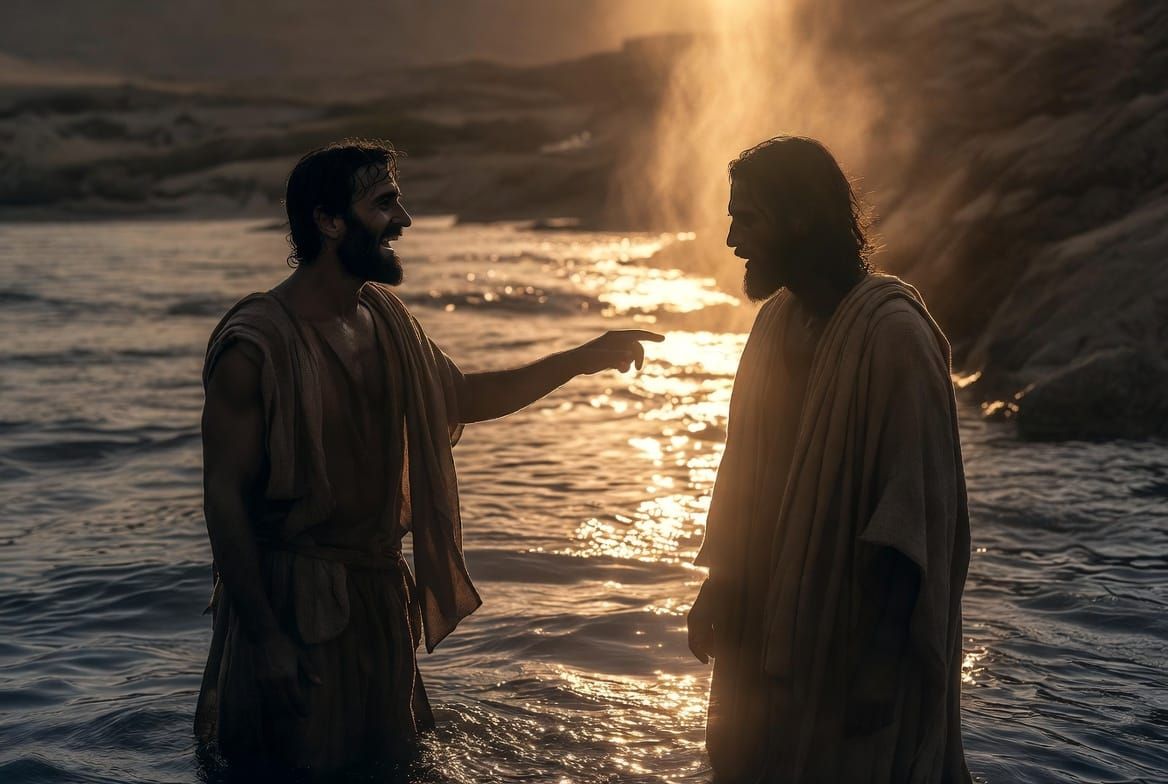
January 18, 2026, Year A, Second Sunday of Epiphany, Season of Epiphany
John 1:29–42, Psalm 40:1–11, Exodus 12:21–28
Grace, mercy, and peace from God our Father and the Lord Jesus Christ be with you on this Second Sunday of Epiphany.
We gather around the light that has come into the world. John has already told us, “The true light, which gives light to everyone, was coming into the world.” (John 1:9, ESV) The Season of Epiphany is the season when the Church rejoices in the manifestation of Jesus Christ: first to the Magi from the East, then at his baptism in the Jordan, and now in the public testimony of John the Baptist. Today our attention is drawn especially to John 1:29–42. In verse 29, the Baptist points with unmistakable clarity and declares, “Behold, the Lamb of God, who takes away the sin of the world!” (John 1:29, ESV)
These words are not casual poetry. They are a thunderclap of revelation. In a single sentence, John gathers up the great biblical story of sacrifice, deliverance, and redemption and places it upon the person standing before him. And because Exodus 12 is appointed for us this morning, the ancient Passover night stands especially before us. John points to Jesus and gives us an invitation that still echoes across the centuries: Come. See. Behold.
To appreciate the weight of this title, “the Lamb of God,” we need to go back to that night in Exodus 12. The Israelites were slaves in Egypt, groaning under generations of bondage. God had sent nine plagues, each more devastating than the last, yet Pharaoh’s heart remained hard. Now the final judgment was coming: death would pass through the land at midnight, striking every firstborn.
In that hour of impending judgment, God gave Moses precise instructions for deliverance. “Go and select lambs for yourselves according to your clans, and kill the Passover lamb,” Moses told the elders. “Take a bunch of hyssop and dip it in the blood that is in the basin, and touch the lintel and the two doorposts with the blood that is in the basin. None of you shall go out of the door of his house until the morning. For the Lord will pass through to strike the Egyptians, and when he sees the blood on the lintel and on the two doorposts, the Lord will pass over the door and will not allow the destroyer to enter your houses to strike you down.” (Exodus 12:21–23, ESV)
Picture the scene. Families gathered inside their homes. The smell of roasted lamb filling the air. Blood placed upon the doorframes with hyssop. Outside, a land waiting for judgment. Then the cry goes up through Egypt. But the houses marked according to God’s command are spared. Judgment passes over.
This was no protective charm. The lamb was slain, its blood marked the household, and God gave that blood as the sign by which the household was spared. He had said, “When I see the blood, I will pass over you.” (Exodus 12:13, ESV) And he commanded Israel to remember what he had done: “You shall observe this rite as a statute for you and for your sons forever.” (Exodus 12:24, ESV) Year after year, generation after generation, the Passover was kept and the story was told again. God delivers. God saves. God remembers his people.
Now stand with John the Baptist on the banks of the Jordan. He has been preaching repentance, baptizing, and preparing the way. Jesus approaches, and John cries out, not once but twice, “Behold, the Lamb of God!” (John 1:29, 36, ESV) Those words carried deep biblical associations: lamb, sacrifice, deliverance, Passover. But John adds something breathtaking. This Lamb “takes away the sin of the world.”
The blood of the Passover lamb marked households that were spared from death that night, but the deeper bondage of sin remained. Human guilt remained. Death remained. The rebellion that reaches all the way back to Eden remained. But John points to Jesus and says that this Lamb takes away sin. Not for one household. Not for one nation. For the world. This is the Epiphany moment: the long-awaited fulfillment is here, and he is standing among us.
John’s testimony is public, bold, and costly. Religious authorities have already sent priests and Levites to question him, yet John keeps pointing away from himself and toward Jesus. In verse 30 he says, “This is he of whom I said, ‘After me comes a man who ranks before me, because he was before me.’” (John 1:30, ESV) John had seen the Spirit descend like a dove and remain on Jesus. God had told him what that sign would mean. John knew whom he was pointing to, and because he knew, he could not be silent.
Epiphany is manifestation that leads to witness. The light appears so that it may be seen. The truth is revealed so that it may be proclaimed. John’s calling is to point to Jesus and refuse to make himself the center. As he will say later, “He must increase, but I must decrease.” (John 3:30, ESV) May God grant us the same humility and courage.
Now watch what happens next. Two of John’s disciples hear him speak and immediately follow Jesus. Jesus turns, sees them following, and asks a question in verse 38: “What are you seeking?” (John 1:38, ESV)
That question reaches beyond those two disciples. What are we seeking when we come to Jesus? Do we want a teacher who will confirm what we already think, help when life becomes difficult, or someone who will fit comfortably into plans we have already made? Or are we seeking him? Jesus’ question presses beneath everything else and asks what we truly want from the one we have begun to follow.
The disciples answer with beautiful simplicity: “Rabbi (which means Teacher), where are you staying?” (John 1:38, ESV) They do not ask him for a miracle. They do not demand a sign. They want to be with him. They want to know where he remains so that they may remain with him.
Jesus replies in verse 39, “Come and you will see.” (John 1:39, ESV) Come. Not when we understand everything. Not when we have put ourselves in order. Not when every question has been answered. Come and see.
They went, and they stayed with him that day. John even remembers the hour. The Gospel does not tell us everything that was said during those hours. It tells us something better for the purpose of the story. Andrew’s next recorded action is to find his brother Simon and say, “We have found the Messiah.” (John 1:41, ESV) The Anointed One, the promised King, the one Israel had been waiting for. Andrew has heard John’s witness, followed Jesus, stayed with him, and now he brings someone else.
Then Jesus looks at Simon and says in verse 42, “You are Simon the son of John. You shall be called Cephas” (which means Peter). (John 1:42, ESV) Jesus does more than observe Simon. He names him. That name anticipates what Christ himself will do with this man. Simon has not yet become the Peter we know from the later Gospel story. Christ’s call comes before Simon’s maturity. The name points forward to Peter’s later confession and vocation, but the work begins here, with Jesus looking at a fisherman brought by his brother and saying, “You shall be called Cephas.”
This is the heartbeat of Epiphany discipleship: hear the testimony, behold the Lamb, come and see, remain with him, confess what we have found, and bring others to Jesus. The movement begins with revelation and ends in witness because grace received becomes grace proclaimed.
Psalm 40 deepens that pattern. David cries, “I waited patiently for the Lord; he inclined to me and heard my cry. He drew me up from the pit of destruction, out of the miry bog, and set my feet upon a rock, making my steps secure.” (Psalm 40:1–2, ESV) The language of rescue fits the same great pattern we have already seen in Exodus. God hears. God draws up. God sets his people securely where they could not place themselves.
Then comes the result: “He put a new song in my mouth, a song of praise to our God. Many will see and fear, and put their trust in the Lord.” (Psalm 40:3, ESV) Deliverance is never merely private. When God rescues, he gives a song, and that song is sung in the congregation so that others may hear and trust.
David says again, “I have told the glad news of deliverance in the great congregation; behold, I have not restrained my lips, as you know, O Lord.” (Psalm 40:9, ESV) Proclamation flows from rescue. The one who has been lifted from the pit has something to say about the God who lifted him.
David also declares, “I delight to do your will, O my God; your law is within my heart.” (Psalm 40:8, ESV) The writer to the Hebrews takes the words of Psalm 40 and places them upon the lips of Christ: “When Christ came into the world, he said, ‘Sacrifices and offerings you have not desired, but a body have you prepared for me … I have come to do your will, O God.’” (Hebrews 10:5–7, ESV) Jesus is the one who perfectly delights to do the Father’s will. In his obedient self-offering, the repeated sacrifices find their fulfillment in his once-for-all offering.
The psalm closes with confidence: “As for you, O Lord, you will not restrain your mercy from me; your steadfast love and your faithfulness will ever preserve me!” (Psalm 40:11, ESV) What David prayed in hope, we receive with deeper assurance in Christ. God’s mercy is not restrained. His steadfast love and faithfulness are revealed fully in the Lamb who takes away the sin of the world.
So let us bring all of this together in our own life as the Church during this Epiphany season.
First, have we beheld the Lamb? Have we looked upon Jesus as the one who takes away our sin? Not excuses it. Not pretends it is unimportant. He takes it away. Scripture tells us, “the blood of Jesus his Son cleanses us from all sin.” (1 John 1:7, ESV) If we have kept Christ at a distance, the invitation remains the same: Come and see. The light is shining, and the Lamb has been revealed.
Second, are we abiding in him? The disciples spent the day with Jesus. They stayed. They listened. Later in John’s Gospel Jesus will say, “Abide in me, and I in you.” (John 15:4, ESV) We remain with Christ through his Word, through prayer, through worship, through the sacramental life of his Church, and through the ordinary obedience of Christian discipleship. We do not come to Jesus as a quick stop on the way to something else. We remain with the one who first called us to himself.
Third, are we proclaiming what we have received? Andrew says simply, “We have found the Messiah.” There is no elaborate argument. He tells his brother what he has come to know. There are people around us carrying guilt, shame, grief, fear, and the conviction that God has forgotten them. Epiphany is not a private celebration. The manifestation is for the world, and the new song God gives his people is meant to be heard.
Fourth, are we bringing others to Jesus? Andrew brought Simon. Andrew could not have known what Christ would do with the brother he brought. He could not see Pentecost, the preaching, the years of ministry, or all that would follow. He simply brought Simon to Jesus. We do not have to know what Christ will do with the people we invite, encourage, pray for, or bring with us. Our calling is not to control the result. It is to point toward Christ and say, “Come and you will see.”
Finally, we should remember that faithful witness is costly. John’s faithfulness would eventually cost him his freedom and his life, and following Christ would prove costly for his disciples. Yet the cost did not make the Lamb less worthy of following. They had seen the one in whom all the promises of God find their Yes (2 Corinthians 1:20). When pressure pushes us toward silence, we need the same grace that made John point, Andrew speak, and Simon follow. We need grace to receive the witness, behold the Lamb, remain with him, and bring others to the one who has first drawn us to himself.
As we prepare to close, hear again the Baptist’s cry: “Behold, the Lamb of God, who takes away the sin of the world!” (John 1:29, ESV) Behold him in his humility, born in a manger. Behold him in his obedience, baptized in the Jordan. Behold him in his sacrifice, lifted up on the cross. Behold him in his victory, risen from the dead. Behold him in his glory, seated at the right hand of the Father. Behold him coming again to make all things new. And as we behold him, hear again his gentle invitation: “Come and you will see.” (John 1:39, ESV)
May the God of all grace, who has manifested his Son in the flesh, give us grace to behold the Son he has revealed. May we see him clearly, follow him faithfully, proclaim him boldly, and bring others joyfully.
In the Name of the Father, and of the Son, and of the Holy Spirit. Amen.