Where Your Treasure Is: Tuesday of Rogationtide 2026 (Matthew 6:19-24)
Rogation Day II. "Where your treasure is, there your heart will be also." The treasure does not follow the heart. The heart follows the treasure. What we accumulate, protect, and return to — that is where our heart actually is, regardless of what we say it is.
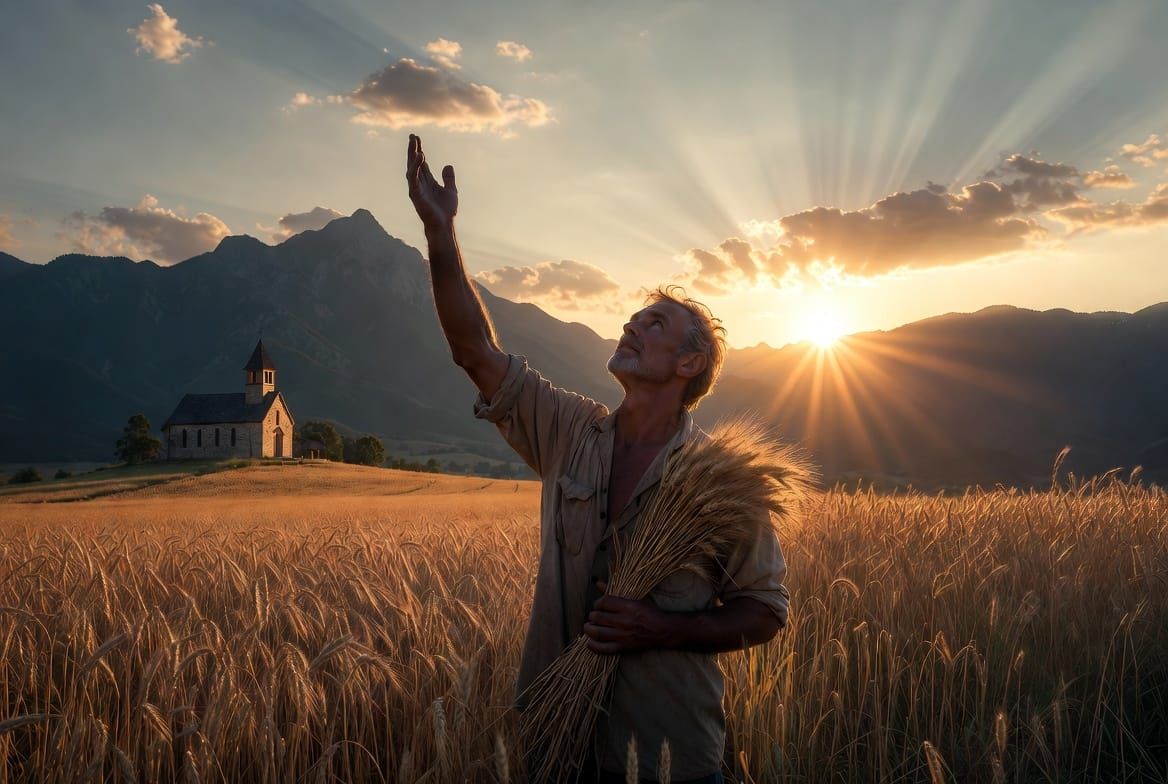
Rogation Day II, Year A, 2026, Tuesday of Rogationtide
Matthew 6:19–24, Psalm 107:1–9, 1 Corinthians 3:10–14
Grace, mercy, and peace be with you on this second day of Rogationtide.
The readings for the second Rogation Day are appointed in the BCP 2019 on page 732: Psalm 107:1–9, 1 Corinthians 3:10–14, and Matthew 6:19–24. Yesterday we prayed about creaturely dependence — the farmer who scatters seed and sleeps and the seed grows: he knows not how. The growth is in God’s hands. Today the Lord presses us a step further: given that all we receive comes from his hand, what are we doing with it? The second Rogation Day is not about asking but about accounting.
Over these three days of Rogationtide the Lord speaks to creaturely dependence, faithful stewardship, and trust in the Father’s provision. Monday named the dependence. Today names the responsibility that dependence carries with it.
“Do not lay up for yourselves treasures on earth.” (Matthew 6:19, ESV) On its surface this is a command about wealth management. But hear it in the context of the Rogation Days, three days before Ascension. The harvest, the labor, the goods of the earth — these are among the most tangible forms of earthly treasure there are. The fields and the gardens and the orchards, the income from honest work, the provision that God’s sustaining mercy gives day after day — all of it is treasure in exactly the sense Jesus means. And Jesus is not saying it is wrong. He says: do not lay it up for yourself. The question is not whether to receive it but what to do with it once you have.
The contrast Jesus draws is between two kinds of treasure and two places to store them. Earthly treasure can be destroyed by moth and rust and stolen by thieves. It is real, but it is fragile, temporary, and insecure. Heavenly treasure cannot be corrupted or taken. Jesus does not specify exactly what heavenly treasure is, but the context of the Sermon on the Mount makes it clear enough: the practice of prayer and fasting and almsgiving in secret, before the Father who sees in secret — these are the things that accumulate as treasure in heaven. The goods of the earth received as gifts from God and returned to his purposes.
Then comes verse 21, which is the pivot of the whole passage: “For where your treasure is, there your heart will be also.” (Matthew 6:21, ESV) We might expect Jesus to say: where your heart is, there your treasure will be. That would fit the common assumption that the heart leads and the money follows. But Jesus reverses it. The treasure does not follow the heart. The heart follows the treasure. What we invest in, what we accumulate, what we protect and return to and worry about — that is where our heart actually is, regardless of what we say it is. The Rogation Days are a fitting time to ask this honestly: when I look at the produce of the earth and the fruit of my labor, what do I see — a gift from a gracious hand, or a possession to be clutched and secured?
Verses 22 and 23 introduce the image of the eye as the lamp of the body. The Greek word for healthy in verse 22 is haplous — which means single, undivided, wholehearted. The healthy haplous eye is the undivided, single-focused eye — the eye that looks first and finally to God as the giver behind every good gift. The eye that is haplous is the eye that looks at one thing and one thing only: the eye fixed on God, the eye that receives the world as his gift and sees him as the giver behind every good thing. When the eye is single in this way, the whole body is full of light. But when the eye is divided — trying to look at God and at the world’s goods simultaneously with equal devotion — it becomes ponēros, evil or sick, and the whole body fills with darkness. The question Rogation presses is the question of the eye: what are we actually looking at?
Verse 24 brings the logic to its conclusion: “No one can serve two masters.” (Matthew 6:24, ESV) The word for serve here is douleuein — to be a slave, to belong entirely to another. The point is not that money is evil but that it demands the same kind of total allegiance that God demands, and the two are incompatible. We cannot be wholly God’s and wholly devoted to accumulating earthly goods at the same time. One of them will be served and the other will be despised. The Rogation Days, which are days of asking God for provision, are also days of examining whether we actually believe that provision is enough — or whether we are trying to secure ourselves beyond what God gives.
Paul in 1 Corinthians 3 approaches the same question from the angle of labor. He has laid a foundation — Jesus Christ — and others are building on it. The warning he gives is not about the quality of the materials but about the kind of work being done: “Each one should be careful how he builds.” (1 Corinthians 3:10, ESV) The work of our hands will be tested. Gold, silver, and precious stones will survive the fire. Wood, hay, and straw will be burned up. The builder himself will be saved, Paul says, but the work that does not survive the testing will be lost. Rogation Day is one of the calendar’s annual invitations to ask the question before the fire does: what are we building with the gifts God has given? When the labor of our hands is tested, what will remain?
Psalm 107 opens with the declaration that the Lord is good and his hesed endures forever. Then it traces the stories of those who wandered in desert wastes, who were hungry and thirsty and their soul fainted within them — and who cried to the Lord in their trouble, and he delivered them. Verse 9: “For he satisfies the longing soul, and the hungry soul he fills with good things.” (Psalm 107:9, ESV) The logic of the psalm is the logic of the Rogation Days: the soul that knows its hunger, that cries out from real need, that does not pretend to have what only God can give — that soul is satisfied. The satisfaction comes not from accumulation but from the giver. The one who fills the soul with good things is not the one who worked the hardest or saved the most. He is the God whose hesed endures forever and who has never left his hungry people without provision.
There is a connection here to the Lord’s Prayer that is worth making explicit. Jesus teaches in Matthew 6:11 to pray: “Give us this day our daily bread.” That petition is a Rogation prayer. It is asking for exactly what the Rogation collect asks — the harvests of the land and the sea, the provision of those who labor to gather them, the constant supply of good things from God’s hand. And the Lord’s Prayer places that petition between the prayer for God’s Kingdom and will to come, and the prayer for forgiveness and deliverance from evil. Daily bread in the middle. Which means that the asking for provision is surrounded on both sides by the Kingdom. Seek first the Kingdom — that is tomorrow’s word, the final Rogation Day. But it is already implicit in the architecture of the prayer Jesus taught: the bread we need is sandwiched inside the Kingdom we are asking to come.
The Rogation Days began Monday with creaturely dependence — the farmer who knows not how the seed grows. They move on Tuesday to creaturely responsibility — the question of what we do with what we receive. And they will conclude tomorrow with creaturely trust — the command not to be anxious, the Father who knows. The three days form a complete theological account of what it means to live as a creature before God: we receive from his hand, we are accountable for what we do with it, and we are invited to rest in the knowledge that the hand that gives has not forgotten us.
On the second Rogation Day we bring our accounting before God: Lord, show us where our treasure is. Show us what our eyes are fixed on. Show us whether we are building with gold or with straw. And if we have been trying to serve two masters — if we have received your gifts and clutched them rather than returning them to your purposes — give us the grace of the single eye and the undivided heart.
The single eye that sees the harvest and sees through it to the hand of the giver. The undivided heart that loves the giver more than the gifts and finds in that love the freedom to hold them rightly, to use them well, and to release them without grief when you ask for them back. We receive from your hand. We want to hold what you give with an open hand, so that when you fill it again, there is room. The treasure is good. The giver is better. Give us the grace to know the difference. Tomorrow, on the final Rogation Day, Jesus will teach us the freedom that comes from trusting the Father who knows what we need.
In the Name of the Father, and of the Son, and of the Holy Spirit. Amen.